Irrigation of Fruit Orchards in Full Sun Exposure: Challenges and Practical Solutions
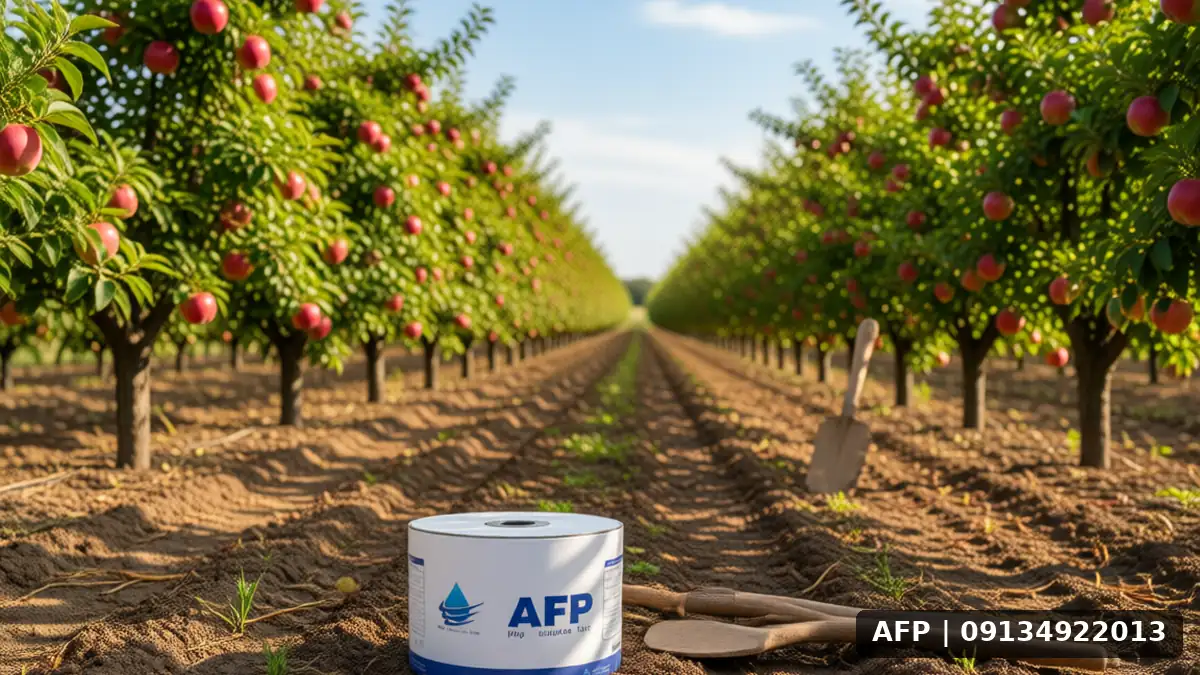
Introduction: Why do completely planted orchards require a different approach to irrigation?
In modern orcharding, the completely planted orchard system—where tree spacing is reduced to the minimum and canopy closure occurs in the early years of growth—is a primary trend for increasing density and productivity. While this method increases per-acre yields, it introduces new complexities in resource management, particularly in fruit orchard irrigation. The main challenge is that in this system, intense root competition, limited soil aeration, and increased sensitivity to moisture stress render traditional irrigation patterns ineffective. Standard texts may not address these details, but in practice, a grower with a completely planted orchard must carefully monitor irrigation volume and scheduling to prevent premature drought or waterlogging, both of which lead to reduced fruit quality.
Analysis of technical challenges in irrigating completely planted fruit orchards
Having a suitable irrigation system is only part of the equation; understanding environmental and botanical challenges is also critical. In completely planted systems, root density at the surface is very high, and root penetration depth may become limited over the long term. This directly affects the choice of irrigation system type. Many producers and farmers are concerned about whether per-hectare yields at such high densities are affected by irrigation quality. The answer is yes; irregular irrigation can lead to significant fluctuations in fruit size.
Challenge One: Uniform water distribution in dense canopies
In fully-canopied orchards, sunlight does not reach the soil beneath the trees, causing a sharp decline in living ground cover (mulch). This increases direct soil evaporation and root zone temperature. Using drip tape can be highly effective in these conditions because it delivers water directly around the primary roots. However, the main challenge is ‘wet-dry’ spots or low-water zones, which typically occur between two lines or at the end of lines. To address this, the distribution network must be designed to minimize pressure drop at the end of lines.
Second Challenge: Managing Humidity-Related Fungal Diseases
High canopy humidity in dense orchards provides a suitable environment for fungal growth. If the irrigation system sprays water onto leaves (as in some sprinkler systems), the risk of Botrytis and other leaf-spot diseases increases. In this case, subsurface or drip irrigation is the best option. The key point is that drippers must be installed so that water is deposited directly in the ‘root zone’ and not on the trunk. This directly affects yield per hectare in vegetables, but in fruit orchards, humidity management directly impacts final fruit quality and prevents fruit cracking, whereas vegetable focus is primarily on quantity.
Application of Drip Tape and Drip Irrigation: Practical Solutions
Choosing between drip tape and conventional drip in a complete kale orchard depends on technical details. Drip tape is often the first choice for orchard owners due to lower cost and reduced water consumption. However, drip tape delivers water linearly along the bed ridges (Levees). In fruit orchards where tall ridges do not exist, drip tape can be placed freely on the soil. Yet, there is a risk of the tape gripping (adhering) to tree roots due to root growth. Therefore, it is recommended to use drip tape with narrower channel diameters to increase the water infiltration depth and prevent established roots from reaching the tape.
Installation and adjustment operational notes
- Drippers and fittings: The use of pressure-compensating drippers in drip lines is critical. In sloping orchards or with variable line lengths, pressure drop causes the end of the line to be under-irrigated and the start to be over-irrigated. Pressure-compensating fittings neutralize this difference.
- Root zone and dripper spacing: In complete kale cultivation, roots are concentrated in the first 30 to 50 centimeters of soil. Dripper spacing should be at most 20 to 25 centimeters to ensure uniform moisture coverage. When using drip tape, the distance from the tape to the tree’s main crown should be approximately equal to half the crown radius.
- Irrigation scheduling: Frequent low-dose irrigation (Frequent & Frequent small irrigations perform better than infrequent large-volume applications in complete fruit gardens. This approach maintains soil moisture around shallow root zones and reduces plant stress during extreme heat.
Additionally, soil management in complete fruit gardens should be evaluated alongside irrigation practices. If the soil is heavy, permeability is low, and tape drip systems may cause water accumulation on the surface and root rot. In such cases, using drip systems with higher pressure or combining tape drip with higher permeability is recommended. Also, knowing the yield per hectare and the factors influencing it can help the farmer adjust water requirements based on tree bearing. Younger trees require more frequent irrigation than mature trees with deeper root systems.
Troubleshooting common issues in complete fruit irrigation systems
Despite the above points, you may occasionally encounter problems such as clogged tape drip or leaks from emitters. Clogging is usually caused by mineral salt deposits or biological sludge. The solution is to activate the system flush at the beginning of each season and use appropriate filters (disc or mesh) with a size of 120 mesh or larger. Furthermore, Types of tape drip and their performance examine; UV-stabilized tape drip lasts longer under sun exposure and is more suitable for open orchards. If tree roots have wrapped around the tape, it should be removed and relocated to a greater distance, or special adhesives could be used (which is not recommended), and it is better to install new tape.
Frequently Asked Questions (FAQ)
Is drip tape suitable for grape or quince orchards?
Drip tape is generally used for vegetable and grain crops. For fruit orchards like grapes or quince, due to high tree density and the need for precision in irrigating sensitive roots, a drip system with adjustable emitters is a better option. Drip tape may deliver water to adjacent trees, causing competition. However, using one-sided drip tape can be effective. For more information, reading an article on vegetable yield per hectare can enhance your understanding of the difference between vegetable farms and orchards.
How can we prevent overuse of water in an intercropped fruit orchard?
The key is using drip tape with fillers or a drip system with a lower output rate, as well as installing soil moisture sensors at various depths. By monitoring moisture depth, you prevent excessive irrigation that leads to fruit drop or splitting.
Does intercropping negatively affect the orchard’s productive lifespan?
Yes, if optimal irrigation and nutrition are not provided. Intense root competition can cause early senescence of trees. Precise irrigation via drip tape or drip systems maintains root health and extends the orchard’s lifespan compared to conventional methods.
Conclusion and final recommendations
Irrigating an orchard under full canopy management is a combination of agricultural knowledge, hydraulics, and operational management. The main challenges include root competition, surface drought, and susceptibility to diseases. Smart use of drip or micro-irrigation, depending on soil type and climate, can turn these challenges into opportunities for increased yield. The key to success is precise monitoring and continuous adjustment of the irrigation system. By following these principles, you can fully utilize the potential of your orchard.
Related articles: garlic seed per hectare factors increase 37460 2, Bell pepper D8AFD8B1 yield per hectare, afzoyishi hosili pomidori dar gekter