Irrigation in Fruit Orchard Understory Carrot Cropping: A Comprehensive Guide
Introduction to Irrigation Management in Carrot Cultivation and Orchards
Carrot cultivation is one of the most sensitive aspects of orchard farming because the plant has small seeds and requires continuous water supply. When carrots are planted in intercropping systems or in the understory between fruit trees, irrigation challenges become dual. The water needs of the carrot’s lateral root system must be met without damaging the deeper, sensitive roots of the fruit trees. Using modern technologies such as drip tape and advanced drip systems is key to success in these complex conditions. This section begins with a general overview of the importance of coordinating drainage and moisture for both plants.
Drip Irrigation Principles for Carrots in Orchard Space
Drip irrigation systems are the best option for expanding carrot cultivation in fruit orchards due to precise water distribution and reduced evaporation. The main difference lies in water penetration depth; carrots require soil surface and mid-level moisture, whereas fruit trees need deep water delivery. Therefore, drip line design must cover only the carrot planting area. This physical separation of irrigation lines prevents flow interference.
Adjusting Dripper Spacing and Working Pressure
- Dripper spacing: For carrots, a spacing of 20 to 30 centimeters between drippers is recommended to create a continuous moisture band. This is the standard spacing.
- Flow rate: Typically, 2 liters per hour per carrot line is sufficient, unless in severe drought conditions where it should be increased to 4 liters. Precise flow rate adjustment is critical.
- Pressure management: To prevent excessive pressure on the main lines passing through the trees, using pressure regulators is essential. Continuous pressure monitoring is also required.
In some cases, using a fixed drip tape for carrot rows is more effective than individual drip emitters, as it distributes water uniformly on the soil surface and prevents water from pooling at a single point. This method is also appealing for farms with smaller budgets.
Optimizing drip tape alongside fruit trees
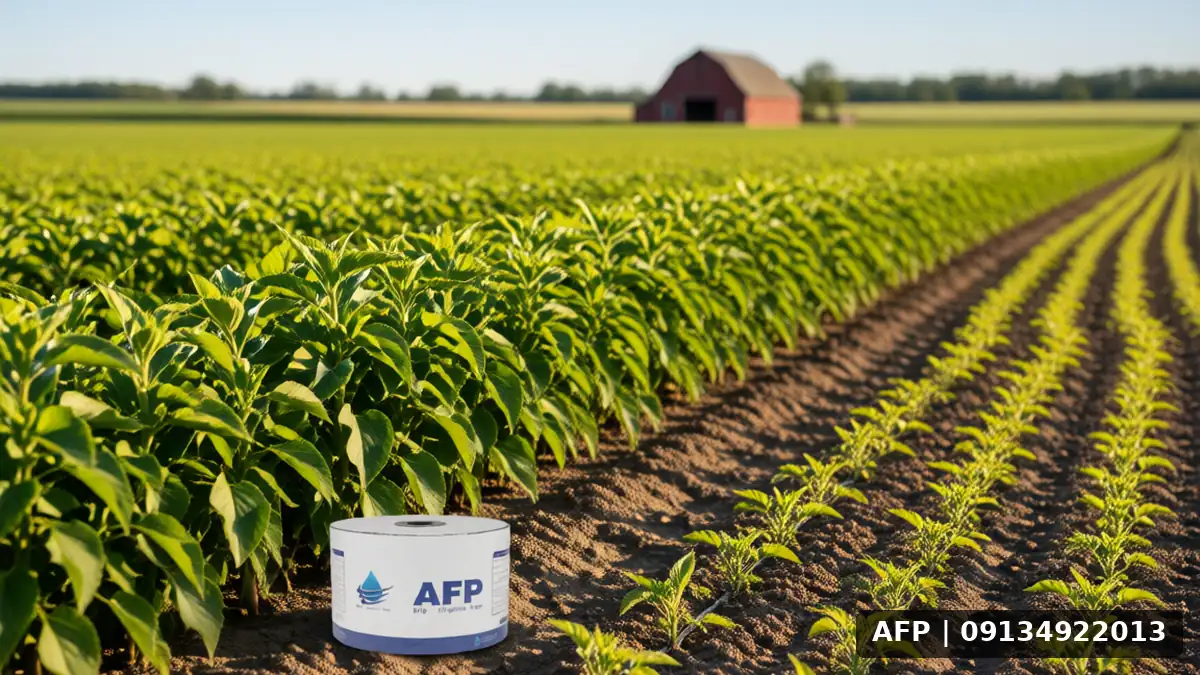
Drip tape is an economical and practical option for irrigating cover crops and interplant crops like carrots. However, selecting the right type of drip tape is of vital importance. Clear drip tapes are more resistant to sun and last longer, but must be placed at an appropriate depth to prevent premature damage. Understanding the type of drip tape emitters can also facilitate the selection process.
Practical tips for installing drip tape for carrots
- Material and thickness: It is essential to use PE tapes of adequate thickness to prevent breakage during radish root establishment. Check the physical resistance of the tape.
- Calculate discharge rate: Ensure that the tape’s discharge rate is proportional to the daily water requirement of radish per square meter. Generally, 16 or 19 mm tapes have different discharge rates depending on the emitter type (microspray or bubbler). Have the discharge rate table available.
- Service and maintenance: Tape systems are sensitive to sedimentation. Using appropriate filters and periodically flushing the lines prevents emitter clogging. Do not forget the maintenance schedule.
To learn more about various techniques, you can refer to the article on key points in using tape irrigation, which provides more details on discharge calculation formulas. These supplementary resources are useful for optimal design.
Challenges of surface irrigation and comparison with pressurized systems
Many farmers still insist on direct field irrigation methods, but in precise carrot cultivation and fruit orchards, these methods face serious drawbacks. Excessive soil moisture causes root girdling and reduces carrot growth speed. In contrast, pressurized systems provide precise moisture control. This functional difference must be taken seriously.
Pros and Cons of Different Methods
A more detailed analysis of the differences between these two methods is explained in the article “Advantages and Disadvantages of Direct Farmland Irrigation,” which is very useful for making the final decision on irrigation system investment. This economic comparison is key.
Practical tips for increasing carrot yield
Irrigation is only one factor; combining it with fertilizer management and planting density determines the final yield. Carrots require sandy and well-drained soil. In orchards, if the soil is heavy, creating deep furrows or using geotextile blankets is recommended to improve drainage before planting. Soil amendment before irrigation is mandatory.
- Irrigation Scheduling: Irrigation in the morning or evening is preferable to prevent severe evaporation during midday. Maintain a consistent timing pattern.
- Moisture Monitoring: Using soil moisture sensors to adjust irrigation frequency prevents excessive weed growth and fungal diseases. Data-driven monitoring is essential in irrigation.
For further optimization, reviewing seeding rate per hectar: influencing factors and strategies for increase can serve as a good model for managing inter-row spacing, as discussed in the relevant guide. Smart inter-row management increases yields.
Answering Frequently Asked Questions (FAQ)
Can a shared piping system be used for carrots and fruit trees?
Yes, but independent control valves are required. Mainlines must have sufficient diameter to prevent pressure drop at the end of carrot lines. Using agricultural flexible pipe as a temporary or permanent main artery is a correct and cost-effective technical decision. Pipe flexibility is advantageous in multi-orchard settings.
What depth of water is required for carrots?
Carrots have a vertical, spiral root system with a depth of 30 to 60 cm depending on the variety. Therefore, water must be available at a depth of 20 to 30 cm below the soil surface. Precisely adjust water infiltration depth.
When should drip tape systems be replaced?
The useful life of drip tape depends on material and exposure conditions, typically ranging from 2 to 5 years. If the discharge rate drops below 50% of its initial value, replacement is due. Keep your replacement schedule up to date.
Summary and Conclusion
Managing carrot irrigation in fruit orchards requires careful attention and familiarity with modern technologies. The choice between drip and tape systems should be based on climatic conditions, soil type, and the farmer’s budget. Thoughtfully combining these systems with proper drainage and fertilization can significantly enhance carrot quality and yield without harming the health of fruit trees. Farmers should consult specialized resources to update their knowledge on equipment selection, such as guides on choosing suitable drip irrigation tape, to avoid incorrect decisions. Continuous learning is key to success.
Related articles: piyozcha hosili gektar rohnomo, tikmi nuki dimi dar yak hektar, Yield per hectare D8AFD8B1, Direct surface irrigation: advantages and disadvantages