Irrigating the Fruit Orchard with okra Crop: A Comprehensive Guide
Introduction: The Importance of Smart Water Management in Bamieh Orchards
Bamieh, characterized by a semi-arid climate and limited access to freshwater sources, is one of the critical regions for water resource management in Iran’s agricultural sector. In this region,irrigating fruit orchards in Bamieh is no longer an option but a necessity that directly impacts the economic future of farmers. Traditional linear irrigation methods lead to severe water loss, soil salinity, and reduced yields. Therefore, transitioning to modern technologies such as adjustable drip tape and drip systems is the key to maintaining the sustainability of fruit orchards. This article aims to provide a clear path for farmers in Bamieh, relying on scientific data and practical experience, to maximize the benefit of every drop of water.
Proper water management not only means conservation but also improving soil quality, reducing root diseases, and increasing fruit volume and quality. The following section provides a technical review of irrigation methods and their implementation in fruit orchards.
Technical Principles of Drip Tape Irrigation in Fruit Orchards
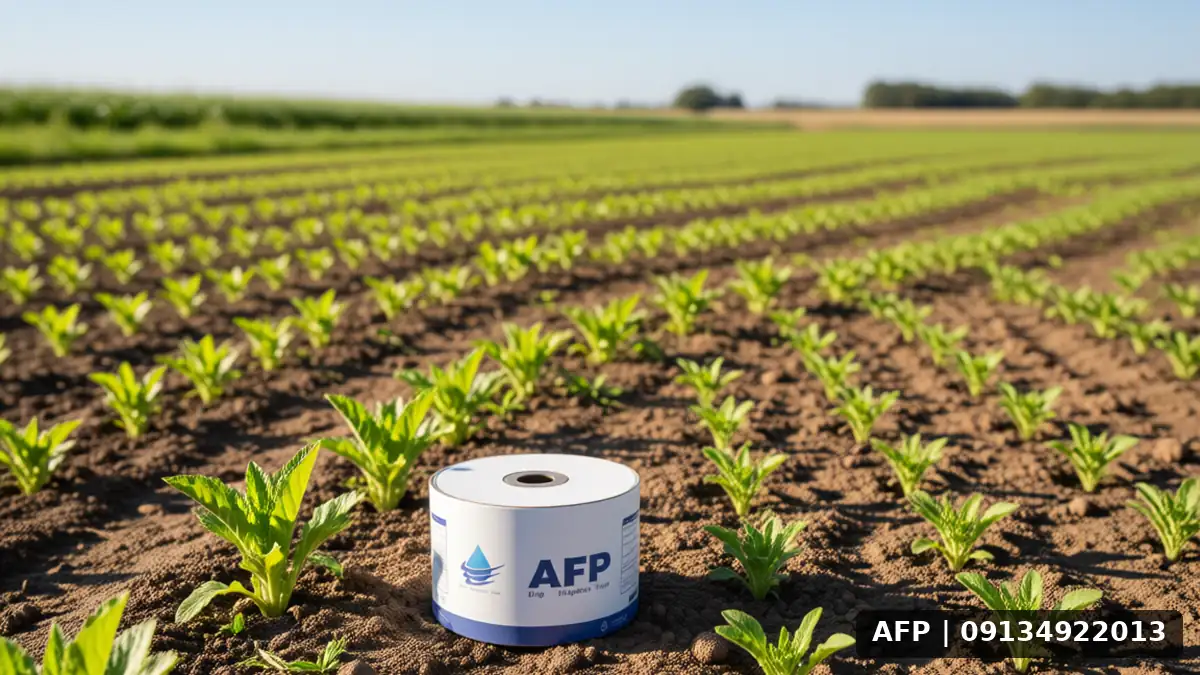
Due to lower installation costs and high adaptability to sloped or flat orchard fields, drip tape systems are often a more attractive option than traditional drip lines for many orchard owners. This system consists of a plastic strip with small emitters that slowly releases water at the soil surface. However, success with this method requires a deep understanding of water flow physics in the soil. Many farmers make errors when determining the water application rate for drip tape irrigation either applying too much water, which leads to evaporation, or too little, which fails to meet plant requirements. The spacing of tape lines from tree trunks and the slope of pipeline lines must be calculated based on local soil type and climate.
<>
Proper installation and setup of drip tape lines
- Using appropriate filters to prevent clogging of tape emitters.
- Separating inlet and outlet water paths to ensure uniform flow.
- Installing in the mid-soil layer to optimize infiltration into the active root zone.
- Employing pressure-regulating valves at the manifold to balance pressure throughout the orchard.
Beyond installation, the maintenance and troubleshooting of drip tapes are of high importance. Using smart control systems can automate irrigation scheduling via soil moisture sensors. This approach aligns with the principles applied in the cultivation of other water-sensitive crops, including optimized planting methods for specific crops discussed in a separate article on onion drip planting. The same principles of pressure and flow management apply to this crop in orchards.
Advantages of Drip Irrigation in Onion Orchards
Although drip tape has lower initial costs, for mature trees and dense orchards, the drip irrigation system generally provides higher efficiency. Drippers allow water to be discharged precisely in the root zone, which is particularly critical in the sandy soils of the Onion region that have high permeability. One of the main challenges with drip irrigation is the clogging of drippers due to mineral deposits. Therefore, the fertigation system, used for injecting pesticides and fertilizers, should be regularly flushed. In orchards, it is also important to prevent soil compaction from being disrupted by aggressive roots. Drip tapes should be buried at an appropriate depth (typically 20 to 30 cm) to prevent damage from animals or road work.
<>
Functional Comparison of Drip Tape and Drip Irrigation in Onion Conditions
The choice between these two systems should be based on the specific conditions of the orchard. In young orchards with small trees, the tape line may be a better option, as it offers greater flexibility in following root growth patterns. However, in mature or older orchards, a drip system with adjustable emitters provides better management options. Additionally, planting distance and vegetation cover density have a direct impact on water demand assessment. The general principles of low-pressure irrigation are similar across all comparable crops, as discussed in an article about Drip tape spacing for forage crops on a hectare is explained in more detail. These spacings in fruit orchards must also be calculated considering tree shading.
Practical tips for higher efficiency
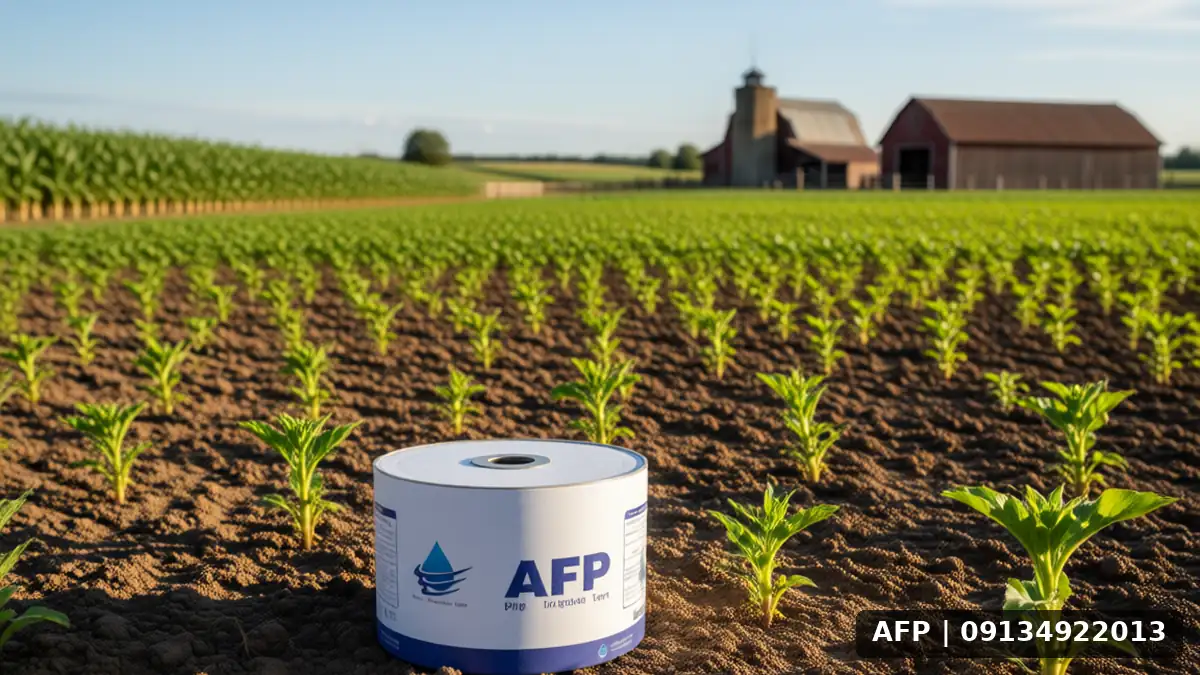
Many common errors in irrigating Bamieh orchards result from neglecting implementation details. One of the most important points is irrigation scheduling. Irrigating during the peak heat of the day causes water to evaporate before it penetrates the soil. The best times are early morning and evening. Additionally, using fertilizer solutions through the irrigation system (fertigation) can increase nutrient uptake efficiency by up to 30 percent. However, care must be taken with the pH of the solution, as being too acidic or basic accelerates sedimentation inside pipes and drippers. In fruit orchards, drain management is also critical because root rot is one of the main causes of crop loss in Bamieh. Drip tape and drip systems must be designed to maintain natural drainage.
<>
Monitoring criteria and irrigation need detection
- Using a tensiometer (moisture sensor) to monitor soil water potential.
- Visual inspection of soil moisture by hand at a depth of 30 centimeters.
- Monitor evaporation and plant transpiration using climate calculations.
- Check leaf condition; midday wilting is a sign of water stress, but do not wait until it is too late.
Water management for chayote is not just a technical issue; it is an economic one. Rising water costs and resource limitations are pushing farmers toward unstable or desalinated water sources, which negatively affect fruit tree health. Therefore, proper filtration and treatment of water input is an integral part of irrigation system maintenance. If you are facing salinity issues, refer to specialized resources such as foydahoi nvori tipii obyri tarafduzi which can provide complementary insights on salinity management in drip irrigation systems.
Frequently Asked Questions (FAQ)
Can drip irrigation completely replace point-source emitters?
Not entirely. Point-source emitters are ideal for young trees and high-density plantings, but for mature trees with large canopies, drip systems with multiple emitters per tree provide better and more uniform coverage.
How often should we irrigate?
This depends entirely on soil type, temperature, crop growth stage, and soil water-holding capacity. There is no fixed algorithm. It is best to schedule irrigation using ETc (crop evapotranspiration) and soil monitoring. As a general rule, watering 2 to 3 times per week with smaller volumes is better than once a week with large volumes.
How do we prevent clogging of drippers?
Proper filtration (screen and sand filters), regular system flushing, preventing organic matter (such as fruit pulp) from entering the line, and using high-purity fertilizer solutions are the most important solutions.
What is the approximate cost of installing the system per hectare?
Costs vary depending on component types, pipe materials, and land slope. It is advisable to request quotes from skilled local contractors, as labor and transportation costs in Bamieh are significant. Excluding labor, the cost of tape line equipment is usually lower than that of drip systems.
Conclusion and Irrigation Outlook in Bamieh
Irrigating fruit orchards in Bamieh requires a combined approach of technical knowledge, precise monitoring, and optimal management. Whether you use tape lines or drip systems, the key to success lies in precision, system cleanliness, and coordination with climatic conditions. Farmers in Bamieh who invest in precision irrigation equipment not only save water but also improve crop quality and yield, resulting in higher sales prices. The future of agriculture in Bamieh depends on water resource sustainability, and the transition to smart irrigation systems is a necessary step in this process. Always remember that soil is living, and your irrigation system must be in sync with its actual needs.