Greenhouse Melon Cultivation: Cost-Optimized Irrigation Strategies
Introduction: Economic Challenges of Melon Cultivation in Greenhouses
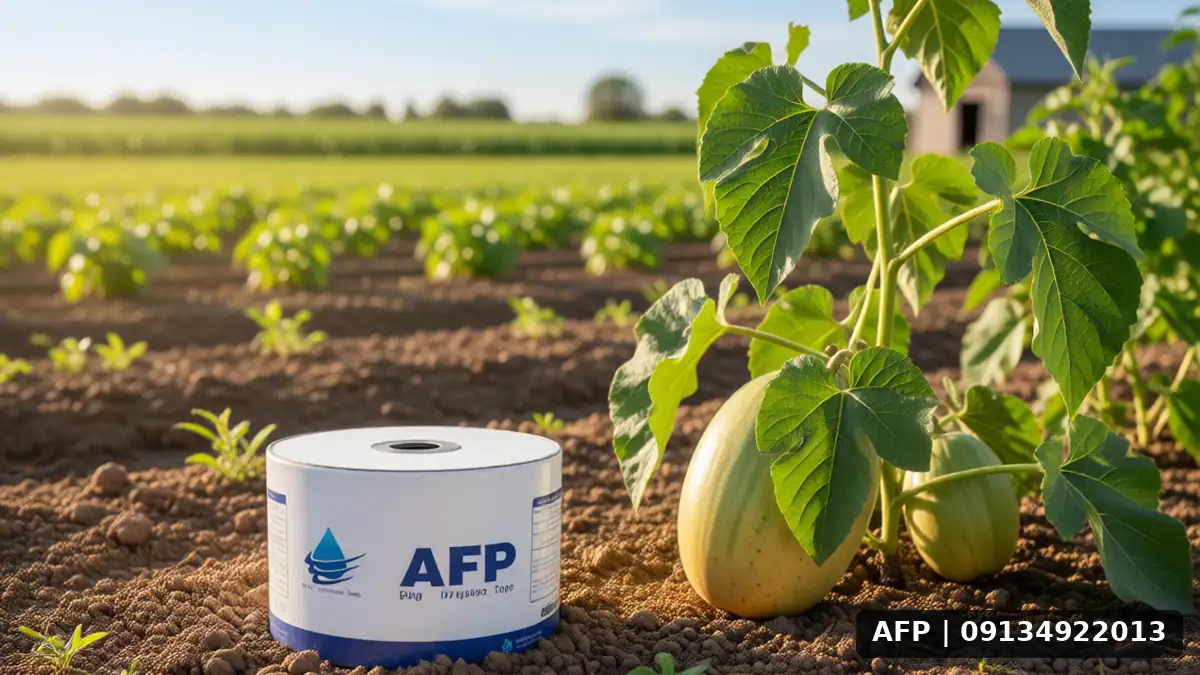
Spring vegetable cultivation, including melon, in controlled environments such as greenhouses is considered one of the most demanding activities in modern agriculture in the region. Despite the significant growth in demand for fresh, high-quality produce, growers face serious challenges in managing fixed and variable costs. Among the main components of greenhouse operational costs are irrigation and plant nutrition expenses. Inaccurate calculation of water consumption and the selection of inefficient systems can severely negatively impact final profitability. Therefore, an approach to optimizing irrigation costs is no longer a luxury, but an economic necessity for survival and competitiveness. In this article, focusing on melon cultivation, we examine how the correct combination of modern irrigation technologies, including drip tape and drip irrigation, can reduce total costs and increase final yield.
<>
Technical Analysis of Irrigation Systems: Why Plated Drip Tape?
To gain a deeper understanding of economic efficiency, we must address the mechanisms of water delivery to plant roots. While conventional drip systems are highly efficient in precise salinity management and fertigation, they incur costs for maintaining filters, drains, and emitters. In contrast, plastic plate band systems offer a different approach. By creating a direct moisture band beneath the roots, these systems act directly on the root uptake zone. The key advantage of band technology is reduced evaporation loss and lower pumping energy requirements compared to high-pressure systems. For cantaloupe, which has a shallow and sensitive root system, uniform moisture distribution within a narrow band reduces soil stress and promotes more uniform fruit development. This uniformity directly correlates to reduced losses during harvest and packaging, thereby eliminating secondary costs.
Initial Costs versus Operating Costs: The Optimization Equation
When discussing ‘optimal cost,’ one must consider more than just the purchase price of equipment. A comprehensive cost-benefit analysis is required. More complex systems, such as those with variable-speed injectors, may have higher upfront costs but are more profitable in the long run due to reduced energy consumption and increased yield per cubic meter of water. For cantaloupe cultivation, which has a short and rapid growth cycle, rapidly deployed and adjustable systems are essential. Furthermore, using systems that surface irrigation in certain greenhouse blocks with access to sewage or direct rainfall resources, can serve as a low-cost method for early-stage establishment, although more precise band or drip irrigation is essential for the fruit ripening stage. Balancing these two approaches can be the key to reducing water and energy costs.
<>
Practical tips for managing melon irrigation costs
To achieve real cost reductions, growers must follow the principles below. The first and most important point is using accurate data. Installing soil moisture sensors in different greenhouse blocks allows you to start irrigation only when the soil is at the threshold of water stress. This prevents overwatering, which not only increases water costs but also causes root suffocation and increases the risk of fungal diseases. Second is timing planning. Using smart timers or automatic control systems that are adjusted based on plant weight and drainage needs minimizes losses caused by schedule deviations. Third is attention to water quality. If water sources have high sediment, using appropriate filters (just like the systems described in Comprehensive guide to cucumber drip irrigation) can prevent clogging of drip tape components and reduce repair costs. Melon, like cucumber, is sensitive to water flow quality.
- Using alternating irrigation techniques to prevent salt accumulation in greenhouse soils.
- Training staff to detect early signs of irrigation under- or over-application.
- Periodic inspection of irrigation system pressure to identify leaks and energy waste.
Impact of irrigation system selection on soil texture and nutrition
Many growers forget that the irrigation system directly affects how the plant absorbs nutrients. In a drip tape system, nutrients move with the water flow toward the leading end of the tape. This phenomenon, known as “nutrient push,” can cause roots to be nutrient-rich on one side of the tape and nutrient-poor on the other. To mitigate this, using cross-armed drip tape or drip systems with spaced emitters can improve distribution. Additionally, adjusting nutrient solution concentration based on water consumption in the drip tape prevents salt accumulation around the roots. Salt accumulation leads to root burn and reduced economic yield. Therefore, chemical water management is as critical as mechanical system management in determining final costs. For technical details and suitable dimensions for various crops, refer to the Drip Tape Installation and Implementation Guide .
<>
Frequently Asked Questions (FAQ)
Is drip tape irrigation suitable for all melon varieties?
Yes, but not in a uniform manner. Determinant-growing varieties require higher water flow compared to bush varieties. Therefore, flow rate settings must be adjusted based on the growth stage. Using slotted drip tape allows for flow adjustment.
How can I reduce irrigation system maintenance costs?
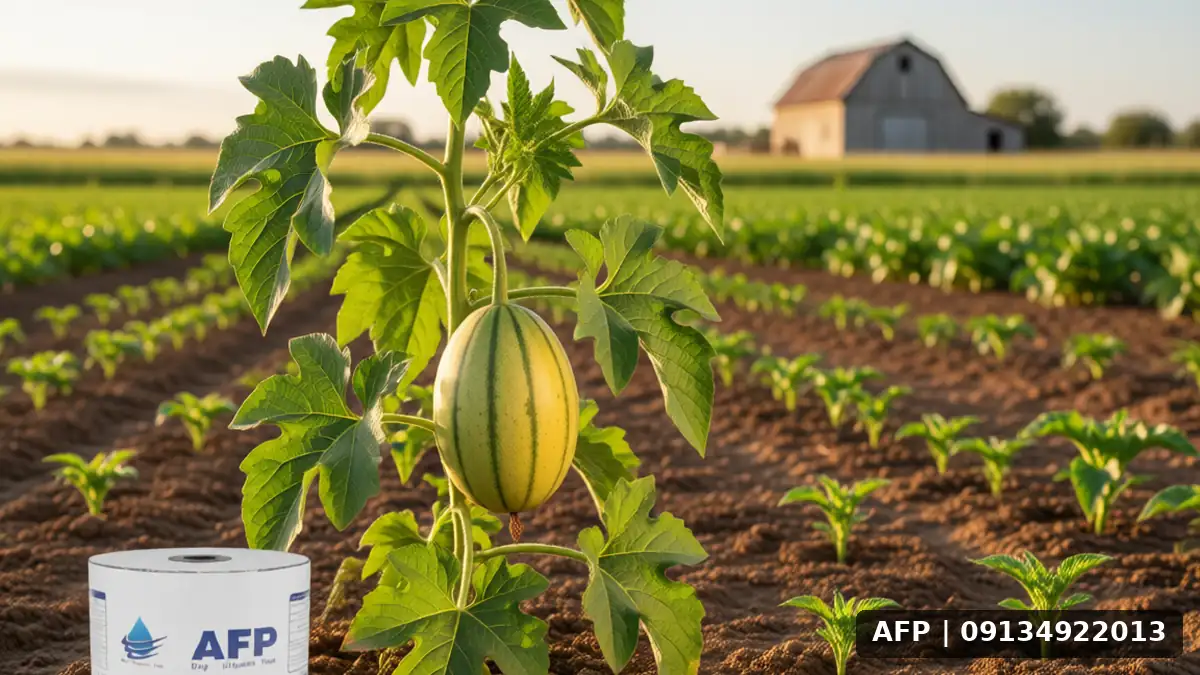
The key is prevention. Frequent filter cleaning, regular hose inspections, and the use of scale inhibitors extend the system’s lifespan and reduce costly production stoppages. Additionally, ensuring the pump pressure is not excessive prevents fitting failures.
Is a combination of surface irrigation and tape irrigation efficient?
In some greenhouse blocks where the growing medium consists of rice hulls or powder pulp, using surface irrigation for the initial planting stage, followed by a switch to tape irrigation for the growth stage, can be a cost-effective solution. This transition must be carefully planned to ensure roots are not subjected to sudden changes in the water source.
Conclusion: Cost optimization as a continuous process
Reducing irrigation costs for greenhouse cantaloupe is not a one-time project but a dynamic process requiring continuous monitoring. By correctly selecting plate or drip tape systems and intelligently managing water resources, water consumption can be reduced while economic efficiency is increased. Precise data monitoring and alignment with crop environmental conditions are the keys to success. Ultimately, investing in irrigation knowledge and technology directly leads to lower operational costs and higher net profit. It is recommended to always refer to the latest technical articles regarding Implement drip tape and stay updated with new technologies.
Related articles: alfalfa hamdan seed rate per hectare