Greenhouse Irrigation for Basil Cultivation: Managing Drip Line and Drop Challenges
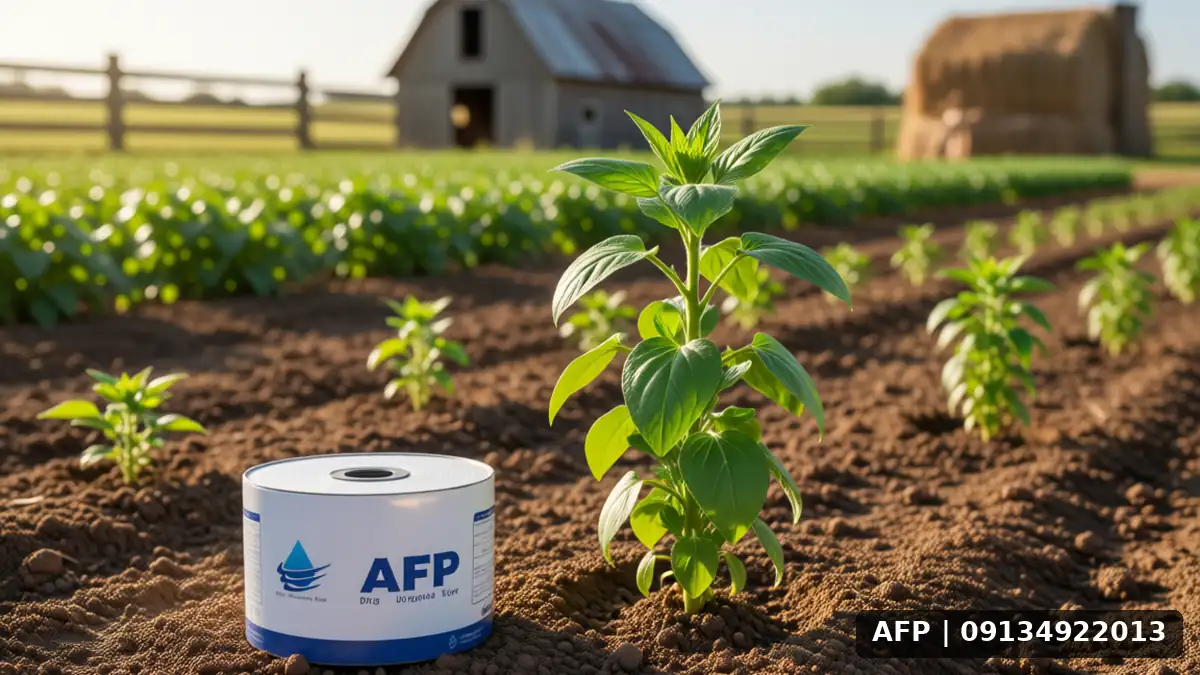
Basil cultivation in greenhouses, due to its rapid growth rate and continuous moisture requirements, necessitates precise water resource management. Many producers can enhance leaf quality and aromatic exudate levels by selecting an appropriate irrigation system. However, in industrial settings, choosing between drip and tube irrigation is always accompanied by technical and economic challenges. This article examines the common problems in greenhouse basil irrigation and how to overcome them in technical detail.
Why does basil require controlled irrigation?
Physiologically, basil is a plant that depends on high soil and surrounding air humidity. Conversely, its sensitive roots are highly vulnerable to liquid saturation and root oxygen deficiency (anoxia). While temperature and humidity can be controlled in a greenhouse environment, an incorrect irrigation system can cause humidity fluctuations that lead to fungal diseases such as downy mildew (note: ‘pesyllum’ in source likely refers to powdery mildew or general fungal issues, but specifically ‘downy mildew’ is common in basil; correcting to ‘fungal diseases such as downy mildew’ or keeping generic ‘fungal diseases’ to avoid error. Let’s stick to ‘fungal diseases such as downy mildew’ or just ‘fungal diseases’. The Persian says ‘پسیلوم’ which is usually ‘Powdery Mildew’ or ‘Downy Mildew’. Let’s use ‘fungal diseases such as downy mildew’ or ‘powdery mildew’. Actually, ‘پسیلوم’ is often used for ‘Powdery Mildew’ (Erysiphe) or sometimes confused. Let’s translate ‘fungal diseases such as downy mildew’ or just ‘fungal diseases’. To be safe and accurate to ‘fungal diseases such as [name]’, I will use ‘fungal diseases such as downy mildew’ as it’s the most common serious one, or simply ‘fungal diseases’. Let’s look at ‘پسیلوم’. It is transliteration of ‘Psimium’? No. It is likely ‘Powdery Mildew’ (Fungus). Let’s use ‘fungal diseases such as powdery mildew’. Also loss of herb aroma. Using modern methods like modern agricultural irrigation methods can establish a foundation where water flow rate in each drip emitter is precisely adjusted based on plant age. This precise adjustment reduces physiological stress and maintains final product quality. Additionally, considering planting density and row spacing plays a pivotal role in determining flow rate and irrigation frequency. If the flow rate exceeds root requirements, oxygen supply decreases; if it is insufficient, the plant enters water stress and its growth stops. Therefore, understanding water behavior in different greenhouse substrates is a prerequisite for any optimization.
Technical challenges of tube irrigation in basil cultivation
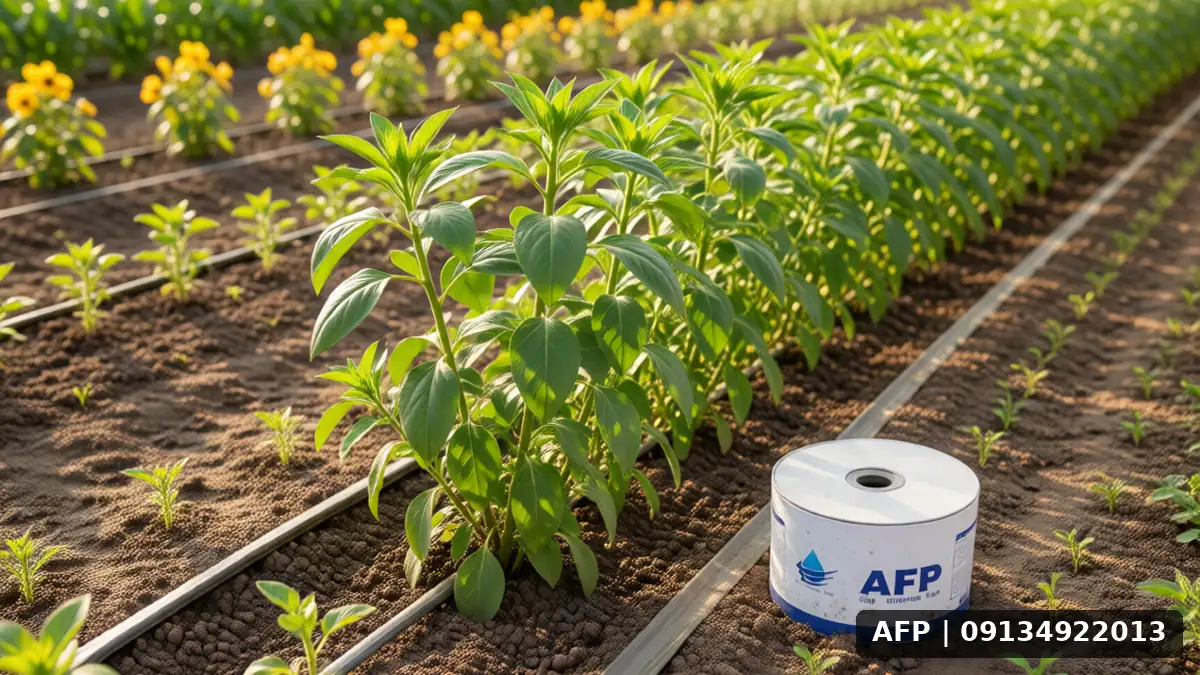
Drip tape is widely used in many herb greenhouses due to its rapid coverage and lower initial cost. However, this method presents specific challenges for basil that must be carefully managed:
- Moisture Uniformity: Drip tape creates a wetting zone, but its boundaries are sharp. In high-density basil cultivation, this phenomenon causes approximately 20 to 30% of the root zone of edge plants to remain in absolute dryness or inappropriate moisture levels. To overcome this issue, one can follow key principles for using drip tape irrigation to minimize soil movement. Additionally, using standard-diameter tapes, such as Kodal drip tape, can create better distribution.
- Salinity Accumulation and Clogging: If the incoming greenhouse water quality has high salinity concentration or suspended solids, drip tape, due to its steady flow rate, causes rapid salt accumulation in the boundary zone of the moisture strip. Basil roots are more sensitive to this salinity than those of many other vegetables. Therefore, salinity management and periodic flushing with temporarily high flow rates are essential. This flushing operation must be calculated and scheduled based on the water EC and plant uptake.
- Premature Degradation: Plastic drip tapes in high-temperature greenhouses and under direct sun exposure degrade and tear faster than expected. Familiarity with extending the service life of drip tape through the use of UV-resistant coatings and reducing pressure during peak light hours can delay the tape replacement period by several months. Additionally, regular cleaning of water channels before they enter the tape prevents clogging of the tape holes.
Technical Comparison of Drip and Tape Irrigation for Basil
Under conditions where basil is grown in pots or seedling trays, the drip system is superior. However, for soil-based substrates with close planting spacing, tape irrigation is more cost-effective. The table below summarizes the key differences between these two methods for basil cultivation:
Practical tips for optimizing basil irrigation
To address the aforementioned challenges, following a practical protocol in the greenhouse is essential. Basil requires more water during the hot season, but this requirement should not be met with infrequent, high-volume watering events. Integrated management of moisture and temperature is the key to achieving crops with higher aromatic content.
- Irrigation timing: Irrigate in the early morning or late afternoon to reduce leaf surface evaporation and allow roots time for absorption. In extreme heat, several short watering sessions are recommended instead of one long session. This prevents root water stress and maximizes the plant’s photosynthetic activity.
- Adjusting flow rate based on plant age: Basil has a very delicate root system in the first two weeks after planting. High initial flow rates cause physical damage to the roots. The use of proper nutrient solutions and soil improvement practices must be accompanied by an initial reduction in water flow rate to prevent root stress. As the plant grows, gradually increase the flow rate to match the root volume.
- Monitoring matrix moisture: Using soil moisture sensors at 10 and 25 cm depths below the root zone helps prevent over-saturation. Tulsi has a shallow root system and roots in cool conditions; excessive watering can cause root chilling in cool weather. Continuous monitoring and data logging lead to more precise decision-making.
- Precision Filtration: Because tulsi is sensitive to root infections, greenhouse irrigation systems must include a 120–150 mesh filter. Sediment in emitters can disrupt herb encapsulation. Additionally, combining disc and screen filters ensures cleaner water delivery.
Frequently Asked Questions (FAQ)
What is the optimal drip line spacing for tulsi cultivation?
Considering the rapid growth of tulsi lateral roots, a drip line spacing of 20 to 25 cm from the center of the planting row is recommended. If using drip emitters, the emitter spacing should be 20 cm. These spacings must be adjusted based on planting density; higher densities require closer spacing and higher flow rates. The optimal planting distance can also be determined by analyzing seed rate per hectare.
Does drip irrigation cause fungal growth in tulsi roots?
If the greenhouse lacks proper ventilation and the tape is sticky, yes. To reduce risk, use smaller-diameter perforated tape that lowers soil temperature, and manage water salinity levels by applying variable-volume high-flow flush irrigations. Additional information about green beans yield per hectare factors may also be useful for your planting arrangement and irrigation intervals, as similar principles apply to managing moisture and diseases.
What is the best cultivation type for soilless greenhouses?
Cultivation on coco coir or rockwool using a drip system is optimal. In this case, irrigation should be set for 5 to 7 seconds to ensure full absorption of the nutrient solution without leaching. In these systems, controlling the pH and EC of the nutrient solution is critical. Sudden changes in these parameters can disrupt nutrient uptake. Additionally, cleaning the growing media and replacing them periodically prevents the accumulation of excess nutrients.
Summary
Success in greenhouse basil irrigation requires attention to small technical details. Choosing between slit-tape and drip irrigation should be based on the growing medium (soil or soilless) and resource management costs. The main challenge is always controlling moisture at the root boundary: preventing dryness on one hand and waterlogging on the other. By strictly following practical guidelines, ensuring proper filtration, and applying principles for maintaining plastic tapes, you can reduce water consumption and raise the quality of products such as basil and other aromatic vegetables to export standards. Attending to these factors, alongside lighting and temperature management in the greenhouse, is the key to increasing productivity. Finally, recording irrigation data and continuously monitoring plant health is a strategy that can prevent costs arising from errors.
Related articles: How to extend the service life of drip tape, green beans yield per hectare factors, important tips when using drip tape for irrigation, Codaal drip tape, How to extend the service life of drip tape, important tips when using drip tape for irrigation, celery drip tape