Fruit Orchard Irrigation in Corn Cropping: Benefits and Specialized Techniques
Introduction
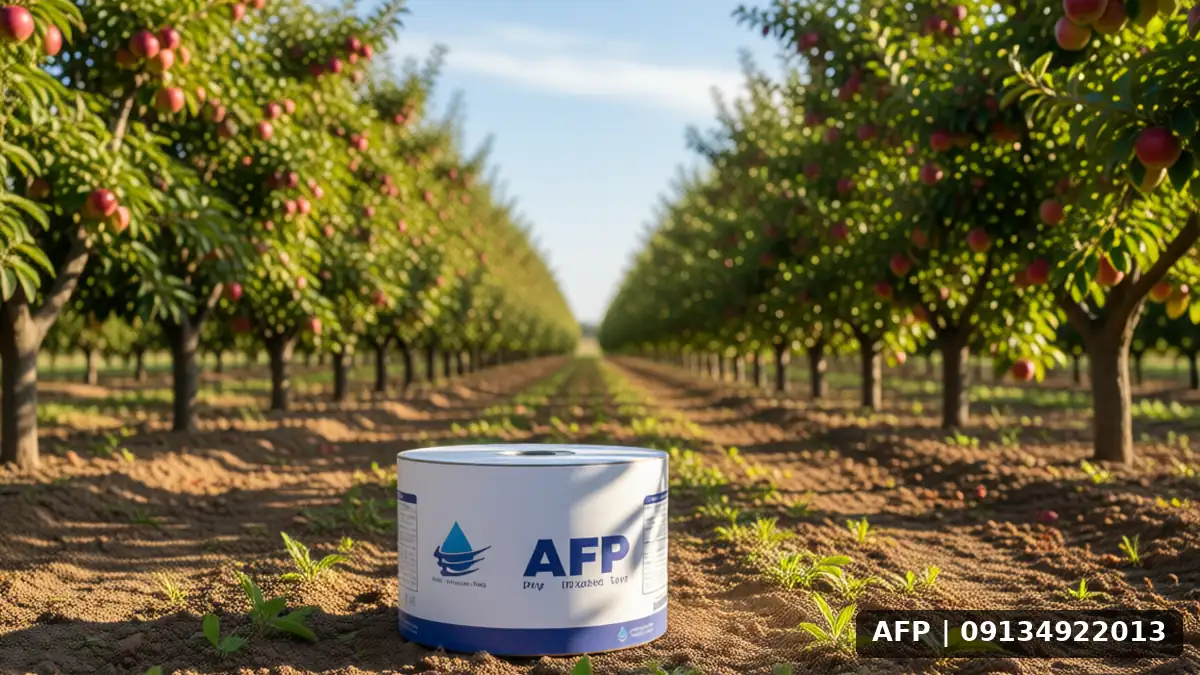
Cultivating millet as a major economic and oilseed crop in Iran requires sufficient water and nutrients. A primary challenge for farmers is the proper management of water resources under harsh climatic conditions and water scarcity. Under these conditions, irrigating fruit orchards in millet cultivation can serve as a smart strategy to simultaneously produce millet while creating suitable space for the development of economic orchards. This integrated approach increases efficiency and reduces total dependency on conventional water sources. It also allows farmers to utilize the available open space between orchard trees to leverage both deeper and shallower root zones concurrently. This synergy not only minimizes evaporation losses but also ensures farmer income stability by providing two primary products (fruit and oilseed).
Benefits of combining fruit orchards and millet
Combining different inputs in a cropping system can offer numerous benefits for both farmers and the environment:
- Increased land productivity: Utilizing different soil depths for tree and millet root systems maximizes soil capacity utilization. Millet roots are primarily active in the upper soil horizons, while trees draw nutrients from greater depths.
- Economic Diversification: Access to both fruit and oilseed markets reduces seasonal risks and price volatility. If almond prices drop, fruit remains the primary income source, and vice versa.
- Soil Moisture Retention: The natural canopy formed by the trees reduces direct solar evaporation from the soil surface and preserves existing moisture.
- Crop Quality Improvement: Proper growth management and reduced almond plant density in the presence of trees correspondingly improve final seed and oil quality. Additionally, the created biodiversity limits plant pests.
Apple yield per hectare Due to climatic diversity, suitable varieties and precision irrigation systems vary. In drier regions, this yield can be several times the conventional standards by optimizing the irrigation system. Orchard trees such as apple, walnut, or almond each have different water and soil requirements, which must be considered when intercropping with almonds.
Drip and strip tip irrigation techniques
Drip irrigation, due to its low water consumption and uniform water distribution in the root zone, is the ideal option for almond orchard and plantation combinations. In almond cultivation, typically constant flow drip emitters are used to deliver water and nutrients directly to the roots of the almond trees. This system allows the planting medium for almonds to remain moist without causing soil waterlogging. It also enables fertigation, which is critical for rapid almond growth.
Strip irrigation is also a suitable method for row crops such as almonds. In this method, water is applied to the soil in narrow strips along the crop rows. This method minimizes evaporation losses compared to overhead sprinkler irrigation and is a good option for soils with relatively high permeability.
- Drip system: Suitable for water-deficient conditions, light soils, and intercropping with trees. It offers high precision in water distribution.
- Drip tape: Suitable for clay soils with medium permeability and semi-arid climates. Installation costs are generally lower than for drip irrigation.
The choice between these two systems should be based on the field soil type, capital costs, and the availability of skilled maintenance personnel. For further guidance on calculating installation points, Drip Line Emitter Layout Guide please refer to.
Practical implementation tips
for successful deployment Irrigation of orchards under sorghum intercroppingThe following principles must be observed:
- Determining appropriate row spacing: The spacing between sorghum rows must be at least 60 to 70 cm to allow for proper installation of the drip irrigation system. For orchard planting, the distance between trees is adjusted to 3 to 5 meters depending on the selected variety. This spacing enables small machinery to move between the sorghum rows.
- Calculating valve flow rates: The drip irrigation flow rate must be proportional to the alfalfa uptake zone. Drippers with a flow rate of 4 or 8 liters per hour are typically the optimal choice for alfalfa. It is important to note that the water flow rate required for tree roots must not be the same as that required for alfalfa roots.
- Two-stage planting (Podridouroa): Alfalfa is generally planted in two stages. The first stage occurs in early spring, and the second stage in mid-spring. When planting the second stage, the drip lateral lines must be protected to prevent decay.
Pipe management in mixed cropping systems is critical. To inquire about prices and the type of pipes required, Price of polyethylene pipe to be considered.
Table of recommended irrigation periods and amounts
The parameters above are calibrated based on the general climate of Iran. Using soil moisture sensors to adjust irrigation schedules is recommended to prevent over-irrigation. For comprehensive guidance on growing Khorasan wheat, it is essential to pay special attention to the local climatic variables. Selecting appropriate intercropping options suitable for the regional climate is key to success.
Frequently Asked Questions (FAQ)
Is oats compatible with all fruit tree varieties?
No, the best compatibility is with half-shade-tolerant varieties. Walnut, almond, and heavy-kernel trees are the optimal choices for intercropping with sorghum. In warm regions, olive and mango varieties can also serve as suitable alternatives. Excessive shading of sorghum leads to weakened growth.
What are the characteristics of groundwater suitable for sorghum cultivation?
Sorghum is sensitive to water with high sedimentation rates. If the water pH exceeds 7 and TDS exceeds 1000, a flushing system must be installed at the end of drip lines to prevent clogging of emitters. Water quality is critical for the operational lifespan of the irrigation system.
Does the presence of an orchard increase sorghum pest pressure?
In the initial years, yes, because the environment creates greater insect diversity. However, in the long term, biodiversity prevents the spread of any specific pest. The use of pheromone traps is recommended in intercropped orchards.
What is the best time to plant sorghum alongside an orchard?
Early spring (Dey and Farvardin) is the optimal time for sorghum to complete its initial growth from orchard shade before the peak summer heat.
Summary
Enabling Fruit orchard irrigation in sorghum croppingis a smart approach to better utilizing climatic potential. Although this system initially requires precision and careful planning, it enhances economic efficiency and sustainability in the long term. The right combination of orchard varieties and adherence to drip irrigation principles is key to your success. To see real-world examples of date palm kernel density per hectare you can assess whether your selected system is applicable to sorghum cropping as well. Studying specialized resources on other compatible crops can open new horizons.