Drip Tape Irrigation in Wheat Cultivation: Prerequisites and Implementation Principles
Introduction: The Need for Innovation in Wheat Irrigation
Wheat, as one of the most important staple foods in the world and in our country, has always faced the challenge of water scarcity. While conventional flood and sprinkler irrigation systems involve high costs, the use of modern systems such as drip tape irrigation has opened a new path for greater efficiency. This method not only reduces water consumption by 40% but also enables more precise delivery of plant nutrients. However, successfully implementing this system in wheat cultivation without considering technical and soil prerequisites may lead to serious issues in plant growth. In the following section, we examine these prerequisites in full detail.
Understanding the Nature of Drip Tape in Wheat Cultivation
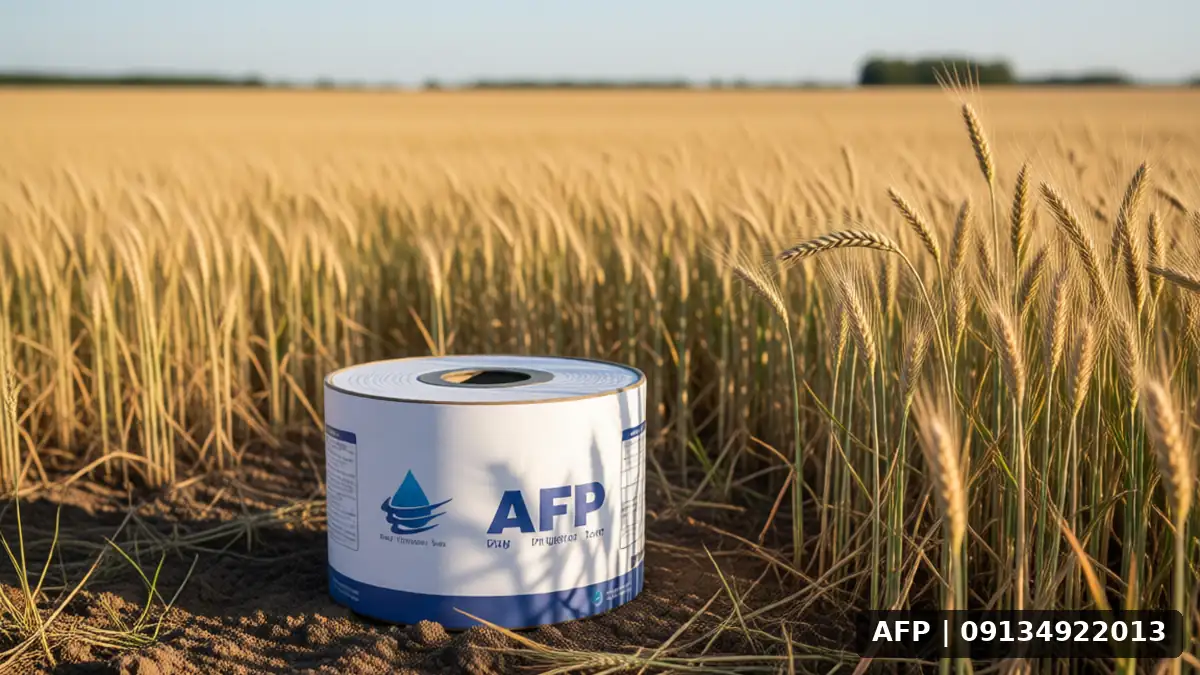
Drip Tape is an irrigation system in which plastic tapes featuring small holes (emitters) are placed along the planting row. In wheat cultivation, where roots are shallow, this system allows moisture and nutrients to be delivered directly to the root zone. Unlike orchards, wheat has high planting density; therefore, the distance between tapes and water flow rate must be calculated with precision.
Key Prerequisites Before Starting Irrigation
To benefit from this system in wheat cultivation, you must first address several critical prerequisites. These include soil analysis, selecting the appropriate type of tape, and correctly designing the pipeline network.
1. Precise soil and slope analysis
The most critical prerequisite is identifying the farm’s soil type. Light sandy soils drain quickly and require more frequent irrigation, whereas heavy clay soils retain moisture longer. For wheat cultivation using a drip line, it is recommended to conduct soil sampling before starting to determine water retention capacity. Additionally, land slope must be considered, as steep slopes make uniform water distribution difficult.
- Light soils: Require shorter line lengths and more powerful pumps.
- Heavy soils: Allow for longer line lengths with lower flow rates.
- Passage: If the farm is divided into sections, the use of appropriate filters is essential.
2. Selecting drip tape with appropriate thickness and diameter
Selecting the type of drip tape is one of the most critical prerequisites. For wheat, tapes with an inner diameter of 16 to 22 mm are typically used. The wall thickness of the tape also determines the useful life of the system. Thinner tapes are less expensive but have lower durability. Farmers should make their selection based on budget and the expected system usage duration. For more information about types of irrigation systems and their differences, refer to the article on types of irrigation systems to gain a more comprehensive perspective on selecting the appropriate technology.
3. Manifold and fitting design
Before purchasing the tape, the manifold network (main artery) and lateral pipes must be designed. In wheat cultivation, due to high seeding density (approximately 100 to 120 kg of seed per hectare), drip tape lines are generally spaced 20 to 30 cm apart. It must be ensured that water pressure at the end of the lines has not decreased significantly, as pressure drop causes under-irrigation of plants at the line ends.
Management and economic prerequisites
In addition to technical issues, management and economic factors also play a role in the success or failure of the project. Many farmers overlook cost prerequisites, which leads to early abandonment.
1. Reviewing fixed and variable costs
Calculate the cost of drip tape per hectare, pump price, filters, and energy consumption. While single-use (discrete) drip tape is cheaper, it requires annual replacement due to rapid wear. In contrast, permanent lines have a higher cost but are usable for 3 to 5 years. Farmers should calculate the return on investment based on the difference in wheat yield between conventional irrigation and drip irrigation conditions.
To compare costs with other crop cultivation, you can look at the soybean yield per hectare to understand the management and economic differences between cereal and legume cultivation.
2. Workforce Training
Another prerequisite is having trained manpower for system installation, commissioning, and troubleshooting. Common errors, such as blockage of drip tape emitters by calcareous or biological deposits, require regular filter cleaning and line flushing. Farmers accustomed to older irrigation systems may overlook the principles of drip tape maintenance.
Practical Tips for Implementation and Wheat Planting
After soil preparation and system installation, the method of wheat planting relative to the drip tape is important.
1. Distance between seed and tape
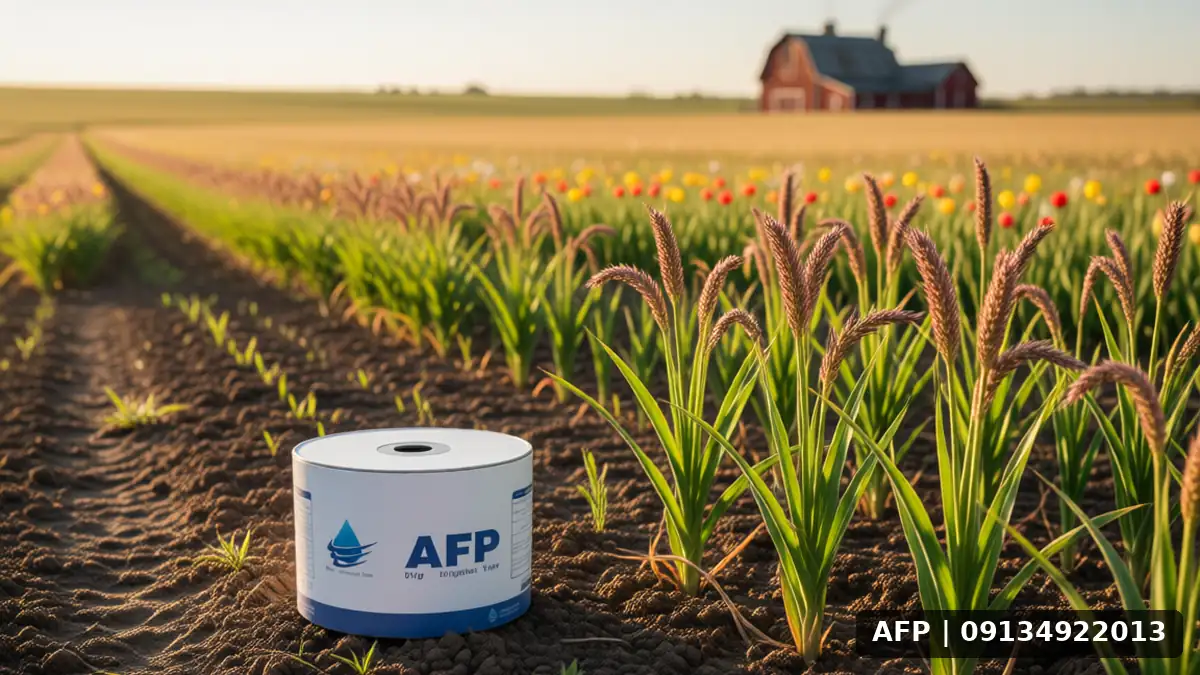
It is recommended that wheat seeds not be planted directly on the line of the typ-tape, as the heat from fertilizer solutions or direct contact with the plastic can damage initial germination. A standard distance of 5 to 10 centimeters from the tape provides adequate space for the development of primary roots. This spacing allows moisture to spread evenly and with aeration in the root zone.
2. Irrigation scheduling
The drip irrigation schedule for wheat must be adjusted based on the plant growth stage. During flowering and grain filling, the plant has its highest moisture requirement. The use of typ-tape allows for light, frequent irrigations instead of heavy watering. This method also prevents root rot. For a better comparative understanding, in Lentil seed rate per hectare has been examined how planting density affects the irrigation system.
3. Fertilizer management in the system
One of the main advantages of drip tape is the ability to apply liquid fertilizer. However, a key prerequisite is using fertilizers with high solubility that do not precipitate. Fertilizer mixing should be done in a separate tank to prevent clogging of the tape emitters. Wheat responds well to moderate fertilization, and fertilizer application via drip tape increases nutrient uptake.
Frequently Asked Questions (FAQ)
Is drip tape suitable for all types of wheat?
Yes, but spacing and flow rate settings must be adjusted according to the wheat variety. Semi-tall varieties may require greater precision in moisture distribution compared to dwarf varieties.
What is the useful life of disposable drip tape?
It is typically used for one growing season (approximately 4 to 5 months). If the quality is low, it may deteriorate earlier.
What is the main difference between this system and surface irrigation?
Flood irrigation wets the entire field area and has high evaporation, whereas drip tape only keeps the root zone moist, improving energy efficiency and weed control.
Conclusion: Final Steps for Success
Implementing drip irrigation with drip tape in wheat cultivation combines technical knowledge, economic management, and precise execution. Key prerequisites include detailed soil analysis, selecting the appropriate drip tape specifications, and staff training. By maintaining the correct planting distance from the drip line and implementing smart fertilizer scheduling, higher performance and reduced water consumption can be ensured. Farmers can gain a more comprehensive approach to farm management by consulting supplementary resources, such as onion seed rates per hectare, and comparing them with sugar beet cultivation. The future of sustainable agriculture begins with these prerequisites.
Related articles: miqdori tuxmi lobia chashmbalbala dar yak hektyar, D8ACD988 D8AFD8B1 seed tonnage per hectare