Drip Tape Irrigation for Maize: Comprehensive Guide
Introduction to Subsurface Drip Irrigation in Corn
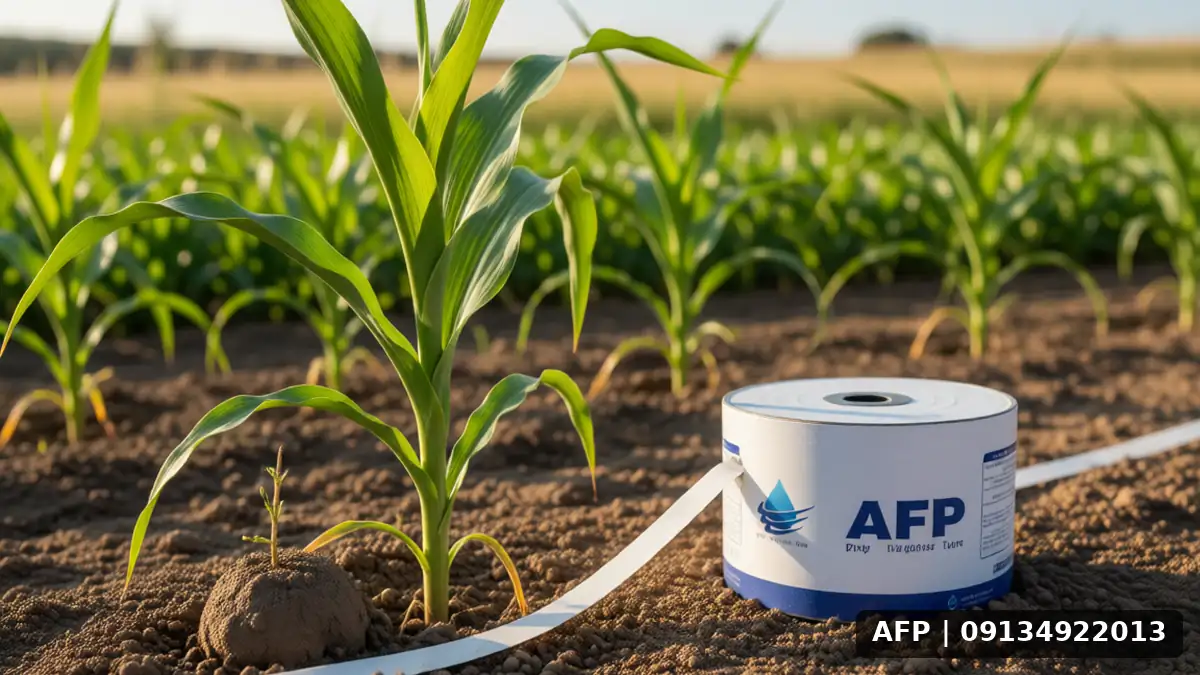
Corn, as one of the world’s most important cereals, has high sensitivity to water stress. Under semi-arid and water-scarce climatic conditions, the use of conventional sprinkler irrigation methods leads to severe resource waste and a decrease in crop quality. Subsurface drip irrigation for corn is an intelligent approach that delivers water directly to the root zone and maintains high bed moisture, thereby maximizing water use efficiency and promoting uniform plant growth. Instead of wetting the entire soil surface, this method moistens only narrow strips below or adjacent to the seeds, resulting in significant water conservation.
This comprehensive guide examines the technical, operational, and economic aspects of this system. It also clarifies the reasons for selecting subsurface drip irrigation for corn through a comparison with other methods. For a better understanding of planting and seeding prerequisites, you can refer to the Bamboo Yield per Hectare or related articles on other popular crops.
Why Corn?
- Corn has deeper roots than small vegetables such as tomatoes.
- Susceptibility to fungal diseases under high moisture throughout the entire soil profile
- High precision in water distribution is required to prevent kernel drop
While specific spacings are recommended for crops such as tomatoes, as described in the article Tomato planting density per hectare the approach for corn differs and requires unique adjustments in the drip tape system.
Technical and engineering principles of the drip tape system
The Drip Tape system, also known as tape irrigation, combines furrow and drip irrigation. In this method, small holes or internal emitters release water in droplets under low pressure from within the plastic tape. This ensures that only a narrow strip of soil, 20 to 40 cm wide, is moistened. For corn, this strip is typically applied in two ways: beneath the seed or adjacent to the plant rows.
Selecting the tape type (single-hole or dual-hole) and hole spacing (Spaciation) is critical. For corn, which grows rapidly, a spacing of 20 to 30 centimeters is generally recommended. This spacing must align with seed planting distance. During planting, the tape is placed in the field simultaneously with seeds using modern planting machines, reducing labor costs.
To better understand the challenges of upgrading similar systems for other crops, it may be useful to study the article on adjusting tape drip irrigation points, although corn parameters differ numerically due to its larger volume.
Optimizing Spacing and Flow Rates in Corn Cultivation
Success Drip Irrigation with Corn Tape This depends directly on the accuracy of flow rate adjustment and planting distance. During active growth stages, corn has the highest water demand. If the tape flow rate is low, roots quickly face water stress. Conversely, high flow rates cause nutrient leaching and increase pump energy costs.
- Selecting flow rates: Typically, a flow rate of 1.6 to 2.4 liters per hour per hole is suitable for corn.
- Planting Spacing: The Row Spacing must be configured so that the seed is placed directly under or next to the drip line.
- Irrigation Amount: It is calculated based on soil water capacity and crop water requirement (Ew), not on a fixed time interval.
Also, seed quality and density affect yield. Although this topic is primarily related to the planting stage, understanding the relationship between seed density and water requirement is important. For example, in crops such as sugar beet where seed density plays a key role in yield, there are similarities with corn that are discussed in the article Sugar beet yield per hectare and influencing factors These management principles are also reflected in corn.
Soil and Nutrient Management (Fertigation)
One of the major advantages of drip tape is the ability to apply fertigation through irrigation water. In maize, the use of nitrogen, phosphorus, and potassium fertilizers from the day of planting to the end of the season is critical. The drip tape system places these nutrients directly within the root zone, enhancing uptake and minimizing waste.
Of course, each crop has its specific requirements. For example, celery also benefits from drip tape systems but with different spacings and flow rates. In the article “Drip Tape for Celery: A Comprehensive Irrigation Guide, Spacings, and Key Points” (and similar links for other vegetables), you can see the differences. In maize, monitoring soil pH and salt deposition along the drip tape is crucial to prevent emitter clogging.
Preventing Drip Tape Clogging
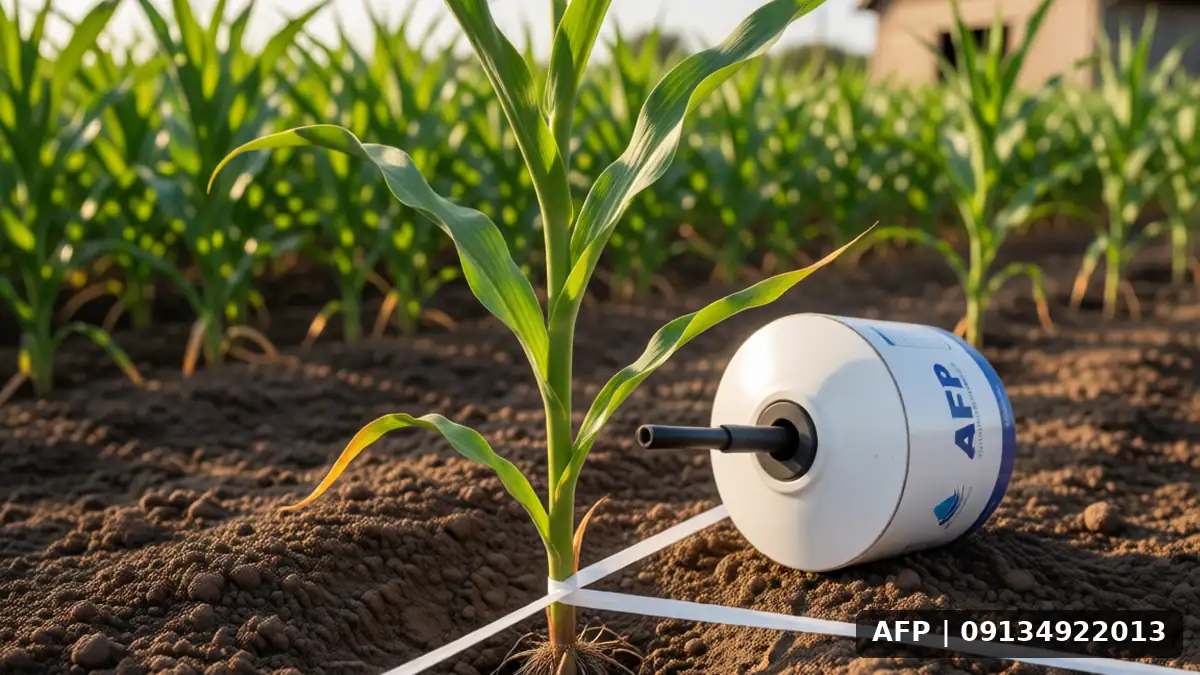
- Use of precision filters at the start of the network
- Periodic flushing of the system with mild acids
- Avoid using solid fertilizers directly in irrigation lines
Practical operational considerations in the field
Proper system execution in the field makes a significant difference in outcomes. Corn is a plant that requires narrow ridges to nourish its deep roots. Therefore, during planting, ensure that the seed is placed at the appropriate depth (typically 5 to 8 centimeters) and the drip line is aligned precisely in a straight line.
Common challenges at the start of the season include pump failures and pressure differences between the beginning and end of the lines. To resolve these issues, it is recommended to use pressure-regulating valves at the end of each line. Additionally, regular monitoring with manual flushing is necessary to ensure uniform flow.
For comparison with other irrigation methods, many farmers initially use surface flooding or other methods. However, for corn, the precision of drip lines outweighs surface methods because it nearly eliminates evaporation loss. The main difference lies in the initial cost, which is recouped within a 3 to 5 year period through water savings and increased yield.
Frequently Asked Questions (FAQ)
Is drip irrigation the same for grain corn and forage corn?
Yes, the general principles of drip strip irrigation apply to corn in both cases, but for forage corn that undergoes multiple cuts, irrigation management must be adjusted based on regrowth. Therefore, the irrigation schedule should not be rigid but rather flexible.
What is the optimal time for installing drip strips?
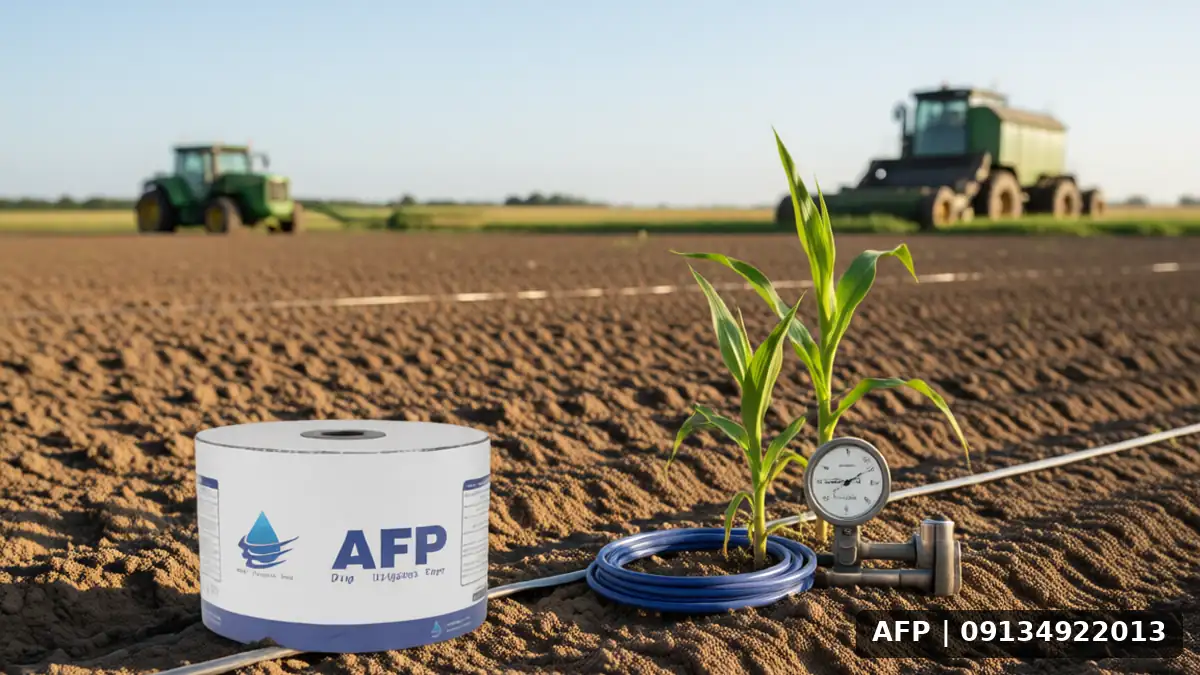
The optimal time is concurrent with the sowing stage. This eliminates the cost of additional labor and ensures planting accuracy. If the system is already present in the field, it must be inspected to ensure that the strips are intact and free of punctures.
Does the drip strip system increase the incidence of root diseases in corn?
With proper management, no. Drip strips moisten only a specific zone, leaving the rest of the soil dry, which limits pathogen development. However, if soil aeration is poor, the risk may increase. Natural aeration and adequate drainage are essential.
Conclusion and Future Outlook
Use of Drip irrigation with tape for corn This method is not just a technical technique, but a paradigm shift in resource management. It relieves farmers from water scarcity concerns, enabling precise and predictable cultivation under harsh conditions. Given global trends, tape drip-irrigated crops have secured their position for major grains such as corn.
To begin, it is recommended that you consult a local irrigation advisor to determine flow rates and emitter spacing based on local soil and water types. Additionally, to expand your knowledge, you can refer to other articles, such as pistachio yields per hectare (a link from a similar product category), to compare crop efficiency. Ultimately, success depends on continuous monitoring, precise adjustments, and flexibility in response to environmental conditions. By investing in this technology, you can preserve the environment while improving the profitability of your corn farm.