Drip Irrigation with Tubing Line in Garlic Cultivation: A Comprehensive Prerequisite Review
Introduction: The Necessity of Upgrading the Irrigation System for Garlic Cultivation
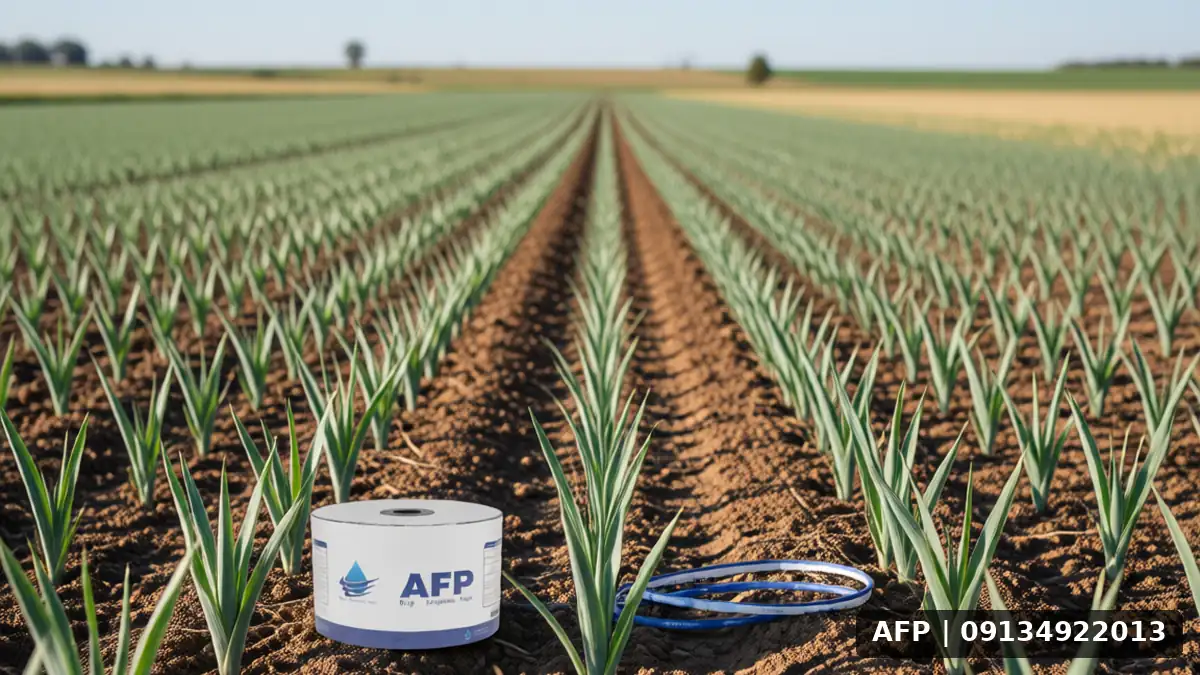
Garlic cultivation, characterized by high economic value and significant biological sensitivity, requires precise management of water and nutrient resources. Under current conditions of water scarcity, the adoption of modern precision irrigation systems, particularly drip irrigation using tape lines, has evolved from a luxury option into a strategic agricultural necessity. This method not only drastically reduces water consumption but also significantly enhances final yield quality and quantity by enabling precise nutrient management. However, achieving these goals requires a thorough understanding of pre-requisites and adherence to technical principles prior to planting; a critical step outlined step-by-step in this article. Modern farmers must account for environmental and soil variables to prioritize resource optimization and prevent the waste of energy and nutrients. Consequently, implementing tape-line drip irrigation for garlic without a deep understanding of the crop’s root and hydraulic mechanisms can lead to serious economic losses.
Technical Evaluation of Suitable Tape Lines for Garlic
Selecting Tape Line Technical Specifications Based on Root Depth
Garlic is a crop with shallow to medium-depth roots; consequently, the installation depth of the drip line plays a decisive role in its performance. Selecting a 20-centimeter drip line can be a standard option, particularly when cultivated in light to medium soil beds. This spacing allows excess drainage to occur between the main roots, preventing bulb neck rot. Conversely, in heavy, cohesive soils, using longer drip lines may lead to moisture accumulation and fungal diseases. Therefore, before purchasing equipment, soil texture analysis and determining the optimal depth are considered the first strategic steps. An accurate understanding of soil structure, achieved through soil physical tests, helps the farmer make correct decisions regarding the type and dimensions of the drip line. Additionally, considering soil infiltration coefficients at different times of the year can be effective in adjusting the irrigation schedule.
Technical Combinations with Drip Systems
Drip lines are not necessarily used independently; they are often installed alongside or on top of drip systems to optimize the distribution of water and nutrients. Understanding the differences between various irrigation systems helps farmers determine which technical combination best aligns with current farm conditions. In many garlic fields, the drip line acts as a surface distribution tube, facilitating water flow from the dripper location toward the roots. This simultaneous combination ensures that moisture in the Root Zone is distributed uniformly, preventing surface salinization.
Prerequisites for Land and Bed Preparation
Surface Grading and Precise Leveling
One of the most critical prerequisites for drip irrigation in garlic cultivation is having a uniform and compact field surface. Drip tape lines function linearly, and any depressions or protrusions cause water to pool unevenly. Therefore, appropriate grading and leveling must be performed using laser or more precise equipment. This step must be completed before planting to prevent roots from developing in uneven conditions. Laser leveling, particularly in large-scale farms, ensures high accuracy and maintains constant pressure throughout the length of the drip tape lines. Even surface variations of a few millimeters can lead to uneven water distribution and, consequently, differences in plant growth, which is not insignificant for delicate crops like garlic.
Row Layout Planning
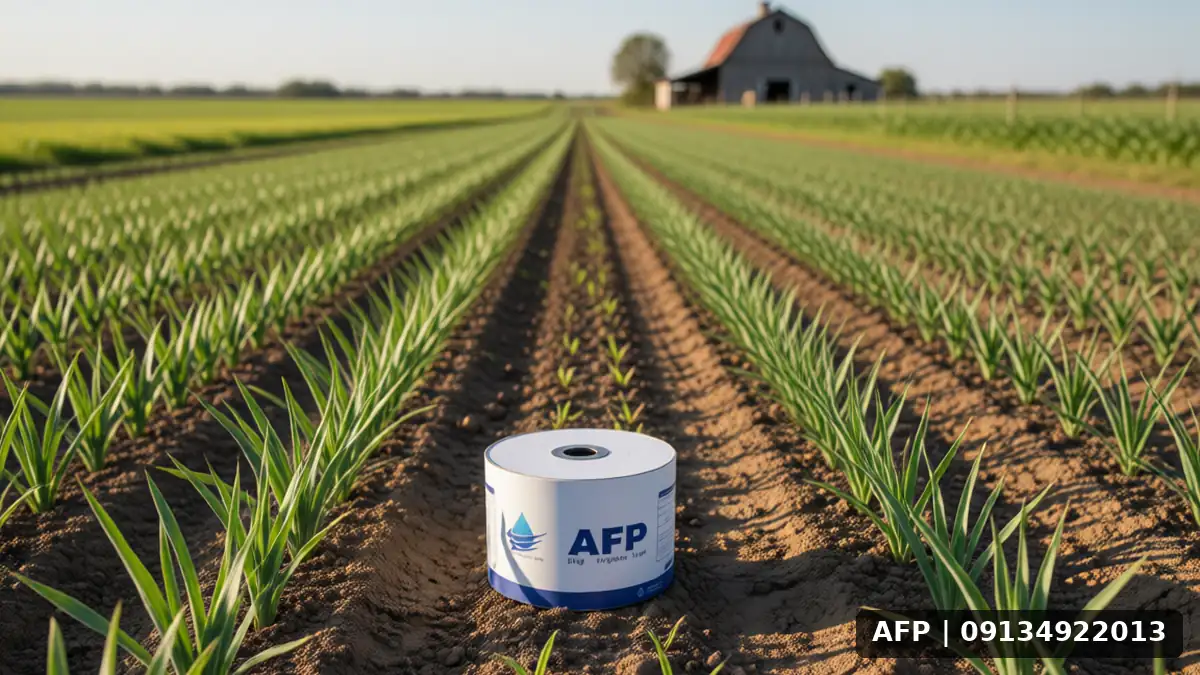
Garlic planting layout with drip tape systems requires standard spacing between rows. Optimizing row spacing is important not only for plant requirements but also for the passage of the tape and access to it. Check Row conditions with a spacing of 40 to 50 centimeters may be the best option for allowing the passage of drip tapes. If the spacing is narrower, the risk of the tape being compressed or damaged during subsequent operations increases. Conversely, spacing that is too wide reduces the coverage efficiency of the tape along the line. Additionally, seed quantity per hectare must be coordinated with the row layout to ensure plant density reaches a level where drip tape coverage is optimized and competition for water and light is prevented. This coordination between layout and density is the key to achieving maximum crop yield.
Practical points and proper system execution
Pre-installation tests
Before fully connecting the tape, the output pressure and flow rate must be checked. Many growers overlook the importance of adequate pressure volume per hectare and assume that the central system pressure is already set. If the pressure at the end of the lines is low, the drip tape will not function properly and water will not disperse. As a result, a 10-minute pressure test is essential to ensure uniform flow. This test should be conducted under full system load conditions. Additionally, inspecting for potential leaks at technical joints and valves before burying the tape prevents water loss and maintains system efficiency throughout the season. Documenting the results of these tests will also be useful for comparing system performance in the following season.
How to Connect and Secure the Tape
Drip tape is usually connected to manifolds using specialized connectors. Weak connections lead to leaks and the accumulation of silt and debris. It is recommended to inspect connections after the first 48 hours. Also, be careful that drain water is not discharged back onto the tape. Covering the surface with clear plastic or straw can help prevent soil splash and maintain surface moisture. Using appropriate straw mulch or plastic mulch, in addition to protecting the tape from climatic factors, helps reduce weed growth and regulate soil temperature. This covering should be applied in a way that it does not hinder proper soil ventilation on hot days to prevent soil compaction.
Frequently Asked Questions (FAQ)
Is drip tape sufficient on its own?
No. Drip tape acts as a distribution channel and usually requires an incoming water source (drip or sprinkler) for garlic cultivation to disperse water along the length of the tape. Without a primary source, the tape will remain empty.
How does drip tape perform in cold seasons?
Garlic is a plant grown during cold periods. Under these conditions, drip tape prevents surface water accumulation and root frost. The drainage capacity of drip tape is a positive attribute in cold climates.
What is the maintenance cost of drip tape?
Drip tape is a highly durable piece of equipment. Major costs are related to replacement in case of damage and annual cleaning. It requires very little maintenance, and compared to other irrigation systems, its repair and maintenance costs are low.
What is the difference between drip tape and drip tubing?
Drip tubing has internal emitters that release water drop by drop. Drip tape is a hollow channel that discharges water in a diffused manner along its length. The combination of these two creates the optimal condition for garlic.
Conclusion: A step towards precision farming
Using drip irrigation with drip tape in garlic cultivation is not just a change in technique, but a transformation in agricultural philosophy. By providing clear prerequisites from soil preparation to pressure adjustment, this method allows the farmer to gain more benefit from water and fertilizer resources. By adhering to the principles introduced in this article and correctly using equipment such as standard drip tape, it can be expected that not only will the required water volume decrease, but the quality of the produced garlic will also reach its highest level. This initial investment will be recoverable in the long term through improved yield. We recommend consulting with local experts and conducting small-scale trials before any implementation to ensure that the selected system is compatible with your specific climatic and soil conditions. Also, study related technical articles regarding Adaptive drip tape It can provide you with useful supplementary information. Ultimately, consistent monitoring of system performance and regular adjustments are key to the sustainability and continuity of this innovative method in your farms.
Related articles: harisnoqi i juvi shashparra dar yak hektor, Direct irrigation of agricultural land: advantages and disadvantages, Price of 20 cm drip line