Drip Irrigation via Tuber in Melon Cultivation: Key Technical Considerations
Introduction: Why Drip Tape for Melon?
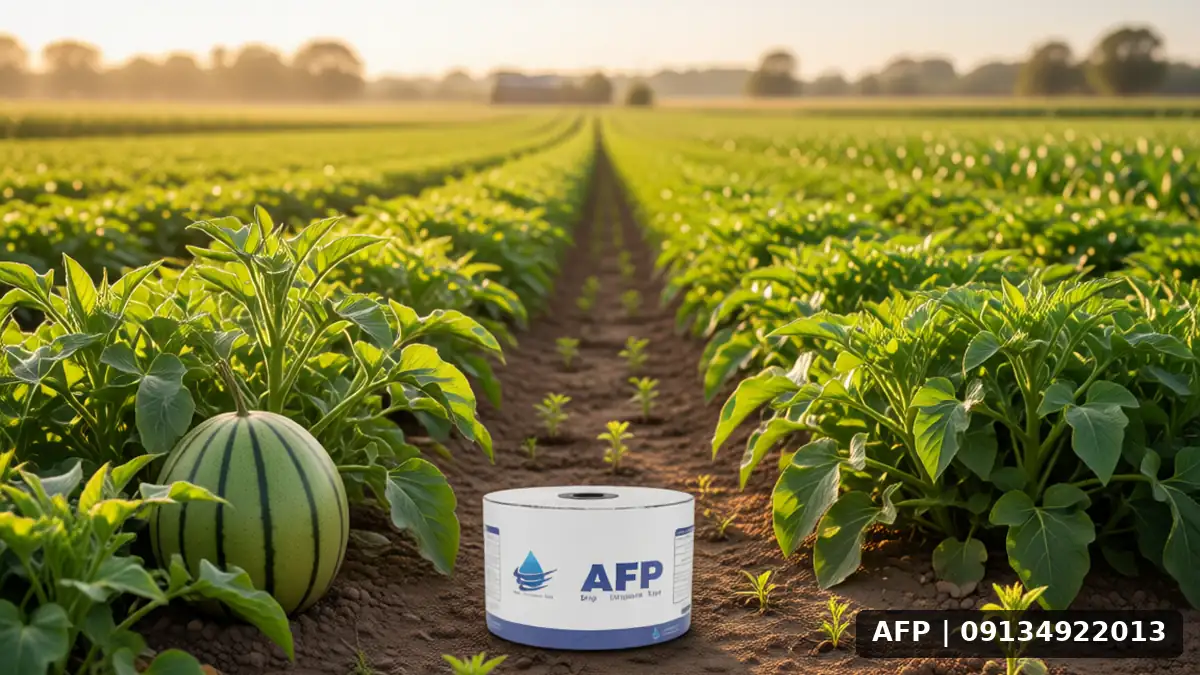
Melon cultivation in Iran’s hot and semi-hot regions requires precise management of water and plant nutrition. As a crop sensitive to water and salt stress, melons primarily develop their root systems in the upper soil layers, necessitating regular and gentle irrigation. Conventional irrigation systems, such as furrow irrigation (flach), not only cause waste of water and energy but also promote weed growth and increase relative air humidity, thereby exacerbating fungal diseases in melons.
On the other hand, standard drip irrigation (using separate drippers) is costly and requires individual component maintenance. In this context, Drip Tape Irrigation (Drip Tape) is the ideal option, combining the precision of drip irrigation with the ease of tape application. Drip tape is a thin, lightweight tube equipped with micro-slit orifices or internal drippers, placed directly adjacent to the plant roots. This method is highly efficient for row-cropped plants such as cucumbers, tomatoes, and melons.
Identifying Technical Specifications of Suitable Drip Tape for Melon
Selecting drip tape with appropriate specifications is the first step toward successful irrigation. Due to melons’ wide root structure and sensitivity to waterlogging, the crop requires tape with closely spaced orifices and low discharge rates. The following are the key technical features:
- Pipe diameter: Typically, drip tapes with an internal diameter of 13 to 16 millimeters are recommended for light crops such as melon. Thicker pipes may not cause excessive pump overload but offer less flexibility for row curvature.
- Emitter spacing: A standard 20-centimeter spacing is the best option for melon. This spacing creates a continuous moist band beneath the soil surface, protecting the roots from dryness.
- Flow rate per emitter: Flow rates of 2 to 4 liters per hour (L/h) are ideal for this crop. High flow rates may cause water to drip from the emitters, creating dry spots, or even cause excessive leaching of nutrients from the root zone.
- Clog resistance: Drip tapes are prone to clogging. The use of appropriate filters (80-120 mesh) and flushing valves at the end of the lines is indispensable.
To better understand how emitters function and their impact on water distribution in the soil, studying the characteristics and properties of drip tapes can provide deeper insight.
Key points for installation and execution of the system
The correct installation of the drip tape system determines more than half of its useful life and efficiency. In watermelon cultivation where plants grow rapidly, adhere to the following principles:
- Number of tapes per row: For watermelon, usually 1 to 2 drip tapes are used per row. If the row spacing is 80 to 100 cm, two tapes spaced 30 to 40 cm apart along the row line provide the best root zone coverage. If rows are narrower, one tape with a higher flow rate or a higher emitter density is sufficient.
- Placement method: Place the tape flat and untwisted under or beside the seed. If transplants are sown early, place the tape 5 to 10 cm away from the sowing line to avoid damaging initial roots. As the plant grows, roots will be attracted toward the tape.
- Water consumption and pressure: Drip tapes require lower pressure than pressure-compensating emitters, but pressures exceeding 3 bar can damage the tubing. Use low-energy, appropriate pumps.
Irrigation and Fertigation Management with Drip Tape
One major advantage of drip tape is the ability to deliver fertilizer with irrigation water (Fertigation). Melon is a crop sensitive to nitrogen, calcium, and magnesium nutrition. With drip tape, you can deliver fertilizer directly to the root zone, maximizing uptake.
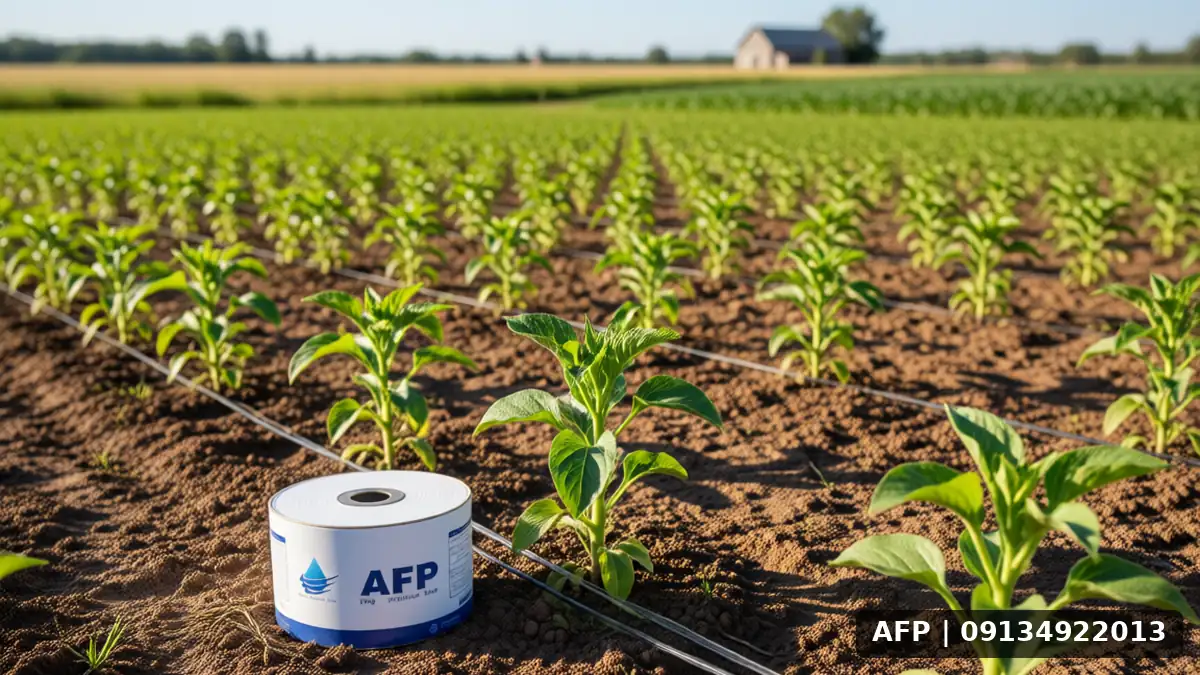
- Irrigation Timing: Melon has different water requirements at different growth stages. During the seedling stage, less water is needed to prevent seed rot. As the crop reaches the fruiting stage (4–6 weeks after planting), water demand peaks, and irrigation must be regular and of sufficient volume to prevent fruit cracking.
- Water Volume: Rather than relying on exact calculations based on ETc, a good rule of thumb for melon drip tape is that each drip tape requires an average of 5–10 liters of water per irrigation cycle on hot days. Adjust this amount based on soil type. In sandy soils, frequent, low-volume irrigation (e.g., twice a day) is preferable to a single, heavy irrigation.
- Salinity prevention: The drip line concentrates salts around the emitters. To prevent salt accumulation and root damage, you must periodically run the system with a high volume of water (flushing) to move salts out of the root zone. This is typically recommended every 10 to 15 irrigations.
If you are looking for complementary methods to reduce evaporation and increase moisture near the roots, you can also explore subsurface irrigation methods for the plants, although the drip line is a surface method but is highly efficient.
Common challenges and practical solutions
Success in melon drip irrigation requires attention to detail. Here we address common challenges:
- Emitter clogging: The most common issue with drip lines. Always use fine-grade disk filters (120 mesh). Also, flush the system nightly with clean water. If you are using well water with chlorine, be cautious of chlorine precipitates.
- Damage to the drip line by animals or tools: Birds and rodents may damage the tape. Covering the tape with a small amount of dry soil or using more durable tubing can help. When mowing, always use plastic or safety blades.
- Uneven water distribution: If pressure is low at the end of the tape, water will not emerge properly from the slots. To compensate, instead of laying the tape in a spiral pattern for long rows, run it from both sides toward the center in a U-shape to ensure uniform pressure. Also, consider the field slope; on steep slopes, air pressure is higher and the flow rate from initial slots may decrease (unless the tape is pressure-compensating).
Frequently Asked Questions (FAQ)
Is drip tape suitable for melon cultivation?
Yes, considering the lower cost of drip tape compared to permanent drip emitters, it is highly economical for temporary crops such as melons. However, be sure to collect and store it for the following year unless it is worn out.
What should be the distance between the drip tape and the melon stalk?
At planting time, place the tape 5 to 10 cm from the seed location. As the plant grows, the stalk and leaves expand, but the roots grow toward the tape. If the distance is too short, the initial roots may be damaged.
How long can drip tape be used?
The useful life of drip tape is typically 1 to 2 years. Direct sunlight exposure and bending cause the tube to become translucent and brittle. Therefore, long-term use is not recommended unless the tube is of exceptionally high quality and is protected from direct sunlight.
Conclusion
Using drip irrigation with drip tape in melon cultivation is a smart solution for modern farmers. This system creates high value-added by reducing water consumption by 30 to 50 percent, increasing fertilizer efficiency, and improving crop quality. The key to success lies in selecting drip tape with 20-centimeter emitter spacing and an appropriate flow rate, correctly installing the tape in the root zone, and consistently managing flushing and filters.
To expand your knowledge on selecting irrigation methods, you can consult the guide on Types of drip irrigation tape to help you choose the best option for your specific farm conditions. Additionally, if you are looking to compare with other products, reading the related article on cucumber cultivation can provide similar insights for plants in the Cucurbitaceae family.
Related articles: saffron seed quantity per hectare guide, obyorii ruizamini, Clover D8AFD8B1 seed quantity per hectare