Comprehensive Guide to Selecting, Installing, and Optimizing Drip Irrigation Systems in Sustainable Agriculture
Optimal water resource management in modern agriculture remains a fundamental challenge for growers and agricultural engineers. Given the repeated droughts, the decline in surface water resources, and population growth, the transition from traditional irrigation methods (such as furrow or sprinkler irrigation) to precision drip irrigation systems has evolved from an option to an unavoidable necessity. The drip irrigation system delivers water and nutrients directly to the root zone, minimizing losses due to evaporation, deep percolation, and surface runoff, and increasing water use efficiency by up to 90%. However, the key to the success of this system lies not only in purchasing equipment but in correct hydraulic design, the selection of quality materials, and the proper execution of installation and maintenance. In this comprehensive guide, we will examine all technical and operational aspects of this system, from initial calculations to the daily management of troubleshooting and repairs. The method of selecting the appropriate drip irrigation tape is the first and most critical step, which we will address next.
Technical fundamentals and hydraulic design principles
Every stable drip irrigation system is based on precise hydraulic calculations. The first step is determining crop water requirement (ETc), which is calculated based on the crop coefficient, regional climate, and growth stage. Subsequently, the drip emitter discharge rate, emitter spacing, and lateral line length must be determined to maximize water distribution uniformity (disunity). Using the Hazen-Williams equation to calculate pressure loss in laterals and determining flow discharge through the discharge-rate relationship are fundamental design principles. A common mistake is ignoring land slope when determining pump operating pressure and the number of main lines. On sloped fields, if the slope is not properly accounted for, pressure increases at the downstream ends of laterals and decreases at upstream points, resulting in significant maldistribution of water. Types of drip irrigation systems Based on pipe material (PVC, PE, or polyethylene tubing) and the method of connection to the main network, each type has specific application ranges and benefits that must be selected according to budget and climate conditions.
Selection of high-quality equipment and consumable materials
The useful life and performance of the system are directly linked to the physical and chemical quality of the drippers and drip lines. High molecular weight polyethylene drip lines with additives resistant to ultraviolet (UV) radiation and oxidation are the standard choice for durability across multiple growing seasons. For drippers, the difference between pressure-compensating (protector) and pressure-constant (Percos) systems is critical in terms of water distribution accuracy; pressure-constant systems offer greater stability in longer lines or on slopes. Since leaks and minor tears in drip lines can incur unrecoverable costs, selecting drip lines certified to the ISO 16765 standard is essential. Methods for extending the useful life of drip lines will be explained in subsequent sections, based on proper maintenance principles. Additionally, the material of connections and flanges should be made of corrosion-resistant materials that are compatible with the main line to avoid creating mechanical weak points.
Key Points in Proper Installation and Setup
Although the design on paper may be complete, proper execution in the field is the final determining factor. The first rule of installation is the absolute cleanliness of the soil bed; any presence of mud, gravel, or roots of invasive plants can cause the line to break and clog the drippers. The connection of drip lines to the main laterals must be done using specialized clamps and standard flanges to prevent mechanical stress and leaks at connection points. The spacing between consecutive drip lines must be precisely adjusted according to the plant’s primary rooting depth and the recommended wetting front by the climate advisor. In crops sensitive to water stress, such as cucumbers, precise adjustment of input flow rates and installation of multi-stage filtration (screen, disc, and media filters) are inherently necessary. Comprehensive Guide to Drip Irrigation for Cucumbers It details the specific technical requirements for this sensitive crop. Additionally, engineers strongly recommend installing a test tap at the beginning of each tape line to check flow uniformity and measure static pressure.
Filteration management and prevention of dripper clogging
Dripper clogging is the major operational issue in drip systems, leading to reduced irrigation efficiency and plant stress. This clogging can be physical (calcium and magnesium deposits), biological (algae and microbial biofilms), or chemical (suspended particles and silt). The central filtration system must be designed based on the total suspended solids in the water source, using screen filters (standard mesh size 120 to 150) and disc filters. Standard preventive measures include periodic flushing of the lines at high flow rates and pressures at the start of the season, and the injection of chlorine and hydrochloric acid into the water to control biological and physical clogging. Cleaning water reservoirs and staged maintenance of media filters are prerequisites for optimal performance. Attention to water source pH and hardness is fundamental in preventing physical deposits, and water chemistry adjustment through the injection of appropriate chemicals is recommended when necessary.
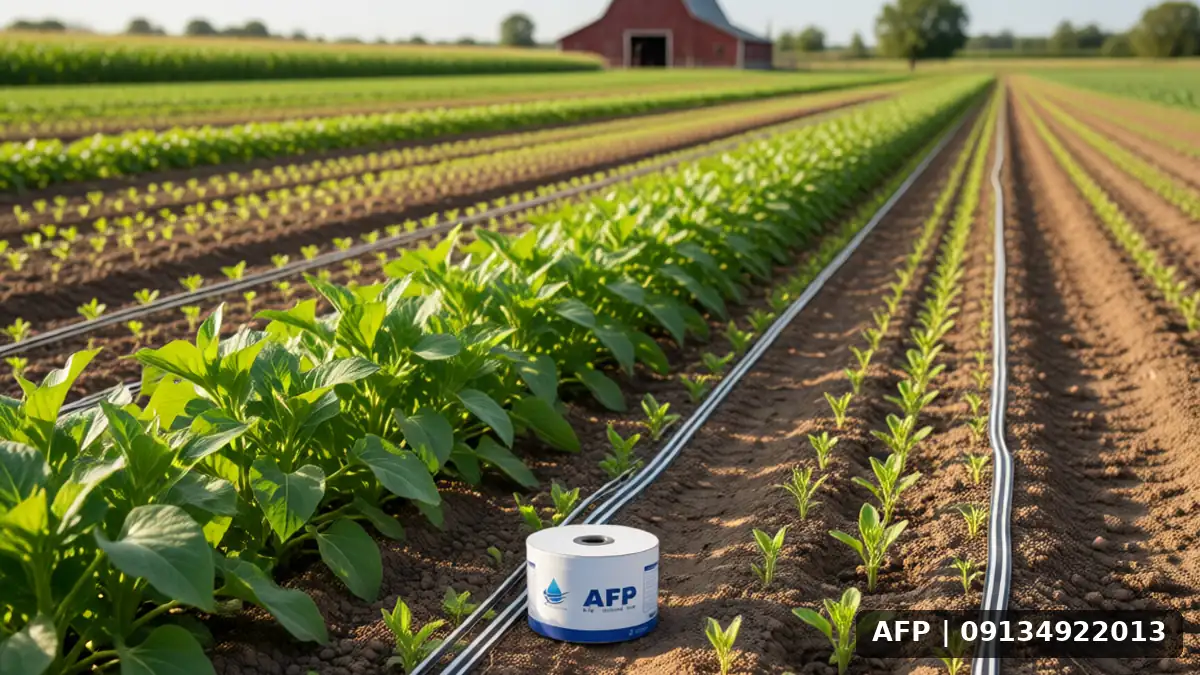
Planting and irrigation management based on crop requirements
Effective cropping with drip irrigation is scheduled based on local timing and meteorological data. Irrigating during peak evaporation hours (noon to 3:00 PM) increases evaporative losses from leaf surfaces and may exacerbate fungal diseases; therefore, irrigation in early morning or evening hours is recommended. Irrigation volume and frequency must be calculated based on meteorological data, soil moisture (measured using primary methods such as a moisture meter or gripe test), and the plant growth stage. For major crops such as soybean, the precision of final irrigation scheduling prior to harvest directly impacts seed quality and oil percentage; excessive irrigation during the seed maturation stage causes rot and reduces commercial quality. Soybean seed rate per hectare and sowing points A useful guide source for cropping and water variables in this section. Additionally, the use of automation systems with timers and soil moisture sensors significantly increases the precision and efficiency of this process.
Costs, economic yield, and periodic maintenance
The initial investment in drip irrigation systems is higher compared to conventional methods (spray or rain), but the long-term economic yield is recoverable due to reduced water losses, increased fertilization efficiency (fertilization with water), and decreased labor requirements for irrigation. With accurate return-on-investment calculations, it is clear that after two to three years, operational costs become more economical than conventional methods, and the payback period in large-scale plots is typically three to five years. Periodic maintenance, including filter cleaning, high-pressure flushing of lines, repair of broken components, and replacement of worn connections, is essential. The use of retractable drip tapes in certain crop and grain plantations enables collection, drying, and storage strategies for the tapes, extending the useful life of the material by up to five times. Retractable Drip Tape Guide This section covers the practical and operational details. Additionally, documenting the history of troubleshooting and repairs is essential for optimizing future performance.
Conclusion and Future Outlook
Drip irrigation is not just a piping system; it is a smart system for managing water, fertilizer, and energy resources. Its success results from the synergy of irrigation knowledge, botany, soil science, and mechanization. Adherence to technical principles in design, installation, and maintenance guarantees production sustainability and reduces human error. Given the high sensitivity of water resources and climate requirements, the transition from conventional methods to drip irrigation is not just an economic choice but a climatic and ethical necessity in sustainable agriculture. Ultimately, investing in farmer training and utilizing major technologies such as the Internet of Things (IoT) for real-time monitoring of water and soil status is the key to a future-oriented and dynamic approach to this technology.
Related and Supplementary Content: