Drip Irrigation in Sorghum Cultivation: Comparative Analysis, Practical Guidelines, and Comprehensive Handbook
Introduction to Nodal Irrigation in Sorghum Cultivation
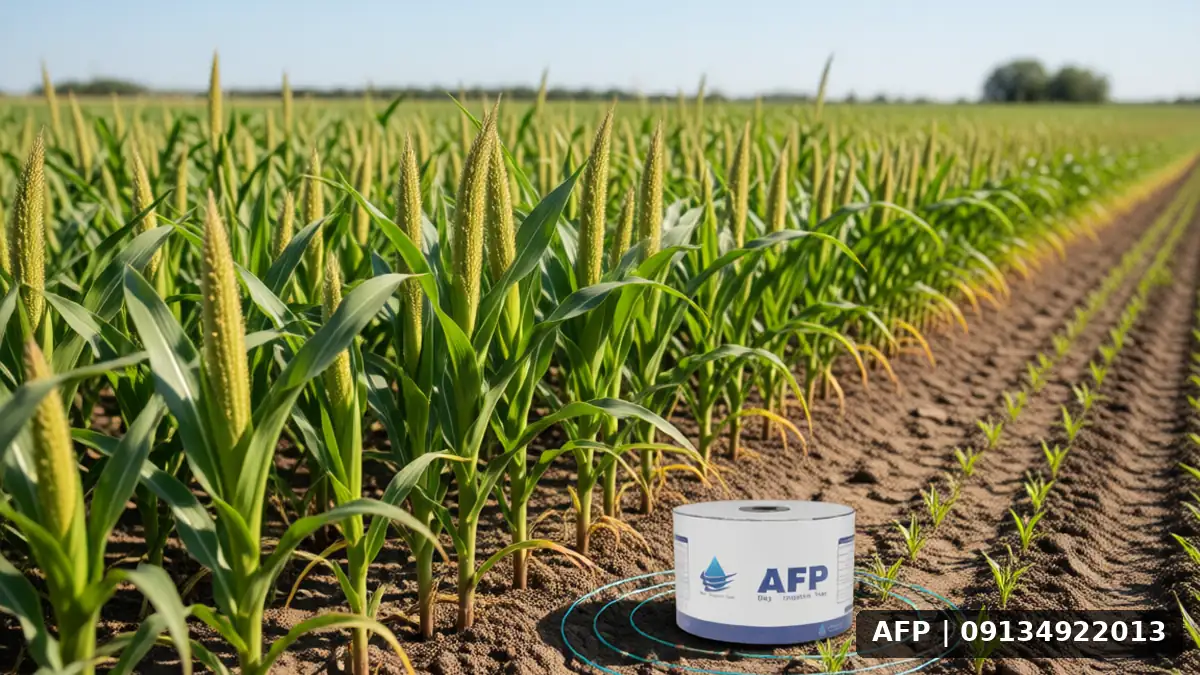
Sorghum is one of the most important grain and forage crops, attracting the attention of farmers due to its relatively high resistance to drought stress. However, proper water management is essential to achieve maximum yield. Nodal Irrigation (Nodal Irrigation) is an advanced method where water is delivered in a controlled manner to plant roots through nodes connected to the main irrigation pipe. This method is widely used in row crops such as sorghum, as it optimizes water distribution within the root zone and reduces water leakage to deeper soil layers.
In contrast, the Tipe Line or Lintie method, in which thin pipes are laid along the crop rows, is more common. Comparing these two methods helps farmers make a better selection based on regional conditions, soil type, and budget. In this section, we become familiar with the technical principles of both methods and then examine the implementation details.
Technical Comparison of Nodal and Tipe Line Irrigation in Sorghum Cultivation
To better understand the differences, the following table provides a comprehensive comparison between the two methods. This table is organized based on technical parameters such as outlet flow rate, water distribution, and installation and maintenance costs.
Key points about sorghum: The sorghum plant has a deep and complex root system. With the node method, adjusting the spacing between nodes allows water to be placed precisely at different root depths. This offers a significant advantage in soils with low water-holding capacity, such as sandy soils. In contrast, drip line usually distributes water at shallower depths, which is ideal for germination but may require finer adjustments during the vegetative growth stage.
One of the main challenges in Sorghum yield per hectareis managing water stress during the sensitive flowering period. The node method, due to its ability to deliver water at lower and intermittent flow rates, can reduce plant stress during this period. However, it requires very high water purification to prevent clogging of the nodes.
Impact on water consumption and efficiency
Research shows that in dry climatic conditions, node irrigation can save up to 20 to 30 percent of water compared to conventional strip drip methods, provided that the node system is correctly calibrated. This saving results from reducing evaporation from the soil surface and concentrating water in the root zone. Although sorghum is drought-resistant, it requires regular irrigation to produce high-quality grain. Therefore, the choice of irrigation method directly affects both grain quality and quantity.
Practical and operational points in installation and operation
Correct implementation of node irrigation requires adherence to specific technical details. Below, we review the most important of these points.
- Soil analysis and emitter selection: Before purchasing, determine the farm soil type (sandy, clayey, loamy). Different emitters have varying flow rates and infiltration radii. For low-permeability clayey soils, emitters with lower flow rates and shorter infiltration radii are more suitable.
- Emitter spacing: Emitter spacing for sorghum cultivation is typically set between 50 and 100 cm. This spacing must align with seed row spacing. If seed rows are irregular, irrigation coverage will not be uniform.
- Filtration and purification system: Due to the sensitivity of emitters to suspended particles, using a screen filter with a mesh size of 100 microns or less is mandatory. Additionally, an ASU (water softener) is recommended to reduce chemical deposits.
- Irrigation scheduling based on ET: Use the local reference evapotranspiration (ET) calculation and adjust irrigation volume and timing based on sorghum crop requirements at each growth stage (germination, vegetative, flowering, maturity). Sorghum is most sensitive to water stress during the flowering stage.
In addition, system maintenance is important. Cleaning nodes after each season or upon observing a decrease in output flow is essential. In the drip line method, cleaning via flush valves and opening the end of the line is simpler, but in the nodal method, it may be necessary to replace or mechanically clean clogged nodes.
Cost Optimization
Although the initial cost of the nodal system is higher, in the long term, it may be economically justified due to reduced water and energy consumption (because of the need for lower pressure compared to some high-pressure systems). Farmers can use drip lines as an alternative or complementary option at different field levels to create combined systems based on root depth.
Frequently Asked Questions (FAQ)
Is nodal irrigation suitable for all sorghum varieties?
Yes, but node settings must be adjusted based on the root depth of the sorghum type (grain or fodder). Fodder sorghum typically has a larger root system and may require nodes with higher flow rates to ensure adequate soil wetting depth. In contrast, for grain sorghum, precise water control in the deep root zone is more critical.
How can I identify clogged nodes?
Uneven water output from nodes and dry spots appearing between rows are primary indicators. Additionally, an increase in system input pressure without a corresponding change in output flow rate may indicate sediment accumulation in the nodes. In such cases, backflushing or replacement of clogged nodes is required.
Can I use a combination of node and drip line systems?
Using a combined system is possible but increases installation complexity. It is generally recommended to select one method for the entire farm unless climatic or soil conditions differ across sections. In such cases, drier sections can benefit from the node system due to its superior deep soil wetting capability.
To better understand the relationships between other cropping variables, study of clover seed rate per hectare can be useful. Although sorghum differs from clover, the principles of managing planting density and its relationship with irrigation interval are very similar when selecting node spacing. Sorghum planting density should be coordinated with row and node spacing to prevent competition for water among plants.
Conclusion and Final Recommendations
Choosing Between Subsurface Drip Irrigation in Sorghum Cultivation and the T-line method is a technical decision that must be based on water resources, soil type, and production goals. Subsurface drip irrigation offers greater advantages in deep water distribution and saving limited water resources, but it is more sensitive to water quality and requires more precise maintenance. The T-line method is a reliable and simpler option for initial setups and farms with soils of medium permeability.
Farmers are advised to conduct small-scale (pilot) trials before large-scale implementation and to record soil moisture performance at various depths using moisture sensors. This helps optimize emitter spacing and irrigation scheduling. Additionally, paying attention to factors affecting sorghum yield such as irrigation management, shows that irrigation quality directly correlates with profitability.
Ultimately, investing in precision irrigation systems such as drip can enhance farm sustainability in the long term. By following the principles outlined in previous sections, such as proper filtration and planning based on ET, the full potential of these methods in sorghum cultivation can be realized.
Summary of Immediate Actions
- Soil analysis and selection of appropriate drip emitters or laterals
- Installation of robust filtration system (100-micron mesh)
- Adjusting emitter spacing based on seed row spacing
- Regular monitoring of discharge flow and system pressure
Related Topics: quinoa tuhmi dar ghektar