Drip Irrigation for Parsley: The Complete Technical Guide
Introduction to the Importance of Water Management in Parsley Cultivation
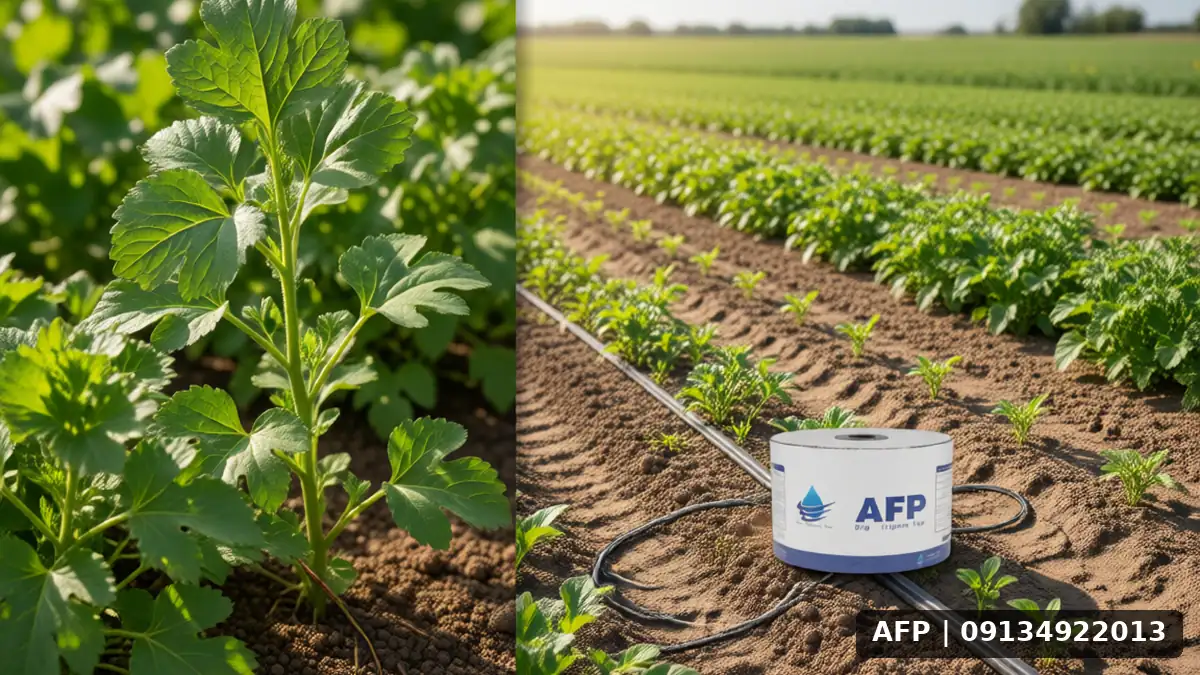
Parsley is a medicinal and culinary crop grown in Iran with high demand in domestic and export markets. A major challenge in cultivating this plant is the precise management of water resources. Because parsley has shallow roots and a delicate vascular system, over-irrigation or severe water deficiency can cause significant yield loss. In these conditions, drip irrigation as one of the most advanced irrigation technologies, plays a vital role in improving product quality and increasing water use efficiency.
Using drip tapes and emitters ensures that water reaches the root zone directly and minimizes evaporation from the soil surface. This method not only reduces water consumption by 40 to 60 percent but also prevents weed growth outside the irrigation band. The following section examines the technical and practical details of implementing irrigation systems for parsley.
Characteristics of Parsley Suitable for Drip Irrigation
Success in any irrigation program requires an understanding of the plant. Parsley (Petroselinum crispum) requires consistent moisture. Significant fluctuations in moisture can cause stem splitting and reduce harvest quality. Drip systems with appropriate emitter spacing (usually 20 to 25 centimeters) ensure uniform water distribution. This characteristic keeps the Wetted Zone active within the main root depth of parsley (approximately 30 to 45 centimeters).
- Root depth: Parsley roots are shallow; therefore, the drip line must be installed at a shallow depth on or just below the soil surface (if possible).
- Salt tolerance: Parsley is highly sensitive to waterlogging. Drip irrigation at set intervals prevents the formation of waterlogged conditions.
- Disease reduction: Keeping the crowns and leaves dry significantly reduces the spread of fungal diseases such as powdery mildew and Phytophthora.
For a better understanding of irrigation management in similar leafy plants that require shallow rooting, you can refer to the Drip Line Irrigation Guide for Pepper as similar principles apply to root zone moisture management in both crops.
Installation and Design of Drip Tape System for Parsley
Proper design of the drip tape system is the first step in improving irrigation efficiency. For parsley cultivation, the distance of the drip tapes from the edges and between each other must be adjusted based on the plant spacing. Typically, parsley planting spacing within rows is around 35 to 40 centimeters. The drip tape should be positioned so that the wetted zone is located directly beneath the plants and slightly forward to ensure the roots can access the water.
- Pipe Diameter Selection: Tape pipes with diameters of 16 or 22 millimeters are selected based on the length of the water lines.
- Emitter Spacing: A 20-centimeter spacing is ideal for parsley to ensure uniform distribution.
- Flow Rate: Drip rates of 2 liters per hour are suitable for young plants, while 4 liters per hour is appropriate for plants in the vegetative growth stage.
The importance of selecting high-quality tape drip lines cannot be overlooked. High-quality lines have greater resistance to clogging and degradation. In Articles related to advanced tape drip lines, the technical details of various filterable tapes are mentioned, which is useful for making appropriate selections in sensitive crops.
Irrigation schedule for parsley at different growth stages
The amount and timing of irrigation should not be fixed; rather, they must be adjusted according to the plant’s growth stage. Parsley typically requires 60 to 90 days to reach main harvest. The following is a recommended pattern that should be modified based on climatic conditions and soil type:
It is important to calibrate soil moisture using a soil moisture sensor or by hand-feel method. Dill soil should always be moist but not wet. If the soil appears clumped and sticky, there is a risk of waterlogging.
Fertigation in Drip Irrigation Systems
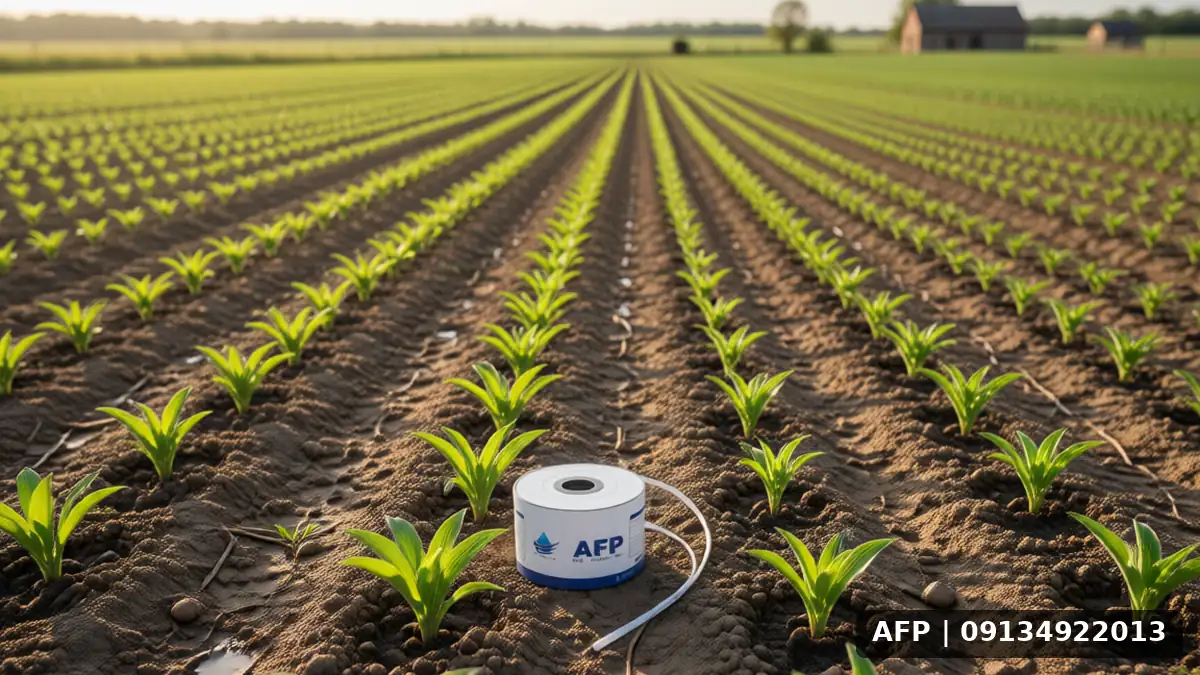
One of the major advantages of drip irrigation for dill is the possibility of fertigation. By combining soluble fertilizers with irrigation water, plant nutrition can be delivered precisely to the root zones. Dill is sensitive to micronutrients such as iron and magnesium. Using foliar sprays of boric acid + zinc and EDTA iron is highly effective for preventing nutritional deficiencies. For example, to compare with other plants and better understand the fertilizer needs of leafy plants, refer to Factors increasing dill yield per hectare consultations that herbal and leafy plants have similar principles in their nutritional requirements.
- Nitrogen: Increase the nitrogen dose during the vegetative growth stage.
- Potassium: To improve fruit quality and shelf life, emphasize potassium during the final weeks of growth.
- Acidity: The pH of the mixed solution should be between 5.5 and 6.5.
Practical tips and troubleshooting for drip irrigation systems
In daily parsnip drip irrigation operations, there are several key points that can prevent system failure or yield reduction:
- Proper filtration: Parsley is sensitive to clogging in drip irrigation. Always use disc or turbidity filters with a 120 to 160 mesh rating and wash them regularly.
- Calibration: Periodically measure the output of drip emitters at the beginning, middle, and end of the line to ensure there is no pressure drop.
- Water stress management: If parsley leaves become sticky or the spaces between them open outward, it is a sign of water stress. If the leaves become soft and the color fades, it is likely due to over-irrigation.
For large-scale cultivation, using automated solenoid valves with soil moisture control takes irrigation precision to a new level. In Black radish performance guide The importance of precise control of environmental parameters to maintain product quality is also emphasized, which is true for celery as well.
Frequently Asked Questions (FAQ)
What is the best time for drip irrigation of celery?
The best times are the early morning hours (before sunrise) or late at night. This allows the water to be fully absorbed into the soil and reduces evaporation caused by direct sunlight. Irrigation during the peak heat of the day is not recommended unless using subsurface tape.
Can gray water be used for irrigating celery?
Yes, with sanitary conditions. If appropriate filters are used and attention is paid to planting and harvesting intervals, treated gray water can be a reliable water source. However, it must be ensured that salt deposition in the celery soil does not exceed its tolerance threshold.
What should be the spacing of drip emitters for celery?
A 20 cm spacing is ideal for most commercial coriander cultivars. If your planting distance exceeds 40 cm, you may require two drip emitters per planting distance to ensure adequate moisture coverage for all root zones.
Conclusion
Implementing the System Drip Irrigation In coriander cultivation, drip irrigation is not just a low-consumption tool but a crop management strategy. By adhering to installation principles, precisely adjusting irrigation schedules based on growth stages, and utilizing fertigation effectively, you can reduce water and fertilizer costs while enhancing both quality and yield. Successful farmers are those who utilize soil moisture data to avoid guesswork in irrigation. To learn about other crops and planting principles, you can explore the articles. Beet Seed Rate Guide to gain a more comprehensive perspective on irrigation management across various agricultural scales.
Remember that the key to successful drip irrigation for coriander lies in continuous monitoring and flexibility to adapt to changing climatic conditions. By investing in a high-quality system and employing smart management practices, you can optimize your performance over the long term.