Drip Irrigation in Onion Cultivation: Key Challenges and Practical Solutions
Introduction: The Importance of Drip Irrigation in Onion Orchards and Fields
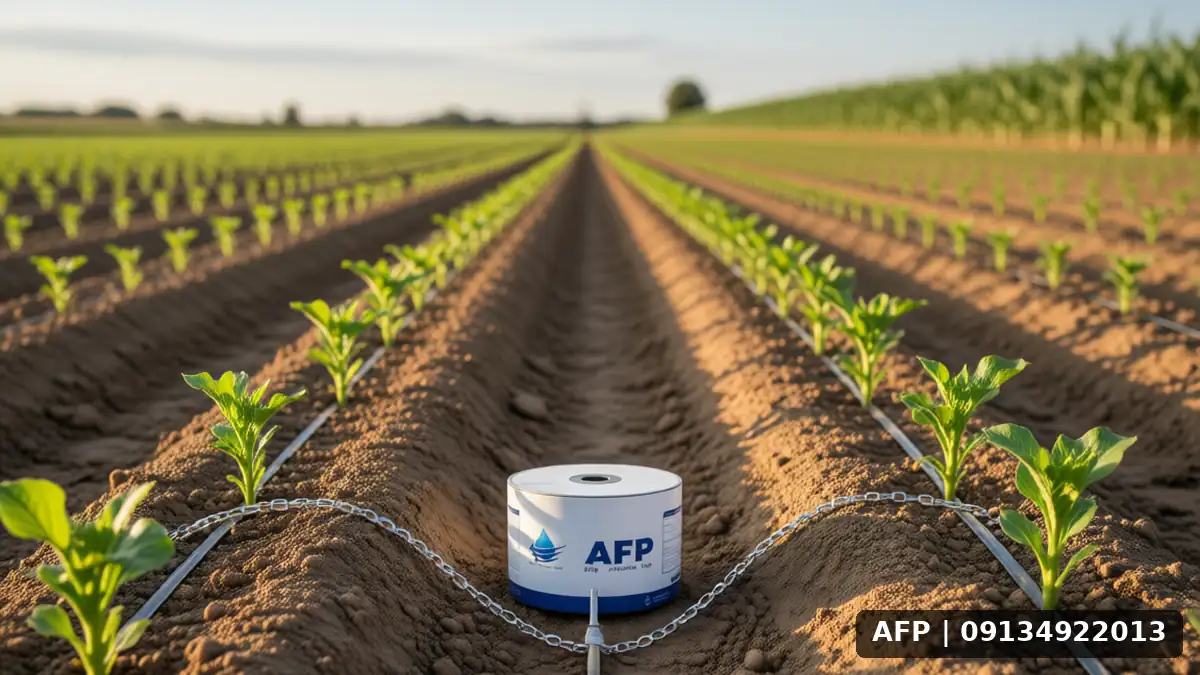
Due to root sensitivity to salinity and precise moisture requirements, onion cultivation heavily depends on an effective irrigation system. Onion is a vegetable that requires regular and controlled irrigation throughout its entire growth cycle. Since the primary energy storage organ of the onion is located below the soil surface, the distribution of water and nutrients directly impacts bulb size, quality, and yield. Drip irrigation, which delivers water and nutrients uniformly directly to the root zone, is one of the best options available. However, like any other technology, it has its own complexities; without a precise understanding of them, it may cause plant stress rather than increasing yield. This section provides a general overview of the importance of using this modern method in onion cultivation to gain a broader perspective on its advantages and benefits.
Main Challenges of Drip Irrigation in Onion Cultivation
Onion is a vegetable with surface roots. Therefore, the depth of water infiltration and its distribution within the root zone are of high importance. If infiltration depth is insufficient, new roots will not grow correctly. Conversely, if water infiltrates improperly, it may cause root suffocation and fungal diseases. Managing this delicate balance is one of the greatest challenges for farmers in onion cultivation. Onion roots, unlike many medicinal plants and cereals, have limited infiltration depth and are primarily located in the top 20 to 30 centimeters of soil. Thus, the irrigation system must be designed to retain moisture precisely within this limited zone, rather than directing water to unnecessary depths that cause nutrient leaching and resource waste. Additionally, onion is sensitive to rapid moisture fluctuations. Sudden dryness following a moist period causes significant cracking of the bulbs, reducing their commercial quality. These sensitivities make the technical complexity of implementing a drip irrigation system for onions higher than for many other garden plants.
1. Selecting the appropriate drip tape
The selection of tape type and emitter flow rate must be adjusted to soil conditions. In clay soils, infiltration is low, while in sandy soils, infiltration is high. For onions, tapes with a flow rate of 2 to 4 liters per hour are typically recommended. However, the key point is that flow rate is not the only factor; the spacing between emitters is also decisive. If the emitter spacing is too wide, alternating dry and wet zones are created, subjecting the plant to stress. For better guidance in this area, you can refer to the article How to select the appropriate drip irrigation tape Consult the guide. This manual provides the necessary technical details for matching the tape to various soil types. Additionally, the tape must be chemically compatible with the substances present in the soil and water to prevent clogging and deterioration of the drippers. Using tapes with internal filters is a critical requirement in onion fields, as it reduces maintenance costs.
2. Managing Soil Salinity
Drip irrigation causes salt accumulation near the drippers. Onions are a salt-sensitive crop. Failure to perform periodic leaching near the drippers can lead to yield reduction. Salinity in semi-dry soils increases rapidly and can cause basal leaf scorch and stunted onion growth. To control this issue, the leaching fraction must be precisely calculated. By adding excess water beyond crop demand, accumulated salinity can be flushed out. Regular monitoring of the EC of irrigation water and soil is also essential. If water EC is high, greater attention must be paid to leaching. Using soil amendments such as sulfur or calcium carbonate can also help mitigate the effects of salinity, but this should not replace proper water management. Ultimately, balancing irrigation and salinity is the key to maintaining the health of onion roots.
Practical Tips for Overcoming Challenges
- Subsoil Brine Injection: Using chemical brine to flush the root zone and prevent salt accumulation.
- Soil Sweetening: If salinity is present in irrigation water, potassium and calcium fertilizers should be used to maintain soil chemical balance.
- Irrigation History: Consider using short, more frequent irrigation cycles instead of continuous watering. This method ensures roots maintain consistent contact with adequate moisture without becoming waterlogged.
- Moisture Monitoring: Using soil moisture sensors helps farmers determine the precise irrigation time without guesswork. This simple tool can reduce water waste by up to 30%.
Drip Line Installation Issues
Drip lines in onion fields must be installed at an appropriate distance from the plants. A distance that is too great causes water to be discharged outside the root zone, while a distance that is too small can damage the line during onion harvest. The best practice is to install the line in the center of the row, 20 to 30 cm from the plant axis. Additionally, when purchasing drip lines, ensure they have adequate resistance to abrasion and wear. Guidance on high-quality drip lines is available at Cantaloupe Drip Line As the operating principles of drip tapes are similar for most vegetables, onion drip tape installation techniques also follow the same basic concepts. Caring for the lines during harvest, by using special knives or non-destructive mechanical methods, extends the useful life of the irrigation system by several seasons.
Water use optimization and yield increase
One of the main advantages of drip irrigation for onions is the ability to precisely control moisture during sensitive growth stages. During bulb formation and filling, onions require uniform moisture. Moisture fluctuations at this stage cause coarse cracking, which directly affects onion weight and price. Precise irrigation cycle planning can prevent this issue. Furthermore, fertilization through the drip irrigation system (fertigation) enables nutrient balance. Onions are sensitive to nitrogen fertilizers, and overuse leads to bolting and rot. By controlling dose and timing of injection, nitrogen leaching and groundwater contamination can be prevented. This integrated approach optimizes irrigation and nutrition, while also improving the environmental sustainability of onion cultivation. Farmers using this system have reported a significant increase in cash return per liter of water consumed. Cost estimates indicate that after two to three seasons, the initial system cost is offset by savings in water and fertilizer.
Frequently Asked Questions (FAQ)
Is drip irrigation expensive for onions?
Initial investment may be higher than conventional irrigation, but over the long term it is more profitable due to water and fertilizer savings. Pump energy costs also decrease due to the lower working pressures in drip systems compared to sprinklers. Overall, total costs over the field’s lifespan are reduced.
How far should the tape line be from the onion plants?
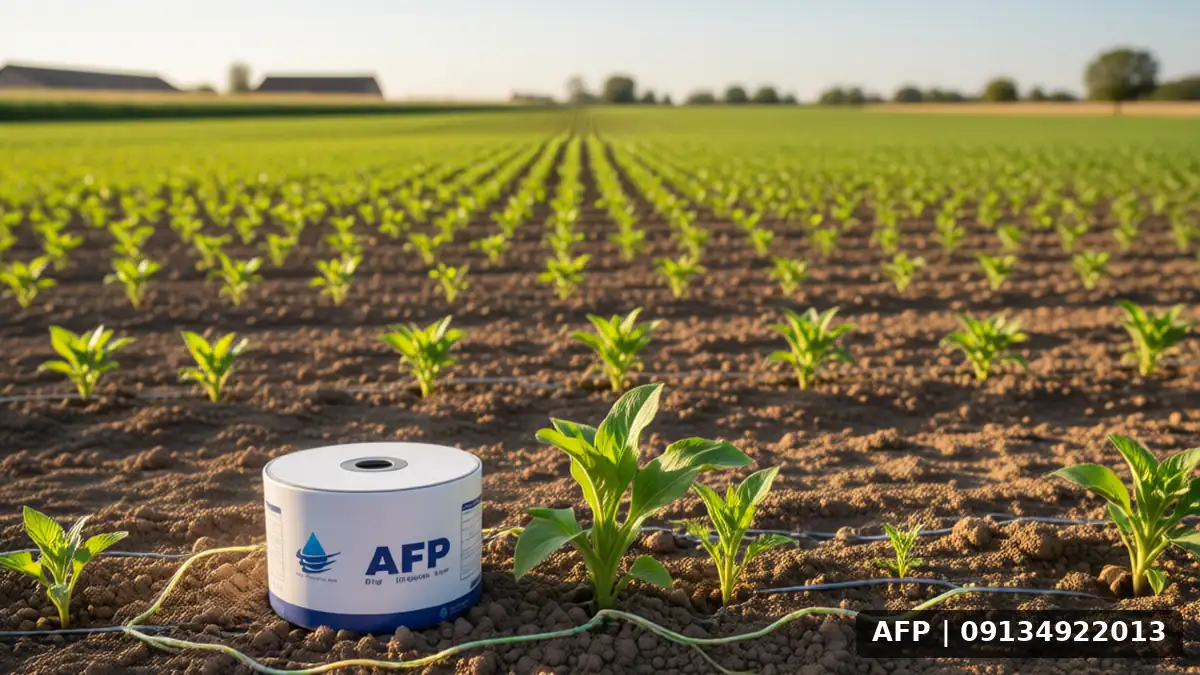
Typically, a distance of 20 to 30 cm from the plants is recommended, but this varies based on soil type. In clay soils, a closer distance is preferable, while in sandy soils, a slightly greater distance may be optimal. The best method is to perform a percolation test in your field to determine the ideal distance. This simple test involves digging a hole, filling it with water, and observing the infiltration rate.
How can we control salinity?
Using leaching irrigation and appropriate chemical fertilizers. Additionally, crop rotation and proper drainage can gradually reduce salinity. Regarding appropriate irrigation, you can utilize the guide Cantaloupe seed rate per hectare as well, because the principles of irrigation calculation based on plant requirements are explained in it, and you can adapt them for onion cultivation.
Conclusion
Onion drip irrigation is an efficient approach that requires precision in selecting appropriate components and proper soil salinity management. By understanding the challenges, higher productivity and better performance can be achieved. Onion is a sensitive crop, and even the slightest mistake in water management can damage the final yield. Investing in knowledge and suitable equipment ensures long-term economic returns. A successful farmer is one who carefully maintains the balance between resource consumption and product quality preservation. Finally, for further reading on related vegetable and spice production, such as Lentil yield per hectare also review this to gain a broader perspective on precise and optimized agriculture.
Related articles: What is the melon seed rate per hectare? (Comprehensive Guide), How to choose the appropriate drip irrigation tape, Cucumber drip tape, Lentil yield per hectare