Drip Irrigation Using Emitter Drip Lines in Soybean Cultivation: Applications
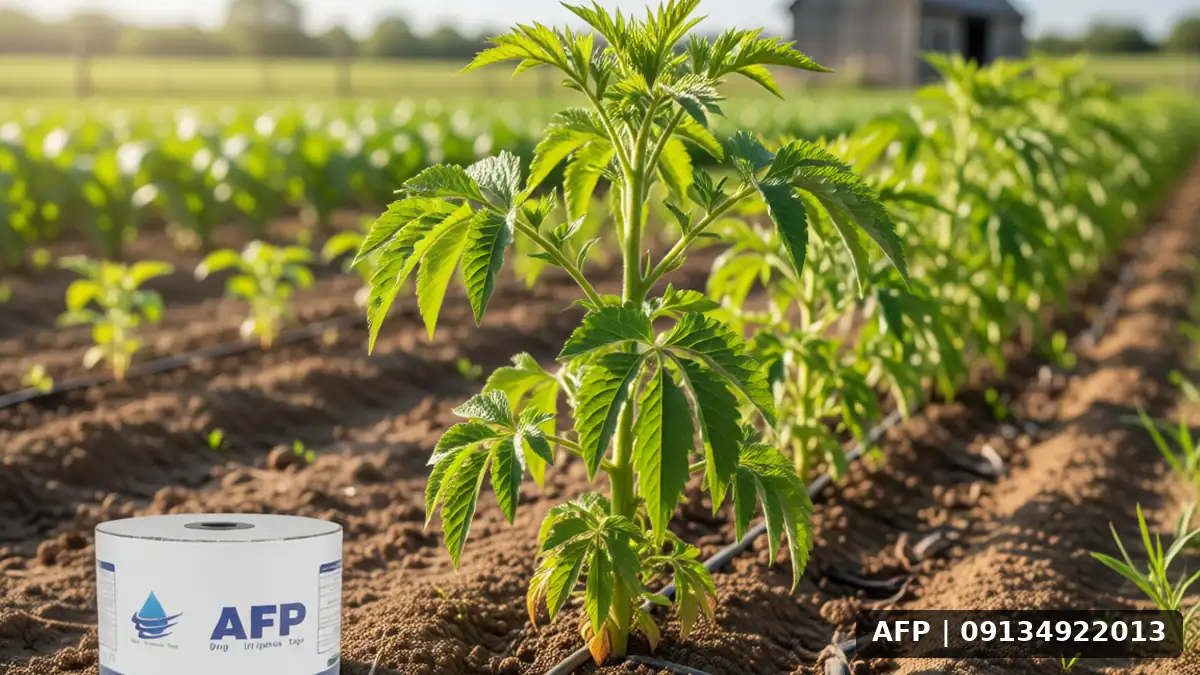
Why is drip irrigation the best choice for lettuce cultivation?
Lettuce is a plant with a shallow root system that requires continuous and uniform moisture but cannot tolerate waterlogging or severe moisture fluctuations. In this case, conventional sprinkler irrigation systems not only waste water but also create conditions for the spread of fungal diseases such as Botrytis and stem rot by wetting the leaves. Drip irrigation with emitters It is the only solution that allows delivering water and nutrients directly to the root zone. This method creates a moist zone around the roots, promoting better root system development, reducing salt-related diseases, and increasing the commercial quality of the product (including freshness and color uniformity). Below, we review all technical and practical aspects required for the successful implementation of this system in lettuce fields and greenhouses.
Principles of emitter operation in lettuce cultivation media
The role of emitters in wet zone management
Unlike tape lines that create a straight line of water, hanging or inline emitters release water drop by drop with very low flow rates (usually between 1 and 4 liters per hour). This feature is critical for lettuce. The wet zone created by emitters is uniform and hemispherical, preventing the leaching of soil around the pot or growing medium. If you use a system that operates similarly to tape line stages but is combined with emitters, you will have greater controllability. Emitters allow the media (Coir or perlite) to remain at the threshold of field capacity without excessive drainage.
Impact on salinity and EC management
One of the major challenges in basil cultivation is salt accumulation in the growing medium. Because the water flow from drip emitters is low, the concentration of nutrients and salinity increases in the area immediately surrounding the emitters. To counteract this phenomenon, use the ‘irrigation and leaching’ technique. & Leaching) after each regular irrigation cycle, pass a specified volume of low-salinity water to flush excess salts out of the bottom of the medium. This process cannot be achieved with spray irrigation, but with a drip system, control of water scarcity and EC (Electrical Conductivity) is much more precise. For a better understanding of the relationship between water usage and salinity management, studying the flow rates of pressure-compensating (inline) drip lines can also provide better insight into pressure and flow distribution in laterals, as emitters are connected to these lines.
Practical tips for installing and adjusting the drip system
Emitter spacing from the root
The most common installation error is placing the drip line too close to the plant stem. For basil, the appropriate distance between the emitter outlet and the center of the pot/medium should be approximately 5 to 10 cm. If the emitter is too close to the stem, permanent moisture around the plant collar causes rot. If it is too far, the central part of the medium remains dry. In deep beds, two emitters per pot can be placed on opposite sides to ensure uniform moisture.
Choosing the type of drip emitter
- Hanging Drip Emitter: Suitable for deep root zones. Creates a vertical wet zone.
- Inline Dripper: Installed directly inside the pipe. Creates a wider wet zone and is suitable for container trees.
- Sprinkler Dripper: With a 5–10 cm throw radius, it is the best option for uniform water and nutrient distribution, but it must not spray onto leaves.
System operating pressure
Standard drippers typically operate at 1 to 2 bars (Atmospheric). If your main line pressure is higher, a Pressure Regulator must be used before the lateral lines to prevent dripper damage and increased seepage rates. Improper pressure regulation leads to irrigation non-uniformity and early or delayed flowering at certain field locations.
Prevention of diseases through root-zone irrigation
Phytophthora and Rhizoctonia diseases in dill often occur due to constantly wet growing media and high leaf humidity. Drip irrigation wets only the root zone, keeping the media surface dry. This dry space inhibits fungal growth. However, if drainage at the bottom of the media bed is blocked, the risk of Rhizoctonia increases. Therefore, Drip irrigation for dill must be combined with proper drainage management and adequate ventilation in the greenhouse. For comparison, in crops such as root vegetables with different irrigation requirements, you can refer to the guide on Onion planting season and irrigation needs , but for leafy vegetables such as dill, root penetration depth is much shallower, and the drip system must be designed for more superficial application.
Optimal irrigation timing and rates
- Initial growth period (first 1–2 weeks): Requires high humidity but in small volumes and at frequent intervals. (e.g., 3 to 5 times per day, 2–3 minutes per application).
- Active growth phase (3-5 weeks): Water volume increases. Irrigation timing should be calculated based on evapotranspiration. Typically, 2 to 3 times per day is sufficient.
- Harvest phase (final week): Reduce irrigation volume by 20-30% to limit growth rate and enhance leaf quality.
Select the drip emitter flow rate so that the total combined flow meets the irrigation requirement per application. If using 1/2 L/h emitters with 4 emitters per pot, the total flow is 2 L/h. For 10 pots per meter of pipe, ensure sufficient pressure to prevent pressure drop at the end of the line.
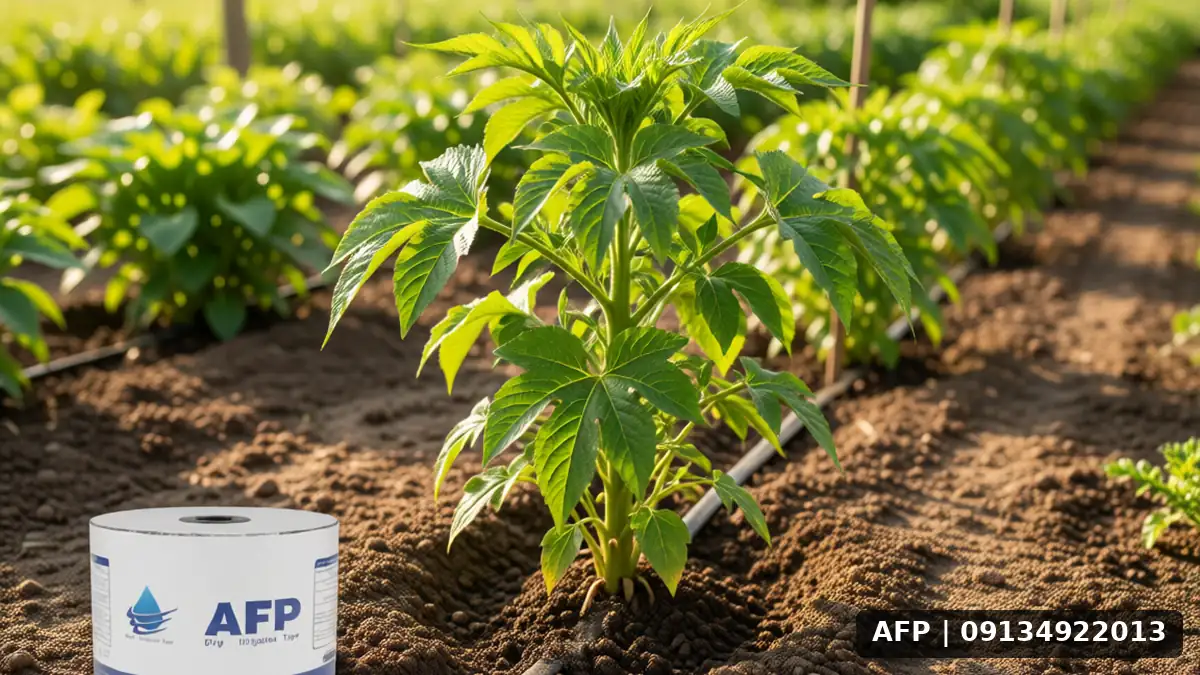
Ensuring sustainable yield through resource management
Using drip irrigation systems is directly associated with reduced water consumption (up to 50% compared to conventional irrigation). This savings reduces production costs. Additionally, combining irrigation and fertilization (Fertigation) through this system reduces substrate leaching and salinity. For those seeking further resource optimization, refer to articles on Furrow irrigation and comparison with modern systems It can provide a broader perspective on differences in economic yields. It is also important to understand how seed selection and planting density affect irrigation needs; for example, in other vegetables such as green bean seed, pod formation and density directly affect dripper spacing.
Frequently Asked Questions (FAQ)
Can I use drip emitters with high pressure?
No, high pressure causes physical damage to plastic drip emitters and eliminates discharge accuracy. Always use a pressure regulator to ensure the inlet pressure to lateral lines is below 1.5 bar.
What should I do if a drip emitter gets clogged?
Clogging is usually caused by water deposits or glaucon. Using appropriate filters (80–120 mesh) at the system inlet and periodic flushing with phosphoric acid (applied via injection and at a permitted concentration) will resolve the issue. Additionally, regular flushing of laterals with citric acid or tartaric acid (at low concentrations) is recommended.
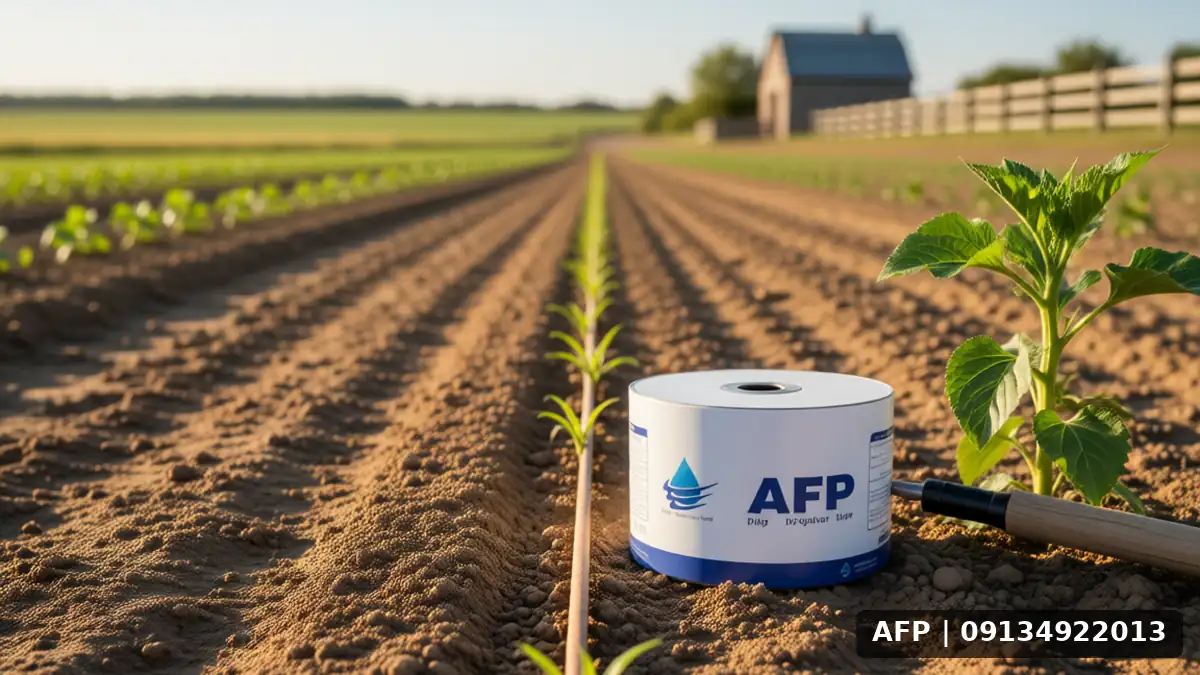
Is this system suitable for open-field cultivation?
Yes, but you must use mulch to reduce soil surface evaporation and suppress weeds. In open fields, the distance between drip emitters should be greater than the mulch spacing to ensure proper flow. For details on cultivating other green crops, you can refer to the guide for Irrigation tips for adzuki beans get inspired, as the general principles of substrate moisture management are similar, with the exception that greater attention must be paid to root depth.
Summary: Investing in quality
Implementation Drip irrigation using a drip emitter In wheat cultivation, this is a revolutionary step toward low-intensity, high-yield agriculture. This system not only conserves water resources but also gives the farmer complete control over plant health. By precisely adjusting spacing, pressure, and flow rate, you can maximize production quality without worrying about root diseases or rot. The final recommendation is to run the system with plain water (without nutrients) for a few days before filling the pots to ensure uniform distribution along the entire pipe. Additionally, learning basic principles such as ribbon strip development and its differences from drip emitters helps you intelligently manage the combination of methods in larger projects. For sustainable agriculture, water quality and moisture control are the golden keys to success.