Comprehensive Analysis of Drip Irrigation Costs for Mung Bean Cultivation: Economic and Engineering Optimization Strategies
Introduction: The Necessity of Transitioning from Conventional Methods to Drip Irrigation in Mung Bean Cultivation
Mung bean (Vigna mungo) is one of the most important early-maturing pulses, playing a vital role in food security and crop rotation cycles in agriculture. Due to its inherent sensitivity to soil moisture balance, it is prone to significant fluctuations under irregular irrigation. Conventional methods, such as flood irrigation or high-pressure hose drip systems, not only waste scarce water resources but also cause salinity buildup and root pruning in the delicate root system of mung beans. In contrast, drip irrigation for mung beans delivers water and nutrients precisely and controllably within the root zone. This approach not only increases water use efficiency by 30% to 40%, but also creates a uniform environment for root development, leading to increased pod size and improved final crop quality. However, the main challenge for modern farmers is assessing the economic feasibility of this technology. Is the higher initial cost and relative complexity of installation recoverable in the long run? Below, we break down the cost structure in detail and provide practical strategies for optimizing them.
Detailed Analysis of Capital Costs: Initial System Equipment
The biggest initial barrier for farmers is capital budgeting. This section covers the purchase of main and sub-laterals, appropriate pumps, control units, and most importantly, drip lines. In mung bean cultivation, which is typically done with adequate plant density and low plant height, equipment selection must be aligned with field geometry.
Selection and Design of Drip Lines: The Heart of the System
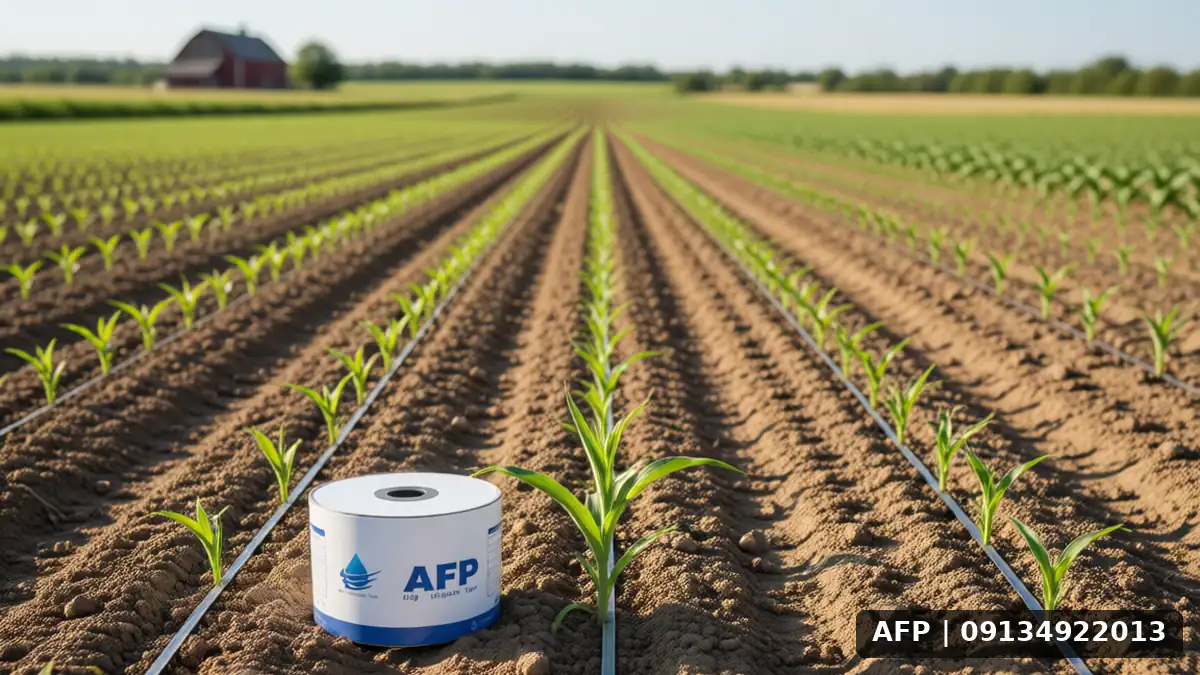
The drip tape is a more popular option than rigid drip lines due to lower cost and faster installation. However, selecting the appropriate system requires understanding the root requirements of rice. The spacing between rice plants is typically adjusted to 5 to 10 cm in a row, which necessitates the use of drip tapes with balanced emitters having a flow rate of 1/6 or 1/4 LPH. If the flow rate is excessive, soil moisture will exceed the root zone, leading to water waste and the growth of surface roots; if the flow rate is too low, water stress will occur. To find the optimal balance, reviewing an article on how to select the appropriate drip irrigation tape can be a useful guide for adapting equipment to your soil conditions. Additionally, the tape’s resistance to ultraviolet radiation and soil chemicals are factors that directly affect its lifespan and replacement costs in subsequent years.
Filtration structures and control valves
Rice is a plant with fine and sensitive roots, and clogging of emitters can be fatal. Therefore, filtration costs should not be underestimated. Using combined systems, including a sand filter (superior to a gravel filter) and a disc filter, increases reliability. Block control valves also allow the farmer to manage water flow separately in each section of the farm based on the different needs of growth stages (tillering, flowering, grain filling). This flexibility, although it slightly increases initial costs, guarantees a more secure harvest by reducing water stress during sensitive stages.
Current and operational costs: water, energy, and fertilizer
Where Drip irrigation for rice proves itself. It is a statement of operating costs. In rain or flood irrigation, evaporation and deep percolation losses can waste up to 50 percent of the water resources. In a drip system, these losses are reduced to less than 5 to 10 percent. This final savings directly affects the energy costs used for pumping water from deep wells.
Energy consumption management and improved pumping efficiency
Reducing the volume of water used decreases pump operating hours and extends the useful life of the motors. Additionally, fertigation through drip emitters is one of the most important economic benefits. Fertilizing with low doses and high frequency maximizes the uptake of nitrogen and phosphorus by mung bean roots and eliminates the leaching of nutrients to deeper soil layers. This allows the farmer to reduce chemical fertilizer consumption by up to 20 percent while maintaining yield, which is economically attractive.
Many farmers believe that once the system is installed, no further action is needed. However, maintenance costs determine the return on investment. Periodic filter cleaning, drip emitter maintenance, and system insulation during hot seasons are necessary components of this cost. To better understand the technical challenges of maintenance, studying the article on types of irrigation systems helps you understand their internal mechanisms. In this regard, knowing the principles Tape drip line maintenance and costs can prevent mechanical damage to the tapes and the need for forced replacement. Proper storage of the tapes in a cool, shaded area extends their lifespan from one season to three to four seasons.
Practical strategies to reduce costs and increase efficiency
Simply itemizing costs is not enough; executable solutions are needed to ensure a positive economic balance:
- Field imaging and mapping: Before purchase, calculate the length of lines through precise field mapping to prevent overbuying.
- System design with uniform pressure: On steep slopes, using Pressure Compensating emitters, although more expensive, prevents uneven irrigation and crop loss.
- Irrigation scheduling based on meteorological data: Using weather stations to adjust irrigation doses prevents unnecessary water consumption during rainy nights or cold days.
- Planting Density Management: Excessive lentil density causes root competition. Reviewing resources such as White bean seed rate per hectare can serve as a model for matching density to water requirements. For lentils as well, a density must be selected that allows the dripper line to supply water accurately to all roots.
Furthermore, paying attention to the water requirements of different lentil growth stages is critically important. The green-up stage has lower water needs, but during the grain-filling stage, water deficit—even for just a few days—can drastically reduce grain weight. Therefore, precise irrigation scheduling must be integrated with plant physiology knowledge to avoid wasting energy on unnecessary activities.
Frequently Asked Questions (FAQ)
How long does it take to recoup the cost of a drip system for lentil cultivation?
Given current water and energy costs, return on investment typically occurs within 2 to 3 growing seasons. This calculation is based on the mutual increase in lentil yield (from 1,500 kg to 2,500 kg per hectare) and a 30% reduction in water and fertilizer costs. To compare returns in other crops with similar requirements, see the article Forage corn seed rate per hectare This can be helpful for you to understand the technical and economic differences.
Can drip tape withstand harsh climatic conditions?
Yes, but the condition is the use of flame- and root-resistant tapes. Proper maintenance, including draining the system at the end of the season and applying chlorine as a disinfectant, minimizes the risk of breakdown.
Conclusion and final recommendation
Selection Mung bean drip irrigation This is not merely a technological choice but a strategic economic decision. While the initial cost may appear daunting at first glance, careful procurement of high-quality equipment (such as standard drop tapes and robust filters) and strict adherence to precise maintenance principles will ultimately tip the cost-benefit analysis in the farmer’s favor. Reduced operational costs, improved produce quality, and system resilience against water fluctuations all transform drip irrigation into a secure investment within agricultural economics. It is recommended that, before purchasing, you consult irrigation specialists to accurately calculate flow rates and drip emitter spacing based on your specific field conditions, ensuring your purchase is fully aligned with the needs of your mung bean crop and minimizing economic risks.
Related Articles: Strawberry yield per hectare D8AFD8B1