Drip Irrigation via Emitters in Cress (Nasturtium officinale) Cultivation: Comparative Analysis and Practical Guidelines
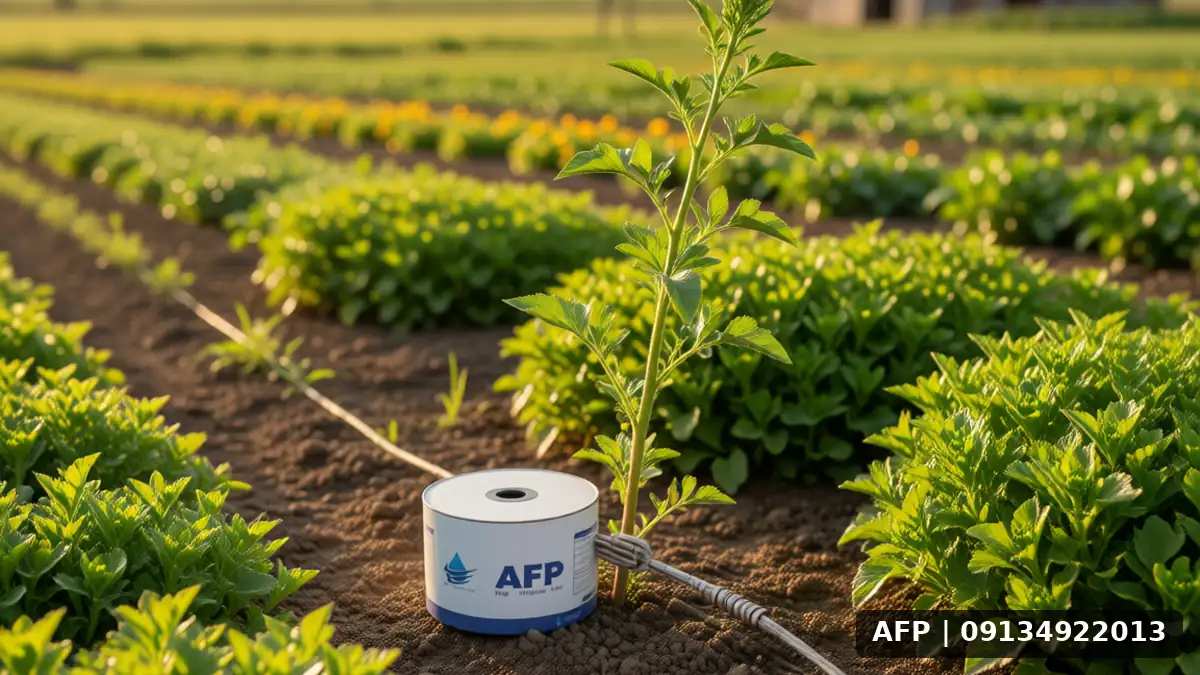
Introduction to the Importance of Optimal Irrigation in Basella alba Cultivation
Basella alba is an economically valuable crop that requires precise water resource management. Under climatically stressful conditions, selecting the correct irrigation method can determine the final yield. Many farmers are uncertain when choosing between conventional and modern systems, but scientific and empirical evidence indicates that the use of drip irrigation with emitters in Basella alba cultivation can significantly increase efficiency. The objective of this article is to provide a comprehensive, non-exaggerated guide so that farmers can make informed decisions based on technical data.
Introduction of the Emitter System and Its Advantages over Tape Methods
Emitters are components placed at regular intervals along drip lines and operate at various rates (such as 1.6 or 2.16 liters per hour). Unlike tape methods, which apply higher pressure to roots, emitters prevent the risk of root damage during the initial germination stages of Basella alba. Additionally, uniform water distribution within the root zone, using emitters with correct spacing, results in uniform plant growth within the row. To better understand the general principles of lateral networks, studying the cost of tape method for one hectare can provide a general comparative perspective. However, in Basella alba cultivation, sensitivity to moisture equilibrium makes emitters a safer option.
Technical Comparison: Emitters versus Tape Methods
A technical comparison of these two systems requires attention to water infiltration depth, wetted area, and maintenance costs. Drip emitters typically operate more uniformly and do not require frequent flushing. In contrast, side-attached strip emitters are susceptible to mold if left exposed to direct sunlight. In lettuce cultivation, where row spacing is usually 30 to 40 centimeters, using drip emitters spaced 10 to 15 centimeters apart optimizes root zone coverage. This spacing ensures water is delivered directly to the fine root zone, reducing waste.
Weaknesses and Implementation Challenges in Lettuce Drip Systems
Every system has its strengths and weaknesses. Among the most significant challenges in using drip emitters for lettuce is the clogging of orifices caused by salts or algae. This problem is exacerbated when the filtration system is inadequate. Additionally, if pump operating pressure is inconsistent, drip emitter output may vary, leading to uneven lettuce growth. To overcome these issues, using appropriate filters and precise pressure regulation at the start of each field is essential. In this regard, a thorough understanding of crop evapotranspiration and soil water holding capacity per hectare helps align system capacity with actual plant demand and prevents excessive pressure.
Critical Parameters for Selecting Suitable Drip Emitters for Lettuce
- Flow Rate: For lettuce, flow rates of 1.6 to 2.0 liters per hour are recommended during the early growth stages, and 2.5 liters per hour during the production stages.
- Dripper Spacing: A spacing of 10 to 15 cm is the standard for basil root coverage.
- Drip emitter material: Thermoplastic polyurethane (TPU) or polycarbonate (PC) are resistant to corrosion and chemicals.
- Penetration depth: The network design should allow a penetration depth of 30 to 40 cm, where the main basil roots are located.
Practical tips for optimizing the basil drip irrigation system
Optimizing the drip system without considering execution details is impossible. First, the drip emitter spacing must be coordinated with the final basil planting spacing. If basil is planted in a single row, emitters can be placed on the same planting line or in a parallel layout. Regular flushing of the network is also a key point; it is recommended to flush for 10 to 15 minutes every 4 to 6 hours to remove sediment from the lines. Additionally, using appropriate pipes for pressure transmission is critical. In the main lines, 3-inch poly pipe Due to high compressive strength and flexibility, it is a safe option for preventing pressure fluctuations. These pipes must be securely anchored at intervals of 15 to 20 meters with appropriate connections to prevent displacement caused by water flow.
Impact of Water Quality on Dripper Performance
Water quality is a determining factor in the service life of drippers. High EC (salinity) water causes salt precipitation in drip lines. Under these conditions, the use of fertilization and water pH adjustment becomes paramount. Additionally, pathogen contamination in water can lead to strawberry root diseases. To prevent this risk, multi-stage filtration (cloth + mesh filter) is a mandatory standard. Failure to adhere to these principles results in reduced irrigation efficiency and ultimately lower strawberry yield, causing economic loss to the farmer. Therefore, budgeting for filtration equipment should not be overlooked.
Frequently Asked Questions About Strawberry Drip Irrigation
What is the best time to install drippers in strawberry cultivation?
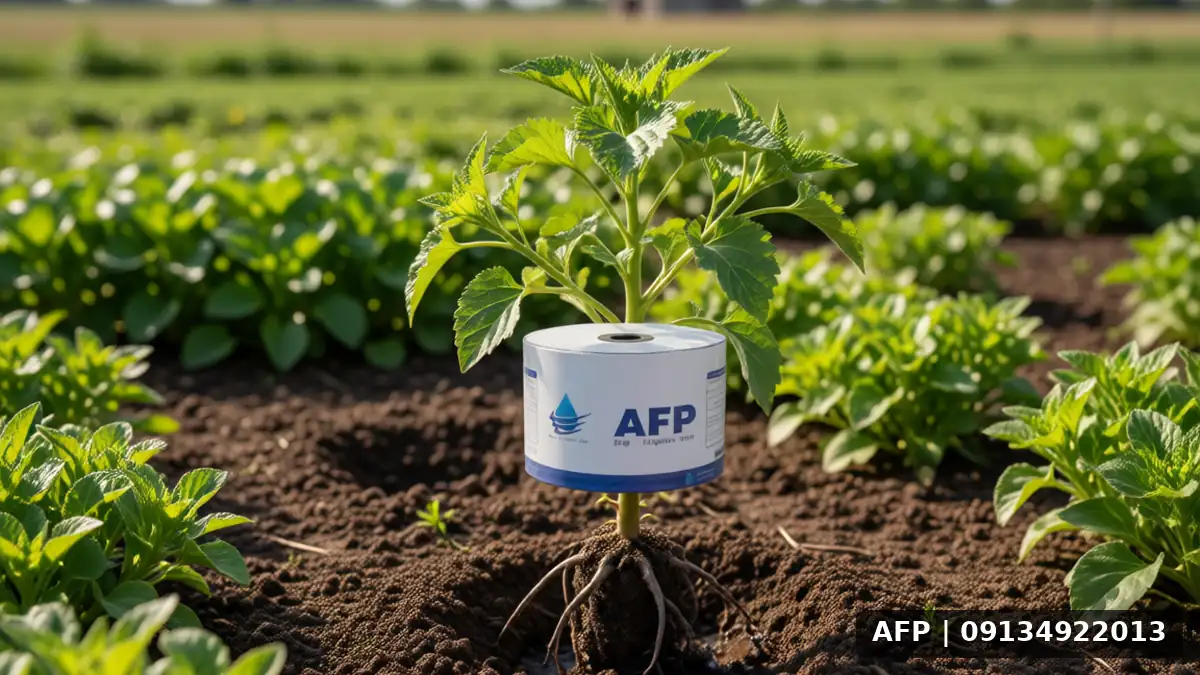
The optimal time for installation is immediately after soil bed preparation and before planting. This ensures that initial moisture for germination is provided, allowing emerging strawberry roots to grow directly within the moist zone. Installation after planting leaves some roots in dry conditions.
Can drip systems in strawberry cultivation be used for fertigation?
Yes, drip irrigation is one of the most ideal methods for fertigation. Nutrient delivery via drip emitters ensures that nutrients reach the sachi root zone directly, increasing uptake. This method also reduces surface salinity and prevents incompatibility issues between chemical fertilizers and hard water.
What is the ideal distance between drip lines for sachi?
The standard distance is 30 to 40 cm. This spacing ensures full coverage of the sachi root zone. If the distance is less than 20 cm, resource wastage and soil salinity increase; if it is greater, dry spots may remain in the root zone.
How can drip emitter clogging be prevented?
The best solution is robust filtration and regular network flushing. Additionally, using anti-algal systems and controlling the quality of the source water prevents suspended matter from entering the lines. If turbidity is observed at the drip emitters, filters should be cleaned or replaced.
Conclusion
Use of Drip irrigation with emitters for papaya cultivation Due to uniform water distribution and reduced root stress, this method is superior to strip irrigation in many papaya growing conditions. By selecting appropriate emitters, adjusting spacing, and using effective filtration, water and nutrient efficiency can be maximized. The final recommendation for farmers is to design the lateral network precisely based on water analysis and field soil conditions before system installation. Understanding technical principles and avoiding intuitive decisions is the key to successful papaya cultivation. Proper implementation of this guide makes it fully achievable to improve papaya fruit quality and reduce operational costs.
Related articles: tokhmi tarud dar yak gektar shinoon ui nigohdori, D8ACD988 D8AFD8B1 per hectare seed amount, D8ACD988 D8B4D8B4 D9BED8B1 D8AFD8B1 per hectare yield