Drift Irrigation in Dill Cultivation: Managing Technical Challenges and Optimizing Performance
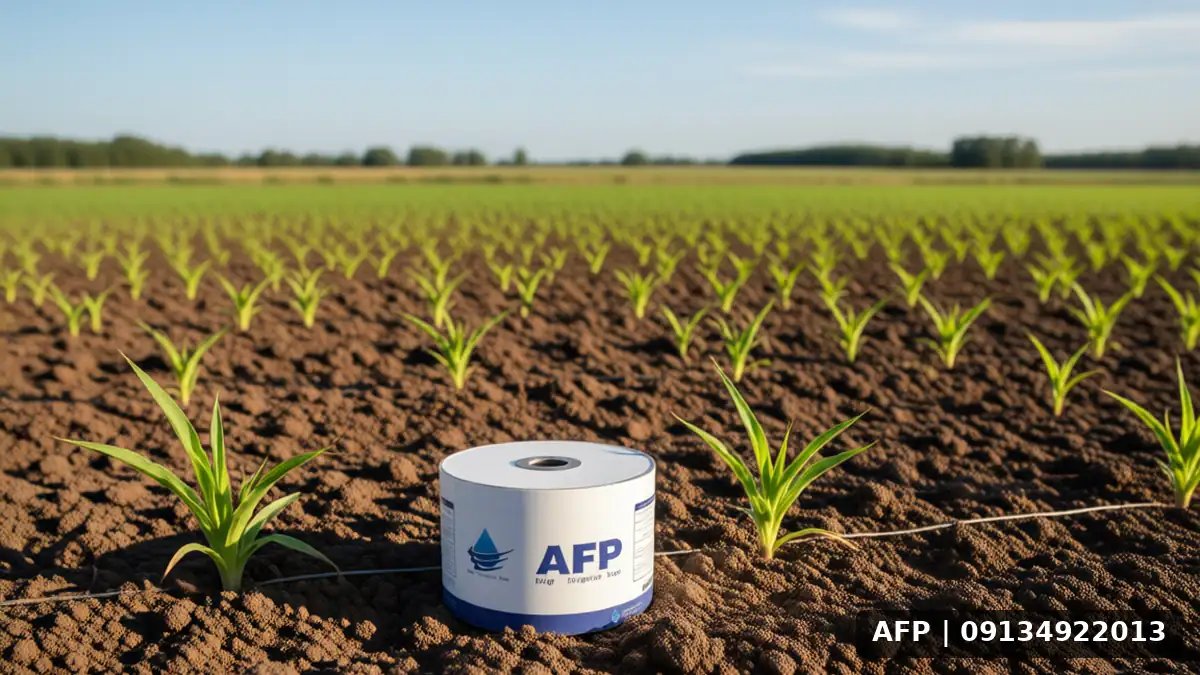
Coriander (Coriandrum sativum) is a fast-growing and sensitive plant where water management plays a decisive role in both the quality and quantity of the crop. Among the various methods, furrow irrigation of coriander is a popular choice due to the even distribution of water, but this method, without regard for technical details, can present significant challenges. From soil erosion and irregular root establishment to excessive salt accumulation in the upper layers, these challenges require an engineering approach. Coriander has a shallow and sensitive root system; therefore, any significant moisture fluctuations or sudden changes in soil water potential (hydropotential) can lead to growth stagnation, tissue breakdown, and a reduction in aroma and flavor. Irrigation management in this plant is not simply about supplying water; it is about precisely managing the moisture gradient within the root zone. Because the plant has fine, shallow roots, it requires conditions where soil moisture is continuously maintained at a balanced level; any deviation from this balance, even for short periods, can directly impact the production of essential oils and the final crop quality. It should also be noted that furrow irrigation is a dynamic process that depends directly on slope, soil type, and ambient temperature and must be carefully managed for sensitive vegetables like coriander.
Main challenges in the furrow irrigation system for coriander
The first and biggest problem with trickle irrigation is flow asymmetry. If the land slope is not properly adjusted, water flows more heavily on one side of the drip line and less on the other. This imbalance causes one half of the planting area to dry out while the other half becomes waterlogged, leading to root rot. In dill, which has a shallow root system, these moisture fluctuations cause physiological stress and halt growth. Additionally, high flow velocity in trickle irrigation can displace light soil particles, resulting in surface erosion and a reduced rooting depth. Managing these processes requires a deep understanding of soil hydraulics. It must also be noted that in areas with strong winds, trickle flow may deflect the water path and create voids along the rooting zone, directly jeopardizing plant stability. Root coarsening under poor moisture conditions reduces water and nutrient uptake, effects that become markedly more evident during the second and third weeks of growth. Farmers often do not recognize this issue until the plant begins to yellow from the leaf tips, which is a sign of nutrient deficiency or root disorder.
- Lack of flow velocity control: Failure to control the input discharge rate creates centimeter-scale depressions in the water channel, which in turn leads to uneven water distribution along the drip line. This inconsistency causes some areas to remain dry while others become waterlogged.
- Slag and sedimentation of suspended materials: If flow velocity decreases at the end of the drip line, suspended particles and nutrients will settle at the tail end, causing an imbalanced nutrient distribution. This deposition can create a layer of coarse material in the root zone.
- Salinity accumulation: With water flowing toward the outlet, a salinity tail develops at the end of the irrigation strip, which is lethal for cilantro and must be mitigated through regular leaching. Salt accumulation around the sensitive cilantro roots can cause leaf scorch and a severe reduction in yield.
Comparison of flood irrigation and drip irrigation in cilantro cultivation
Despite the cost advantages of flood irrigation, many farmers, upon observing a decline in produce quality, are shifting toward purchasing tape systems and drip systems. In a drip system, precise water distribution is possible within the root zone. Cilantro requires continuous but low moisture; a tape system with a 10 or 15 cm spacing can provide this need with much less loss from evaporation and deep percolation. In contrast, flood irrigation requires a smooth and precise slope, which becomes a major challenge in uneven terrain. The use of performance-enhancing factors in sugar beet or root crop cultivation shows that precise moisture management is the key to efficiency; a similar principle that governs cilantro as well. Additionally, cost-benefit analysis at a large scale often selects tape systems due to their precision and labor reduction, as the top choice. Although the initial cost of tape systems is higher, it is offset in the long term due to reduced water waste and increased product quality and quantity. Drip systems also allow for more precise nutrient management (phytonutrient), which is of high importance for sensitive plants like cilantro.
Practical tips for optimizing the cilantro irrigation system
If you are using furrow irrigation for any reason, it is essential to observe the following points to manage the challenges mentioned. However, the optimal solution is to combine leaching principles with drip technology, which has proven effective even under arid desert conditions. This approach guarantees quality and environmental sustainability. Additionally, in high-density plantings, using drip tapes with closer spacing can help reduce root competition and increase growing space.
- Field slope adjustment: The longitudinal slope of the furrow should be in the range of 0.5 to 1 percent. A steeper slope leads to increased velocity and erosion, while a gentler slope leads to water accumulation. Where possible, laser-lev the field surface to ensure more precise water distribution.
- Salinity leaching management: Cilantro is sensitive to salinity. After every 5 to 10 furrow irrigations, perform one deep leaching pass to flush out salts. This process should be carried out using fresh water at a specific volume to prevent severe runoff.
- Use of drip tape with a fragmentation device: If you migrated to drip irrigation, ensure you use 15 cm spaced drip tapes for cilantro. This spacing allows for proper planting layout and delivers moisture directly to the root zone. Consult the full guide in the article Vegetable Drip Tape Irrigation Guide which follows similar principles for cilantro. Selecting drip tape with an appropriate diameter and clog-resistant emitters is also essential.
- Irrigation Scheduling: Perform irrigation during the cooler hours of the day to reduce evaporation and maximize the plant’s moisture uptake. Monitoring soil moisture with soil sensors is also recommended to prevent over-irrigation and resource waste.
FAQs on Sprinkler Irrigation for Cilantro
Is cilantro better suited for surface (furrow) irrigation?
No, surface irrigation causes mold and stem fungal diseases. Cilantro is sensitive to high leaf moisture, which can facilitate fungal life cycles. Therefore, methods that deliver moisture directly to the soil while keeping the leaf surface dry are preferred.
What is the best row spacing for furrow irrigation?
A row spacing of 40 to 50 centimeters is recommended to allow water flow and provide access for harvesting. This spacing also promotes appropriate light distribution and air circulation between rows, preventing fungal growth in the shade created between plants.
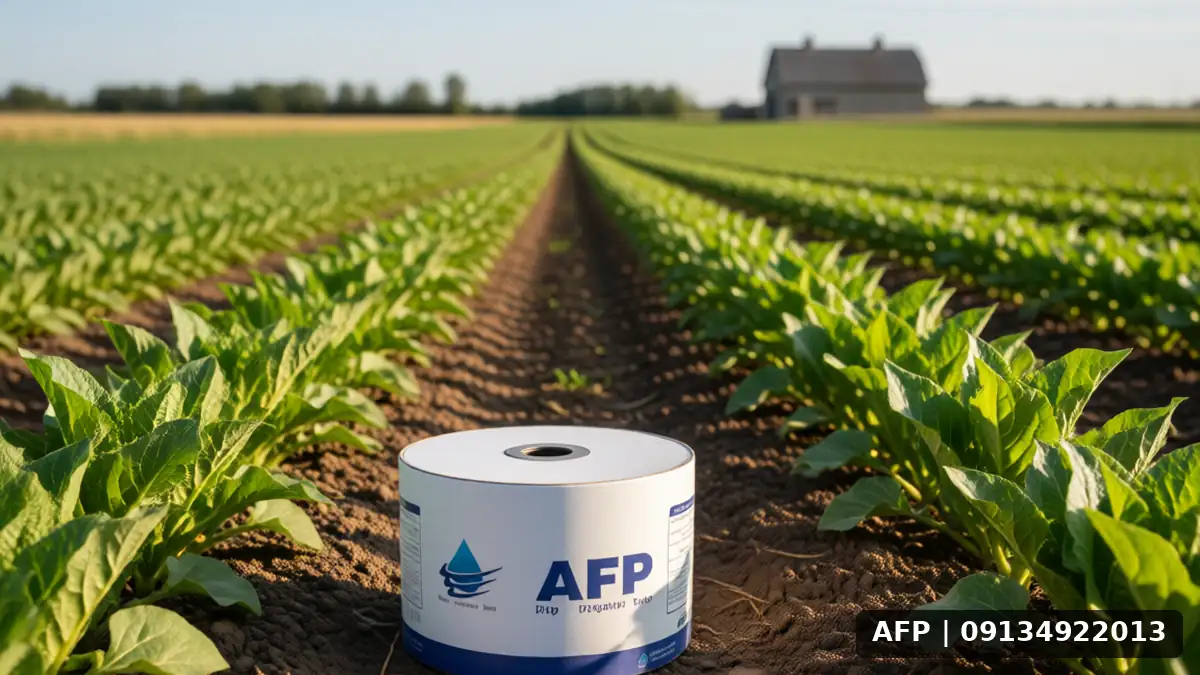
Can fertilizer be applied via the furrow system?
Yes, but it requires complete dissolution of the fertilizer and the use of low concentrations to prevent precipitation. For more details on dosages, you can refer to the Seed quantity per hectare guide, which also covers nutrient balancing. Precise plant nutrition is a primary complement to proper irrigation, and combining these two processes in intersecting systems can maximize yield. It should also be noted that high fertilizer concentrations in furrow systems can cause burn to the shallow roots of cilantro.
What should be done if the land has a steep slope?
Run-off irrigation is not recommended. In this case, you must use a drip system with controlled pressure or small channels at the lower boundary of the land. Additionally, the potential energy of the fluid can be used to compensate for pressure drop. Designing irrigation systems for sloped land requires more precise engineering and higher costs, but it can provide higher efficiency.
Conclusion
Run-off irrigation for coriander is a cost-effective solution, but it is expensive in terms of management and high-risk. Optimizing slope, managing salinity, and paying attention to uniform distribution are the keys to success. However, for long-term use and higher quality, investing in precision equipment per hectare remains the gold standard that provides precise water distribution with minimal losses. By adhering to the mentioned principles and considering climatic conditions, one can achieve desirable economic and quality yields from coriander cultivation. The combination of local knowledge and new technology creates a sustainable future for this crop. Ultimately, continuous monitoring of soil moisture and root health will be the most important factor in the successful management of coriander irrigation.
Related articles: Drip irrigation conditions in suburban areas