Cotton Yield per Hectare Analysis Using the Half-Drip Line Method: Technical Breakdown and Practical Considerations
Introduction: The Importance of Furrow Irrigation in Cotton Cultivation
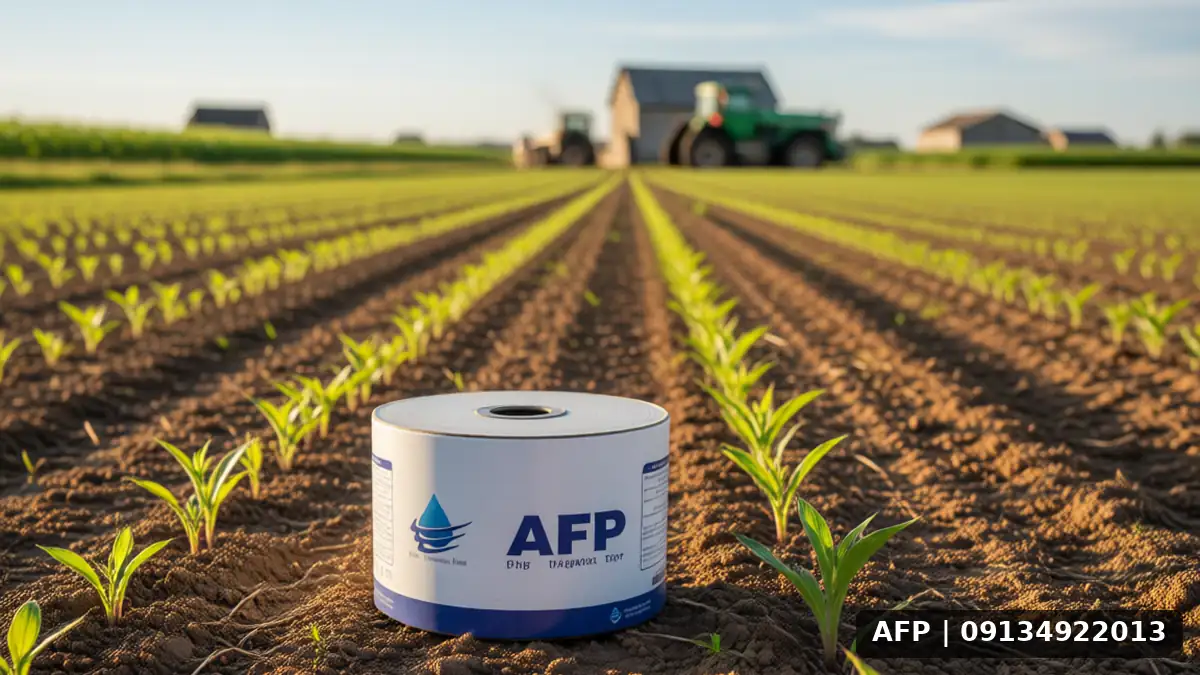
Cotton is classified as an irrigation-sensitive crop due to its high dependency on water and light and its critical need for precise resource management. One of the main challenges for farmers in this regard is achieving high land productivity with minimum water consumption. In this context, Furrow irrigation as one of the most advanced surface irrigation methods, has a high capacity for equalizing water distribution and improving uniform plant growth. The objective of examining [cotton yield per hectare with furrow irrigation] is to better understand the direct relationship between irrigation precision, root health, and ultimately the quality and quantity of cotton bolls.
Today, in the agricultural sector of Iran and many arid and semi-arid regions, the transition from flood irrigation to drip and furrow irrigation systems is considered not only a necessity but an economic advantage. By reducing water loss and increasing moisture availability in the root zone, plants can fully express their genetic potential and achieve higher yields. The following section details the technical specifications, optimal conditions, and implementation points of this topic.
[IMAGE_1]
Mechanism of Furrow Irrigation’s Effect on Cotton Growth and Performance
Cotton is a deep-rooted and branching plant that has specific sensitivity to drought stress, particularly in the pre-boll formation and flowering stages. Furrow irrigation creates parallel wet bands along the ridges, allowing water and nutrients to reach the effective root zone directly. Compared to drip line irrigation, this method offers lower costs and more uniform coverage for row-cropped systems.
Increasing Productivity and Yield Quantity
- Irrigation uniformity: The drip line prevents irregular water drainage and reduces drought stress during the late crop maturation stage.
- Improved nutrient uptake: Moisture accumulation around the drip line increases the availability of nutrients from seed and liquid fertilizers.
- Reduced root damage: Precise moisture control reduces internal root fungi and stem rot, directly impacting shelf life and final yield volume.
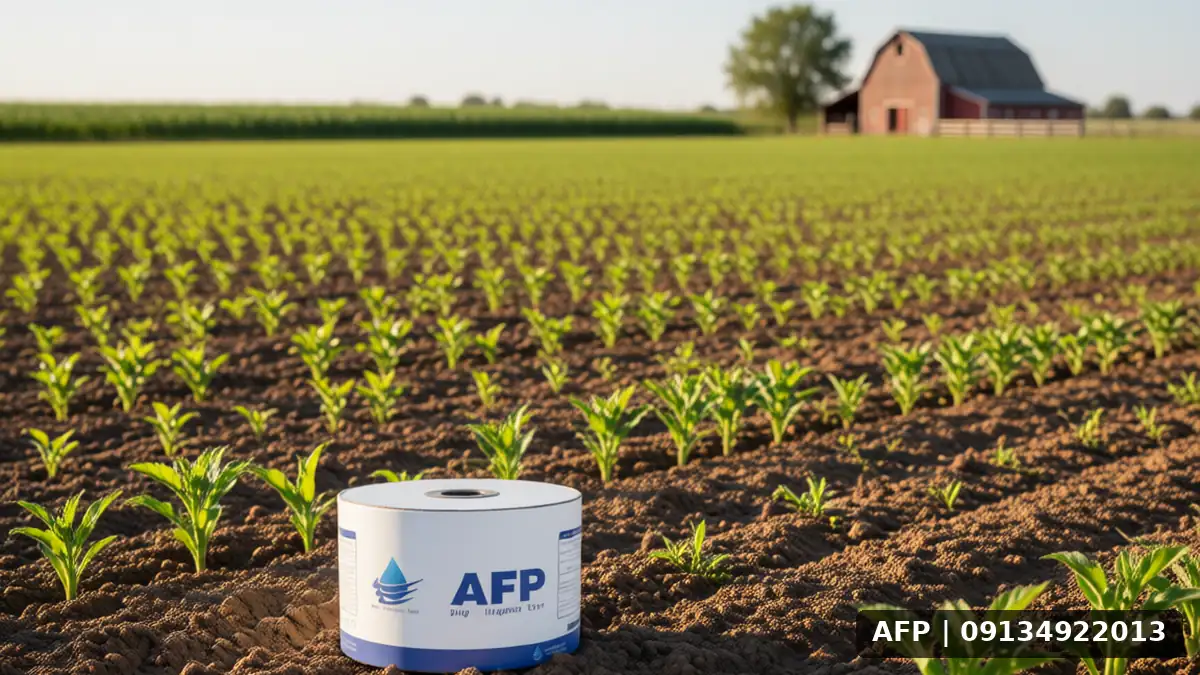
Statistics show that with proper implementation of drip irrigation, [cotton yield per hectare with drip irrigation] can increase by 20 to 25 percent compared to conventional flood irrigation methods, while saving approximately 30 to 40 percent on water consumption.
[IMAGE_2]
Variable Factors Affecting Cotton Yield and the Role of Drip Tape
To better understand yield, attention must be paid to multiple factors that affect the crop alongside the irrigation system type. The key factors interacting with the drip tape method are listed below:
- Planting Depth and Density: The planting spacing for cotton (typically 40 to 50 cm in row width) must be synchronized with the drip tape spacing to ensure uniform coverage.
- Soil Quality: In clay soils with low permeability, drip tape creates water flow channels that prevent uncontrolled runoff or waterlogging.
- Nutrition: Drip tape allows for the gradual application of nitrogen during sensitive growth stages, which directly impacts boll formation and fiber yield.
- Managing Water Shortage: Using drip tape, reducing the number of irrigation events while increasing the duration of soil wetness allows for better management of water scarcity.
If variable factors such as appropriate seed selection and seeding rate are also considered, crop yield is more reliably assured. For a better understanding of sowing and spacing parameters, refer to the article on [Cotton seed amount per hectare + influencing factors] which provides additional details.
[IMAGE_3]
Practical Tips for Maximizing Drip Tape Use in Cotton
Proper implementation of a drip tape system requires adherence to specific technical and operational principles to achieve expected efficiency. Here are the most important recommendations for farmers who intend to use this method:
Selecting the Appropriate Washout
- For cotton rows, using a washout of 10 to 15 millimeters is recommended to ensure deep zone coverage.
- If the soil is sandy, a 10 millimeter wide washout is more appropriate, whereas for clay soils, a 15 millimeter washout is more suitable.
Irrigation timing and volume
- Hatching to 40-day stage: Due to the sensitivity of cotton to stress, irrigation with small and regular amounts (every 3 to 4 days) is recommended.
- Active growth and bud formation stage: This period represents peak water demand. Using drip tape, the water application can be increased by 40 to 50 percent over the actual requirement (due to cotton irrigation coefficients) to ensure uniform drainage.
- Crop maturation stage: In late season, stress irrigation and its gradual increase are critical for bud ripening and stem moisture reduction. Drip tape simplifies this operation due to its uniformity.
Additionally, attention to water filtration is essential to prevent clogging of the drip tape. Using disc filters or screens with appropriate mesh size extends the system’s useful life. Furthermore, you can explore the proper combination of irrigation and fertilization in greater detail in the article [Benefits of Drip Tape].
Frequently Asked Questions (FAQ) About Cotton Yield with Tifeline Irrigation
1. Is Tifeline irrigation suitable for all soil types in cotton cultivation?
Yes, but with different settings. In sandy soils, Tifeline irrigation achieves significantly higher efficiency by reducing deep percolation. In clay soils, it prevents waterlogging around cotton stems and reduces fungal diseases. In both cases, more precise yield control is achieved.
2. Is the installation cost of Tifeline irrigation higher compared to drip irrigation?
In most cases, Tifeline systems do not have higher initial costs due to their simple structure. However, on a large scale, their management is sometimes combined with drip flushing (hybrid system), which creates more optimal efficiency and higher economic return. To better understand cost estimates, refer to the article [What is the cost of Tifeline irrigation per hectare?].
3. How can I use Tifeline irrigation for pest control?
By creating a uniform wetted band, the soil surface becomes fertile, preventing weed growth adjacent to the planting row. Additionally, precise control of stem moisture increases the stability of bud systems against shattering.
4. What is the role of water supply in increasing open and closed buds?
Water deficiency during the bud formation stage typically leads to a 30% loss in production capacity. The drip line provides constant moisture at the root depth, preventing bud drop (bud abortion) and ensuring final yield.
Summary and Final Recommendations
Using drip line irrigation for cotton cultivation is a smart and economic solution that optimizes water efficiency and crop yield. Achieving [maximum cotton yield per hectare with drip line] requires adherence to technical principles such as proper leaching selection, irrigation scheduling, and precise water filtration. Combining this method with correct sowing and fertilization management can significantly reduce environmental risks and yield losses.
Given climate change and water resource scarcity, the transition to precision irrigation systems like drip lines is essential not only for increasing yield but also for agricultural sustainability. Farmers who properly implement this method will have a significant competitive advantage not just in water savings, but also in cotton quality and economic returns.
Related articles: Drip Line in Kirkuk: Sustainable Agricultural Solutions, Barley seed rate per hectare + influencing factors, fawaid nawwar riyy atip, Related article Related article Related article D8AFD8B1 Related article