Comprehensive Guide to Coffee Planting with Drip and Tefrip Irrigation
09/28/2026Author: baharlooiNo comments
The medicinal and aromatic plants industry in Iran continues to face production and water resource management challenges due to its specific climatic conditions. Saffron, being a high-value medicinal plant, requires specialized care during its vegetative and maturity stages. While conventional flood irrigation often results in water wastage and weed proliferation, Selecting an appropriate drip tape for drip irrigation can offer a more precise and effective solution. By directing water directly to the root zone, this method not only reduces water consumption by up to 50% but also promotes uniform plant growth and enhances final product quality.
Why is drip irrigation critical for medicinal plants like Saffron?
Medicinal plants generally possess relatively delicate root systems that are sensitive to drastic moisture fluctuations. Significant soil moisture variability can cause root cracking and reduce nutrient uptake. By utilizing drip tape, we can establish stable humidity conditions in the surface soil layer. This stability fosters better root system development and, consequently, increases the yield of organic extracts. Additionally, the reduction in effective rainfall in mountainous and arid regions has made low-water-consumption irrigation methods a necessity rather than an option. A detailed review of the history of determining irrigation points and irrigation schedules indicates that precision in calculating water volume is the key to success in modern cultivation.
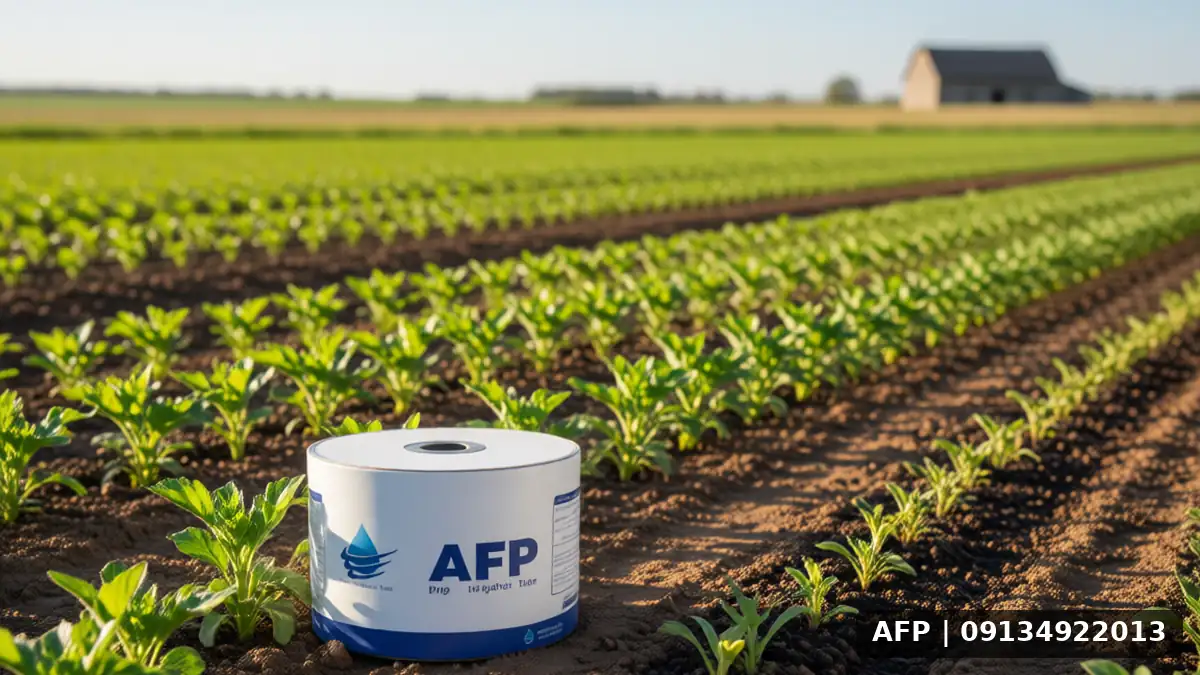
In the image above, the organized planting rows and drip tape lines are visible, indicating precise planning during the agricultural stage.
Planting procedures and field preparation for Saffron
Before planting, the soil must be thoroughly tilled and harrowed to reduce mechanical resistance. In Saffron cultivation, row spacing and plant-to-plant distance are critical. Excessive row spacing complicates weed management and increases eradication costs. Conversely, narrower spacing leads to competition for light and nutrients. Typically, a row spacing of 50 to 60 cm and a plant-to-plant distance of 20 to 30 cm are recommended. This layout allows the drip tape to be placed between rows without damage. Furthermore, using plastic black mulch can help suppress weed growth and retain moisture.
Drip tape installation and connection to the main system
Proper drip tape installation requires high precision to prevent breakage or kinking. First, place the distribution lines adjacent to the rows. Then, connect the drip tape to the main pipes using appropriate fittings and maintaining constant pressure. The key point is that the water flow rate through the drip tape must remain constant to ensure uniform irrigation. Therefore, A comprehensive drip tape irrigation guide for greenhouses and open fields is a valuable resource for understanding hydraulic principles. In field cultivation, line-end pressure must not exceed the allowable limit, as this can cause the tape to rupture. Using a pressure regulator can resolve this issue.
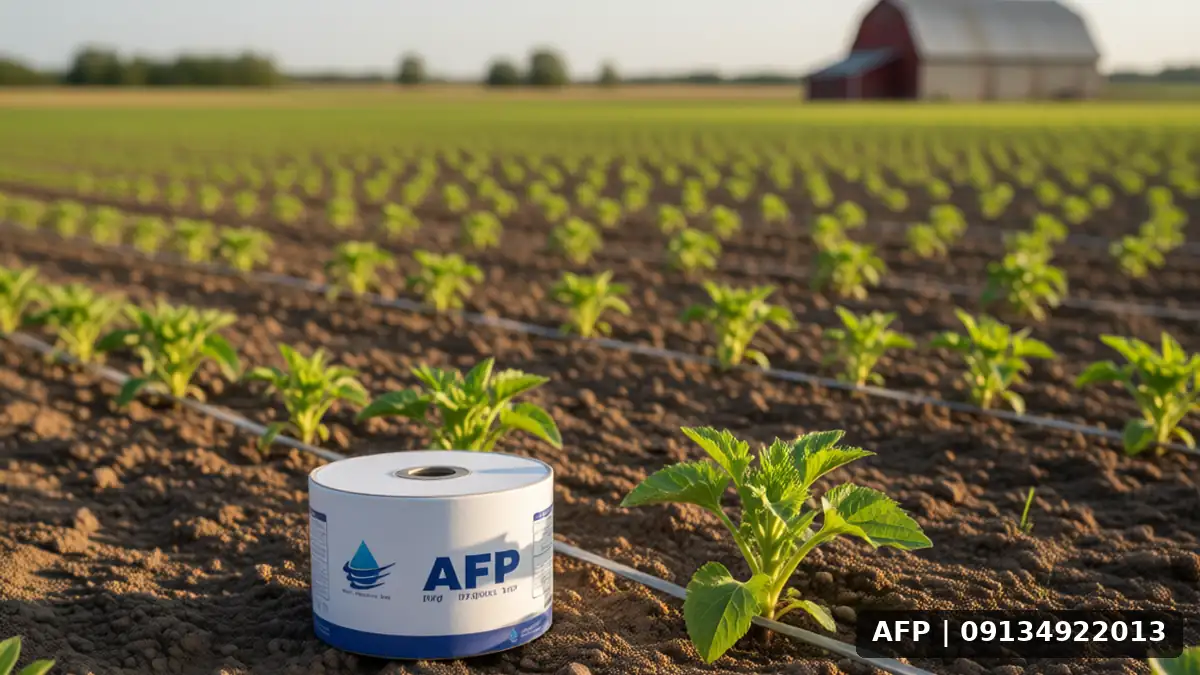
In this image, the connection point of the drip tape to the main distribution line using polyethylene fittings is visible.
Irrigation timing schedule and moisture requirements
The espresso irrigation program varies based on the plant’s growth stage and local climate conditions. In the germination stage, continuous and high moisture levels are required. During the vegetative stage, the plant is developing its root system and needs regular watering. In the flowering and fruiting stage, water requirements decrease slightly to prevent root rot and reduce the risk of fungal diseases. The table below estimates water requirements in cubic meters per season:
Growth Stage
Irrigation Interval (Days)
Irrigation Duration (Hours)
Special Considerations
Germination
2 to 3
0.5 to 1
Complete rooting, soil temperature above 15 degrees
Vegetative
3 to 4
1.5 to 2
Increased growth rate, check leaf health
Flowering
4 to 5
1 to 1.5
Reduce moisture to prevent fungal diseases
Maturity and Harvest
6 to 7
0.5
Cut off water before harvesting to maintain dry quality.
Weekly checks of soil moisture using a penetrometer or a digital moisture meter are recommended. If the soil is very dry, increase the frequency of irrigation; if it is too wet, reduce it. Pay attention to the performance of the drip tape under different conditions which can serve as a useful guide for your settings. Also, irrigation during the cooler parts of the day (early morning or late evening) is recommended to minimize water evaporation.
Rainfall and weed management in the drip system
One of the benefits of drip irrigation is that the area between rows remains weed-free (when using drip tape). However, medicinal plants are sensitive to the chemical nature of certain herbicides. Therefore, non-chemical methods, such as mulching and thermal control, are recommended. Mulching not only helps control weeds but also preserves soil moisture and improves soil structure. In addition, the use of glass or polyethylene covers at the start of planting can be helpful in cold regions. Also, if fungal diseases caused by excess moisture are observed, the interval between irrigation sessions should be increased, and preventive fungicide applications should be used. Read about irrigation pipes for different crops to help you select the best pipe material for your region.
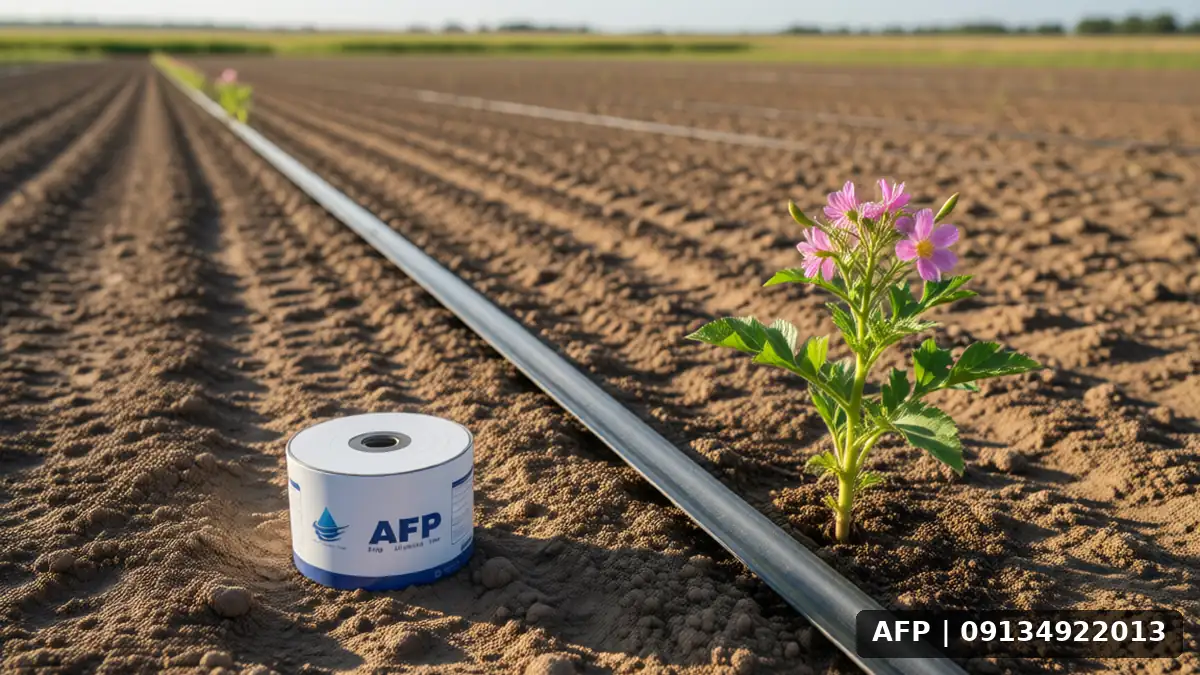
This image shows an example of mulching coverage and drip tape lines in planting rows.
FAQs about planting espresso with drip irrigation
Can salty water be used to irrigate espresso?
No, medicinal plants are generally very sensitive to salt. Using water with a high EC can cause leaf scorch and reduce the absorption of nutrients. If the water source is saline, it needs to be desalinated.
What is the best time to connect the drip tape to the main pipe?
It is recommended to connect the drip tape to the main pipe before starting irrigation to prevent water pressure from flushing inside the tape. Also, ensure the inside of the tape is clean to avoid clogging.
What should be the spacing of the faces of the drip tape?
Emitter spacing can range from 2 to 10 centimeters depending on the drip line model. For medicinal plants with shallow root systems, high-density emitters (e.g., 2 or 3 centimeters) are more suitable to ensure uniform moisture distribution.
Is it feasible to use liquid fertilizers with a drip irrigation system?
Yes, drip systems enable Fertigation. However, fertilizers must be diluted to the appropriate concentration before entering the system to ensure solubility. This practice enhances crop yield efficiency.
Conclusion and final recommendations
Cultivating medicinal plants such as Espresso using drip and tape line irrigation is a sustainable and cost-effective approach that can significantly increase crop yield. The key to success lies in selecting suitable equipment, ensuring correct installation, and precise irrigation scheduling. By adhering to the principles outlined in this article and considering local climatic conditions, resources can be conserved and high-quality products delivered to the market. It is recommended to calculate seed quantity and agricultural requirements based on local conditions before final implementation. Additionally, consult irrigation experts for local adjustments. Success in this process requires patience, precision, and continuous attention to plant health. With regular monitoring, optimal performance throughout the agricultural season can be achieved.