Center Pivot Irrigation for Sugar Beet: Applications and Comprehensive Guide
Introduction: The Importance of Central Irrigation in Beet Sugar Cultivation
Beet sugar is a high-value root crop that, due to its deep-rooted nature and extreme sensitivity to drought stress, requires precise and optimal management of water resources, which is of vital importance. Central Irrigation Or central irrigation systems, which are based on the principles of water distribution according to root depth and spread, allow farmers to deliver water and nutrients with high precision directly to the root zone. Compared to conventional methods such as surface or sprinkler irrigation, this approach significantly reduces water consumption while improving crop growth uniformity and root quality. Below, we examine the applications, benefits, and key implementation points of this novel method in beet sugar cultivation to facilitate the optimization of agriculture.
Technical Fundamentals of Central Irrigation in Beet Sugar
Precise definition and fundamental differences from standard drip irrigation
Unlike common drip systems that primarily focus on the soil surface layer, central irrigation facilitates vertical water infiltration to depths of 40 to 60 centimeters through intelligent pressure and flow rate adjustments. This characteristic constitutes a competitive advantage for beet sugar, whose main root storage zone is located at medium depths. Ensuring moisture at these depths guarantees that the plant has access to stable moisture resources even under conditions of severe temperature fluctuations.
Key and Primary Advantages for the Beet Sugar Crop
- Reducing soil tension: Uniform moisture distribution at depth prevents cracking and root stress caused by alternating wet and dry cycles.
- Increasing nutrient uptake rate: Concentrating nutrients in the active root zone significantly improves fertilizer efficiency and reduces fertilizer waste.
- Weed control: Maintaining relative dryness in the inter-row spaces creates unfavorable conditions for weed growth and reduces chemical costs.
- Water resource conservation: Deep irrigation reduces direct evaporation from the soil surface, enabling more sustainable water resource management.
Practical applications and critical implementation tips
Guide to selecting the appropriate drip tape for sugar beet
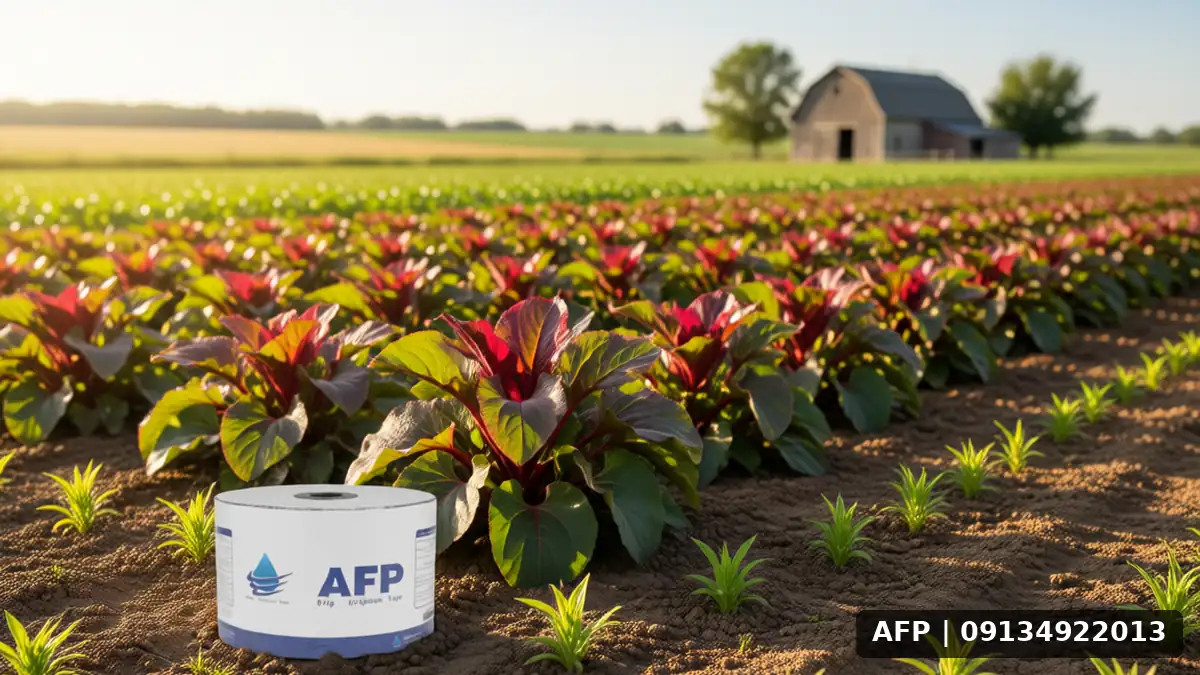
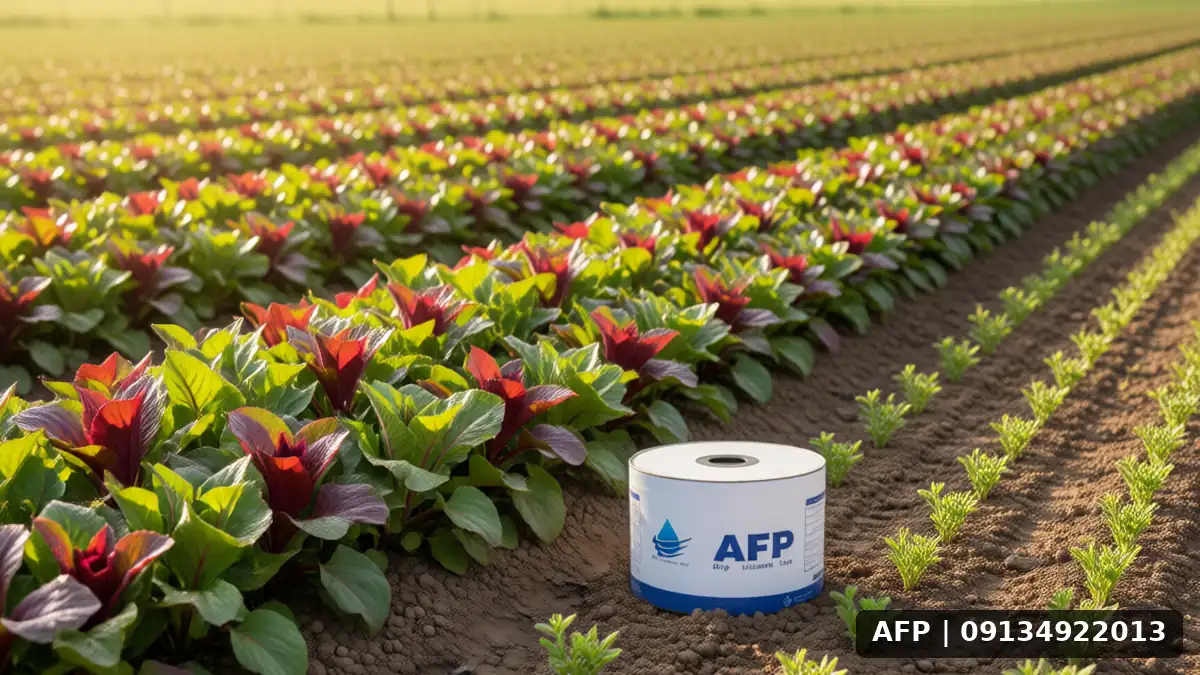
For successful drip irrigation implementation, selecting drip tape with the appropriate thickness and structure is critical. For sugar beet, tapes with a thickness of 100 to 150 microns are recommended due to their resistance to soil pressure and root penetration. The hole spacing must also be adjusted to match the sugar beet planting layout, which is typically 10 to 20 centimeters. Correct selection of agricultural drip tape can extend the system’s useful life by up to 3 seasons. To understand the precise selection criteria, you can refer to the comprehensive Agricultural drip tape selection guide.
Precise management of water pressure and flow rate
One of the main challenges in drip irrigation is maintaining constant pressure along the entire length of the tape. Pressure loss at the end of the line can cause water deficiency for plants at the end of the row and reduce crop uniformity. The use of flow regulators and appropriate filtration systems mitigates this issue. Additionally, scheduling irrigation based on real-time soil moisture sensor data doubles the efficiency of this method and minimizes resource waste.
Fertigation
A key advantage of pivot systems is their ability to enable highly precise fertigation. Soluble fertilizers are delivered directly to the root zone through irrigation lateral lines. This method is particularly beneficial for phosphorus fertilizers, which are rapidly fixed in sandy soils. Maintaining the appropriate pH of the fertilizer solution is essential to prevent precipitation within the laterals and to avoid clogging of emitters.
Pivot System Installation and Maintenance Guide
Lateral Line Inspection and Water Requirement Calculation per Hectare
When installing the system, it is important to note that the water requirement for one hectare of sugar beet varies based on regional climate and soil type. Typically, 6,000 to 12,000 cubic meters per year are required. How much lateral line maintenance is needed for one hectare? This amount depends directly on row spacing and soil type. Regular lateral line maintenance, including filter flushing and periodic inspection for emitter clogging, is a critical responsibility of the farmer. For precise information on water requirements, you may consult the practical guide. Lateral Line Requirement per Hectare Benefit from it.
Common problems and practical solutions
- Drip line blockage: Use of sand and disc filters with 80-120 mesh screens. Periodic flushing of the system before the start of the season is recommended.
- Pressure drop at the end of the line: Dividing laterals into shorter sections or using pressure-regulating valves can solve the problem.
- Physical damage to the line: High-precision mechanized sowing and avoiding plow interference with previous lines to prevent tearing is essential.
Impact of center pivot irrigation on final yield
Research indicates that using center pivot irrigation systems can increase beet root yield by up to 15%. This improvement results from reduced environmental stress and optimized nutrient uptake. Key factors affecting yield per hectare in beet crops include soil depth, root type, and water management. Additionally, beet roots are sensitive to high concentrations; therefore, precise control of the EC of fertigation solutions is critical. For a better understanding of factors affecting yield, refer to the detailed article Factors affecting yield per hectare for study.
Frequently Asked Questions (FAQ)
Is center pivot irrigation suitable for all soil types?
Sandy and light soils are highly compatible with this system because water infiltrates more easily. In clayey and heavy soils, greater care must be taken in adjusting flow rates to prevent surface saturation.
What cost should I budget for installing a center pivot system?
Costs depend on the type of lateral line, filtration, and connections. Generally, the cost per unit area for lateral lines is lower than for drip systems, but filtration and pump costs must be calculated. Purchasing 3-inch pipes and other key components from reliable sources ensures the quality and durability of the system. To learn about purchase options and the use of network components, visit the useful page Purchasing 3-inch pipes and associated facilities It can serve as a good guide.
Can potato drip tape be used for sugar beets?
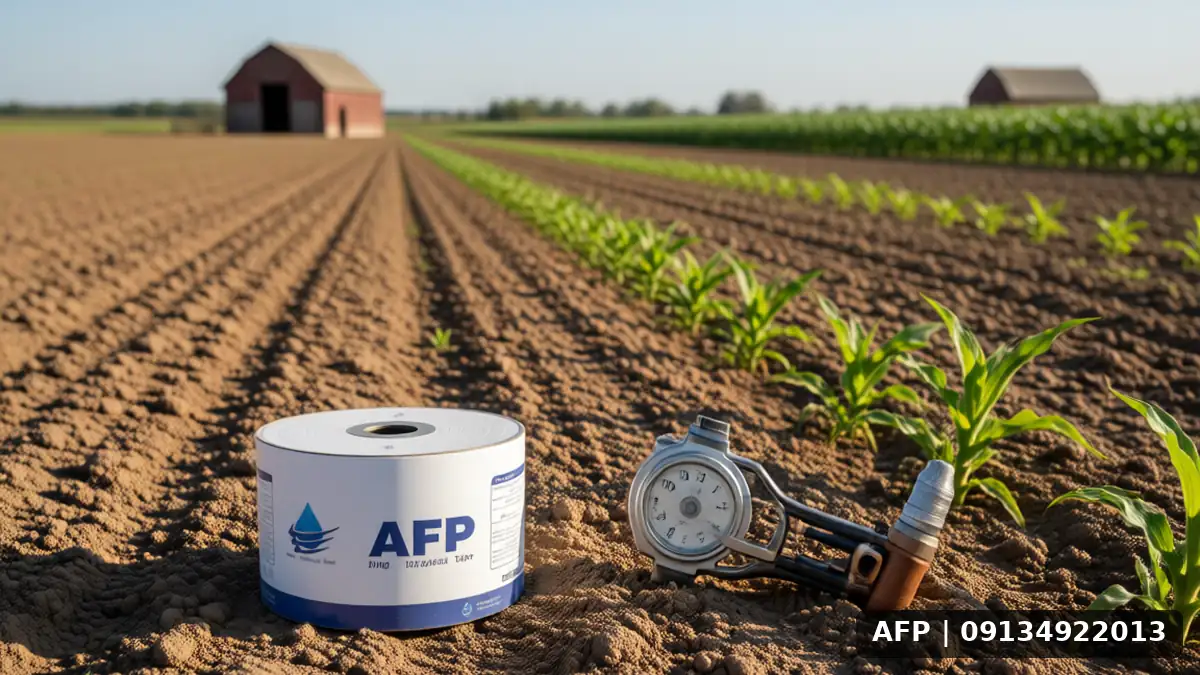
Potato drip tape typically has narrower emitter spacing. For sugar beets, it is better to use drip tape with 15-20 cm spacing to ensure optimal root zone coverage. Using inappropriate drip tape can lead to water overspray, resource waste, and reduced efficiency.
Summary
Pivot irrigation in sugar beet cultivation is an efficient and essential method for improving water use efficiency and crop yield. By selecting appropriate drip tape, properly managing pressure, and applying precision fertilization, farmers can overcome challenges such as drought stress and poor root quality. This method requires technical knowledge, continuous monitoring, and careful planning. We recommend that, in addition to reading this article, you consult with local irrigation system experts to optimize your system design according to your regional climatic and soil conditions.