Center Pivot Irrigation in Quinoa Crops: Challenges and Practical Solutions
Introduction: The Importance of Precision Irrigation in Quinoa Cultivation
Quinoa, as a valuable and protein-rich grain, requires specific soil and moisture conditions. This crop is highly sensitive to salinity and irregular moisture deficiency, which necessitates more complex irrigation systems. While center pivot irrigation is functional, it presents challenges in quinoa cultivation that, if unmanaged, negatively impact grain quality and yield. In arid and semi-arid regions, optimal water use is not only an economic necessity but also a priority for resource sustainability. This article provides a detailed examination of these challenges and practical solutions to overcome them, enabling farmers to make decisions with greater confidence. This analysis includes technical assessments, costs, and practical responses to give readers a complete picture of optimal water management in quinoa farms.
Technical and Environmental Challenges of Center Pivot Irrigation
Uneven Moisture Distribution
One of the major issues in center pivot systems is the difference in water pressure between the beginning and end of the lateral. This heterogeneity causes some plants to experience shedding stress while others face excessive moisture. Although quinoa has some tolerance to salinity, salt accumulation at the soil surface can halt root growth. Therefore, precise nozzle adjustment and maintaining pressure ratios are of high importance. Farmers should regularly monitor water pressure at various points in the system to prevent salt accumulation and ensure uniform growth across the entire field. Additionally, periodic inspection of water channels at the downstream points of the system can prevent latent problems and reduce major repair costs.
Physical Damage to Young Plants
In the early seeding stages, delicate quinoa stems are vulnerable to high-pressure water droplets. Turbulence and droplet impact can cause stem breakage or erosion of soil around the roots. This damage directly affects crop losses and planting density. Compared to wheat, quinoa requires more delicate management during sensitive growth phases, which can be addressed by selecting appropriate nozzles and reducing flow velocity. The use of low-pressure nozzles is highly effective in preserving soil structure and preventing heavy rainfall impact on seedlings. Furthermore, maintaining a safe distance between the nozzle tip and the seedling tip minimizes mechanical risk and ensures the sustainable health of the plant stand.
Maintenance and energy costs
Pivotal systems require significant energy for rotation. In semi-arid regions, this cost must be calculated alongside seed and labor expenses. Although drip lines require a higher initial investment, they offer better economic justification in the long term through reduced losses and increased yield. Cost-benefit analysis from a long-term return perspective enables informed decision-making. Farmers should calculate the rate of return on investment based on reduced water consumption and improved product quality to ensure the economic effectiveness of these methods. Comparing fuel or electricity costs for rotations with the additional efficiency gained from precise irrigation is the key economic equation that must be formulated before investment.
Practical solutions: Using drip lines
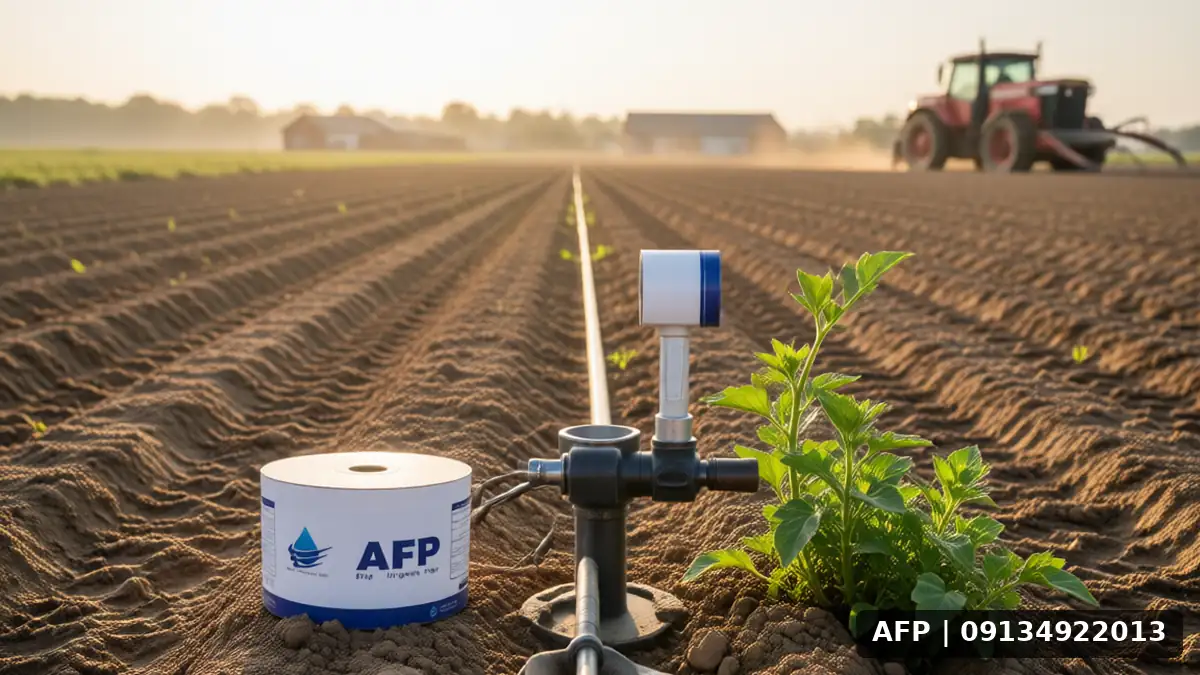
To address the challenges above, the use of modern technologies such as the installation of drip irrigation lines is recommended. This method resolves the issue of uneven distribution by creating low-pressure, focused irrigation. The design principles of drip lines can be directly applied to improve central systems. By referring to the drip irrigation line installation guide, users can learn the correct method for connecting sublines to the mainline and the appropriate pressure. These systems maximize root water uptake efficiency and prevent surface evaporation, which is of critical importance for quinoa. Adhering to standard installation principles and using high-quality materials extends the system’s operational life and simplifies routine maintenance.
Practical tips for farmers
- Soil analysis: Before proceeding, use soil testing to determine water retention capacity and salinity. Quinoa does not perform well in soils with high pH, and soil amendments must be carried out before the start of the planting season. Accurate identification of soil type is the first step in selecting an appropriate irrigation plan.
- Scheduling: The optimal time for irrigation is during the cooler night hours to reduce evaporation. Accurate irrigation scheduling in response to plant growth is essential. Aligning with weather forecasts helps minimize weather-related risks.
- Moisture monitoring: The use of soil moisture sensors at three depth levels limits excessive irrigation and prevents waterlogging of the root zone. Collected data should be recorded and analyzed to optimize future programs.
- Mulching: Organic mulches reduce strain on the irrigation system and retain moisture, which is highly effective in quinoa fields. Selecting the appropriate mulch type further enhances its complementary effect on soil moisture conservation.
Frequently Asked Questions (FAQ)
Is central pivot irrigation suitable for all climates?
No, in arid and dry climates, the efficiency of this system decreases. In such cases, drip irrigation systems with protective covers perform better. Selecting a system based on local data is the key to success, which can be achieved by studying resources such as Wheat irrigation yield per hectare As an example, it is understandable. Comparing the irrigation of various cereals with quinoa highlights the diversity of water requirements and helps establish realistic expectations.
What are the differences between quinoa irrigation and conventional grain irrigation?
Quinoa has a fibrous root system and is more drought-tolerant, but for maximum yield, it requires stable moisture during the grain-filling stage. Conventional grains require concentrated irrigation cycles. Quinoa responds better to gradual distribution. This difference in irrigation needs complicates program design and requires greater attention to timing to prevent yield loss. Flexibility in adjusting water pressure at different growth stages enhances the success rate.
The impact of irrigation on other pulses
Precision systems can also affect alternative crops. It has been observed that uniform moisture distribution creates a significant difference in grain quality. This is also seen in crops such as production of lentils per hectare factors where water management directly affects final yield. Farmers can use this knowledge to improve their farm yields and prevent losses caused by water stress. Inter-cropping with similar crops strengthens the economic sustainability of the farm.
Can pivot irrigation be used to reduce salinity?
Yes, salinity can be reduced through leaching. However, it must be ensured that sufficient water is available to prevent subsurface contamination. This process requires precise water volume calculations and must be adjusted carefully to avoid wasting water resources. Salinity control is considered a key part of overall farm efficiency and should be accompanied by regular monitoring of soil electrical conductivity. Targeted leaching unlocks the potential of crops that have been hindered in saline soils.
Conclusion
Center-pivot irrigation in quinoa cultivation is a powerful tool, but without addressing technical challenges, it cannot reach its full potential. Combining precise irrigation knowledge with drip tape technology and continuous soil monitoring is the key to success. Farmers should make informed decisions based on local data to preserve water resources while maximizing the economic productivity of quinoa. This integrated approach paves the way for a sustainable future in agriculture. Familiarity with green bean yield per hectare can help better understand the various dynamics of multiple cropping in center-pivot irrigation systems and inspire farmers to pursue technical optimization. Integrated planning serves as the bridge between theory and practice.
Related articles: How to install drip tape irrigation, drip tape installation guide, seed rate for rainfed wheat