Center Pivot Irrigation in Coriander Cultivation: Prerequisites

Introduction: The necessity of precise irrigation management in cilantro cultivation
Cilantro, a plant from the Apiaceae family, plays a significant role in the food and pharmaceutical industries. Despite the rapid growth and short cycle of this crop, water management remains a primary challenge for producers. Cilantro roots are primarily located in the top 30 centimeters of soil; therefore, any inconsistency in irrigation can quickly affect crop quality and yield. In this context, the concept of axis irrigation — in which water is directed from a central source or channel toward lateral lines or strips — can be considered a engineered solution for small to medium-scale cilantro cultivation projects.
However, before any practical implementation, a thorough understanding of the technical, agronomic, and management prerequisites is essential. These prerequisites include correct bed selection, irrigation network design, pressure and flow rate adjustment, and coordination with the cilantro cropping schedule. We examine these factors in detail below to enable farmers to achieve maximum efficiency in their cilantro cultivation with minimal risk.
Defining axis irrigation and its differences from conventional methods
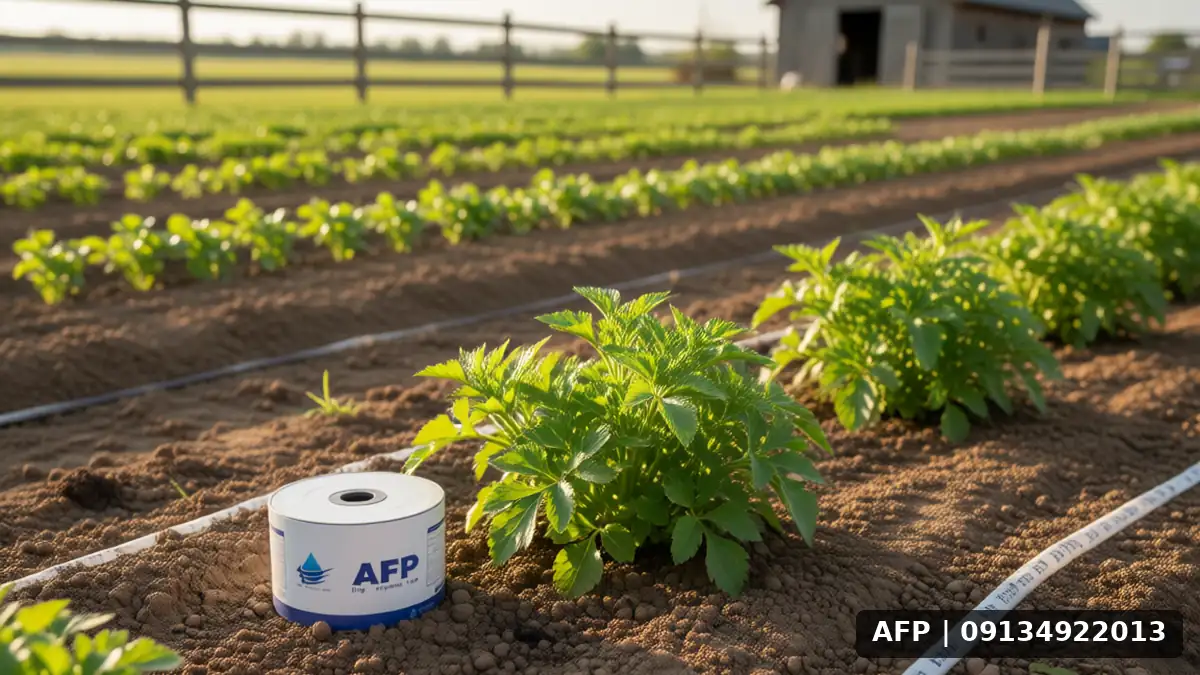
Axis irrigation (AFP) is a semi-centralized method in which water from a main channel (axis) is distributed to multiple lateral lines or strips. Unlike drip irrigation, which delivers water point-by-point near the roots, axis irrigation moves the water flow along a specific strip, continuously moistening the soil bed. This method demonstrates significant efficiency under conditions where land slope is slight and the soil texture is medium to light.
In comparison with Strip-tap irrigation which is used for vegetables with deeper roots, such as potato, pivot irrigation for shallow-rooted plants like cilantro requires more precise adjustments. This is because cilantro is sensitive to constant wetness, and flow rate inconsistencies can lead to root rot. On the other hand, compared to Increase spinach yield through irrigation management, cilantro requires greater precision in irrigation scheduling due to its faster growth rate.
Why does cilantro require a different approach?
- Shallow root depth: 90% of cilantro roots are located in the top 20 centimeters of soil. This means that any insufficient or excessive water infiltration directly affects plant health.
- Short growing season: Cilantro can be harvested within a window of 6 to 10 weeks; therefore, the irrigation system must be installed, adjusted, and reversible quickly.
- Water stress sensitivity: Under water deficiency, cilantro rapidly loses its fragrance and essential oils, reducing its commercial value.
Technical and engineering prerequisites for implementing central irrigation in cilantro
Successful implementation of central irrigation on a cilantro bed requires strict adherence to precise engineering principles. These prerequisites can determine the boundary between successful production and economic failure.
Designing the central network and bed selection
- Slope and level: The maximum allowable slope for center-pivot irrigation in coriander is 0.5% to 1%. Steeper slopes cause water accumulation at the lower end and deficiency at the upper end.
- Bed width: Coriander is typically planted on beds 40 to 60 centimeters wide. In center-pivot irrigation, the irrigation furrow must be positioned exactly at the center or along one of the bed lines to ensure symmetric water distribution over the root zone.
- Furrow/pipeline material and diameter: Using polyethylene furrows with a thickness of 0.8 millimeters or greater provides resistance to pressure and tension. The inner diameter should be sized to achieve the design flow rate with minimal pressure loss.
Pressure source and flow rate regulation
Unlike drip irrigation, which requires low pressures (1 to 3 bar), center-pivot irrigation using open or semi-open furrows can operate at lower pressures and higher flow rates. The primary prerequisite is a stabilized pressure source. Pressure fluctuations lead to uneven water deposition, which is unacceptable in coriander due to its high sensitivity. It is recommended to use a pressure regulator or a pump with adequate capacity to maintain a stable flow rate.
To better understand the differences in water behavior across various networks, one can refer to Luxury and Thread Irrigation Guide It was noted that although coriander requires a more precise pattern, it also follows general principles. Advanced Agricultural Solutions In arid regions, it can serve as a model for resource optimization in coriander cultivation.
Agricultural and Management Prerequisites for Coriander Cultivation
Pivot irrigation is not just a technical tool; it must be synchronized with the coriander cropping plan. This synchronization includes selecting planting times, seed types, and soil management.
Scheduling of Planting and Pivot Irrigation
Coriander can be planted in both spring and autumn. In both seasons, pivot irrigation should begin from the day of planting. The initial prerequisite is bed preparation, meaning precise and flat leveling. Even a 2 cm height difference can cause over-irrigation at one point and drought at another. Therefore, the bed preparation stage should be considered a critical prerequisite.
Soil Management and Salt Balance
Cilantro performs best in light to medium soils with a pH of 6 to 7.5. A soil analysis is essential before installing a pivot irrigation system. Heavy soils with poor drainage are prone to root fungal diseases when pivot irrigation maintains continuous moisture. In such cases, combining pivot irrigation with grade molding or using low-demand crops, such as Reducing Seed Row Spacing to Increase Yield can be a combined solution, although cilantro, due to its high added value, requires a more precise irrigation system on its own.
Seed Management and Planting Density
One prerequisite for success is selecting high-quality seed at the appropriate density. Cilantro typically requires 10 to 15 kilograms of seed per hectare. High density increases competition for water. In pivot irrigation systems, if the set flow rate is based on a lower density, plants in the center will face moisture deficiency. Therefore, coordination between irrigation flow rate and seed density is a computational prerequisite.
Practical Tips for Implementation and Performance Assurance
- Pilot Test: Before full-scale planting, sow a 10-meter test plot and operate the center pivot irrigation system. Measure the water deposition pattern using a manual moisture sensor.
- Responding to Temperature Fluctuations: On hot days, increase flow rate by 15 to 20 percent but reduce irrigation duration to prevent bed waterlogging.
- Regular Cleaning: Inspect tape line emitters every two weeks. Layered sediment can reduce flow rate. High-pressure flushing at the beginning of each season is essential.
- Fertilizer Synchronization: Use the center pivot irrigation system for injection of soluble fertilizers, but only when water and fertilizer pH levels are compatible. Coriander is sensitive to nitrogen; excess application can lead to rapid vegetative growth and reduced aroma.
- Visual monitoring: Check the moisture of the root zone bed up close. If the soil under the roots is dry at a 5-centimeter depth, the system requires review.
Frequently Asked Questions (FAQ)
Is axial irrigation more suitable for cilantro than drip irrigation?
There is no direct answer. Drip irrigation is better for precise control and reducing evaporation. However, if you have lower-pressure infrastructure or narrow, concentrated beds, axial irrigation can be more efficient. The ultimate criteria are installation cost, control precision, and regional climate.
How do we adjust the appropriate flow rate for cilantro?
Flow rate depends on soil type and temperature. For clay loam soil, a flow rate of 0.5 to 1 liter per hour per meter of line is appropriate. For sandy soil, up to 2 liters per hour. Always adjust using soil moisture monitoring.
Can central pivot irrigation be used alongside other vegetable crops?
Yes, but with caution. If cilantro is intercropped with deep-rooted vegetables such as potatoes, the difference in water requirements will stress one of the plants. It is better to Tomato seed guide and density use as a visual design example based on shared irrigation needs.
What is the role of slope in central pivot irrigation?
Slope is the determining factor for water distribution. Steep slopes pull water toward the downslope end, leaving the upslope end dry. The primary prerequisite is precise leveling of the field.
Conclusion: Central pivot irrigation is a smart choice with specific prerequisites
In cilantro cultivation, central pivot irrigation is an engineered and effective method, but its success depends on strictly adhering to technical, agronomic, and management prerequisites. From field preparation and soil analysis to flow rate adjustment and moisture monitoring, every step plays a role. This method can provide a competitive advantage, particularly in small and medium-sized farms with limited space and appropriate water access.
Rather than focusing on a single technology, adopting a systematic approach aligned with the specific requirements of cilantro is key to reducing waste and increasing the commercial value of the crop. By meeting these prerequisites, cilantro producers can use water resources more optimally and produce a standardized, high-quality product for the market.