Broadcast Irrigation in Parsley Cultivation: A Detailed Comparison with Drip and Sprinkler Systems
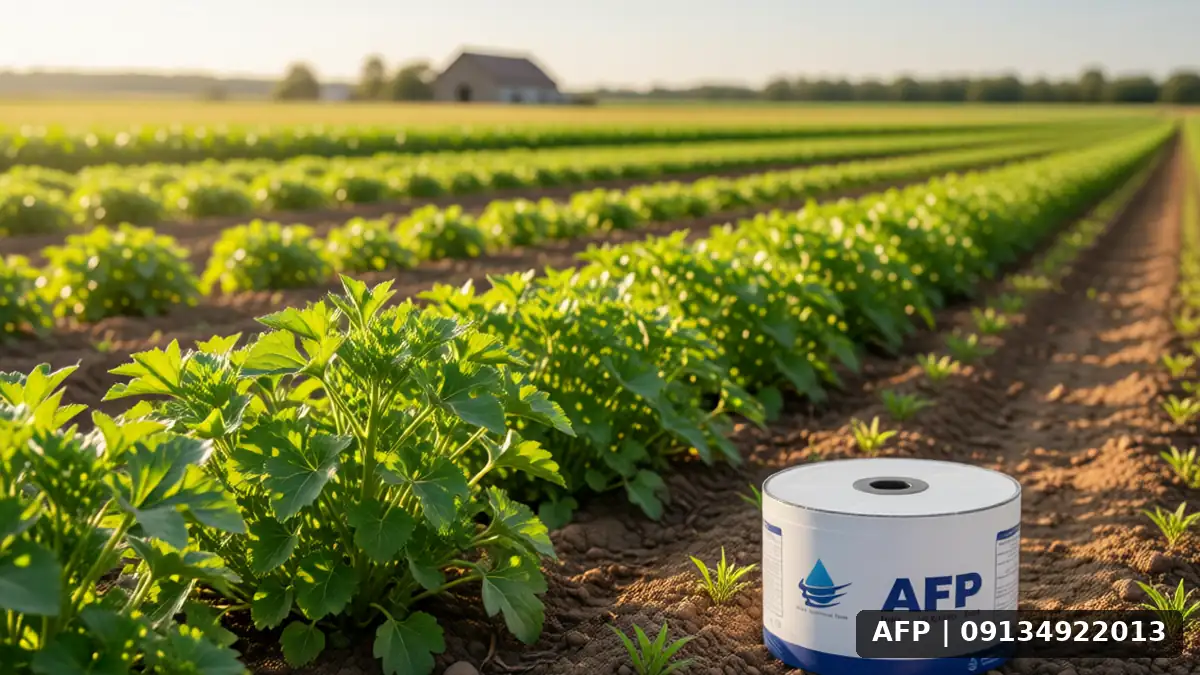
Introduction: Why is choosing an irrigation method for parsley critical?
Parsley is a crop sensitive to water stress and possesses a delicate root system. The choice of irrigation method directly impacts green quality, leaf moisture levels, and ultimately, the commercial value of the produce. In recent years, sprinkler irrigation has faced significant challenges compared to modern methods like tape and drip irrigation, despite being an older method still widely used in some regions. This article provides farmers with a precise and practical comparison of these methods to help them make the best decision for their farms.
What is sprinkler irrigation and how is it implemented for parsley?
Sprinkler irrigation is a method where water is distributed through rotating or fixed sprinklers, simulating natural rainfall across the field. In parsley cultivation, which is typically grown in wide rows, using fixed or rotating sprinklers with an appropriate coverage radius can facilitate irrigation operations. However, uniform water distribution in this method depends on wind, field slope, and correct pressure settings, which can be challenging in small parsley farms.
One of the main concerns with sprinkler irrigation is the excessive wetting of the parsley canopy. This can increase the risk of fungal and bacterial diseases and reduce the quality of the green for exporters or the local market. Therefore, precise planning of irrigation timing (e.g., early morning hours) is essential.
Advantages and disadvantages of sprinkler irrigation for parsley
- Advantages: Lower initial cost compared to drip tape, suitability for other plants in the crop rotation cycle, and relative control over water and soil.
- Disadvantages: Water loss through evaporation, risk of fungal disease contamination, dependence on weather conditions, and inability to precisely control root zone moisture.
To better understand the role of this method alongside other systems, you can refer to the Parsley Irrigation Guide, which covers planting and maintenance details.
<>
Drip Tape: Challenges and Opportunities in Parsley Cultivation
In recent years, Drip tape It has been proposed as an efficient alternative to center pivot irrigation for row-crop agriculture. However, is this system suitable for parsley? Drip tape is generally better designed for crops with wider row spacing. Parsley is often planted in dense rows, which can create issues regarding the placement of the tape and its distance from the stems. If the drip tape is too close to the plant crown, the risk of plant damage and system failure increases.
Nevertheless, the use of drip tape for beans or other leafy greens such as parsley can be successful with specific adjustments. The key to success is selecting the appropriate emitter and maintaining a safe distance between the tape and the plant. Many farmers prefer to grow parsley using linear drip due to its small crown size, but if you use drip tape, ensure that the tape is placed in the middle of the empty rows to prevent it from obstructing stem growth.
Water Consumption Comparison: Center Pivot vs. Drip Tape
For a more detailed comparison, study how drip tape works for bean crops; its principles are transferable to cilantro cultivation, although with differences in row spacing. Additionally, to better understand design principles, determining drip tape emitters is of great importance to ensure that the entire root zone is irrigated.
<>
Practical tips for success with both methods
- Soil analysis: Before selecting a system, assess the soil type. In sandy soils with rapid water infiltration, drip tape with higher flow rates performs better, but in clay soils, surface irrigation may be ineffective due to poor water penetration.
- Irrigation Scheduling: For surface irrigation, always irrigate in the early morning or evening to minimize evaporation and prevent prolonged wetness of the parsley crown. With drip tape, timing is less critical, but the irrigation duration must be calculated based on root zone requirements.
- Mulching: Using mulch in parsley cultivation with drip tape systems can conserve moisture and prevent weed growth. In surface irrigation, mulching has a greater effect as it prevents the bare soil from becoming excessively wet.
One key factor is seed spacing in parsley cultivation. Knowing the saffron seed amount per hectare may seem useful for other plants, but for parsley, knowing the exact planting density determines whether the drip tape system operates with lower pressure. High parsley density requires precise adjustment of precision irrigation systems.
Frequently Asked Questions (FAQ)
Is drip irrigation suitable for parsley in hot weather?
No, not very much. In hot weather, micro-tube systems suffer from high evaporation and wind-induced water drift, leading to water waste and reduced efficiency. Micro-tube systems are significantly more efficient in hot conditions.
Which system is more cost-effective for small parsley farms?
For very small farms, manual or simple drip irrigation may be more suitable than micro-tube or drip systems. However, if the farm has elongated beds and you intend to manage several hectares, micro-tube systems offer long-term advantages with moderate costs.
If I use a micro-tube system, do I need a filter?
Yes, definitely. Micro-tube systems are highly sensitive to sediment and organic matter. Without an appropriate filter, the tubes clog and water distribution becomes uneven, which is lethal to the delicate roots of parsley.
Can furrow and tape systems be combined?
Combining different systems is generally not recommended as it increases system complexity and incurs additional costs. It is better to select a primary system and design the field based on it.
<>
Conclusion: Which System Is Best for You?
Choosing between furrow and tape irrigation for parsley cultivation depends on several factors. If you aim to reduce initial costs and have large farms with suitable soil, furrow irrigation can be a viable option, provided you monitor crown fungal diseases. However, if your priorities are green quality, reduced water consumption, and crop uniformity, Tape or linear drip are better options. Paying attention to row spacing, soil type, and climatic conditions during selection is key to your success. It is recommended to consult an irrigation specialist before purchasing equipment to receive the best solution for your specific farm conditions.
Related articles: Yield of D8AFD8B1 onion per hectare, Tip tape for beans: A comprehensive drip irrigation guide, comprehensive guide 20cm tip tape prices iran market