Beet Yield Per Hectare with Drip Lines: A Comprehensive Practical Guide to Maximizing Efficiency
Introduction: The Vital Importance of Modern Irrigation in Determining Sugar Beet Yield
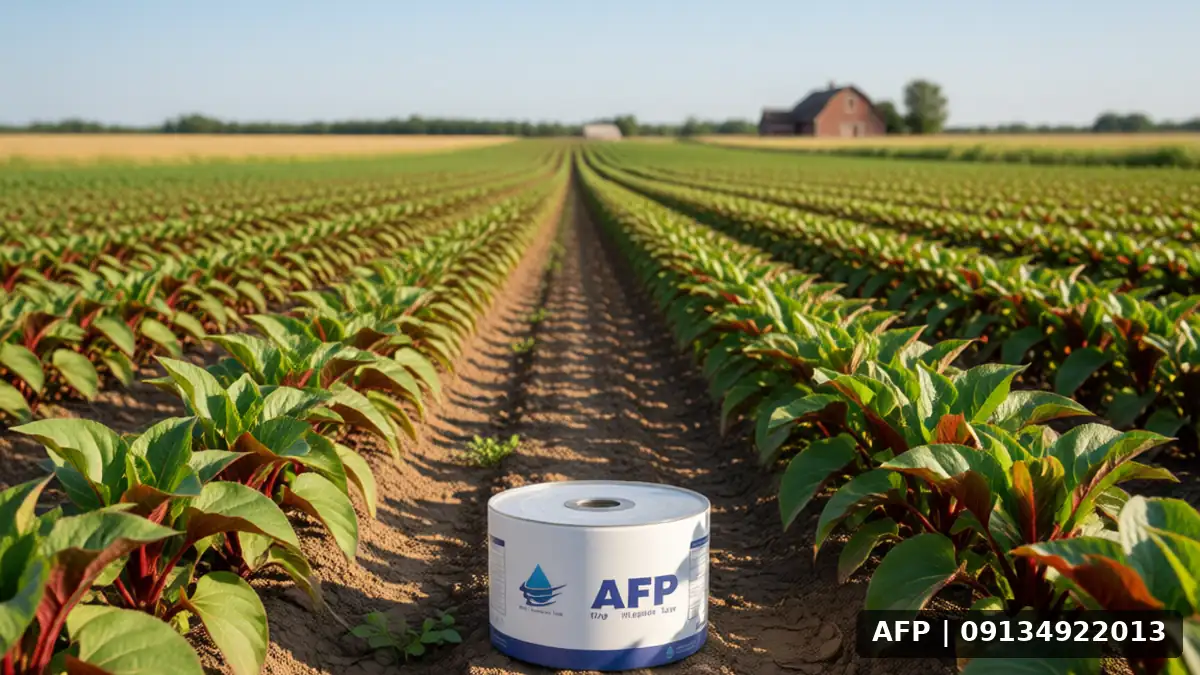
Sugar beet is a cornerstone crop of agricultural economics and processing industries with high production potential, but realizing this potential depends on precise resource management. One of the main challenges for farmers in arid and semi-arid regions is achieving the optimal sugar beet harvest per hectare using drip line irrigation without wasting water and energy. Pressurized irrigation systems, particularly drip lines, enable uniform moisture distribution in the root zone by providing a steady, controlled water flow at the soil surface. This approach not only prevents salt leaching and maintains root-soil equilibrium but also brings nutrients closer to the rhizomorph zone, enhancing nutrient uptake. In this guide, based on agronomic principles and field data, we review all necessary steps to improve yield efficiency and crop quality, enabling you to plan for the next planting season with greater confidence.
Soil Texture: The Primary Determinant of Irrigation Strategy
Relationship Between Rooting Depth and Drip Line
Sugar beet is a plant with a deep, fleshy root system whose effective depth can range from 0.5 to 1.5 meters, and even up to 2 meters under optimal conditions. The drip line system must be designed to maintain moisture throughout this entire depth. In loamy and heavy textures, permeability is lower and water moves more slowly; therefore, the drip line discharge rate should be lower and the irrigation duration longer to prevent water from infiltrating inaccessible layers. Conversely, in sandy and light textures, water is lost quickly; thus, irrigation frequency should be increased while the volume per irrigation event is reduced. Inaccurate adjustments based on soil texture lead to moisture stress or root suffocation, which negatively impacts final root weight and sugar concentration.
Nutrient Management: Water-Based Fertilization (Fertigation) Power
One competitive advantage of the micro-irrigation strip system over surface irrigation is the ability to perform high-precision fertigation. Sugar beet has high sensitivity to macronutrients such as nitrogen, phosphorus, and potassium, as well as micronutrients like boron and magnesium. Injecting water-soluble fertilizers through the system ensures nutrients are delivered directly to the root zone at the precise location of absorption, reducing losses due to leaching or evaporation. This method leads to a significant increase in sugar percentage in the root and improved final product quality for the sugar industry. Correctly grading fertilizer mixes and water pH is your roadmap for increasing yield. To learn about technical details and suitable combinations, you can study the relevant specialized guide at the link below, which well explains the general principles of fertilization: Comprehensive Guide to Fertigation in Drip and Micro-Irrigation Strip Systems.
Technical Parameters for Adjusting the Micro-Irrigation Strip System
Selecting Flow Rate and Line Spacing
Technical device settings must be adjusted based on the local climate and varieties. The initial recommended flow rate for sugar beet micro-irrigation strips is generally between 20 and 35 liters per hour, but this figure must be calibrated by measuring the soil water infiltration depth in your local soil. The spacing between micro-irrigation lines is also a critical parameter; in most sugar beet varieties, the typical row-to-row spacing is between 50 and 60 centimeters. This spacing must be adjusted so that the root zone is fully exposed to moisture, while preventing salt accumulation at the soil surface between rows. If the line spacing is too wide, portions of the soil will remain dry; if too narrow, installation costs will increase and the risk of root diseases will rise.
Accurate calculation of system water application rate
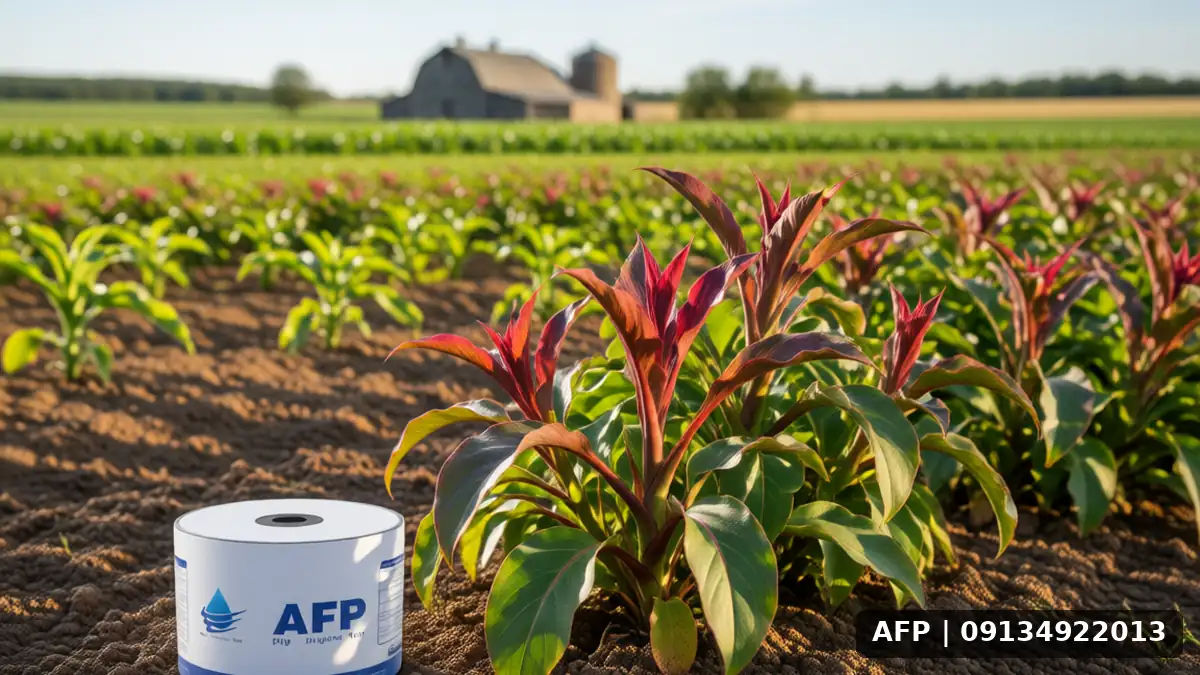
To determine the final yield, you must know exactly how much water is consumed per square meter of crop. Calculating flow instability and the system’s uniformity coefficient is a primary task of farm management. If water flow varies between zones, part of the farm will be over-irrigated while another part remains deficient, resulting in two-tiered performance. It is recommended to use standard flow measurement tools to correct for deviations. For a better understanding of calculation methods and basic formulas, studying the content related to water application rate in drip irrigation lines will help you calculate your parameters more accurately.
Practical tips for increasing performance
- Sensitive timing of growth stages: Sugarcane is most sensitive to water during the root formation and dormancy stage. Water deficit at this stage, even if compensated for later, causes the root to remain small (size fixation). Short and frequent irrigations during this period are key to achieving high weight.
- Field cultivation and variety performance: Selecting disease-resistant varieties with a maturity period suited to the regional climate constitutes half of success. Local varieties generally have more stable performance. To compare with other root crops and understand management differences, you can refer to the guide regarding Dry bean harvest per hectare Also review it to familiarize yourself with the differences between root and fruit systems.
- Root disease management: Clogged tips can alter the pH at the root zone and promote fungal growth. Using appropriate filters and performing periodic flushes with acid or chlorine extends the system’s lifespan and ensures plant health.
- Application of similar patterns: Precision irrigation systems for other crops share similar principles. Studying examples like the comprehensive guide to growing cucumbers with drip irrigation can provide a clear understanding of spacing and flow rate configurations for other row crops, although cucumber requirements are more variable.
Economic analysis and comparison with other crops
Sugarcane yield per hectare using drip irrigation can range from 50 to over 70 tons under optimal conditions. These figures are typically 20 to 30 percent higher than those achieved with conventional furrow methods. Conversely, the operating costs of the drip system include pumping energy and the purchase of soluble fertilizer. However, water savings and improved sugar quality justify the economic return of this investment. Understanding the behavior of other root and grain crops for comparison is important; for example, examining similar cases in Squash yield per hectare indicates that drip systems are suitable for both shallow and deep-rooted crops, but flow rates for squash should be adjusted based on their lower drought tolerance.
Frequently Asked Questions (FAQ) about sugarcane drip irrigation
Does drip irrigation cause root rot in heavy soils?
No, provided that flow rates are reduced and frequency is increased. Root rot is usually caused by prolonged moisture retention around the roots, which can be controlled through proper drip irrigation settings.
When is the best time to install a sugarcane drip irrigation system?
Fixed systems are typically installed before planting to minimize root disturbance during sowing. For temporary systems, the timing of the first irrigation must be synchronized precisely with the planting schedule.
What is the impact of water salinity on drip tape?
Salinity affects the effective discharge of water. In saline waters, greater surface leaching is required to keep salts away from the root zone. This directly impacts total field water consumption.
Summary and Final Recommendations
Achieving the maximum Sugar beet yield per hectare with drip tape It is a multi-step process requiring precision at every stage, from soil analysis to harvest. Combining the selection of high-potential cultivars, precise adjustment of drip tape discharge rates based on soil texture, and execution of a clear water-soluble fertilization program forms the three main pillars of your success. By continuously monitoring soil moisture and continuously optimizing parameters, you can reduce environmental risks and ensure long-term field profitability. It is strongly recommended to consult with local specialists before system installation to optimize the design according to your specific regional climatic conditions. Success in this area requires patience, precision, and the application of up-to-date knowledge.