Drip Irrigation in Marzhe Crop: A Comprehensive Guide
Introduction: The Importance of Water Optimization in Sorghum Cultivation
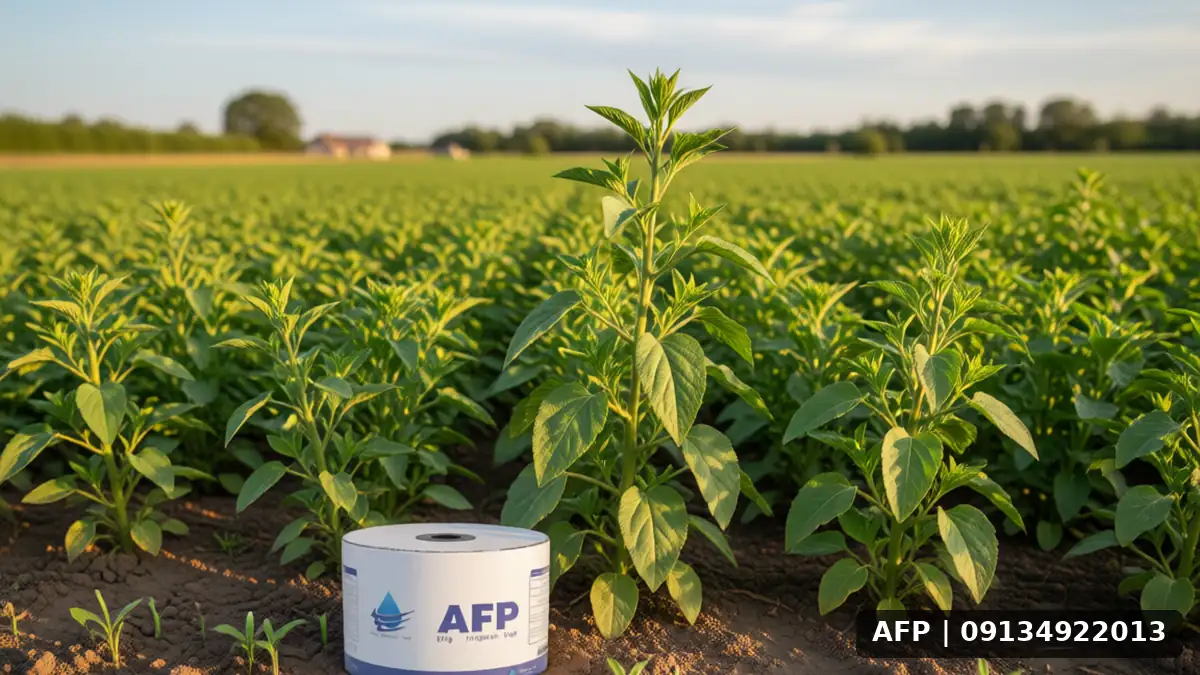
Sorghum (Sorghum) is a crop that holds a significant position in the arid and semi-arid climates of our country due to its adaptability to diverse climatic and soil conditions. Also known as sorghum, it is a key product in agricultural programs for low-rainfall regions. Despite its relative drought tolerance, proper water resource management remains the decisive factor for the final yield of this crop. Many farmers still use traditional surface irrigation methods, which leads to significant waste of water and chemical nutrients. In contrast, drip irrigation as one of the most efficient methods of water distribution, enables the precise injection of moisture and nutrients directly into the root zone. This modern method not only prevents water loss due to surface evaporation and deep percolation but also preserves the soil’s physical structure, thereby supporting better plant root development. Furthermore, reducing excessive moisture in the air space between plants significantly lowers the risk of fungal and mycological diseases.
The use of drip lines in sorghum cultivation requires precision in selecting pipe diameter, discharge flow rate, and emitter spacing. Additionally, understanding the soil type and land slope plays a pivotal role in system design. The following comprehensive guide is provided for farmers intending to adopt this system. It is based on field experience and principles of optimized hydraulics. For a better understanding of the overall mechanism and comparison with other methods, you can also refer to ‘Everything About Subsurface Irrigation’ to establish a balance between different methods and gain a proper understanding of the pros and cons of each. The choice of the appropriate method depends on the farm scale and soil type.
Explanatory Tables and Drip Irrigation System Structure
Drip irrigation systems for cucurbit crops typically consist of three main components: the water source, the main transport system (hoses or mainlines), and drip tapes. Cucurbits are plants whose planting distance varies depending on the seed type (direct-seeded or transplanted); therefore, selecting a drip tape with adjustable emitter spacings is critical. The design of the sub-main and main pipeline networks must ensure that pressure loss across the field is minimized. Design is simpler in flat fields, but sloped fields require pressure regulating valves and precise calculations. Familiarity with the various components of the system and their functions is the first step in preventing installation errors. Additionally, selecting the appropriate working pressure for the supply pump directly affects the service life of the emitters.
Selecting the appropriate drip tape type
For broadcast planting with varying distances, drip tapes with 500 mm or 750 mm emitters are suitable options. However, for higher precision, 25 mm and 33 mm spacings are also applicable. Selecting drip tape with UV-resistant material is essential for resistance to ultraviolet radiation, as poor-quality tapes degrade rapidly when exposed to direct sunlight. Familiarity with the technical differences between system components is recommended. Reading the article on drip tape maintenance and management can improve the service life (longevity) of your system. Tapes with thicker wall thicknesses offer greater mechanical resistance to pressure and plant roots.
- Emitter Discharge: For cucurbits, discharges of 2 to 4 liters per hour are generally recommended, depending on soil conditions and the plant’s daily requirement. Clay soils require lower discharge rates, while sandy soils require higher rates.
- Emitter Spacing: A depth of 20 or 30 cm is generally appropriate and should be coordinated with the plant spacing to ensure uniform moisture distribution.
- Tape material: Use of polyethylene with nano-particle concentration to enhance mechanical strength and provide better root resistance.
Irrigation scheduling and planting patterns
The success of border drip irrigation depends on matching the planting pattern with the dripper spacing. If the border is planted at a 60 cm spacing, place the drip tape 20–25 cm from the plant so that water penetrates directly into the root zone. This arrangement ensures that excess moisture does not flow toward neighboring plants, preventing relative water stress. In dense plantings, it may be necessary to use two drip tapes per row. Additionally, the lateral row spacing must be considered to prevent the tapes from overlapping. Irrigation timing must also be aligned with the projected climate and air temperature.
Irrigation scheduling
Border is sensitive to water stress during two critical stages: vegetative growth (tillering) and flowering and grain filling. Water requirements are lower in the early stages, but as the season progresses and the crop enters the grain-filling stage, irrigation volumes should be increased. Reducing irrigation during these sensitive periods can lead to decreased yield and grain quality. It is recommended to use climate-based computational algorithms. To compare with other crops and understand the economic value of optimization, consider the sorghum yield per hectare to set more economically viable targets and calculate your return on investment.
Practical challenges and system troubleshooting
One of the biggest challenges in drip irrigation is clogging of emitters and leaks in drip tape. Barley is often grown in conditions with high clay content; therefore, the water filtration system (Filter) must be kept clean at all times. Using disc or mesh filters with appropriate mesh size is key to success. Additionally, regular cleaning of sand tanks and inspecting the drip lines at the start of each season is essential. Chemical clogging caused by gypsum and iron deposits can also become problematic; using dilute acids in fertilization injection tanks can act as a preventive measure. Prompt repair of leaks prevents water loss.
Costs and Maintenance
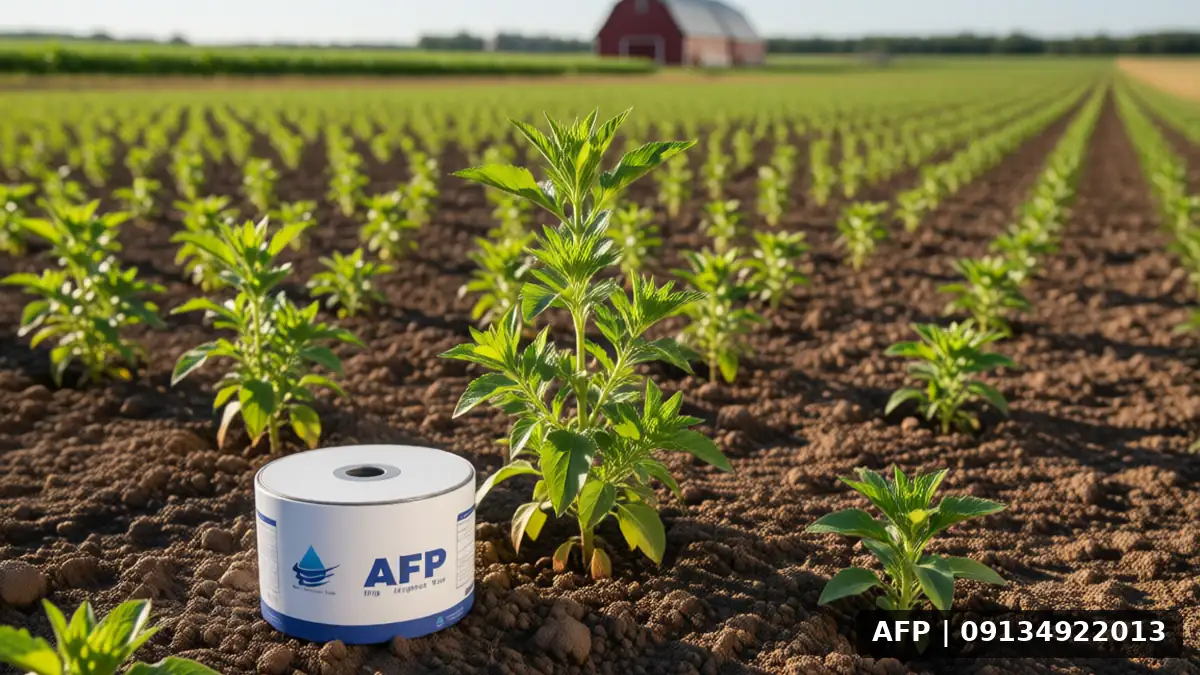
You may ask whether the maintenance costs of a drip system are cost-effective. Based on cost analysis, the cost of repairing and replacing worn-out drip lines is a major indicator of economic efficiency. By using high-quality materials and training staff, the system’s useful life can be extended up to 5 years. A thorough study of Drip tape maintenance costs helps you set a more accurate annual budget and avoid unexpected expenses. These analyses also include pumping costs, electricity, and labor.
Increasing Yield Through Precise Water Management
The primary difference between surface irrigation and drip irrigation lies in final crop quality. Roots that consistently experience uniform moisture levels suffer less stress, resulting in better vegetative growth and larger grain size. This principle applies to all grain crops. While this does not directly affect sorghum per hectare, its principles are applicable to “Watermelon yield per hectare: Influencing factors + methods to increase”; as both are crops sensitive to root-zone moisture. You can familiarize yourself with “Watermelon yield per hectare: Influencing factors + methods to increase” to gain a comparative perspective on water management for high-water-use crops.
Frequently Asked Questions (FAQ)
Can tube drip tape be used for plants with deep roots, such as sorghum?
Yes, but the tape must be buried 10 to 15 centimeters below the soil surface to prevent rapid drying by the sun and ensure moisture reaches the deeper roots. This also prevents damage to the tape by farm machinery.
What is the appropriate emitter spacing for sorghum?
Generally, 30 centimeters is recommended for dense planting, and 50 centimeters for sparse planting. The spacing must be a multiple of the planting distance to ensure uniform moisture distribution between plants.
What is the best time to install drip tape?
Install the drip tape simultaneously with or after planting to prevent mechanical damage to roots caused by the tape edges. Subsurface systems are typically installed before planting and must be placed precisely on the planting lines prior to the seeding operation.
Summary
Drip irrigation is not a burden for coriander cultivation but a smart way to increase farm yields under water scarcity conditions. By correctly selecting the tape type, matching dripper spacing to the planting pattern, and managing system pressure, you can save on water, energy, and other costs. The key to success lies in continuous system monitoring and proper water treatment. Farmers who wish to combine these principles with subsurface systems can achieve more productive and sustainable results. This initial investment will lead to increased profitability and environmental sustainability in the long term.
We hope this guide helps you better understand the potential of drip irrigation in sorghum cultivation. To get started, proper design and selection of high-quality equipment are essential first steps. Consulting irrigation specialists can help optimize your system based on your specific farm conditions. Thank you for reading this guide, and we hope you achieve better results in the next growing season.
Related articles: Everything About Subsurface Irrigation, Melon tonnage per hectare: influencing factors + methods to increase it, rahnamai mukammali kishti qahvagi tuxmador