Drip Irrigation in Garlic Cultivation: Comprehensive Guide
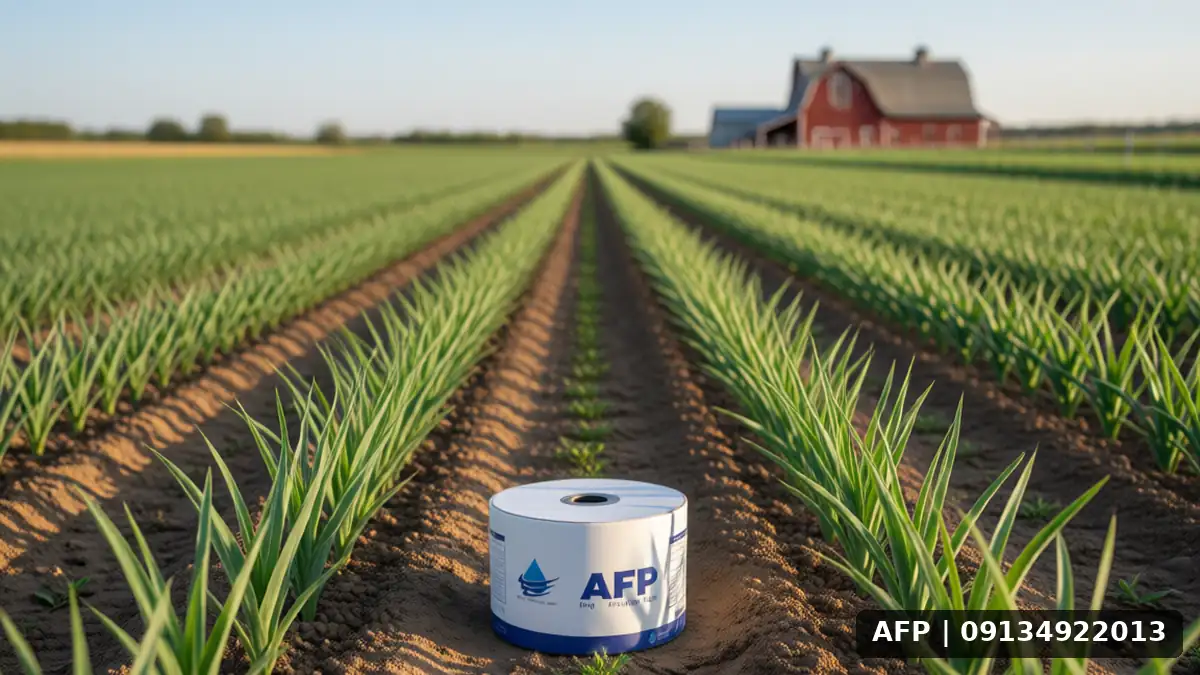
Garlic cultivation is one of the most important economic activities for farmers seeking high-value-added crops. Unlike many grains, garlic shows high sensitivity to moisture stress. Improper water use can lead to rotting, stunted growth, or reduced bulb size. Over the past decade, drip irrigation methods, such as drip tape systems, have been introduced as key solutions for sustainable water resource management. We examine this topic comprehensively below to help you make the best decisions for your farms.
Why is drip irrigation vital for garlic?
Garlic requires uniform moisture throughout all growth stages. Severe fluctuations in soil moisture can cause skin splitting and increased vulnerability to pests. Drip irrigation delivers water directly to the root zone, preventing surface evaporation and maintaining moisture at the desired depth. This method provides significant economic benefits in the arid and semi-arid regions of Iran where garlic farming is prevalent.
- Increased water efficiency: Reduced losses from evaporation and deep percolation.
- Reduced fertilizer consumption: Ability to apply fertilizer with water (Fertigation) for better plant uptake.
- Weed control: Because only the seed bed zone is irrigated, weeds between the rows do not grow due to moisture deficiency.
Designing a suitable drip tape system for onions
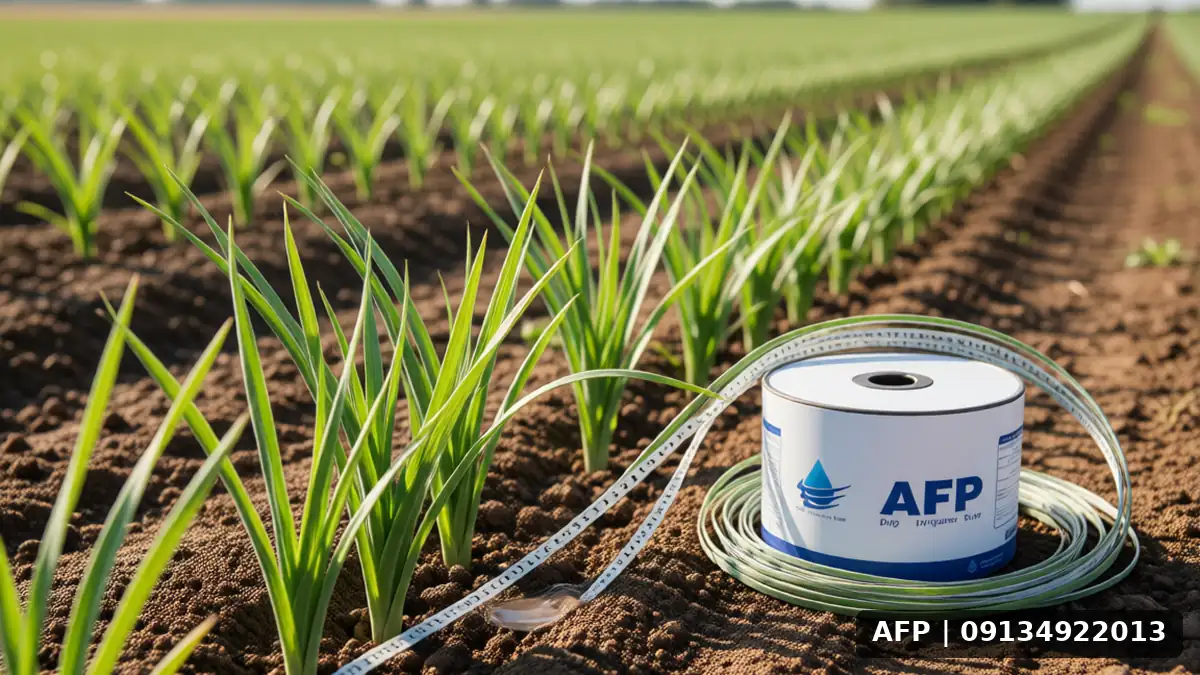
In the drip tape method, hoses or pipe drip tapes are placed underground or on the soil surface. The appropriate distance of the tapes from the seeds and the adjustment of the droplet flow rate are two key parameters in design. For onions, the dense root zone is typically closer to the surface. Therefore, using tapes with closer emitter spacing (for example, every 10 or 20 centimeters) is recommended to ensure uniform moisture coverage around the seedlings. The speed of moving the tapes must also be adjusted according to the plant growth rate and soil water absorption capacity. If the movement speed is too high, sufficient moisture will not form at greater depths, and onion taproots will be damaged.
An important technical point is the selection of the tape or drip line diameter. Tapes with a smaller diameter (8 millimeters) offer more flexibility and are more ideal for sloping surfaces, but may be prone to clogging over the long term. 16-millimeter pipes have higher durability. The choice between these options should be based on the soil type (sandy or clay) and the system’s inlet water pressure. For more information on pressure and flow calculations, you can refer to the article on seed quantity per unit area, which, although related to other crops, shares the same technical principles for pressurized systems. However, our primary focus remains on onions.
Vertical and horizontal adjustments
The installation depth for subsurface drip tapes is ideally 10 to 15 cm below the soil surface. This depth should be slightly deeper than the initial primary root zone to prevent root suffocation. If using a surface method, tapes must be arranged to prevent hanging or accumulation at specific points.
Moisture Management at Different Growth Stages of Garlic
Garlic water requirements vary at different stages. During the seedling stage, the plant requires moderate and regular moisture. Maximum water demand occurs during the flower emergence and bulb formation stage. At the final stage, before harvest, stopping irrigation helps the garlic dry out faster and improves storage quality. A common mistake is over-irrigating in the last weeks, which causes the bulbs to become soft and makes skin peeling difficult.
Practical tips and common errors
- System Flushing: Before each new irrigation cycle, run the system without pressure for a few minutes to flush out any potential sediments.
- Filtration: The use of disc or mesh filters with an appropriate mesh size (100 to 120 mesh) is essential to prevent emitter clogging.
- Pressure Monitoring: Pressure fluctuations can lead to uneven water distribution. Maintaining constant pressure along the lateral line is critical.
One of the main challenges in drip line systems is uniform pressure distribution. If the field is sloped, the use of pressure regulators downstream is necessary to prevent excessive water flow at lower points. Additionally, when growing garlic alongside other crops, managing shared water and fertilizer resources becomes doubly important. To better understand resource allocation, the article on rosemary yield per hectare can provide insights into optimizing resources in intercropping systems, although garlic is typically a monoculture.
Frequently Asked Questions (FAQ)
Is drip irrigation costly for garlic?
Although the initial installation cost of a drip or micro-tape system is higher than spray irrigation, a 30 to 50 percent reduction in water, fertilizer, and labor costs results in a return on investment within 2 to 3 harvest seasons.
Can micro-tape be used simultaneously for garlic and onions?
Yes, since these two crops have similar root depths and water requirements, they can share a common pipeline bed, but the emitter flow rates must be carefully adjusted. Onions generally require slightly higher pressure to ensure faster water movement through the tape, whereas garlic requires more caution.
What is the best time to stop irrigation before harvesting garlic?
Usually, irrigation must be completely stopped 10 to 14 days before harvest. This allows the garlic skins to dry and harden, which is essential for long-term storage.
Summary
The use of drip and tape irrigation in garlic cultivation is no longer a luxury option but a requirement for competitiveness in current markets. By adhering to proper design principles, monitoring water pressure, and managing fertilization on time, you can maximize garlic yield. It is important to note that garlic is a plant with shallow roots, a characteristic that makes it one of the best candidates for precision irrigation systems. Farmers are advised to use the link for seed quantity of tamarind per hectare to compare their knowledge. Ultimately, the key to success in garlic irrigation is patience and precision in daily adjustments.
Related Articles: Seed amount of lentil D8AFD8B1 per hectare, Rosemary yield D8AFD8B1 per hectare, Tape irrigation spacing for wheat and modern irrigation methods, Wheat irrigated yield D8AFD8B1 hectares