Drip Irrigation with Drip Emitters in Cucumber Cultivation: Strategic Comparison
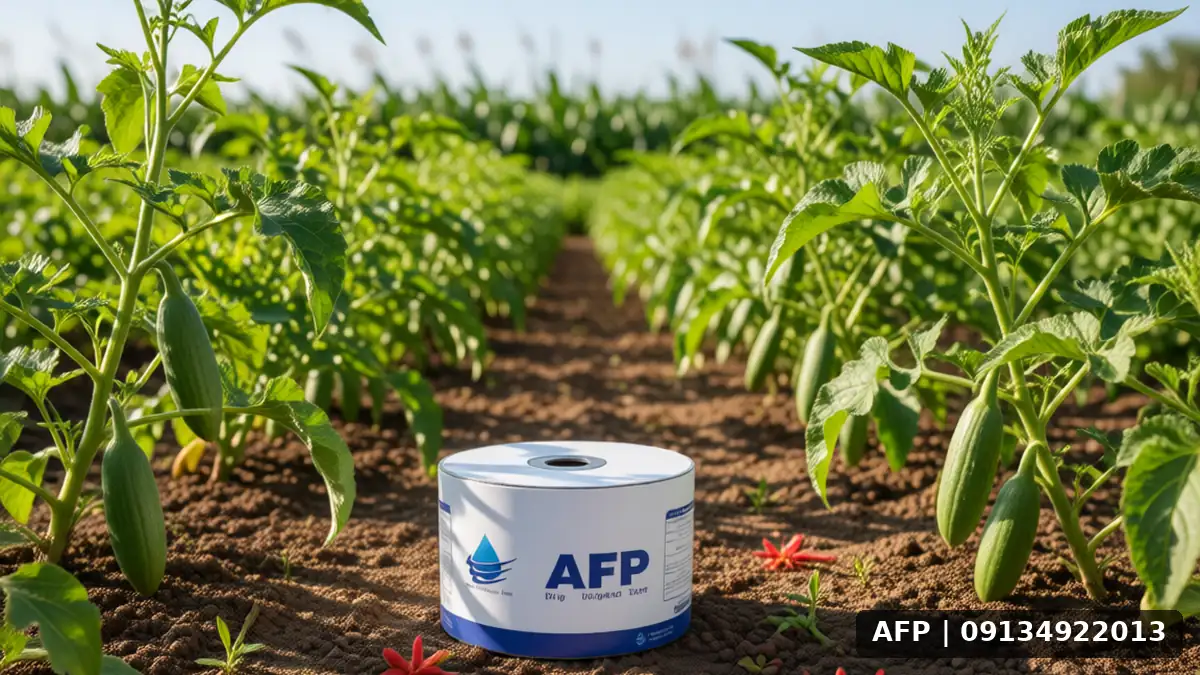
Cultivation of cucumbers is one of the most important greenhouse and open-field crops in Iran, exhibiting high sensitivity to soil and water management. The selection of an appropriate irrigation method directly impacts crop quality, yield, and plant health. In recent years, drip irrigation has found a special place in modern agriculture. However, many growers face the question of whether to use standard drip emitters or tape drip. This article provides a practical answer to this concern through a specialized comparison of these two methods.
Overview of Cucumber Irrigation Methods: Drip and Tape Drip
To better understand the comparison, it is first necessary to identify the technical differences between these two methods. Drip irrigation using emitters typically operates via drip tapes with specified spacing, delivering water as small droplets directly to the plant roots. In contrast, tape drip consists of a perforated plastic tube that distributes water as a thin, continuous layer on the soil surface along the plant row.
Technical Characteristics of Tape Drip in Cucumbers
Due to its greater surface coverage, tape drip is a popular option for open-field farms where the cost of a full drip system is not comparable for all operators. These tapes generally feature small, regular slits that ensure uniform soil moistening within a narrow band. In cucumbers, which have shallow and sensitive roots, this method can lead to excessive wetting of the root zone and an increased risk of fungal diseases, unless spacing and pressure are managed precisely.
Advantages of Drip Irrigation Using Emitters
- Reduced water consumption: High-precision drip emitters deliver water directly to the root zone, minimizing surface evaporation.
- Precise salinity control: Fertigation and management of solution salinity via drip systems are significantly simpler and more effective.
- Maintained root zone moisture: Uniform water distribution in the root zone without excessive wetting of the furrow space.
- Increased efficiency: Integration with automated systems reduces the need for manual irrigation.
Performance comparison: Water, growth, and management
When choosing between tape drip and standard drip emitters, three key parameters must be considered: water consumption, cucumber growth pattern, and required management level. In closed greenhouses, tape drip is sometimes preferred due to its faster installation speed and lower initial cost. However, in open fields, drip systems using emitters offer a long-term advantage because of their resistance to variable weather conditions and the reduction of fungal diseases caused by leaf wetness.
Comparison table of tape drip and drip emitters in cucumber cultivation
One important often-overlooked factor is the impact of water on soil stability over the season. In cucumbers, repeated drip-line irrigation cycles can lead to surface soil compaction, whereas drip emitters maintain soil structure due to uniform pressure and flow rate. Additionally, given the sensitivity of cucumbers to water stress, pressure-compensated drip emitters provide better control of moisture in the shallow root zone.
Practical tips for selection and implementation
Selecting the right emitters for cucumbers
- Selecting emitters with anti-clogging stability: Cucumbers require continuous moisture. Emitters with high anti-clogging stability (such as plasma emitters) are recommended to prevent clogging and maintain accuracy in the long term.
- Determining the appropriate spacing: Emitter spacing must be adjusted according to the growth rate of the cucumbers and the planting method. Generally, a spacing of 20 to 40 cm is suitable.
- Salinity and EC Management: Using drip irrigation allows for the programming of solution salinity. While general guidelines for salinity management in vegetable crops apply, cucumber exhibits higher sensitivity.
- Monitoring Water Application Depth: For cucumber, irrigation depth should not be excessive, except during initial growth stages. Drip emitters with lower flow rates (1.5 or 2 liters per hour) can prevent excessive wetting depth.
Economic Comparison and Efficiency
Economically, tape line irrigation is a viable option for small and open-field farms with limited budgets due to ease of maintenance and the lack of need for advanced pump and filtration systems. However, for industrial greenhouses and large-scale farms, drip irrigation with drip emitters offers better long-term economic returns by reducing water waste, improving fertilizer efficiency, and lowering disease incidence. Additionally, to select the most suitable drip system, it is recommended to study the comparison between tape line and drip irrigation to examine practical differences.
Frequently Asked Questions (FAQ)
Is tape line irrigation suitable for cucumber in greenhouses?
The drip tape is usually not the first choice in greenhouses due to the need for controlled humidity and disease prevention. A drip line with emitters is more suitable because of its higher precision in humidity control and the ability to schedule fertilization.
What should be the spacing between emitters for cucumbers?
A spacing of 25 to 40 centimeters is generally suitable for cucumbers. This spacing must be coordinated with the type and flow rate of the emitter.
Does drip tape cause more soil salinity?
Yes, due to surface wetting and the lack of deep flushing, drip tape can lead to salt accumulation at the soil surface, unless a periodic high-volume flushing method is used.
How can emitters be protected from clogging?
Using appropriate filters, periodic flushing of the lines, and selecting emitters with anti-clogging stability, such as plasma emitters, are among the most important methods. Additionally, you can learn more about the installation cost of drip tape irrigation.
Conclusion and Final Recommendation
Choosing between flat tape and drip systems with emitters for cucumber cultivation depends on farm scale, climatic conditions, budget, and the level of crop management. For large farms and greenhouses, drip systems with emitters are the better choice due to precision, salinity control, disease reduction, and long-term economic efficiency. For small farms with limited budgets, flat tape may be a more practical option, provided that salinity and fungal diseases are prevented.
To better understand the principles of selection and planning for irrigation systems, studying the comparison between flat tape and internal line water is recommended. Ultimately, small-scale testing and continuous monitoring of cucumber moisture and growth are key to selecting the optimal method.
Related Articles: asparagus seeds per hectare guide, seed amount spinach hectare optimal methods, Rain irrigation of farmland D988 effects, Yield of maize variety D8AFD8B1 per hectare