Irrigating Jafari Fruit Orchard: Key Drip and Tipline System Insights
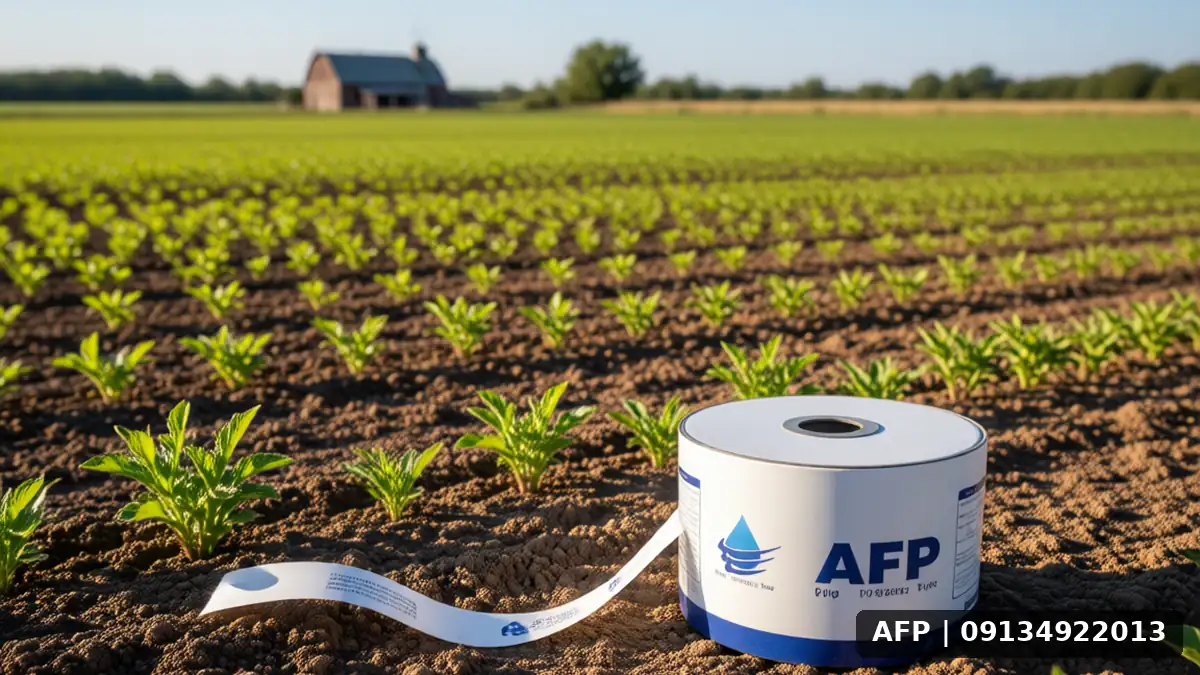
Crop Parsley As a popular medicinal and culinary crop, parsley requires precise water resource management. Parsley is a plant whose roots are sensitive to consistent moisture; water stress causes leaf wilting and discoloration, while waterlogging leads to root rot and reduced cutting growth. The main challenge for growers is how to maintain precise water balance under arid and water-scarce conditions. In this regard, Parsley orchard irrigation should not be viewed solely as a conventional sprinkler approach, but instead utilize modern systems such as drip and strip irrigation.
Technical foundations of drip irrigation for small-seed crops
The drip system is recognized as a strategy for reducing evaporation and increasing effective water use. However, for plants like parsley, which have low height and high planting density, selecting the appropriate emitter diameter is critical. Emitter diameter must be such that it covers the root zone without wetting the stem.
Emitter selection based on planting spacing
Parsley planting spacings are usually narrow. Therefore, the use of 1 to 2 L/h drippers is recommended. A key consideration is the placement of drip lines, which must be positioned directly over the crop rows rather than between them. To better understand the relationship between linear spacing and discharge rates, you can refer to [Criteria for Calculating Drip Irrigation Systems](https://navar-abyari.ir/%D9%85%D8%B2%D8%A7%DB%8C%D8%A7%DB%8C-%D9%86%D9%88%D8%A7%D8%B1-%D8%AA%DB%8C%D9%87%DB%8C%DA%AF%DB%8C-%D8%A2%D8%A8%DB%8C%D8%A7%D8%B1%DB%8C-%D9%82%D8%B7%D8%B1%D9%87-%D8%A7%DB%8C/) which outlines the fundamental formulas.
Tip Line: An option for maintaining surface moisture
The Tip Line, or micro-spray line, is essentially a form of narrow-band sprinkler irrigation that creates a continuous or intermittent narrow strip of water on the soil surface along the crop row. This method offers several advantages for parsley. First, since the water is delivered directly from the surface, it does not require the high pressure associated with drip pumps. Second, uniform horizontal moistening reduces hydraulic stress on the delicate lateral roots of the parsley.
Differences between Tip Line and Drip Irrigation in Disease Management
One of the primary concerns with Tip Line irrigation is the creation of high relative humidity at the soil surface and the potential for fungal outbreaks. For prevention, irrigation timing is critical. Watering should be conducted in the early morning or late afternoon to allow sunlight to dry the leaf surfaces more quickly. In addition to irrigation management, it is necessary to understand the properties of pipes and network components, which are discussed in [Features and Applications of Tip Line](https://navar-abyari.ir/%D8%AE%D8%B5%D9%88%D8%B5%DB%8C%D8%A7%D8%AA-%D9%88-%D9%88%DB%8C%DA%98%DA%AF%DB%8C%D9%87%D8%A7%DB%8C-%D9%86%D9%88%D8%A7%D8%B1-%D8%AA%DB%8C%D9%84/).
Key Considerations for Integrating Fruit Orchards and Parsley Cultivation
Parsley is generally cultivated between rows or on the borders of fruit orchards. In this configuration, the fruit trees (such as apple, pear, or olive) act as natural windbreaks and light barriers, directly affecting soil moisture and temperature distribution under drip irrigation.
Managing Tree Shade
Shade provided by fruit trees reduces soil evaporation. Consequently, irrigation flow rates and frequency in shaded areas should be lower than in sun-exposed areas. Failing to account for this difference can lead to root waterlogging in shaded zones. Additionally, mature fruit tree roots compete with parsley roots. Using separate irrigation systems or at least isolating filter screens can prevent clogging of the parsley system caused by fine sediment from the tree system.
Practical Irrigation Scheduling Based on Growth Stages
The optimal irrigation approach aligns with the plant’s physiological needs. During the early seedling stage, roots are delicate and require moist soil without waterlogging. During the flowering and pod-setting stage, water demand increases.
- Seedling Stage: Frequent low-volume irrigation (every 1 to 2 days). Use of low-flow drip emitters.
- Vegetative growth stage: Reduce irrigation interval to every 3 to 4 days. Increase flow rate to fill stems.
- Flowering and pod formation stage: Moisture stability is critical. Sudden water cutoff at this stage causes petal breakage.
- Harvest stage: Gradually reduce irrigation to increase scent quality and essential oil concentration in leaves.
Flow rate and system loading calculations for parsley
For correct design, actual crop load must be utilized. Celeriac is a crop whose growth rate depends on the evaporation rate from the soil bed. If the drip or microspray application rate is less than the crop requirement, the soil between irrigations will dry out completely, causing crop stress. In this context, studying the [minimum loading of drip irrigation systems](https://navar-abyari.ir/%D9%85%DB%8C%D8%B2%D8%A7%D9%86-%D8%A8%D8%B1%D8%AF%D8%A7%D8%B4%D8%AA-%D8%B1%D8%B2%D9%85%D8%A7%D8%B1%DB%8C-%D8%AF%D8%B1-%D9%87%DA%A9%D8%AA%D8%A7%D8%B1/) will be useful.
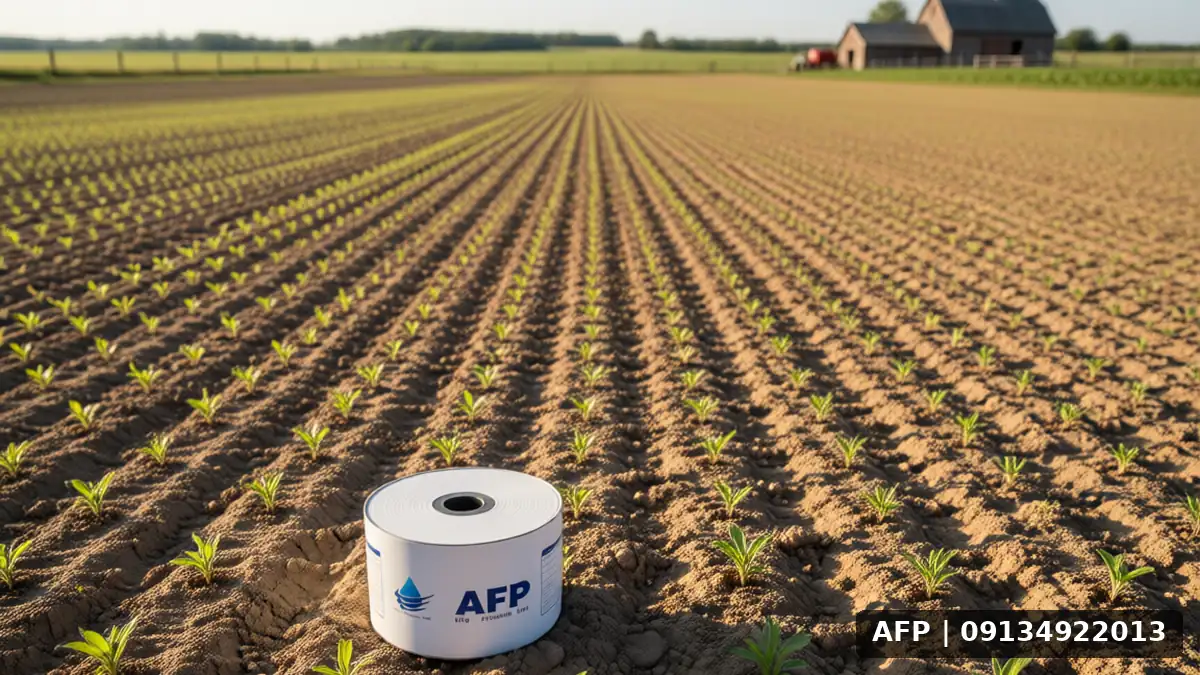
The role of water quality in two systems
One of the main difficulties in drip and microspray irrigation is emitter clogging. Celeriac is usually grown in areas using groundwater or agricultural wells. These water sources are often highly corrosive due to mineral salts. Filtration must include two stages: a disc filter and a media filter. In the microspray system, because the stream width is narrow, clogging is detected more quickly. therefore, weekly visual inspection of the microspray outlets is mandatory.
Supporting intercropping and utilization
Combining celeriac with other crops can improve cropping economics. Celeriac is often used as a cover crop or intercrop in rows of flowers or water-absorbing crops. In this case, irrigation management is not uniform. To better understand yield estimation in intercropping, studying [average yield of intercropping per hectare in Iraq](https://navar-abyari.ir/mixed-crop-yield-per-hectare-iraq/) can provide insight into competitive interactions between different plants regarding water use. Although Iran’s climatic conditions are different, the general principles of intercropping are applicable.
Cost optimization of systems
In system comparisons, drip line systems typically offer simpler installation and have fewer moving parts than complex emitter systems. However, pressure-compensating emitters are a better option if fertigation (combining fertilizer and water) is required. This combination delivers nutrients such as nitrates and soluble phosphates directly to the root zone without the need for separate spraying.
Frequently Asked Questions (FAQ)
Is a drip line system more suitable for parsnip than a drip system?
In high-frost regions with light soils, drip systems are superior in terms of precision and reduced evaporation. However, in flatter areas where drip lines can be installed, drip line systems are a more economical option due to lower costs and easier access for maintenance.
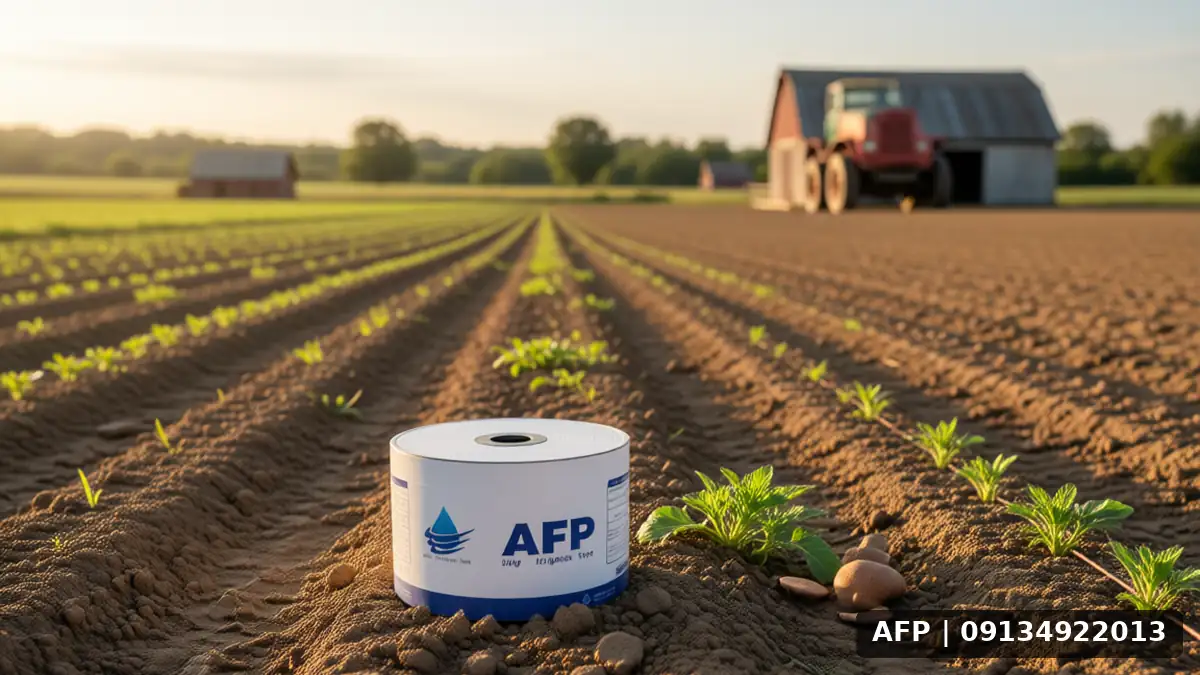
What should the spacing of irrigation lines be for parsnip?
The spacing of irrigation lines must exactly match the planting row spacing of the parsnip. If parsnip is planted in a single row, one irrigation line is sufficient. In high-density planting, two parallel lines with lower flow rates may be required.
Can orchard tree irrigation systems and parsnip systems be combined?
Direct combination of pumps is not recommended because the pressure and flow requirements for large trees differ from those of small-seed plants. It is better to rely primarily on line separation. For information on [how to use subsurface irrigation systems for plants](https://navar-abyari.ir/%d8%a2%d8%a8%db%8c%d8%a7%d8%b1%db%8c-%d8%b2%db%8c%d8%b1-%d8%b3%d8%b7%d8%ad%db%8c-%da%af%db%8c%d8%a7%d9%87%d8%a7%d9%86/), which helps maintain moisture without surface evaporation, you can review more specialized sections, although subsurface irrigation is not common for parsley due to the high cost of extensive excavation.
Conclusion and final recommendation
Progress in irrigating the parsley orchard requires transitioning from manual and non-commercial watering to more modern systems. The choice between drip and tape irrigation depends on farm conditions, soil type, land slope, and budget. Both systems can increase irrigation efficiency by up to 40% if designed correctly and filtration is managed. It is recommended that farmers also use the [seed quantity calculation guide per hectare](https://navar-abyari.ir/%d9%85%d9%82%d8%af%d8%b1-%d8%a8%d8%b0%d8%b1-%da%a9%d8%a7%d9%87%d9%88-%d8%af%d8%b1-%d9%87%da%a9%d8%aa%d8%b1/) for crop layout planning before final installation, because planting density directly affects the required flow rate per meter of irrigation line. By following these points, one can achieve parsley with bright green color and concentrated aroma.
Related articles: Seed quantity of pigeon pea per hectare + influencing factors, mixed crop yield per hectare iraq, ushuli shinodani piyaz obri nuqravi, Rosemary (D8AFD8B1) yield per hectare