Rainfall Erosion in Asparagus Cultivation: Comprehensive Analysis, Technical Comparison, and Practical Solutions
Introduction to Surface Runoff Irrigation in Broccoli Cultivation
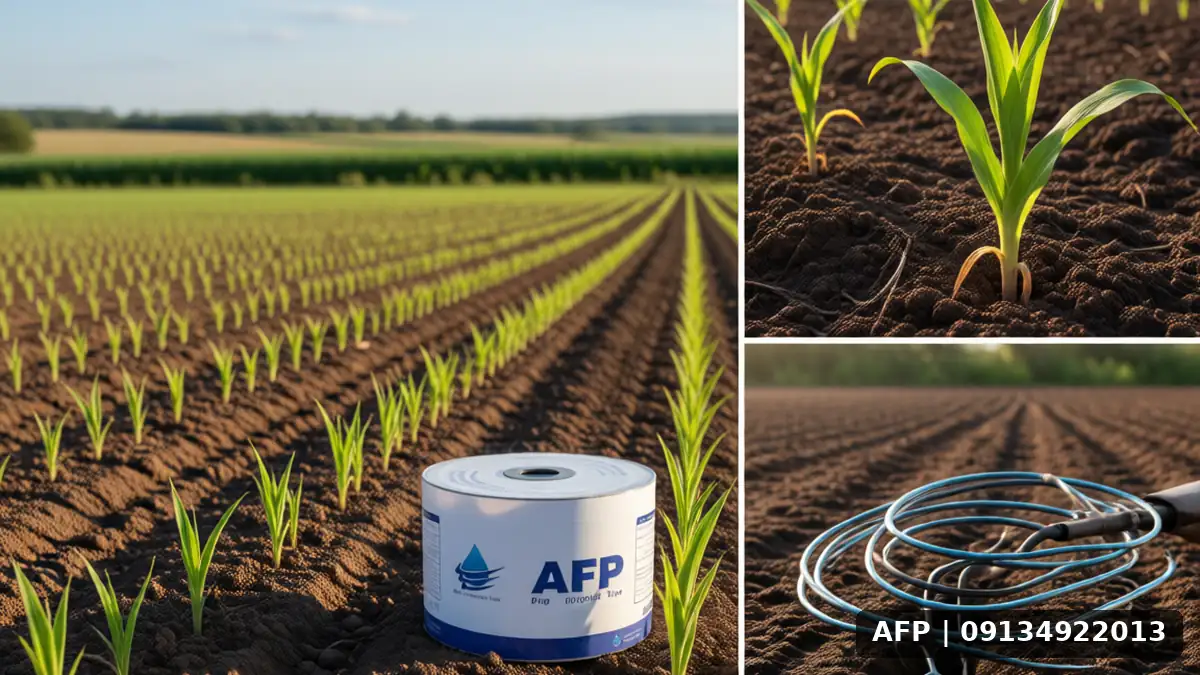
Broccoli is a sensitive cruciferous vegetable whose optimal growth depends on precise management of root zone and soil moisture. In many farms in Iran as well as agricultural regions in Eurasian countries, surface runoff irrigation is still widely used due to its simple installation, relatively low initial cost, and easy access to spare parts. In this method, water carrying dissolved nutrients moves via polyethylene strips or runoff channels toward lateral outlets of irrigation canals or linearly over the crop bed, reaching the roots through drainage and infiltration.
However, given climate change, the reduction of fresh water resources, and the expansion of new broccoli genotypes that require more uniform moisture, a question arises: is this traditional method still capable of meeting the demands of modern agriculture? In this article, we deeply compare this method with modern technologies such as drip irrigation and tip-line systems. Our goal is to provide a precise analysis of the advantages and disadvantages so that farmers can make more informed decisions to improve water efficiency, preserve soil quality, and ultimately enhance broccoli yield.
Operating Principles and Runoff Mechanism in Surface Runoff Irrigation
Rain irrigation based on runoff relies on creating a continuous, shallow water flow along crop rows. In this system, a primary strip or open channel is typically installed along the length of land plots. Secondary outlets or discharge gates are designed with a gentle slope so that water, once entered from the inlet, is distributed by gravity and head loss towards the strip boundaries and the plant root zone. This method is occasionally suitable for crops with narrower planting spacings and soils that have good drainage.
In asparagus cultivation, a critical point is that the root system of this crop is primarily active in the upper soil layers (10 to 30 cm deep). Consequently, superficial and rain-like water distribution may increase the risk of leaching nutrients from the active soil layer, unless precise management of inlet flow rate and land slope is maintained. In fact, two key parameters for the success of this method are the appropriate adjustment of inlet flow rate and precise measurement of land slope, to prevent soil erosion and ensure uniform water distribution across the entire field length.
Technical comparison of rain irrigation with runoff and modern methods (drip and tape)
To better understand the fundamental differences between these methods, the table below provides a comprehensive comparison between rain irrigation with runoff and two more modern and widely used methods in the current market. This comparison is based on technical, economic, and agronomic indicators:
Strip-line drip irrigation, an advanced and evolved form of drip irrigation, enables more precise water and fertilizer allocation. This system utilizes narrow strips that discharge water in a defined width band onto the soil surface or at shallow depths. You can refer to the article “Strip-line drip for beans: A comprehensive drip irrigation guide” for more information on its operation, technical calculations, and advantages. Although that article focuses on beans, the physical principles of fluid flow, discharge calculations, and soil interaction with strip-line irrigation are identical for asparagus.
Conversely, solid set spray irrigation significantly increases the risk of wind drift and nitrate leaching between crops due to its wide surface coverage and high humidity in the air space between rows. This leads to wasted fertilizer resources and contamination of drainage water.
Practical tips for optimizing spray irrigation in asparagus cultivation
If a farmer decides to continue with flood irrigation with runoff due to budget constraints, specific soil types, or existing farming habits, it is essential to follow the technical guidelines below to prevent significant yield loss and maintain plant health:
- Precise land slope management: To prevent water accumulation at the end of the furrow and soil erosion, the slope must be within a specific range. Slopes between 0.1% and 1.5% are generally recommended. Excessive slopes cause soil runoff and create uneven irrigation patterns, while slopes below the minimum threshold lead to root rot due to waterlogging.
- Smart irrigation scheduling: The optimal time for flood irrigation is the cool hours of the night or early morning. This prevents leaf scorching on spinach, which is sensitive to heat and humidity, caused by intense sun exposure. Additionally, reducing the duration of moisture on leaves minimizes the risk of Botrytis and other crown fungal diseases.
- Crop rotation and soil amendment: Combining flood irrigation with crop rotation principles using legumes or other plants helps restore nutrients to the soil and maintain its structure. To learn about the general principles of direct irrigation, its pros and cons, and soil inspection methods, you can review the article on Direct Irrigation of Agricultural Land: Advantages and Disadvantages. This knowledge facilitates a better understanding of the water-soil interaction in the runoff method.
- Basic filtration and maintenance: Even in simple flush systems, the use of filter screens and regular cleaning of nozzles are essential. Sediment and suspended particles in the water can cline laterals, causing water to flow towards the end of the line while the beginning remains dry.
As a more cost-effective alternative to full drip systems, using narrow nylon or polyethylene tapes with low thickness can achieve a good balance between installation cost and irrigation precision. In this regard, a comprehensive guide Watering rates of tape irrigation for irrigation can help you calculate the required output flow for your specific farm conditions and prevent water waste.
Frequently Asked Questions (FAQ)
Is flush sprinkler irrigation suitable for broccoli in the flowering stage?
No, it is strongly not recommended. Because wetting flowers and developing seeds can lead to rot-causing fungal infections and a severe reduction in commercial quality. During sensitive flowering stages, always use soil-based methods such as drip or sub-surface irrigation to keep the plant’s air space dry.
How many sprinkler irrigation events per week are sufficient for broccoli?
On average, 3 to 4 times per week, depending on air temperature, evaporation rate, and farm soil type. However, this amount should not be determined arbitrarily; it must be verified and adjusted using a soil moisture meter or by manual assessment of soil moisture at root depth.
Can old drip tapes be used for lateral application?
Yes, it is technically feasible, but the dripper nozzles must be removed or opened to create a continuous flow. This method increases the risk of nutrient leaching and requires closer monitoring of discharge rates.
To better understand the relationship between irrigation systems, root management, and final yields of vegetables, studying resources such as Strawberry yield per hectare: factors and methods to increase it can be inspiring, as both broccoli and strawberry plants are classified as perennial crops highly sensitive to uniform root zone moisture, and proper irrigation management directly affects their marketable volume.
Summary and Conclusions
Related topics for expanding knowledge: bell pepper yield per hectare tajik farmers, red bean seed quantity per hectare yield tips