Rainfall Irrigation in Field Bean Crop: Key Points and Correct Principles
Introduction to the Importance of Optimal Irrigation in Chickpea Cultivation
Chickpea, as a cereal grain with high economic and nutritional significance, requires precise water resource management. Selecting the appropriate irrigation method can impact seed quality, biomass production, and ultimately, the plant’s resilience to climate stress. Among these methods, sprinkler irrigation has gained attention from many farmers due to its relatively low cost and easy installation. However, is this method ideal for growing chickpea, which has sensitive root systems and specific soil moisture requirements? The following sections examine this subject in full detail. Chickpea is a leguminous crop that holds high value not only for human consumption but also for livestock feed. Therefore, maintaining root and stem health throughout all growth stages is vital for ensuring high yields. Leguminous plants like chickpea have relatively shallow root systems that are more sensitive to sudden moisture changes. Consequently, any severe fluctuations in water delivery can cause physiological stress and reduce dry matter uptake. Experienced farmers know that combining irrigation knowledge with plant physiology understanding is the key to success. Additionally, attention to local soil texture, due to varying permeability, plays a critical role in determining irrigation quantity and timing. In arid climates, more precise management is necessary to prevent heavy evaporation. These initial considerations highlight the complexity of the issue and the need for modern and optimal methods. This article aims to provide a clear overview of the most practical irrigation techniques for chickpea through a comprehensive review, enabling you to make the best decisions for your farm.
Familiarization with Sprinkler Irrigation in Orchards and Farms
Sprinkler irrigation mimics natural rainfall, distributing water as fine droplets over the soil surface and plants through sprinklers. This method is feasible in conditions with sufficient open space and suitable ground slope. To better understand the place of this method among other systems, we recommend reading the article on what furrow irrigation is, its features, and disadvantages, to better recognize the fundamental differences between conventional and modern irrigation systems. Understanding these differences helps farmers correctly evaluate economic and technical criteria during final selection. Sprinkler systems usually include central pumps, main lines, and sub-lines that connect to multiple sprinklers. While the initial cost of these systems may be lower than drip irrigation, operational and energy consumption costs must be carefully calculated. In lentil fields, since plants are sown in specific rows, uniform irrigation throughout the entire row length is critical. If distribution is not uniform, some plants may suffer from moisture stress while others may suffer from waterlogging. This unevenness can lead to reduced growth uniformity and ultimately a decrease in yield. Therefore, selecting sprinklers with an appropriate distribution pattern based on the local prevailing wind direction is considered an advantage. Additionally, the ability to control pressure at the pump outlet allows for adjusting the droplet size to align with the needs of each growth stage.
Advantages of Sprinkler Irrigation in Lentil Cultivation
- Wide Coverage: Suitable for level lands with approximately uniform surface. This characteristic ensures that water is distributed uniformly across the entire area.
- Ease of Installation: Does not require precise furrow formation and has less complexity in main lines compared to tape irrigation. This simplification can reduce initial operation time and costs.
- Seed Germination and Moisture Retention: In the initial stages of crop establishment, providing uniform soil moisture for chickpea germination can be beneficial. Additionally, soil temperature regulation during hot days is achieved by increasing surface moisture through this method. Surface soil cooling can protect the superficial chickpea roots from extreme heat. This cooling effect is particularly valuable during peak summer days and can prevent heat stress in the plant. However, balance must be maintained to ensure that excess moisture does not lead to fungal diseases.
Disadvantages and specific challenges in chickpea cultivation
- Water wastage: Water evaporation, especially in dry and hot air, results in the loss of energy expended. This issue is particularly pronounced in the semi-arid climates of Iran. A significant amount of water evaporates before reaching the root zone, thereby reducing water use efficiency.
- Pest and disease issues: Constant wetness of chickpea leaves creates a favorable environment for fungi and bacteria. In more advanced systems, understanding the pros and cons of direct soil irrigation helps better assess the drawbacks of surface wetting methods. Preventing such diseases requires precise management of the irrigation cycle timing. Using fungicides prior to irrigation can provide additional protection, but should not replace proper agronomic management.
- Leaching of nutrients: Chickpeas are sensitive to nitrogen loss through leaching, and artificial rainfall can increase this risk. Chemical fertilizer management must be coordinated with water application rates. Rapid decomposition of fertilizers in moisture-retentive soils can lead to nitrogen exclusion from the root zone. Using slow-release fertilizers can mitigate this problem to some extent.
Key points in designing a rain sprinkler irrigation system for lentils
If you decide to use this method, adhering to the following points is essential for optimal performance. Correct design of water transmission and distribution networks is the first step to success. Hydraulic calculations must be performed accurately to ensure acceptable pressure loss at the end of the lines. [[IMAGE_1]]
Selection of appropriate sprinklers
For lentil cultivation, which has a relatively shallow root system, the use of low-pressure sprinklers with a large droplet diameter is recommended. High sprinkler pressure can cause physical damage to young lentil stems. Additionally, proper spacing of nozzles must be arranged so that no dry spots remain in the field. To better adapt the system to soil texture and the plant, consulting a guide on types of tape irrigation and the performance of each type can be useful, as understanding the difference in water behavior between tape lines and spray irrigation helps in better combined design. Selecting the sprinkler model should be based on droplet size and spray pattern to ensure uniform irrigation. In some cases, combining large and small sprinklers can help create uniform coverage in uneven terrain.
Timing management of irrigation
The best time for irrigation of faba bean is early morning or late evening to prevent excessive evaporation during the cooler hours of the day. It is also important to avoid watering on windy days, as wind causes uneven water distribution and creates imbalanced moisture in parts of the farm. Irrigation scheduling should align with the plant’s physiological processes. For example, during the flowering stage, the plant is sensitive to stable moisture, and irrigation during cooler hours can be beneficial. Accurate monitoring of soil moisture using mobile sensors can improve scheduling precision. Additionally, checking weather forecasts to avoid irrigation before natural rainfall is another economic optimization.
Practical comparison: irrigation vs. drip tape
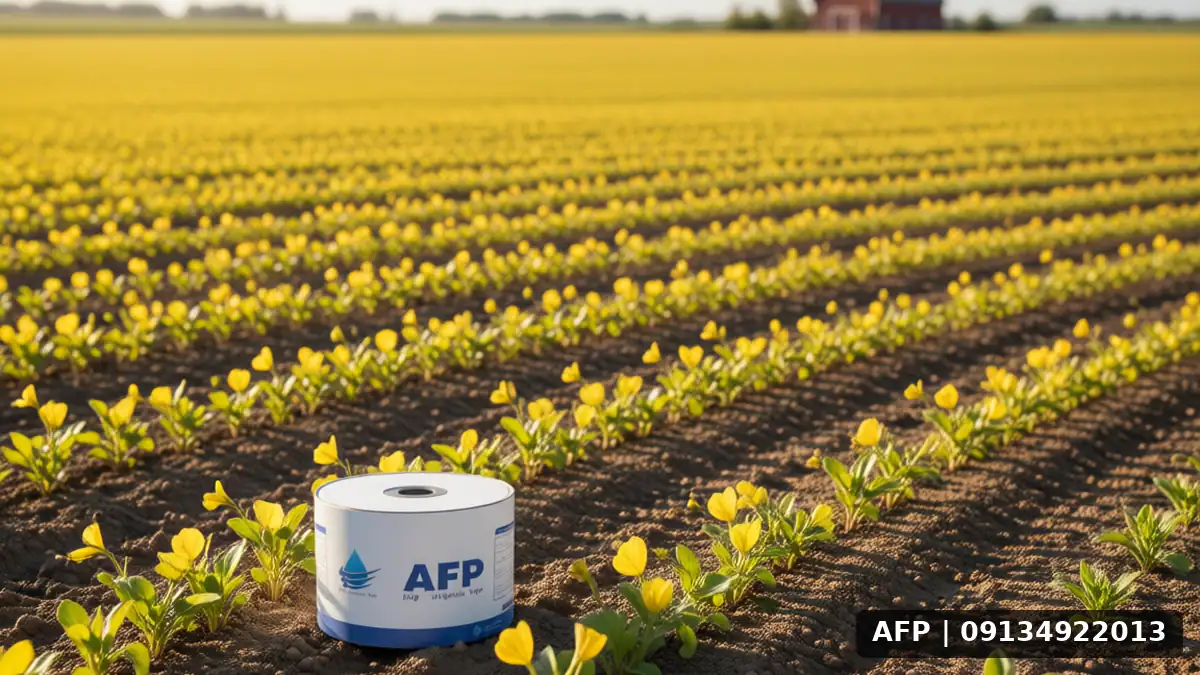
Although sprinkler irrigation is efficient on a small scale, pressurized systems such as drip lines often perform better in larger lentil fields. In this system, water is delivered directly to the root zone. For technical details, you can refer to the 3DMJ pipe and accessories page, which addresses selecting the appropriate pipe for pressure transmission. Additionally, if you are looking for more affordable and alternative solutions, knowledge of flat pipe prices and purchasing tips will help you budget correctly. Finally, for those seeking to further reduce surface water usage, reading everything about subsurface irrigation is a suitable option. These alternative methods typically yield higher water use efficiency and reduce long-term operational costs. Water use efficiency in modern methods such as band and drip irrigation will lead to increased water supply access for a significant portion of the global population and the preservation of substantial resources in the long term. The selection of an irrigation system should not be based solely on initial cost, but must also consider total economic viability and water sustainability. [[IMAGE_2]]
Frequently Asked Questions (FAQ)
Is sprinkler irrigation suitable for all growth stages of lentils?
No. In the early emergence stage, surface moisture is beneficial. However, during flowering and grain filling, moisture fluctuations can reduce grain quality. Many farmers use a combination of line or point irrigation (such as drip) during sensitive stages. Integrated management of water resources is the key to achieving sustainable yields. Adapting irrigation strategies as plant growth stages change enhances optimization.
Does sprinkler irrigation cause soil compaction in lentil fields?
If the sprinkler discharge rate is too high, soil aggregates at the surface will break down and become water-repellent. Using low-pressure sprinklers and establishing appropriate vegetation cover (mulching) prevents this issue. Preserving soil structure is vital for feeding the deep roots of lentils. Additionally, avoid repeated deep plowing before irrigation to maintain soil structure. [[IMAGE_3]]
Conclusion
Sprinkler irrigation for lentils is an efficient but temporary solution for specific conditions. Due to its low installation cost, it is suitable for small farms and sloping lands, but on large, flat fields, trickle and drip systems are far superior in terms of efficiency and plant health. Selecting the appropriate method requires considering soil type, regional climate, and budget. By combining technical knowledge with proper principles, one can prevent water resource shortages and rising production costs while achieving high-quality yields. Investing in precision irrigation systems yields significant long-term savings. Sustainable agriculture requires smart decisions based on scientific data.
Related articles: 3-inch pipe, Price of L-Flat pipe, Everything About Subsurface Irrigation, What is Furrow Irrigation: Features and Disadvantages, Onion Seed Rate per Hectare: Comprehensive Guide and Key Points