Tape Drip Irrigation for Onion Seedling Cultivation: Key Practical Considerations
Introduction to Drip Taper Irrigation in Shallot Cultivation
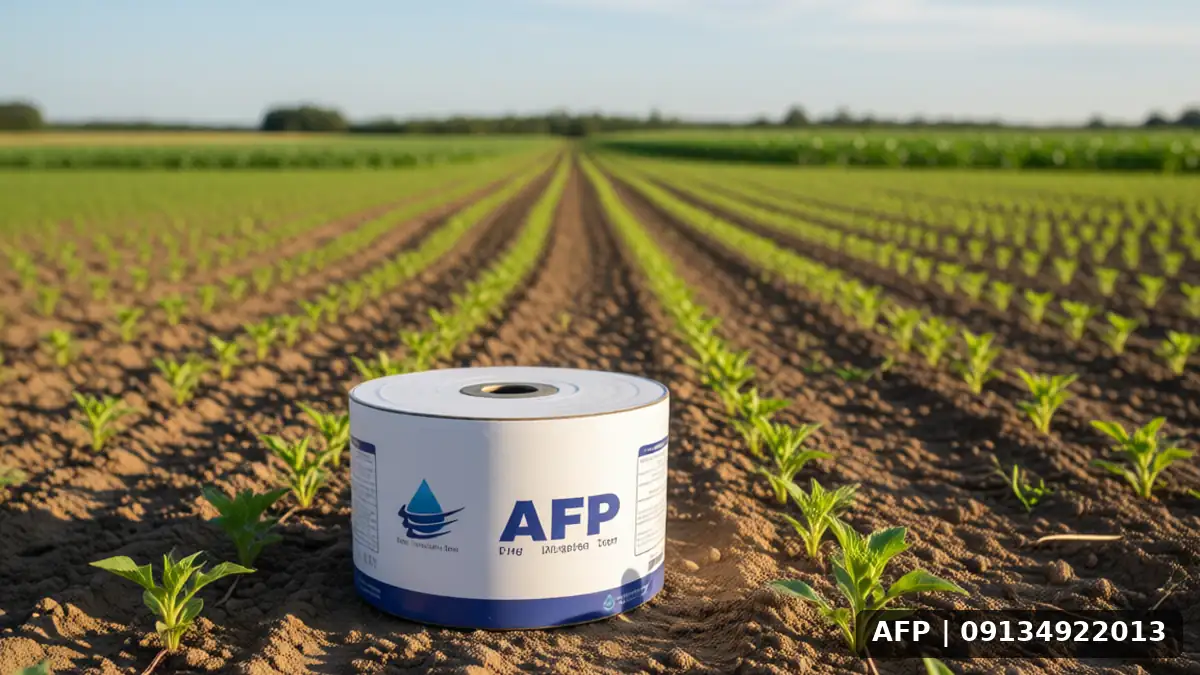
Shallot cultivation is one of the most widely used crops in agricultural exhibitions. Due to rapid growth, water sensitivity, and the need for suitable soil conditions, it requires a precise and systematic irrigation system. In recent years, drip irrigation with drip tape has been introduced as one of the most efficient and optimal methods for water resource management in shallot farms. This method reduces water consumption by 30 to 50 percent, promotes uniform shallot growth, increases fertilizer efficiency, and reduces fungal diseases. In this article, we examine the key, practical, and technical aspects of drip tape irrigation in shallots so that farmers can benefit from the full capacity of this system with precision and proper planning.
In the drip tape irrigation system, a thick plastic tape with numerous small holes (drippers) discharges water at a depth of 5 to 15 centimeters in the root zone simultaneously and at low pressure. This feature ensures that water is distributed evenly and concentrated in the root zone, preventing water from migrating to unnecessary areas. Shallots, with their delicate and shallow roots, are highly sensitive to rapid changes in soil moisture; therefore, drip tape irrigation is considered a precise and reliable bridge for maintaining plant health.
Key Points in the Installation and Setup of Shallot Drip Tape
The setup process for shallot drip tape requires attention to technical details, the selection of standard materials, and proper execution. Below, we review the most important key points that must be observed during the installation of this system:
- Selecting drip tape with the appropriate thickness: For green onions, thick plastic tape drip lines (minimum 0.3 mm) are recommended due to root sensitivity to dry-wet cycles. These tapes offer greater resistance to root pressure and mechanical soil stress, resulting in a longer useful life.
- Number and layout of holes: The spacing of holes in the tape drip line should be adjusted according to the crop’s water demand. Typically, a spacing of 10 to 15 cm is ideal for green onions. Proper hole arrangement ensures that moisture is distributed uniformly around the roots.
- Pressure percentage and tape drip line settings: Tape drip lines operate only under low pressure (approximately 1 to 2 bar). The pressurization system must be calibrated to ensure that the water discharge rate remains constant along the length of the tape. A pressure gauge pump can be used to verify uniform output.
- Covering and protecting the tape: Tape drip lines for green onions are usually laid on the soil surface as floor covering, and in some cases, they are buried under the soil. When buried, ensure that the soil is of suitable firmness and free of gravel to prevent damage to the tape.
- Pump system and pressure regulation: Since the drip tape operates at low pressure, the appropriate pump must be equipped with a pressure regulator and a manometer to prevent sudden pressure surges that could damage the tape.
For more details regarding the characteristics of the drip tape, refer to the Technical specifications of irrigation drip tape .
Irrigation management and proper scheduling for green onion cultivation
One of the most important challenges in drip tape irrigation for green onions is precision in irrigation timing and volume. Green onions require higher moisture levels during the early growth and bulb formation stages, while moisture should be gradually reduced during the senescence and drying stages to allow the bulbs to develop fully.
- Stage 1: Initial moisture establishment: Immediately after planting, light and regular irrigation (every 2 to 3 days) is essential to establish root contact and prevent the delicate green onion shoots from drying out. At this stage, the drip tape must be adjusted so that moisture penetrates to a depth of 5 to 10 cm.
- Stage 2: Active Growth and Bulb Formation During this stage, plant water demand reaches its peak. Irrigation should be performed at shorter intervals (every 1 to 2 days) with appropriate volume. The drip tape must be adjusted so that moisture penetrates to a depth of 10 to 15 cm to encourage roots to grow at the desired depth.
- Stage 3: Gradual Moisture Reduction Two to three weeks before harvest, irrigation should be gradually reduced to allow bulbs to dry out and desiccate naturally. This process helps preserve quality and storage duration of the onions.
For information on methods to optimize urban harvest yields per hectare, Urban harvest volume per hectare please refer to the following.
Drip and tape irrigation: Comparison and selection
In some shallot fields, using separate drip emitters instead of tape is recommended. Both methods have specific advantages and disadvantages:
- Advantages of tape irrigation: Rapid installation, lower cost compared to separate drip emitters, complete root zone coverage, and reduced maintenance costs.
- Advantages of separate drip emitters: Ability to adjust output precisely for each plant section, and greater flexibility in unpredictable root conditions.
- Disadvantages of tape irrigation: Risk of clogging, potential damage if placed under the soil, and need for periodic cleaning.
- Disadvantages of standalone drippers: Higher cost, more complex installation, and potential damage if misaligned.
In green onion, drip tape is used more frequently as an economical and practical method, typically installed as a mulch or flush with the soil. However, in specific climates with high soil moisture, standalone drippers may be a better option. To learn about the difference between furrow irrigation and drip tape, refer to What is Furrow Irrigation? Features and Disadvantages .
Practical tips for optimal drip tape performance with green onions
To maximize the effectiveness of drip tape for green onions, it is essential to observe the following practical points:
- Water usage: Irrigation water must be suitable regarding pH (6 to 7) and EC (less than 1.5 dS/m). If salts are present in the water, pre-treatment of the water is essential to protect the drip line and prevent clogging of the emitters.
- Fertilization via drip line: Chemical fertilizers (such as nitrogen) can be injected into the soil through the drip line. This method ensures maximum fertilizer uptake by the roots and prevents waste. Water-soluble fertilizers yield the best results when applied via the drip line.
- Soil pre-treatment: Before installing the drip line, the soil must be prepared by addressing compaction, stones, and fungal or insect contamination. Onion shoots in stony or clay soils have less ability to absorb moisture from the drip line and may require adjustment of the moisture infiltration depth.
- Soil moisture monitoring: Using soil moisture sensors at various depths helps prevent excessive dryness or waterlogging. Balanced moisture of 60 to 80 percent of the root zone depth is suitable for onions.
- Water treatment: Filtering water of suspended particles helps keep the drip tape emitters clear. Sieve or screen filters can prevent clogging of the tape.
For more information on root compatibility, please refer to the relevant specifications.
Frequently Asked Questions (FAQ)
Should the drip tape for onion be placed above or below the soil surface?
For onions, the drip tape is usually placed on the soil surface (surface application) so that the shallow onion roots can access it. If additional protection is required, subsurface tape with a 10 cm depth can be used.
What is the typical drip irrigation application rate for onions?
The irrigation requirement for onions depends on climatic conditions and soil type. Typically, the application rate during the active growth stage is 15 to 25 liters per square meter per day. In dry climates, the rate may increase up to 30 liters per square meter.
How long can a drip tape be used?
The service life of drip tape for shallot cultivation depends on many factors. With proper care, drip tape can be used for up to 2 to 3 years. If placed under the soil and subjected to root pressure, the service life of the drip tape may decrease to 1 to 2 years.
Does drip tape have problems in conditions of high soil moisture?
In conditions of high soil moisture, drip tape may move away from the roots and cause the holes to become blocked. In these conditions, using a separate dripper or adjusting the infiltration depth of the drip tape may be a better option.
Conclusion
Drip irrigation with drip tape in shallot cultivation is one of the most effective methods for precise water resource management and increasing crop yield. Adhering to key points in installation, scheduling management, and irrigation amount adjustment plays a fundamental role in achieving desirable results. Farmers, considering climatic conditions and soil type, can use the drip tape system as surface mulch or subsurface and benefit from fertigation methods through the drip tape. With proper execution and care, drip tape can save up to 30 to 50 percent of water while increasing shallot yield by 15 to 25 percent.
For more information on agricultural field management and yield increase, refer to Differences in drip line specifications between stitching and plate types Please consult. Finally, it is recommended that precise planning be carried out before starting irrigation, and that consultation with irrigation system experts be sought if necessary.