Drip Irrigation in Millet Cultivation: Cost-Optimized Strategies and Water Management
Sunflower cultivation has acquired a special place in agricultural economics due to its high yield and widespread applications in food, petrochemical, and animal feed industries. This crop, whose economic dimensions go beyond a local product and impact global markets, requires precise resource management. Among these, water resource management has always been one of the main challenges in achieving maximum yield, posing various financial and environmental risks for farmers. In recent years, modern irrigation methods, such as knuckle irrigation or demand-based controlled systems, have attracted significant attention. These methods enable smart resource management by precisely synchronizing the plant growth stage with water intake. Below, we examine various dimensions of this technology in sunflower cultivation to demonstrate how using plant data can reduce costs and improve product quality.
Why Knuckle Irrigation Is Chosen for Sunflower
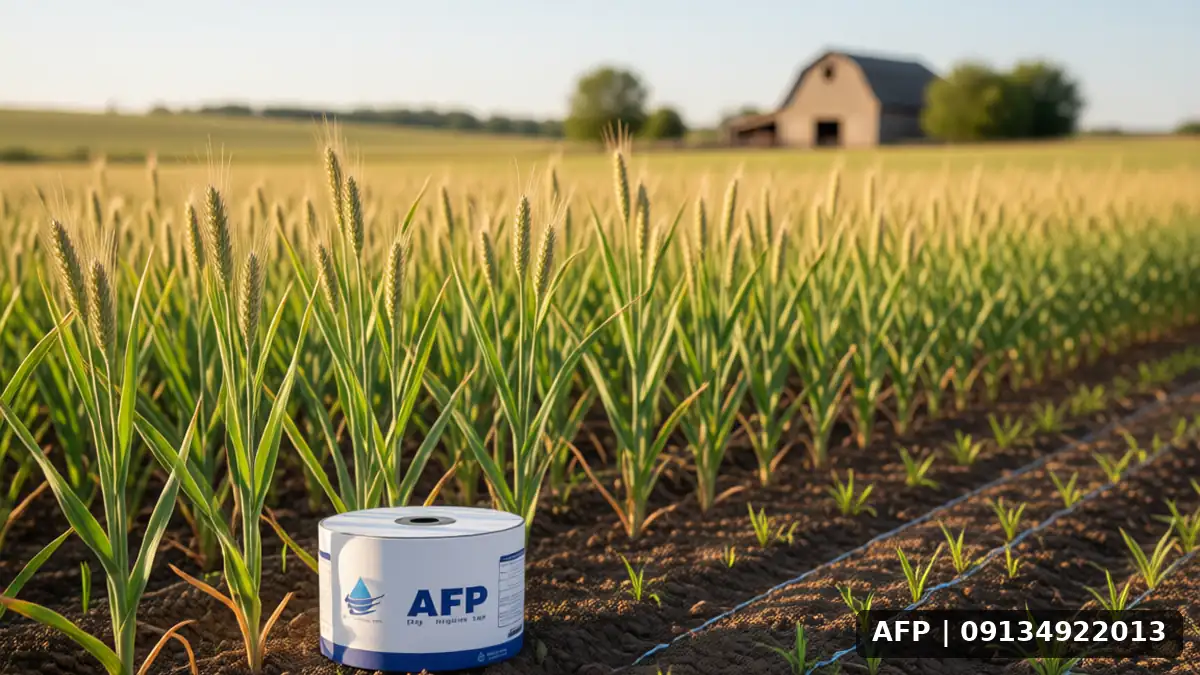
Barley is a crop sensitive to moisture fluctuations, particularly during the grain-filling stage, where low temperatures and water deficit can cause shattering and significantly reduce yield. Node-based Irrigation is founded on the principle of identifying critical plant growth nodes and determining water requirements at each node based on actual root zone and atmospheric conditions. Compared to fixed scheduled irrigation, this approach offers greater flexibility in response to weather variability. From a cost-optimization perspective, using this technology can reduce water waste and consequently lower pumping and energy costs. By precisely identifying plant needs, this system prevents over-irrigation and keeps roots under optimal conditions. In fact, replacing blind scheduling with live plant data means maximizing the utility of every drop of water.
Operational mechanism of nodes in barley
- Vegetative node: The initial stage, requiring balanced moisture for root system development. The focus at this stage is on establishing a suitable environment for future uptake.
- Flowering node: High sensitivity to drought stress, which directly affects grain formation and final yield. Precise management at this stage is critical.
- Grain-filling node: Peak water consumption for grain filling and weight increase. Any deficit at this stage directly leads to reduced thousand-grain weight.
By monitoring these nodes precisely, farmers can prevent over-irrigation. This approach indirectly aligns with topics such as Solubility Path per Hectare which is related to the sustainability of the irrigation system. In fact, the more sustainable the irrigation network is, the higher the accuracy of water delivery to sensitive nodes and the greater the reduction in resource waste. A deeper understanding of system sustainability helps us avoid pressure fluctuations that can affect sensor accuracy.
Cost Optimization Analysis in Node Irrigation
Transitioning to a node irrigation system requires initial investment in sensors, smart valves, and a central control unit. However, from a macroeconomic perspective, reducing water consumption relative to production volume drastically lowers the cost per unit of production. To better understand economic variables, one can refer to Sunflower Seed Yield per Hectare which indicates the sensitivity of initial seed and planting costs to final yield. In sunflower production as well, the synergy between planting precision and irrigation accuracy is the key to profitability. Although initial costs may appear higher, long-term savings in water and energy use create high economic value. Additionally, reducing the labor required for manual farm monitoring is a hidden benefit of this system that should be factored into operational accounts.
Technical implementation and execution tips
For successful implementation, transmission lines must be designed to control flow at various nodes. Using electric valves and smart control units are essential components of this process. Considering appropriate pressure in network design is vital. This topic overlaps with the principles of… Irrigation preparation of the field and its interaction… …prevents operational overhead. Farmers must ensure that sensor maintenance costs are included in their economic model to avoid sudden financial risks. Additionally, the integrity of data from moisture sensors and leaf temperature to the central system plays a critical role in real-time decision-making. Correct wiring and circuit safety against voltage fluctuations are other technical points that should not be overlooked.
- Identification of critical growth stages of barley based on geographical region and local climate.
- Placing sensors in the active root zone with high calibration accuracy.
- Implementing a sensor-to-valve feedback system with minimal latency.
- Periodic calibration of equipment and cleaning of filters.
FAQ: Frequently Asked Questions
Is drip irrigation applicable to rainfed wheat?
No, this system is designed primarily for irrigated cultivation. In rainfed farming, rainfall capture and moisture conservation are more critical than active irrigation. However, similar data can be used for soil moisture monitoring, although solenoid valves have no direct application in such setups.
How does it affect grain quality?
Precise moisture control during the grain-filling node prevents grain shriveling and shattering, thereby enhancing crop uniformity. Uniform grains are more attractive for processing and export markets.
What is the return on investment period?
Depending on the region and yield efficiency, ROI is typically achieved within 2 to 3 cropping seasons. This estimate does not account for the premium price of wheat on the global market.
Finally, familiarity with hidden variables in cultivation, such as garlic seed per hectare factors increase which addresses yield-increasing factors in similar crops, can serve as a useful complement for optimizing the sunflower irrigation network. Understanding these variables helps the farmer establish a balance between growth space and water supply.
Conclusion and Outlook
The transition from open irrigation to smart, node-based irrigation is a necessary step in modern agriculture. By focusing on cost optimization and utilizing precise plant data, sunflower farmers can maintain yields while simultaneously reducing financial risks associated with weather variability. The key to success lies in relying on data and maintaining flexibility in resource management. Ultimately, this technology is not an expense but an investment in the sustainability of sunflower cultivation. Using these methods ensures that every drop of water is consumed precisely when the plant derives the most benefit from it. This approach is not only economically viable but also environmentally sustainable.
Related articles: Cilantro yield per hectare, Triticale D8AFD8B1 seed quantity per hectare