Greenhouse Garlic Irrigation: Practical Drip and Tape Applications
Introduction: Why Irrigation Management in Greenhouse Garlic is Critical?
Gar cultivation in greenhouse environments requires high precision in regulating soil moisture. Unlike open-field crops that are largely influenced by climate, greenhouse garlic is grown in a controlled environment where the smallest fluctuation in water volume can directly affect bulb size, quality, and consistency. Garlic is a crop sensitive to salinity and waterlogging; therefore, selecting the appropriate irrigation method, such as drip or tape, is a determining factor for production success.
In this guide, we examine in detail the applications of these two methods in greenhouse garlic cultivation. Our goal is to provide clear insight for farmers seeking to increase efficiency and reduce water waste. Let’s dive into the technical and operational details so you can make better decisions for your crop.
Drip Irrigation: Precision and Control at the Leaf and Soil Level
Drip irrigation is considered one of the most advanced irrigation methods, delivering water drop by drop at low pressure directly to the plant root zone. This method is highly suitable for greenhouse garlic because it allows precise control of the water volume delivered to each plant.
Key Advantages of Drip Irrigation in Garlic Cultivation
- Reduced Evaporation: Since water reaches the soil directly rather than the leaves, surface evaporation is significantly reduced.
- Prevention of fungal diseases: Keeping the planting bed surface and stems dry prevents the development of fungal rots, which are fatal to garlic.
- Integration with fertigation: Drip systems enable precise fertigation, resulting in uniform growth of garlic bulbs.
Technically, for greenhouse garlic, low-flow emitters (e.g., 1 to 2 liters per hour) are typically used to prevent root starvation. If you are looking for a reliable system for precise water delivery, reviewing How to determine drip tape irrigation points can enhance your understanding of the principles of uniform water distribution in linear and point systems, as the pressure distribution logic in these two systems is similar to some extent.
Drip Tape: Speed in planting and extensive coverage
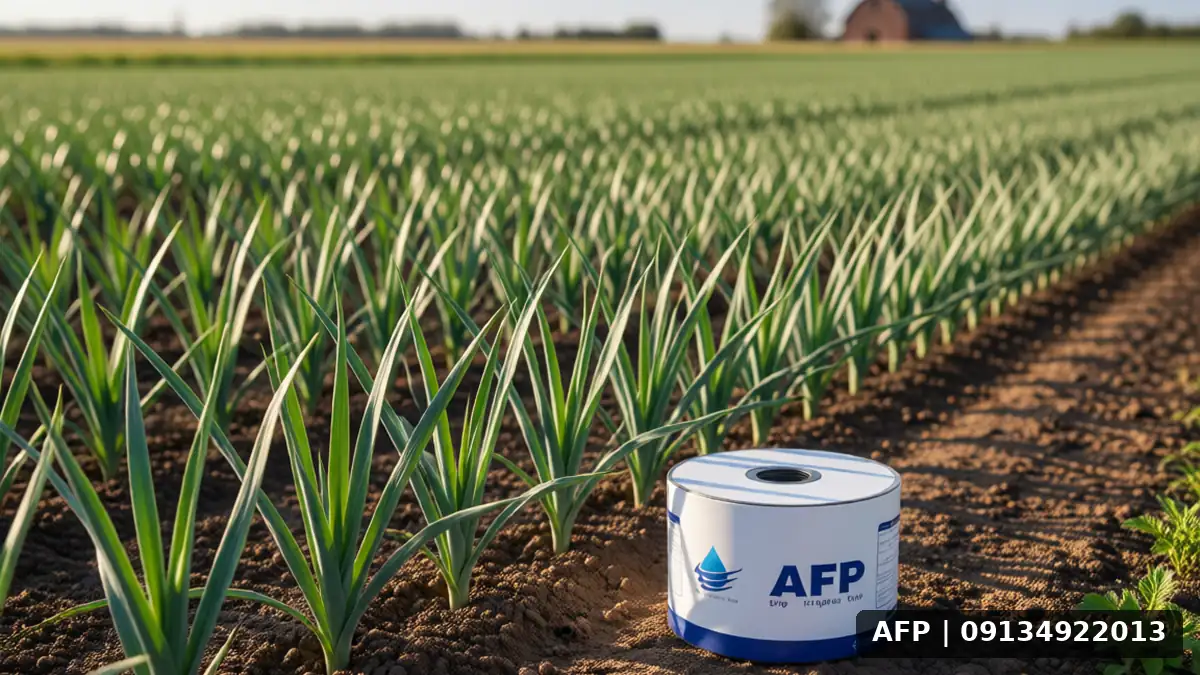
Drip tape is a plastic strip with small holes that is placed on the soil surface or within planting furrows. This method is widely used in commercial greenhouses with high-density planting lines. Drip tape allows for rapid and simultaneous irrigation along the entire row, and its installation is simpler compared to individual emitters.
Practical Applications of Drip Tape for Garlic
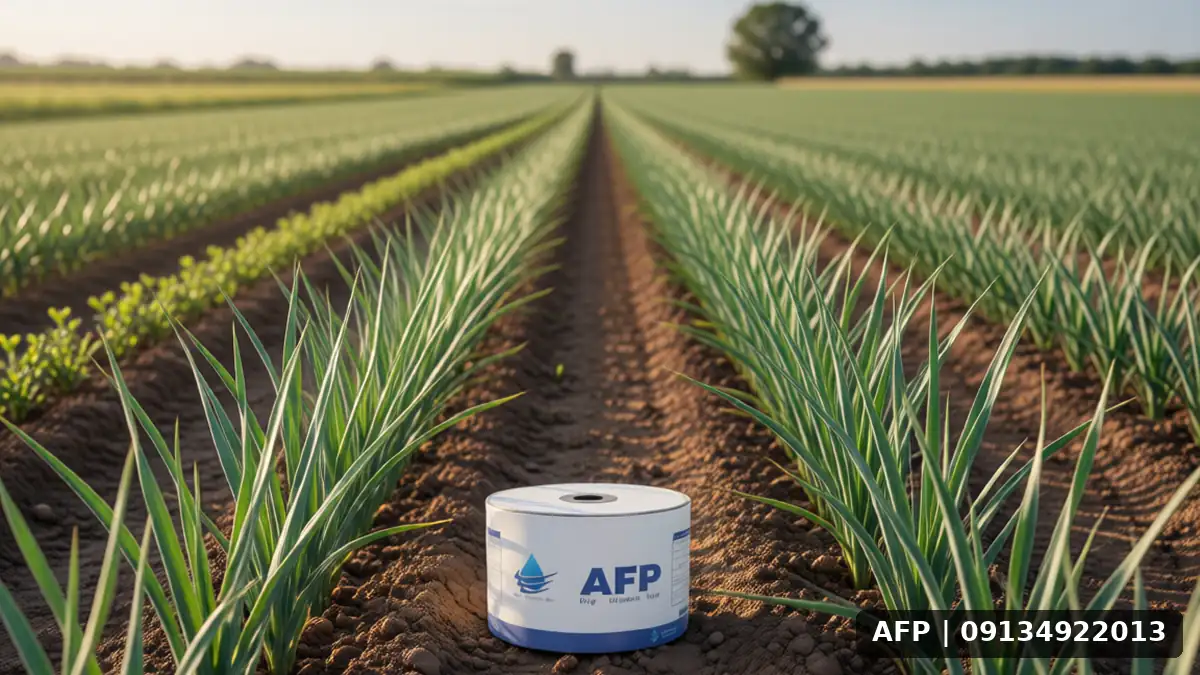
- Pre-planting installation: Place the drip tape in the planting trenches and sow the garlic seed directly on top of it. This ensures that the roots have direct contact with the tape.
- Local moisture management: Drip tape creates a moist zone around the roots, which is highly effective for the early growth stages of garlic.
- Labor reduction: There is no need to check individual drippers, and the entire line receives water at a uniform pressure.
When using drip tape, selecting the appropriate tape type is critical. For garlic cultivation, it is recommended to use tapes with larger holes (e.g., 2 mm) to provide sufficient water flow for rapid garlic root development. To better understand how tape type affects cost and yield, it is recommended to study Drip Tape Cost per Hectare. This article helps you correctly budget your irrigation from the start and avoid purchasing expensive products unnecessarily.
Comparison of Drip and Drip Tape Irrigation in Greenhouse Garlic
Both methods have their advantages, and the choice between them depends on your greenhouse physical design and budget. Some greenhouses also consider combined systems, using drip tape for initial growth stages and then drip emitters for final bulb strengthening.
Key practical points for successful garlic irrigation
Regardless of the selected method, adhering to the following points can make a significant difference in the quality of produced garlic:
- Soil salinity: Garlic is sensitive to salinity. Before irrigation, test water quality. If using salty water, increase irrigation volume to flush salts from the root zone.
- No over-irrigation: Never allow roots to be submerged in water. Soggy garlic is highly susceptible to smut and fungal diseases. The bed should be moist but not waterlogged.
- Bed management: Before installing drip or line-tape systems, prepare the soil bed uniformly, free of stones and large debris, to prevent blockages in the water flow.
- Planting in Holes: When planting garlic in holes, ensure that the placement area for the drip or line-tape system is kept undamaged so that water supply to the plants is not interrupted.
For farmers aiming to optimize water usage, understanding the importance of under-line-tape and pipe filters is essential. Appropriate filters can prevent impurities from entering the system and ensure the longevity of your irrigation equipment across multiple cropping seasons.
Managing Air Humidity in Greenhouses
Irrigation is only one part of the equation; greenhouse air humidity must also be managed. When using drip irrigation, the relative humidity of the greenhouse air remains low until you use line-tape runoff, which may increase local humidity around the rows. Monitoring the relative humidity inside the greenhouse helps you activate ventilation or cooling systems as needed to maintain thermal balance.
Frequently Asked Questions (FAQ)
What is the best time for irrigating garlic in a greenhouse?
It is generally recommended to irrigate during the cooler hours of the day (early morning or evening) to reduce evaporation and salt accumulation. Additionally, frequent, low-volume irrigation is preferable to infrequent, high-volume irrigation.
Does greenhouse-grown garlic require high soil moisture?
No. Garlic is sensitive to excessive moisture. The soil should remain moist but not waterlogged. Constant, suffocating moisture promotes fungal disease in garlic.
What is the main cost difference between drip and tape-line irrigation?
Drip systems have higher consumable costs (drippers) but allow for more precise control. Tape-line systems are more affordable but make managing pressure balance in long lines more difficult.
Can garlic be grown in small greenhouse pots using these methods?
Yes, however, using single-unit micro-drippers is more suitable than tape-line, which is designed for long lines.
Summary: Smart Selection for Garlic Cultivation
Choosing between drip irrigation and lateral line systems for greenhouse garlic cultivation is a technical and economic decision. If your priority is salinity control, stem health, and precise fertigation, the drip system is the best option. If your priority is installation speed, coverage of dense rows, and simpler management, the lateral line system is the smart choice.
Ultimately, success in greenhouse garlic cultivation depends on the correct combination of a suitable growing medium, high-quality water, and an optimized irrigation system. By reviewing the points mentioned and studying complementary resources such as the Lateral Line Irrigation in Agriculture guide, you can ensure that your system achieves optimal efficiency. It is always recommended to consult an irrigation specialist before final implementation to calibrate pressure and flow rate parameters based on your climate and greenhouse type.
Greenhouse garlic irrigation, while challenging, can become one of the most profitable methods for producing high-quality garlic by utilizing modern tools such as drip and lateral line systems. Protect your water resources and use them wisely.
Related Articles: How to Determine Lateral Line Irrigation Points, mung bean yield per hectare guide, cost drip tape per hectare, Importance of inspecting D988 tube drip line land