Subsurface Irrigation in Eggplant Cultivation: Applications and Techniques
Introduction to the Importance of Subsurface Irrigation in Eggplant Cultivation
Eggplant is a high-yield greenhouse crop that requires stable soil moisture for optimal growth. Conventional sprinkler irrigation methods not only lead to water wastage but can also come into direct contact with leaves, increasing the risk of fungal diseases and Pythium root rot. In this regard, Subsurface irrigation of eggplant is introduced as a smart solution. This method places water sources at root depth, ensuring uniform moisture distribution in the root zone and preventing the aerial parts of the plant from getting wet. The use of subsurface or buried drip tapes allows for more precise control of water stress, resulting in improved fruit quality and reduced labor costs.
Key Benefits of Subsurface Systems for Eggplant
- Significant reduction in direct evaporation from the soil surface.
- Prevention of leaf wetness and reduction in the incidence of phytopathogen diseases.
- Increased effective uptake of water and nutrients in the root zone.
- Simultaneous application of fertigation solution is possible at the root zone depth.
To better understand the functioning of drip lines, you may review the section on drip line types to become familiar with the variety of products available on the market.
Technical principles and specialized applications of subsurface irrigation
Installing subsurface drip lines requires high technical precision. The burial depth of the line must be adjusted based on the depth of active eggplant roots. Generally, depths of 10 to 15 cm are recommended for young plants, and depths of 20 to 30 cm for mature plants. This depth ensures that moisture is delivered exactly where roots perform their metabolic activity. In arid climates, this method can reduce total water consumption by 20 to 30 percent.
Impact on root and soil moisture management
In subsurface systems, the moisture peak is located at depth, and the soil surface dries out gradually. This forces the plant to expand its roots to greater depths. For more precise planning, awareness of Amount of mung bean seed per hectare + factors affecting the determination of quantity and other competitive or intercropped plantings can be beneficial in successive or mixed cropping cycles, as root density is highly important in integrated land management systems.
Using appropriate filtration in subsurface systems is critical. Since the drip line is buried at depth, accessing it to clear clogs is more difficult. Therefore, disc or quartz filters with the correct particle size rating should be installed at the start of the line. For additional information on operation and maintenance, study the page types irrigation tapes performance recommended.
Application in Greenhouses and Open Fields
In greenhouse operations, using subsurface drip lines or direct irrigation cables ensures root zone temperature stability. This thermal stability reduces heat stress during hot summers. In open fields, this method is particularly effective in areas with strong winds where surface irrigation results in uneven distribution due to wind drift. Additionally, because the line is buried at depth, this system allows for soil operations such as deep cultivation with fewer restrictions.
Practical Tips for Installation and System Management
Proper installation of subsurface eggplant drip lines requires adherence to specific safety and technical steps. The key execution points are outlined below.
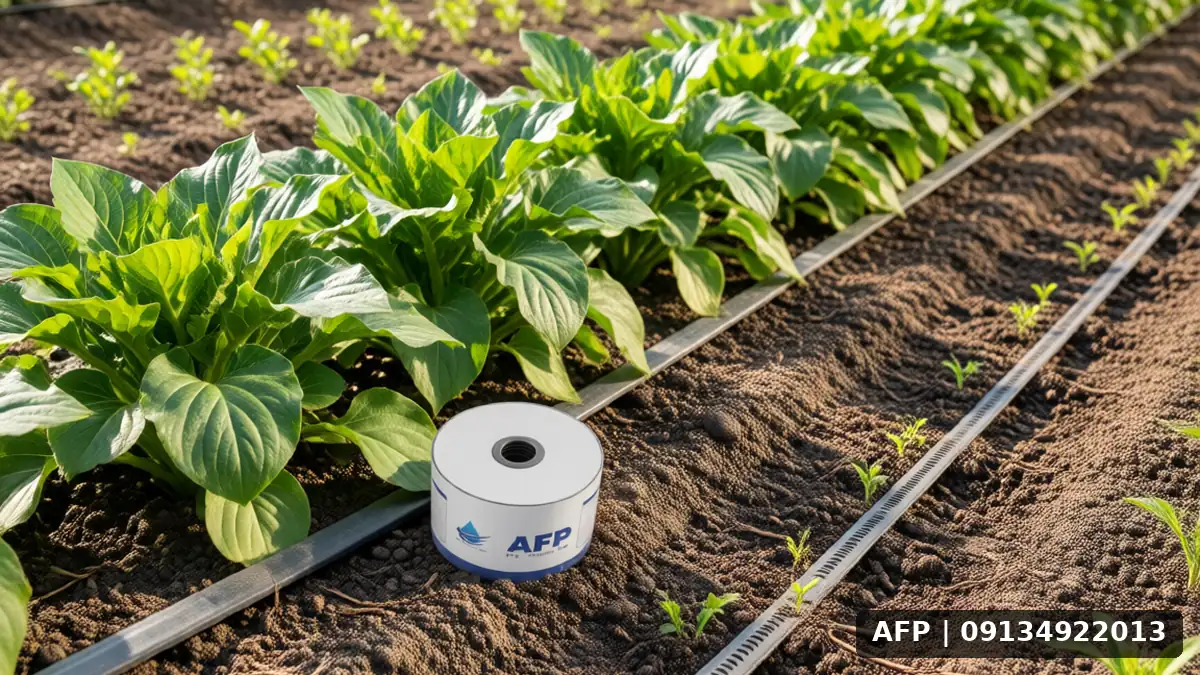
- Land Preparation: The field surface must be perfectly leveled to ensure uniform hydraulic potential along the tape length.
- Mulching: Applying mulch material where the tape emerges from the manifold connection prevents root intrusion into the tape holes.
- Depth Accuracy: Use a spade or mechanized equipment to dig the trench. The trench depth should be 5 cm shallower than the final target burial depth of the tape. This allows the tape to be positioned at the exact designated depth after it is laid and the soil is packed by passing the spade.
- Leak Test: Apply test pressure to the system before fully closing the trench to ensure there are no leaks at the connections.
Additionally, to optimize the discharge rate, familiarity with iq selecting agricultural drip tape is helpful. Selecting a tape with an appropriate discharge rate (e.g., 2 to 4 liters per hour) is critical for eggplant. An excessively high discharge rate can lead to salinization of the soil surface or root suffocation in heavy soils, whereas a low rate prevents water from reaching the root tips.
Irrigation Scheduling and Monitoring
After installation, moisture monitoring methods such as neutron probes or gravimetric measurements should be used. Subsurface irrigation for eggplant does not mean ignoring soil moisture. Regular monitoring enables adjusting irrigation frequency based on climatic conditions. During the first weeks after transplanting, maintain high soil moisture to ensure complete rooting. Subsequently, gradually reduce moisture to the stress threshold to encourage the plant to produce higher-quality fruit.
Frequently Asked Questions (FAQ)
What is the suitable burial depth for drip tape for eggplant?
Generally, a depth of 10 to 15 cm is recommended for young plants and 20 to 30 cm for mature plants. This depth is determined based on the depth of active roots at various growth stages.
Is subsurface drip tape suitable for all soil types?
In sandy soils, the tape can be placed slightly shallower because water penetrates deeper faster. In loamy and heavy soils, the burial depth must be greater to ensure the moisture pulse remains within the root zone. Additionally, in alkaline soils, monitor for salt deposition around the tape and use periodic system flushing.
What is the main difference between subsurface irrigation for eggplant and surface drip tape?
Surface tape is laid on the soil surface next to the crop row and provides direct irrigation. Subsurface tape is buried at root depth. The main advantage of subsurface irrigation is reduced evaporation and keeping foliage dry, but installation and maintenance are slightly more complex.
Conclusion
The expansion of subsurface irrigation systems in eggplant cultivation is a significant step toward sustainable and water-efficient agriculture. By adhering to installation principles, selecting appropriate depths, and monitoring soil moisture precisely, farmers can fully benefit from the physiological and economic advantages of this method. Familiarity with similar products in other crops also broadens your perspective on water resource management in your farm. To compare irrigation methods for other crops, you can refer to the page Watermelon yield per hectare using drip tape for reference. Finally, it is recommended to conduct pilot trials on a small section of the farm before widespread implementation of the subsurface system to evaluate its performance under local conditions.