Sprinkler Irrigation for Soybean Cultivation: Challenges, Solutions, and Execution Principles
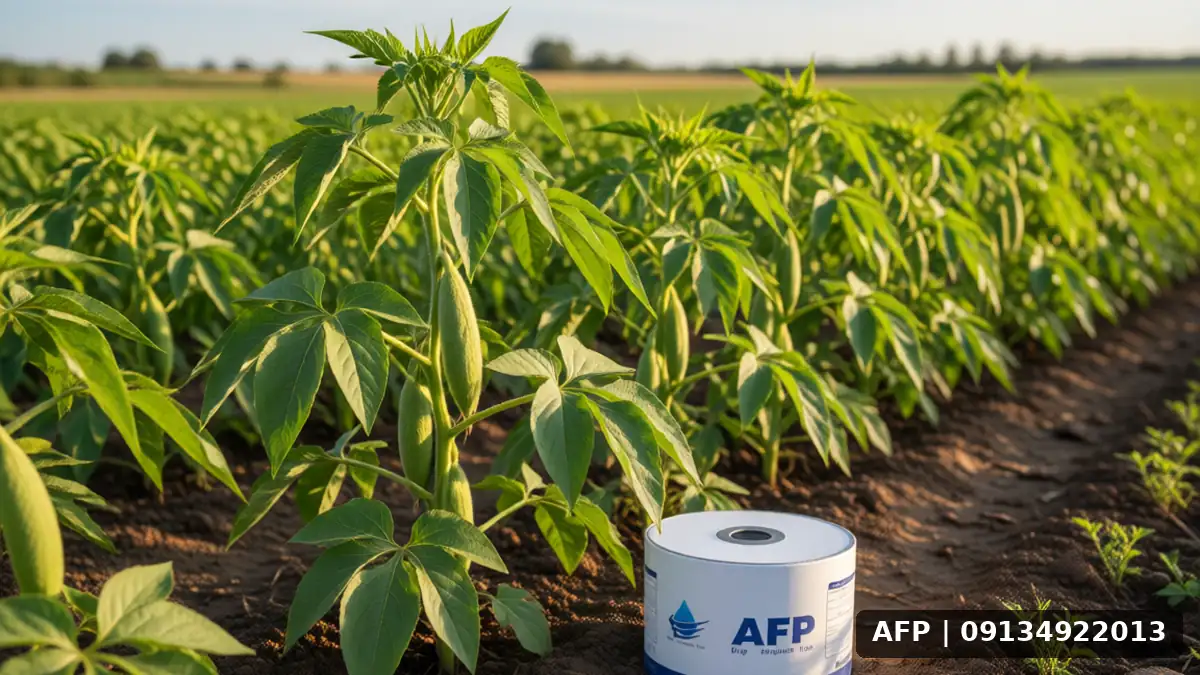
Introduction: The Role of Furrow Irrigation in Soybean Cultivation
Soybean is one of the most important oilseed crops in the world, capable of being cultivated under various climatic conditions. Selecting an appropriate irrigation method plays a vital role in determining the final yield and product quality. Furrow Irrigation As one of the oldest and most widely used methods, it has maintained its position in large areas with flat plains, although it has recently been compared with modern methods such as Selecting the Appropriate Drip Tape and pressurized systems. In this section, we examine in detail how this method works for soybeans and why it remains important, analyzing why many growers continue to use it.
Furrow irrigation is based on the uniform flow of water from one end of a furrow to the other. This method can be challenging for soybean cultivation, which requires deep roots and balanced moisture, unless it is implemented with great precision in furrow design, infiltration coefficient determination, and flow rate control. Understanding environmental variables such as air temperature and evaporation rate is also essential for predicting water behavior along the furrow.
Technical Challenges in Implementing Furrow Irrigation for Soybean
Water displacement and poor irrigation uniformity
One of the major problems with furrow irrigation is the lack of uniform water distribution along the furrow. In long furrows, water often stops before reaching the end or the infiltration depth at the end exceeds the allowable limit. This unevenness can cause biological stress and reduced root growth in soybean, which is sensitive to drastic moisture changes. Precise management of the water inlet flow rate to prevent this phenomenon requires complex hydraulic calculations. Considering the soil infiltration rate at different field locations also plays a key role in determining the irrigation end time. If the infiltration rate at the downstream end is lower than at the upstream end, longer irrigation time is required for the furrow’s end, but this may cause soil erosion at the furrow’s head.
Dependence on land slope and erosion
Furrow irrigation depends on the natural land slope. Excessive slope causes high flow velocity, soil erosion, and damage to soybean root morphology. Conversely, low slope can cause water stagnation and create waterlogged conditions (oxygen deficiency) for the roots. This dilemma makes system design difficult and requires costly land leveling modifications. Additionally, minor surface unevennesses can deflect the water flow path and create patches with excessive or insufficient moisture, affecting the uniform growth of pods.
Increased soil salinity and crust formation
Continuous use of furrow methods can lead to salt accumulation on the soil surface or the formation of clay crusts that reduce soil permeability. Soybean has relative sensitivity to salinity, and increased soil salinity can cause leaf scorching and reduced photosynthesis. Unlike subsurface irrigation methods that involve more precise salinity control, Subsurface irrigation This may be a more sustainable option for saline zones, but it is more expensive. In furrow irrigation conditions, leaching salt from furrows is more difficult, requiring seasonal flushing, which is in itself an operational burden.
Practical points for optimizing furrow irrigation of soybeans
Despite the aforementioned challenges, by adhering to operational principles, effective use of this method can be achieved. Below, we review the most important practical points:
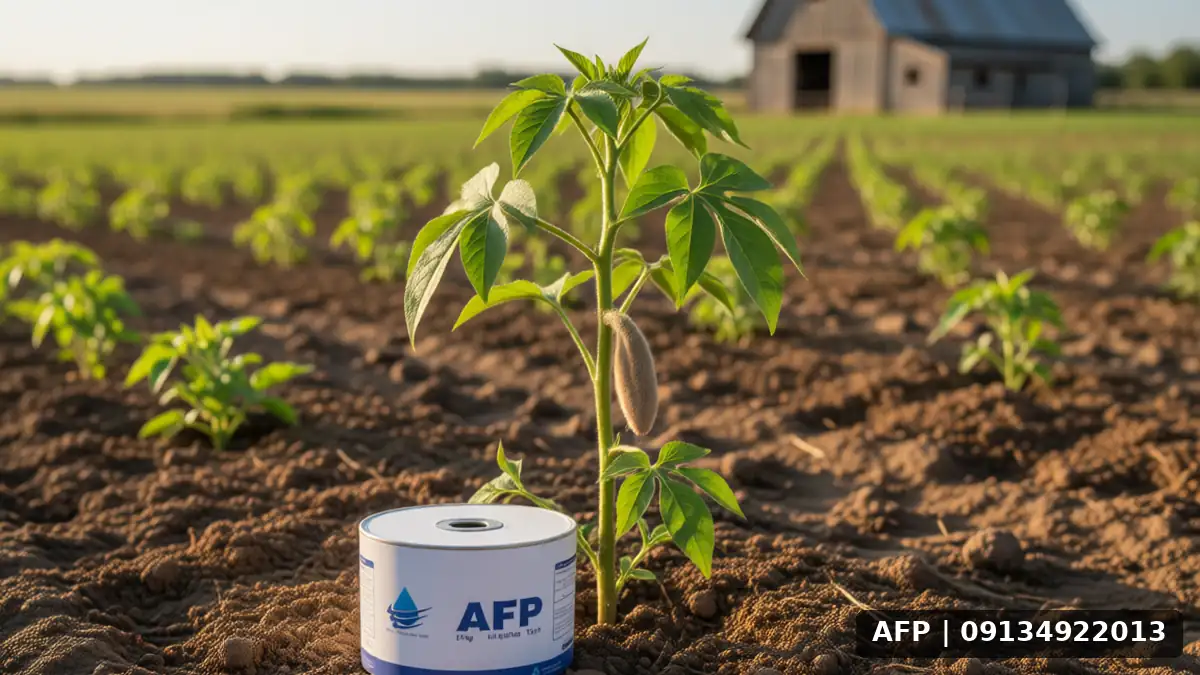
- Determining the appropriate furrow length: Furrows longer than 50 meters generally have more difficult management. Dividing the field into shorter furrows provides better control over irrigation timing.
- Planting soybeans in lines perpendicular to the furrow: Planting soybean seeds in lines perpendicular to the water flow ensures that roots contact water in a uniform path and prevents soil erosion.
- Inflow Management: Using pressure-regulating pipes to control the inflow discharge into furrows is essential. A uniform flow rate is key to reducing erosion and increasing infiltration.
- Adjusting the Irrigation Schedule: During sensitive flowering and pod-set stages, soybean has high moisture requirements. During this period, increasing the frequency of irrigation and reducing the flow discharge, instead of long and heavy irrigation events, is recommended.
- Coordination with Companion Cropping: If soybean is grown in rotation with cereals, the irrigation program should be adjusted to meet the different needs of the plants. For example, evaluating mixed crop performance can help determine the overall farm strategy.
In addition to the above points, attention to seed quality and planting density, alongside the irrigation method, also affects overall yield. If your farms are located in arid and semi-arid regions and you are looking to cultivate forage corn, studying the guide for Drip line spacing for forage corn can provide you with valuable comparative aspects, as the physical principles of water flow in both methods have overlaps.
Economic and technical comparison with modern methods
Lateral (flume) irrigation has a lower initial installation cost compared to drip systems, but it carries high hidden costs in terms of water and labor efficiency. In contrast, drip and tape (lateral) systems, by reducing water losses by up to 50%, become economically viable in the long run. However, for extensive soybean farms in low-rainfall regions, the investment for transitioning to a modern method requires precise return on investment analysis. Proper grading of the tape lateral can be the key to success in this transition. Long-term maintenance costs of lateral systems must also be considered in the economic model, as seasonal changes in terrain slope or nozzle clogging can reduce efficiency.
Frequently Asked Questions (FAQ)
Is washdown irrigation suitable for every growth stage of soybean?
No. This method is very sensitive during the germination and early seedling stages. In these phases, the delicate roots require uniform moisture, and washdown irrigation may cause relative waterlogging and fungal growth. During vegetative and flowering stages, it is better to deliver water to the furrows accurately with controlled flow rates.
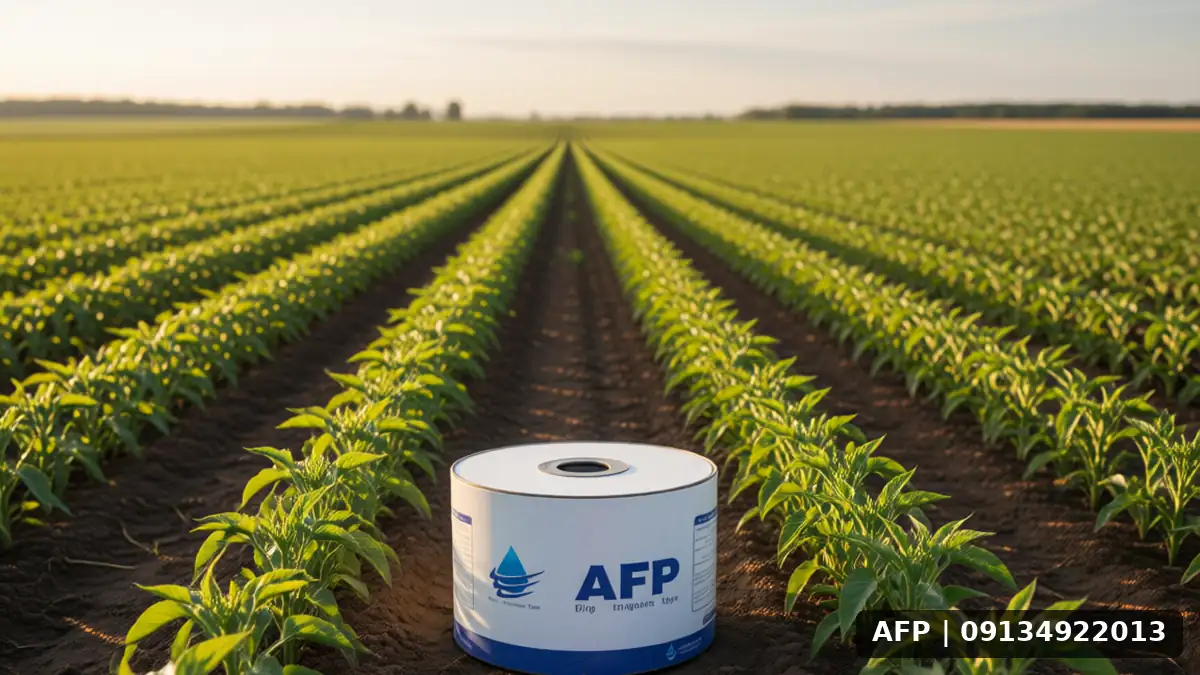
When is the best time to install a pivoting irrigation system for a soybean field?
The best time is before planting, during the land preparation phase. Furrow design should be carried out simultaneously with plowing and ridge formation to avoid the need for demolition and reconstruction.
Conclusion
Pivoting irrigation for soybean cultivation, although a conventional method, can still be applicable with technical modifications and precise management. Major challenges include irrigation uniformity issues, soil erosion, and salinity accumulation. Farmers should not rely solely on empirical cues but make decisions based on a deeper understanding of water flow physics and the physiological needs of soybeans. If possible, comparing this with modern methods such as Black corn seed rate guide or other crops can provide a more comprehensive view of your operational costs. Success in soybean cultivation is a combination of appropriate seed selection, planting timing, and intelligent water resource management, regardless of the method chosen.