Fruit Orchard Irrigation in Melon Cultivation: Applications and Operational Strategies for Drip and Tipline Methods
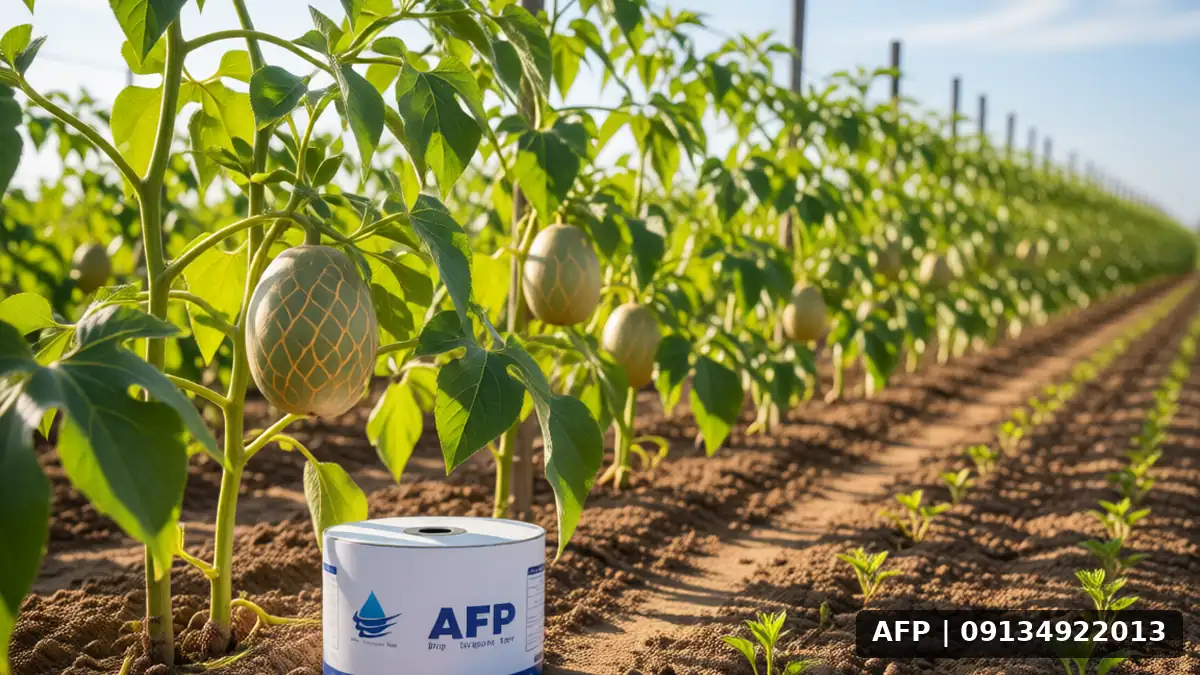
Introduction to Watermelon Orchard Irrigation
Watermelon cultivation (Pumpkin) in Iranian agriculture is considered a high-demand and prosperous crop due to its diverse uses, long shelf life, and significant economic return. This plant is native and well-adapted to Iran’s climatic conditions; however, successful cultivation and the achievement of superior quality products depend heavily on the precise management of water and soil resources. Among all environmental factors, selecting the appropriate irrigation method from planting to harvest is the final determinant of the quality and quantity of the final produce. In this section, we examine in detail the fundamental differences between two advanced, technological methods: drip irrigation and furrow irrigation. This allows farmers to make an informed, economical, and effective choice. A deep understanding of how these systems operate is the key to reducing water losses, increasing efficiency, and achieving uniform, healthy fruit. Additionally, understanding how appropriate irrigation influences the plant’s physiological processes is of particular importance. Therefore, this guide is not merely a technical description but a practical roadmap for optimizing the production chain in watermelon orchards. Given that water is a scarce and limited resource in many agricultural areas of Iran, investing in precise irrigation technologies is not just a technical option but an economic and ecological necessity. The following sections provide a more detailed examination of each of these two methods.
Overview of Furrow and Drip Irrigation
Both methods are pressure-irrigation subsystems, but their fundamental difference lies in the water distribution mechanism and the discharge pattern at the soil surface. In tape irrigation, water is discharged unidirectionally and continuously from a thin plastic tape to the soil surface. These tapes typically use micro-sized holes or slits to distribute water as a thin, uniform layer over a specific width and depth range. The water then reaches the plant roots through vertical and lateral infiltration. This method is highly efficient for row and line crops such as melon, cucumber, and tomato, as farmers can place the irrigation tapes directly alongside the planting rows. This proximity ensures that water is used directly in the root zone and reduces evaporation losses from the soil surface.
In contrast, drip irrigation injects water directly into the root zone drop by drop at lower, controlled pressure through individual emitters installed on main lines. Emitters have specific output rates and are placed at fixed intervals along the lines. To better understand how they work, maintain drip tape, and repair emitters correctly, it is vital to grasp these mechanisms. Drip tape typically has lower initial costs and offers faster, simpler installation for seasonal crops like squash, as it is easy to harvest and reinstall in subsequent seasons. However, emitters offer greater durability against pressure and temperature changes and are recommended for permanent crops such as orchards. Nonetheless, drip systems have higher initial investment costs and require more precision during installation to prevent emitter rotation and minor leaks. Furthermore, the choice between drip tape or emitters must be based on plant root depth and the farm’s soil type.
Practical Applications in Squash Cultivation
The honeydew melon requires uniform and constant moisture for rapid growth and to prevent fruit hollowness or cracking. Severe soil moisture fluctuations can cause physiological stress, jeopardizing seed and flesh quality. Using pressurized irrigation, such as trickle or drip, ensures that only the root zone remains moist. This focused irrigation controls excessive humidity for shade-tolerant plants in the honeydew orchard, which is a key factor in preventing fungal diseases and root rots that can completely destroy the crop. Additionally, precise water allocation and avoiding foliage wetting stop vegetative growth, allowing the plant to direct its energy toward fruit production. To maximize efficiency, the recorded yield of melon per hectare using trickle irrigation demonstrates the significant advantage over conventional irrigation. Many farmers observe a 20 to 30 percent increase in unit yield after implementing this system. Furthermore, the precise management of Fertigation in these systems makes nutrients available at the required root depth and time, enhancing nutrient uptake efficiency and reducing total fertilizer consumption. Consequently, the rapid return on investment in pressurized irrigation is a primary reason for its popularity among honeydew melon growers. Proper management of these systems also reduces the labor and time required for irrigation, providing a notable competitive advantage in large-scale farms.
Practical and Technical Implementation Points
To achieve optimal results in kiwi fruit orchard irrigation and prevent operational issues, it is essential to adhere to the following guidelines:
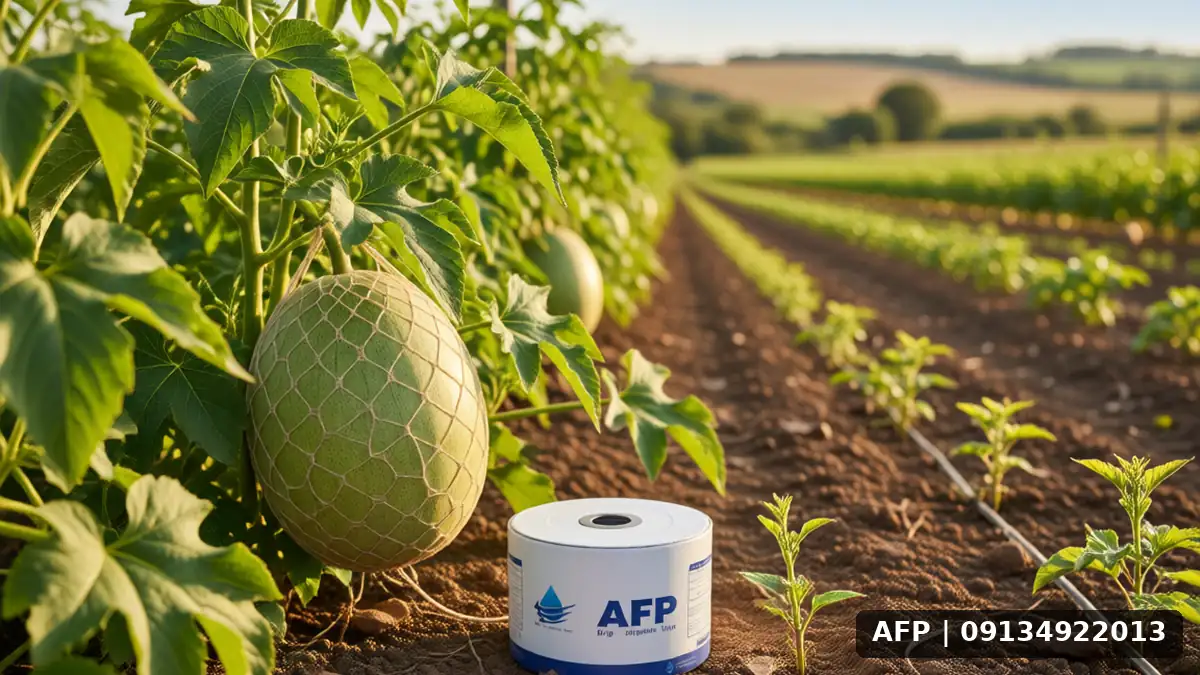
- Soil analysis and water holding capacity: Perform soil analysis before system installation to determine the correct irrigation intensity and frequency. In sandy soils, irrigation should be frequent and low-volume, whereas in loamy soils, higher-volume applications with longer intervals can be used. Ignoring these parameters can lead to root waterlogging and rot.
- Appropriate filtration: Both drip tape and dripper systems require optimal screen and gravity filters to prevent clogging of tape and dripper emitters. Selecting a suitable filter screen size based on the water source (well, qanat, or municipal pipe) is critical. Incomplete filtration is the primary cause of clogging and system failure during the initial months of operation. Hydrocyclones are recommended for surface water sources, while disc filters are recommended for well sources.
- Dusting and mulching for root zone recovery: Using polymer covers or mulch around drip tape helps reduce water evaporation and control weeds. These covers also stabilize soil temperature, which is highly beneficial for the sensitive kiwi root system. In hot and dry regions, mulching can offset up to 50 percent of water deficits and reduce irrigation requirements.
- Irrigation timing: The optimal times for irrigating cucumbers are early morning or evening to prevent high temperatures from causing rapid evaporation and reducing water efficiency. Irrigating during peak daily heat maximizes evaporation losses and can cause leaf scorching if water is applied by spray. Additionally, using electronic timers to control irrigation timing improves system accuracy and uniformity.
Also, understanding water consumption estimates based on climate helps optimize your irrigation schedule to reduce water usage while ensuring uniform root growth. To select the correct equipment and prevent issues, reviewing tips before purchasing drip tape is essential. Furthermore, awareness of Factors affecting the amount of melon seed per hectare helps you align planting density with your irrigation system’s capacity. If planting density is too high, the irrigation system will be unable to provide sufficient moisture to all plants, increasing the risk of reduced yield.
Comparison of two methods: Summary table
Frequently Asked Questions (FAQ)
Can drip tape be used for vegetable crops such as pumpkin?
Yes, drip tape irrigation is common and effective for row crops like pumpkin and squash. Due to its low cost and quick installation, it is popular among novice farmers and small-to-medium farms. Additionally, the ability to quickly remove the tapes after harvest reduces the time required to prepare the field for the next crop.
What is the optimal planting distance for melon using drip tape?
Planting distance depends on plant compactness, but generally, 1.5 to 2 meters between rows is recommended. Place the drip tape in the center between rows to ensure each plant has sufficient water access. If using emitters, the spacing between emitters must match the plant spacing to prevent water from running off away from the root zone. Furthermore, considering the prevailing wind direction in the area can influence the layout of the emitters.
How does drip tape work if using municipal piped water?
Municipal piped water, due to high pressure and turbidity, requires a filter and pressure regulator. In this case, drip tape can operate without issues, but clogging must be monitored. Input pressure regulation is critical; excessive pressure can cause tape rupture and system inefficiency. Using precise regulators is key to the longevity of the system when using municipal water sources.
Is drip emitter irrigation better than drip tape?
Both have their advantages. Drip tape is more suitable and cost-effective for seasonal and row crops, whereas drip emitters are generally recommended for permanent orchards and fruit crops (such as plum or apple orchards). The final selection should be based on initial budget, expected system lifespan, and crop type. In melon farms with seasonal planting, drip tape is considered the more economical option.
Additional notes and summary
For managing irrigation in melon orchards, it is crucial to understand that water is made available to the plant in usable amounts under all conditions. Using pressurized irrigation systems such as drip tape and drip emitters allows farmers to precisely control moisture and strengthen root systems. This precise control helps reduce fungal diseases and produce higher-quality crops. Economically, the increased yield resulting from reduced water and fertilizer consumption lowers operational costs and improves farm profitability. Additionally, reducing reliance on manual labor for irrigation frees up time for other orchard activities. Finally, we recommend consulting with an irrigation specialist and reviewing Types of drip tape irrigation carefully to select a system that is fully compatible with your farm’s soil and climatic conditions. By following correct irrigation principles, you can ensure that your melon crop is harvested with excellent freshness and quality. This approach not only offers financial benefits to the farmer but also plays a vital role in water resource sustainability and environmental protection.
Related articles: miqdori tuxmi lobiya sabz dar yak gektar rahnamoi kisht, garlic seed per hectare factors increase 37460 2, Yield of irrigated lentil per hectare (kg/ha), pumpkin seed per hectare factors