Fruit Orchard and Squash Irrigation: Drip Line Efficiency Comparison
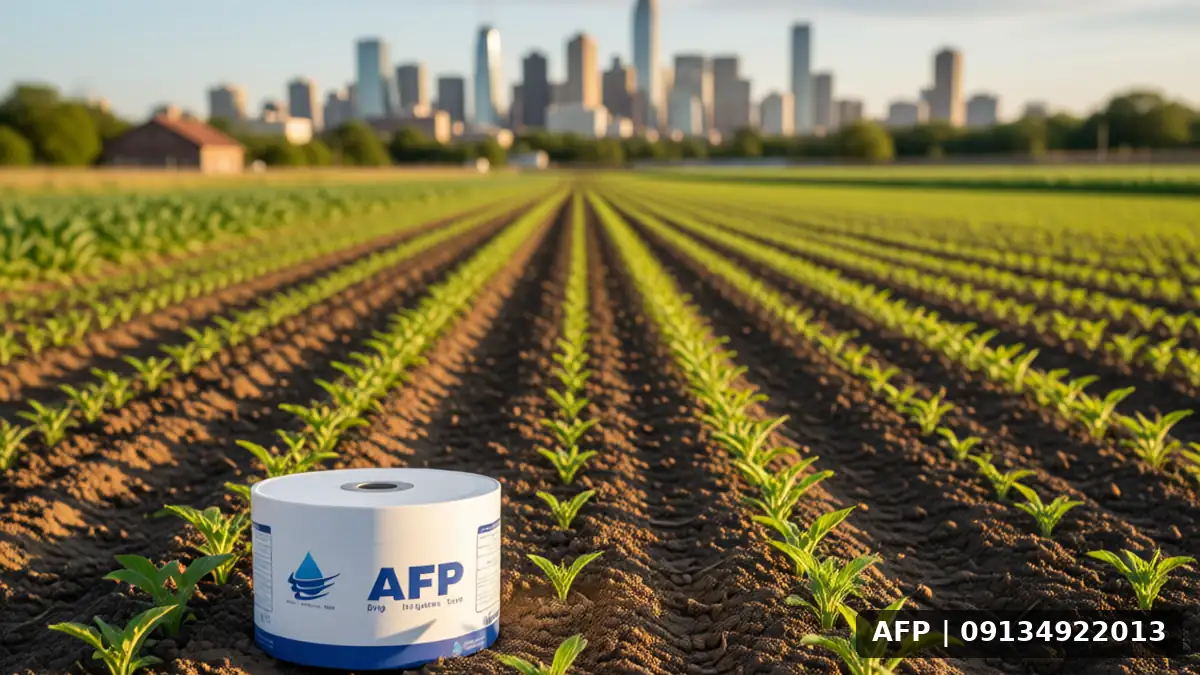
Choosing the appropriate irrigation system is one of the most critical decisions in modern agriculture, especially when dealing with crops such as squash and orchard trees with different requirements. Squash While both tape line irrigation and drip irrigation are built on the principles of precision irrigation, subtle differences in water distribution, installation costs, and maintenance can impact final crop yield. In this guide, with a practical, comparison-focused approach, we aim to analyze technical and economic criteria for farmers and orchardists to make more informed choices.
Technical Analysis of Irrigation for Squash Using Tape Line
Squash is a crop sensitive to waterlogging that requires precise soil moisture management. Tape line is highly attractive for squash due to the extensive coverage of the root zone. In this method, a thin polyethylene tape with micro-holes is laid on the ground. One of the main challenges in squash cultivation is competition with weeds and wastewater management, where tape line can be effective in reducing them. By examining the importance of land inspection in tape line and polyethylene hose systems we realize that proper grading and a level surface are critical to prevent waterlogging and root rot in squash. Additionally, squash attachment to soil and its sensitivity to light stress can be managed by adjusting irrigation timing in the tape line system. Compared to drip irrigation, tape line has a lower initial cost but a shorter useful life due to mechanical wear and UV radiation.
Irrigation of Fruit Orchard Trees: Differences with Vegetables
While melon is an annual crop, orchards consist of perennial trees with deeper root systems and more complex structures. Orchard irrigation using drip systems is typically implemented with main and sub-main lines and fixed emitters, whereas tape systems are primarily designed for annual vegetable crops. However, tape systems can be a viable option during the early growth stages of fruit tree seedlings or in high-density orchards with narrow row spacings. The key factor in orchard irrigation is water penetration depth; emitters allow water to reach depth slowly over longer intervals, while tape systems, with higher flow rates, may distribute water more quickly on the surface. To better understand these differences, study a comprehensive guide to tape system usage in tomatoes which can provide a good overview of tape system behavior in high-yield crops, which is somewhat similar to moisture management in fruit trees.
Economic Comparison and Water Efficiency
- Investment Cost: Tape systems have a significantly lower cost than standard drip systems due to their simple structure and high-volume production. In melon cultivation, this cost-efficiency, combined with high yields, makes it particularly attractive.
- Water Usage: Both methods have high efficiency, but drip irrigation usually offers greater precision in orchards due to the ability to regulate local pressure and reduce surface evaporation from specific points.
- Pump energy consumption: Due to the diameter of main lines and lower flow resistance, tape systems generally require lower-consumption pumps compared to complex drip networks.
- Investment in subsequent years: Orchards require a sustainable system for decades, making drip irrigation more logical long-term due to its longer useful life. Pumpkins, as an annual crop, respond well to reusable or annually replaceable tape systems.
For a more detailed analysis of economic variables, one can also refer to cost estimation guides in other crops. For example, Yield guide for flax per hectare This can provide a model for profitability modeling in moisture-sensitive crops such as pumpkins, although pumpkins are categorized as vegetables and flax as a grain crop.
Practical Implementation and Maintenance Tips
Soil Preparation for Pumpkin Cultivation
Prior to laying the drip tape, the soil must be thoroughly tilled and leveled. The presence of large rocks or weeds root masses can cause the tape to tear and water to leak. Using collector pipes and secure fittings reduces water loss. Additionally, placing the tape adjacent to the pumpkin row ensures that the main root zone has direct access to moisture.
Pressure Management in Fruit Orchards
In fruit orchard drip systems, stabilizing pressure using a balancing tank or variable-speed pump is key to uniform irrigation. Pressure fluctuations lead to under-irrigation of some trees and over-irrigation of others, which can cause fruit cracking or asymmetrical foliage growth. Installing a flow meter and manometer at various points in the network helps the farmer monitor system balance.
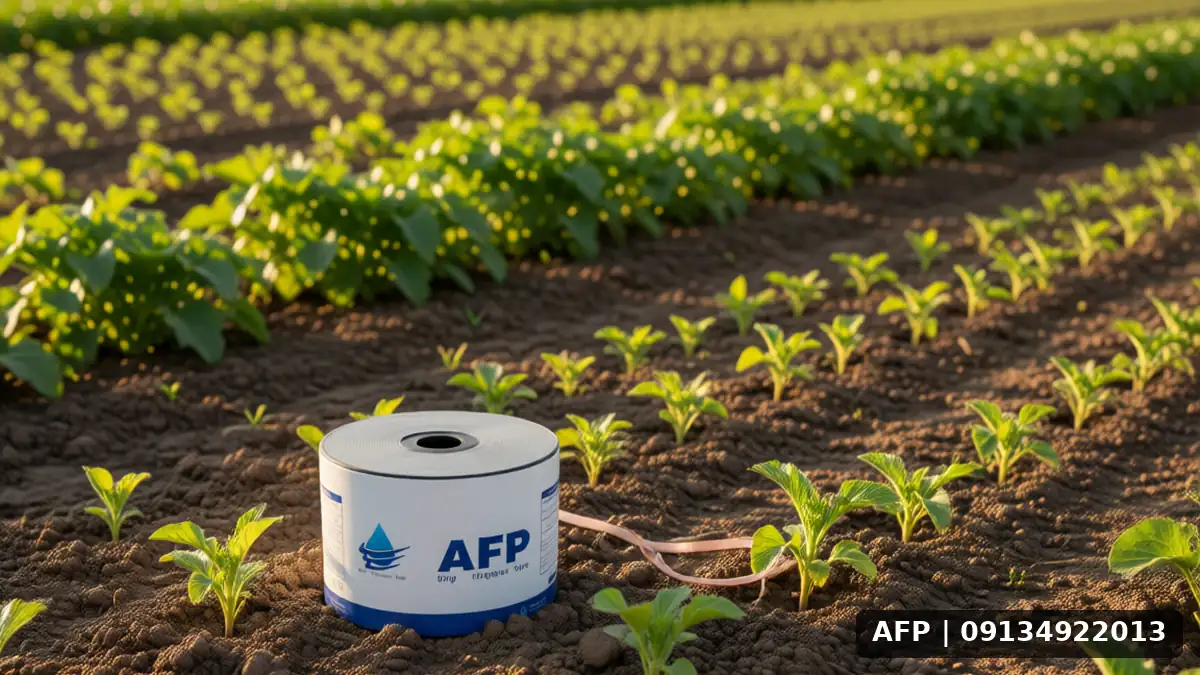
Also, attention to water type and hardness is critical in selecting emitters. Springs or water with high sediment requires multi-stage filtration (sand and turbo) to prevent clogging of drip tape or emitters. This point is of double importance in systems fed directly from a well. For a better understanding of the purification and maintenance process, study Soybean Yield per Hectare It also references water resource management in rain-fed crops, offering a combined perspective on resource management.
Frequently Asked Questions (FAQ)
Is tape drip suitable for all fruit orchards?
No, tape drip is generally better suited for annual vegetable crops with narrow furrows. In fruit orchards with mature trees and wide furrows, a conventional drip system or micro-sprinkler irrigation is more practical. Tape drip may temporarily work for young seedlings in dense orchards.
How long does tape drip last?
The service life of tape drip depends on thickness (microns) and environmental conditions. Tapes 60 to 80 microns thick are typically usable for 1 to 3 seasons. Thicker tapes (100 microns and above) can last up to 5 years, but emitter performance will decrease over time.
What is the main difference in water usage between drip and tape drip systems?
Both methods have similar water consumption patterns, but drip irrigation holds the advantage in managing Variable Rate Irrigation (VRI) due to its ability to precisely adjust flow rates based on individual trees. Tape (tipeh) irrigation provides a uniform flow along the entire tape, unless variable emitters are used, which can be technically complex and more expensive.
Conclusion and final recommendation
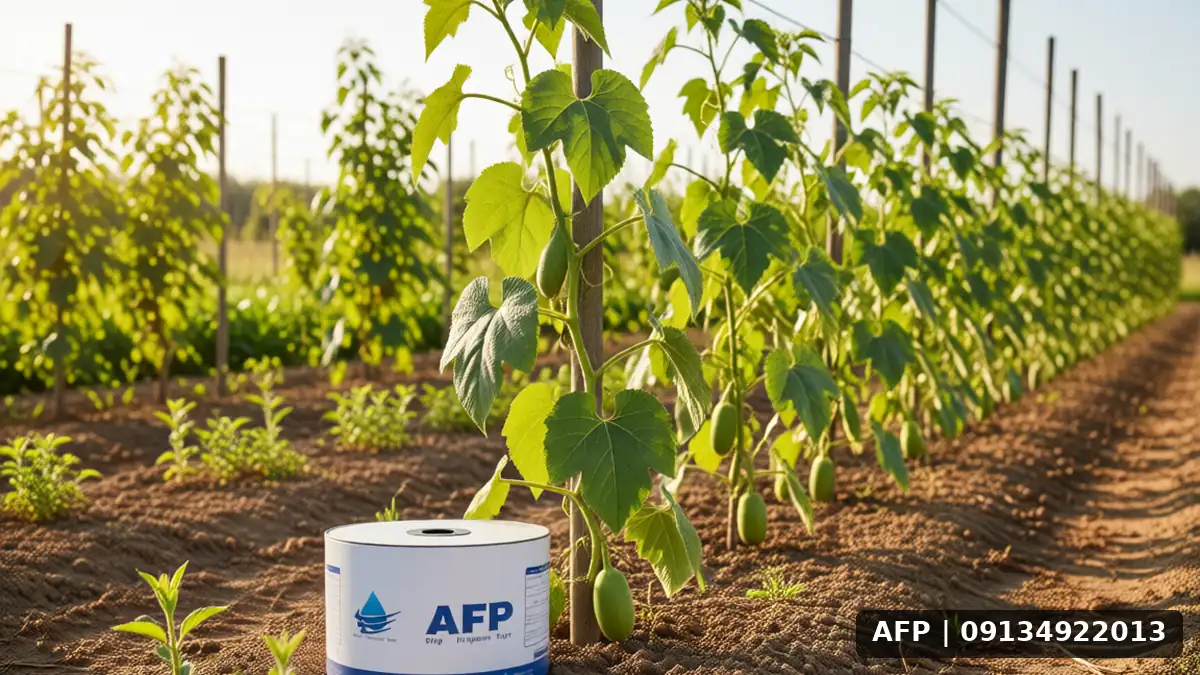
The choice between drip irrigation and tape irrigation is not a matter of preference, but an engineering and economic decision. For cucumber cultivation, tape irrigation is the superior option due to its low cost, high efficiency in narrow furrows, and rapid installation. However, it must be accompanied by close monitoring for emitter clogging and mechanical wear. For orchards, a drip system with a long useful life, adaptability to tree canopy growth, and flexibility in flow rates is a more reliable long-term option. The investment in drip irrigation for orchards translates into annual returns. The final recommendation is to consult irrigation experts before making a selection and utilize the Solanum melongena per hectare seeding rate guide (For example, similar vegetable cropping) Use this to understand the general framework for crop and moisture management. Combining specialized knowledge with local climatic conditions is the key to successful precision irrigation.