Drip Irrigation with Emitters for Beetroot Cultivation: Benefits and Practical Tips
Introduction to the role of modern irrigation in beet cultivation
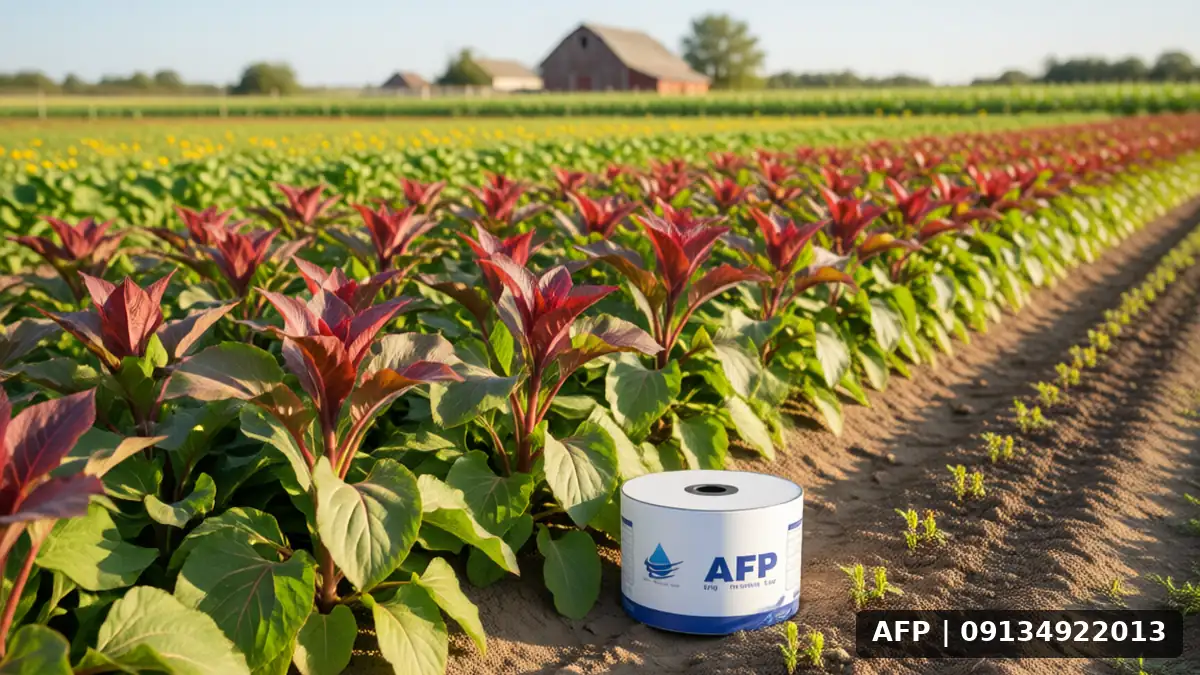
Sugar beet is one of the strategic commodities of Iran’s sugar industry that, due to its bright root and export value, always requires special care. In recent years, with drought and water resource constraints, farmers have been pushed toward modern irrigation methods. Beet Drip Irrigation As one of the most efficient methods, it has gained a special position in the cultivation of this crop. This method not only prevents water waste but also guarantees uniform beet growth by precisely distributing nutrients and water. Since beets are a plant that takes up high amounts of water and minerals during its growth season, proper irrigation management directly affects the size and quality of the roots.
In this article, we want to examine more deeply the benefits of using modern emitters and Drip Irrigation Lines in beet fields. Our goal is to provide a practical roadmap for farmers who intend to upgrade their irrigation systems. By having a deep understanding of hydraulic mechanisms and the physiological needs of the plant, we can achieve optimal resource optimization.
Anatomy of Drip Irrigation Systems in Beet Cultivation
Differences Between Drip Emitters and Tape Drip in Beetroot Cultivation
Many farmers assume that drip irrigation and tape drip are the same, but in practice, these two methods have subtle differences that impact beetroot cultivation. In a drip emitter system, water droplets are applied gradually and precisely near the root zone. This ensures soil moisture is maintained in the active root zone of the beetroot, reducing water stress. In contrast, tape drip systems, which typically use specialized ribbons with smaller spacing, create a continuous wet band along the row. For beetroot, which requires a significant water volume for tuber formation, systems Tape drip with plastic or sewn-on connectors are often better options, as they minimize evaporation in the root zone and provide greater stability in soil moisture.
Why Drip Emitters Are Ideal for Beetroot?
Beetroot tubers have high sensitivity to water stress during the final months of the growth cycle. Using drip emitters with appropriate flow rates allows farmers to supply the required root-zone water volume at specific time intervals (e.g., every 12 hours). This precise control results in the formation of high-quality, symmetrical tubers. Additionally, the presence of drip emitters facilitates fertigation, which is critical for beetroot nutrition. Beetroot requires high levels of potassium and sulfur; combining fertilizer with irrigation water enhances the uptake of these elements from the root to the tuber. This feature creates a strong competitive advantage, particularly when access to high-cost chemical fertilizers is difficult.
Key Advantages of Drip Irrigation Using Drip Emitters
Transitioning from legacy irrigation systems (such as linear or sprinkler systems) to drip irrigation offers several benefits. The most significant ones are discussed below:
- Water conservation: Drip irrigation uses up to 40–50% less water compared to sprinkler irrigation. This saving is vital in water-scarce regions and directly affects final production costs.
- Reduced energy costs: Working pressure in drip systems is generally lower than in high-pressure systems, resulting in reduced pump usage and electricity consumption. In the long term, this reduction in energy use improves the farm’s economic efficiency.
- Reduced incidence of root diseases: Only the root zone is kept moist, and humidity decreases above the root area. Relative dryness at the soil surface limits surface fungi and rot.
- Increased final yield: Uniform distribution of water and nutrients ensures that all seeds are consistent and symmetrical, a highly valued characteristic in industrial processing. Seed size uniformity also enhances market pricing.
Additionally, reducing water stress during hot months enables beet seeds to achieve faster growth and higher weights. Farmers adopting modern systems typically observe a notable increase in yield per hectare . This efficiency improvement provides significant economic justification, even in high-pressure seasons.
Practical tips for proper beet irrigation
Determining planting depth and spacing
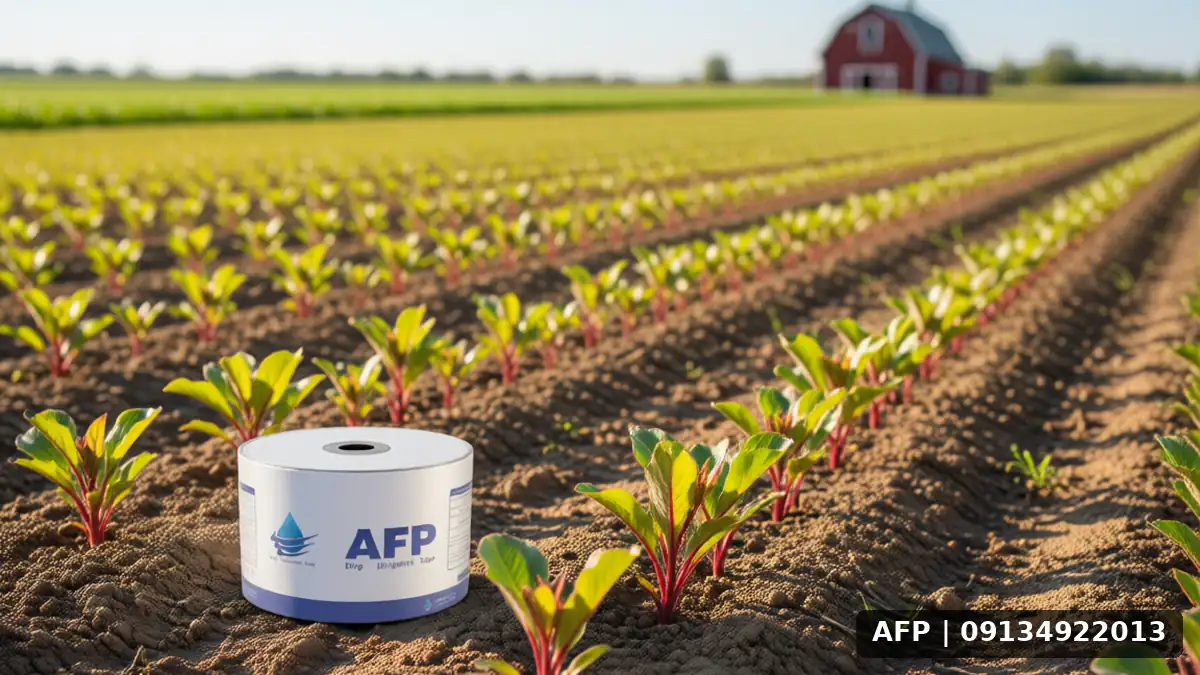
Success in drip irrigation for beets begins with the planting phase. When using drippers, the planting distance must align exactly with the system layout. Beets are typically sown in rows 35 to 40 centimeters apart. Drippers must be placed directly next to the seed furrows so that the liquid reaches the root zone. The planting depth should be approximately 3 to 5 centimeters to protect the seedlings from direct solar radiation and shield the tape line from mechanical damage. Adhering to these intervals ensures the overlapping of wet circles.
Soil moisture management at different growth stages
- Vegetative stage (30 to 45 days): Low and frequent irrigation. Seedlings are small and require sufficient moisture for rapid root growth. Daily short irrigation sessions are recommended.
- Grain filling stage (60 to 90 days): Increase irrigation volume. Grains are growing and require more water. Ensure roots do not dry out. This stage marks peak water demand.
- Maturation stage (after 120 days): Gradually reduce irrigation until reaching the desired grain moisture percentage. Excessive irrigation at this stage causes grain softening and cracking. Gradual water cutoff increases sugar accumulation.
Use of filters and pressure monitoring
Water filtration is the most critical part of maintaining a drip system. Small clay and sand particles entering the drip line can clog emitters and reduce efficiency. Using a suitable filtration system (such as a mesh or disc filter) is essential. Additionally, the water pressure at the drip line inlet must be maintained between 1 and 3 bar to ensure proper flow. It is recommended to use a pressure regulator in the drip line to maintain appropriate pressure. Seasonal inspection of filters extends the useful life of the system.
Frequently Asked Questions (FAQ)
Is drip irrigation for beets cost-effective?
At first glance, the initial cost of drip lines and emitters may be higher than that of a linear system. However, considering the costs of supplies, water, and energy, the payback period for these systems is less than one season. By eliminating unnecessary expenses and increasing efficiency, overall profitability increases. Accurate economic calculations demonstrate long-term profitability.
How long does drip irrigation for beets take?
Irrigation duration varies depending on the drip rate and spacing between emitters. For low-flow emitters, irrigation is typically sufficient for two to three hours. This period should be adjusted based on air temperature and evaporation. Precise monitoring of scheduling is the key to system sustainability.
Can drip irrigation be used for other crops, such as bell peppers?
Yes, similar principles are applied in irrigating peppers and other high-value vegetables. Drip systems are easily adjustable to meet different crop requirements. A comprehensive pepper drip tape guide can provide complementary insights. Diversifying crop rotations reduces investment risk.
Conclusion and Final Recommendations
Transitioning to a drip irrigation system with emitters for beet cultivation is not merely an option but a necessity for survival under drought conditions. The benefits of this system, ranging from water conservation to improved seed quality, make it a sustainable and profitable choice. By following the practical tips outlined in this article, such as planting depth, moisture management at various stages, and proper filter maintenance, you can achieve maximum yield potential. The future of green, sustainable agriculture begins with your choices today. Investing in irrigation technology is an investment in food security.
Related Articles: Comprehensive Pepper Drip Tape Guide: Boosting Productivity + Key Tips