Triticale Greenhouse Irrigation: Comprehensive Guide to Tip Line and Drip Systems
Introduction: The Importance of Precision Irrigation Systems in Triticale Cultivation
Triticale, a hybrid cross between rye and wheat, has gained significant popularity among modern farmers in recent years due to its high resistance to environmental stresses. Although the crop naturally adapts well to dry and open-field conditions, it requires highly precise water management in greenhouse or semi-open environments to achieve maximum growth and effective disease control. Greenhouse Irrigation of Triticale Irrigation does not only affect growth rate but directly impacts the volume, size, and quality of the chaff and grain.
The use of advanced irrigation technologies, particularly greenhouse drip tapes and drip networks, enables the direct delivery of water and nutrient solutions to the root zone. This results in a significant reduction in water waste, precise soil moisture control, and ultimately increased economic yield per hectare. The following section examines the technical principles, practical applications, and key installation steps of these systems to provide a comprehensive guide for the correct implementation of greenhouse projects.
Specialized Applications of Drip Tapes in Greenhouse Environments
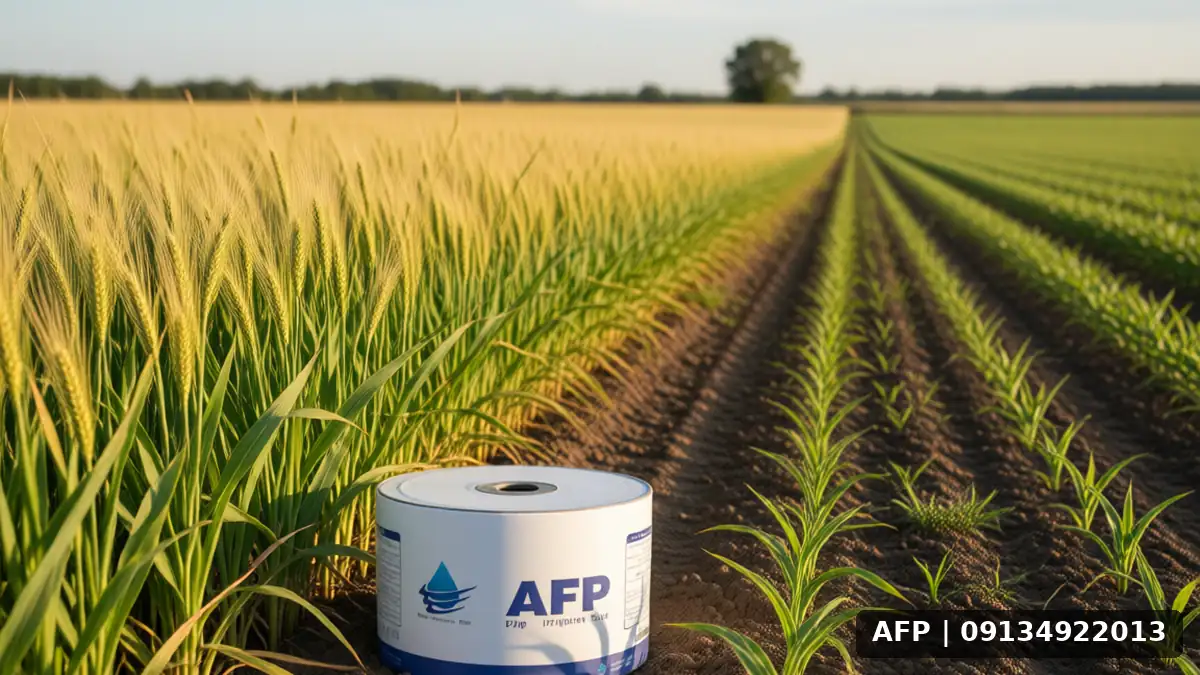
One of the main challenges in commercial greenhouses is delivering water uniformly across all soil depths. Drip tapes, due to their thin tubular structure and ability to be placed directly on the growing medium, provide an ideal solution for maintaining moisture in the topmost soil layer. In the cultivation of triticale, which is typically grown at high densities in close-spaced rows, maintaining an appropriate distance between the drip line and the seed row is critical.
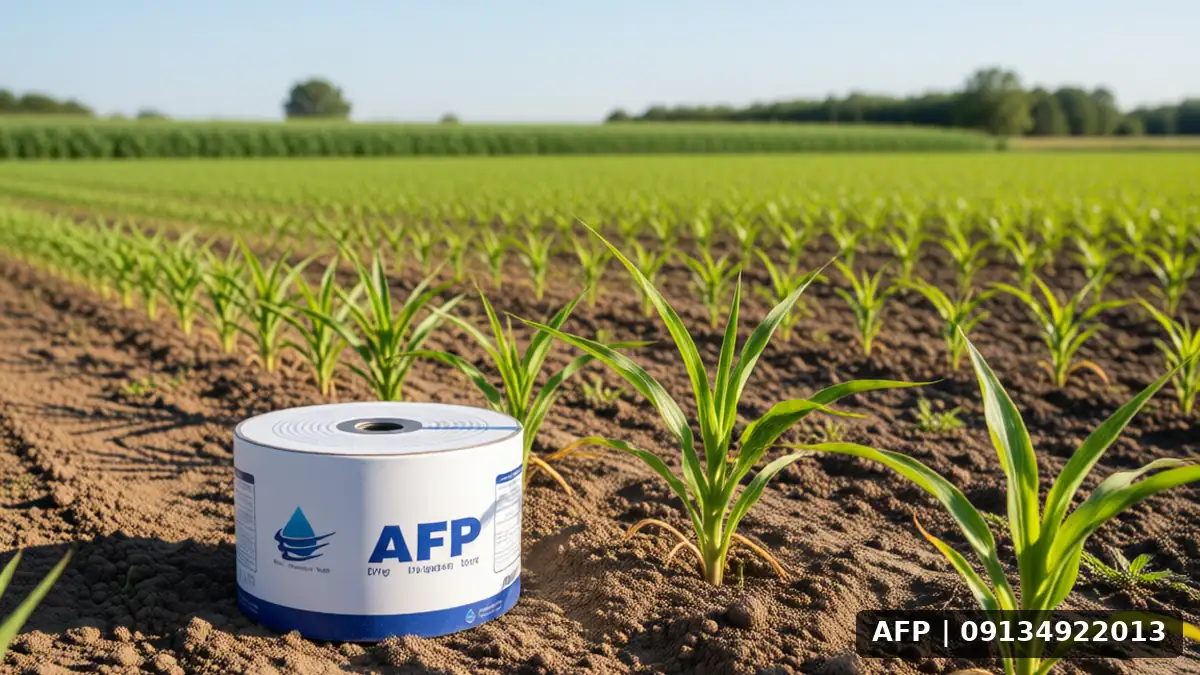
- Moisture Control for Root Establishment: Triticale requires moderate and stable moisture during the initial germination stage. Drip lines create a slow, continuous flow that prevents seed washout or root suffocation caused by heavy irrigation, creating optimal conditions for seed germination.
- Prevention of Fungal Diseases: By reducing indirect evaporation from the soil surface and controlling relative humidity, the favorable environment for the development of Pythium and other fungal leaf spots in triticale is eliminated. This feature is of double importance in greenhouses where rhizosphere air is controlled.
- Uniform Growth and Harvesting: Uniform water distribution ensures that all plants in a row have similar appearance and weight. This uniformity is highly beneficial for planning mechanized harvesting in small and medium-sized greenhouses and for increasing production line speed.
To determine the optimal spacing for wheat drip lines and modern irrigation methods, similar algorithms can be applied to triticale, as irrigation engineering based on root system depth and planting density follows fixed physical principles that remain independent of the plant species.
Assessment of Root Dynamics and Comparison with Other Crops
To better understand root behavior in cereal plants, studying resources such as The total whole-plant yield of broccoli per hectare can provide important lessons for irrigation management. Unlike leafy vegetables which have higher water consumption, triticale is not a xerophyte but exhibits high sensitivity to drought stress during flowering and grain filling.
In combined systems, drip lines are sometimes used at wider spacings while simultaneously using a center-of-row tape line to maintain soil chemical and thermodynamic stability. This approach appears essential in glass-roof greenhouses where evaporation is high. Furthermore, creating artificial soil drainage using controlled slopes and outlets from the tapes can effectively prevent water accumulation near the roots and root rot. The combination of tape and drip irrigation should be adjusted based on the active root zone depth and local rainfall or humidity load.
Practical Installation and Maintenance Notes for Greenhouses
Correct installation of the irrigation system is as important as selecting the type of tape. In greenhouse environments, factors such as light exposure, soil temperature, and airflow affect system performance. The key points for engineers and farmers are listed below:
- Inlet pressure adjustment: Water pressure must be matched to the discharge rate of the drip line. Excessive pressure damages the pipe walls and reduces the useful lifespan of the drip line. It is recommended to use precision pressure-reducing devices (pressures) and regulators to maintain a stable output flow rate.
- Correct field installation (Fielding): When replacing drip lines or creating new lines, ensure the main pipe is at the correct depth to prevent freezing or damage from surface plowing. The pipe layout must be smooth without sharp bends.
- Water filtration: Triticale is sensitive to microbial contamination. Using a sand media or disc filter is mandatory to prevent clogging of the small dripper orifices. Failure to filter water will block the drip line and damage the entire system.
- Soil moisture monitoring: Using soil moisture sensors in active root zones helps farmers schedule irrigation based on actual crop water demand rather than a fixed calendar. Monitoring data enables smart algorithms for water optimization.
In addition to irrigation, pesticide management and fertilizer application schedules are also conducted through the irrigation system. This process, known as Fertigation, requires water-soluble solutions that do not cause sedimentation. To familiarize yourself with general planting principles and resource management, reviewing resources such as the comprehensive guide to pumpkin planting can provide examples of planting distance management and irrigation line arrangement that share structural similarities with millet rows.
Frequently Asked Questions (FAQ)
Is drip tape suitable for all growth stages of millet?
Yes, but drip tape efficiency is highest during the initial vegetative stage and before full soil bed coverage is achieved. In the later growth stages, if plant spacing decreases and shading occurs, it may be necessary to readjust the flow or use lateral drip lines to ensure light reaches the grains and prevent excessive moisture accumulation.
What is the recommended distance between the drip tape and millet seed rows?
A spacing of 20 to 30 cm is generally considered the standard. This spacing must be adjusted based on the tape’s wetting width and the soil texture. Fine-textured soils require closer spacing, while drainage-friendly soils require more precise spacing to ensure moisture reaches the root zone.
Can a drip irrigation system be used in glass greenhouses?
Yes, drip systems with a 400 mm emitter spacing are generally used in industrial greenhouses. These systems have a higher initial cost but are preferred when precise soil chemistry control is required. For guidance on selecting the appropriate drip system, be sure to review the pre-purchase considerations for irrigation tapes.
What is the effect of drip irrigation on powdery mildew diseases in triticale?
Reducing the relative humidity of the rhizosphere air and keeping the soil surface dry limits the reproduction and growth of powdery mildew fungi. Therefore, drip irrigation is also considered a non-chemical preventive method that reduces the need for pesticide application.
Conclusion and Outlook
Smart water resource management in greenhouse triticale cropping has made the transition from sprinkler methods to tape and drip systems inevitable. This shift not only leads to reduced water and labor costs but also improves crop quality by maintaining seed uniformity. Farmers can achieve maximum productivity and reduce production risks by integrating soil moisture data and adapting to local climatic conditions.
Finally, attention to engineering details such as the cost of size-three wet rain pipes and side components is part of the project’s economic analysis and should not be overlooked. Investing in precision irrigation infrastructure is a long-term asset for future monitoring in vertical and semi-open agriculture, which requires more precise planning.