Drip Irrigation in Carrot Cultivation: Understanding Challenges and Practical Solutions
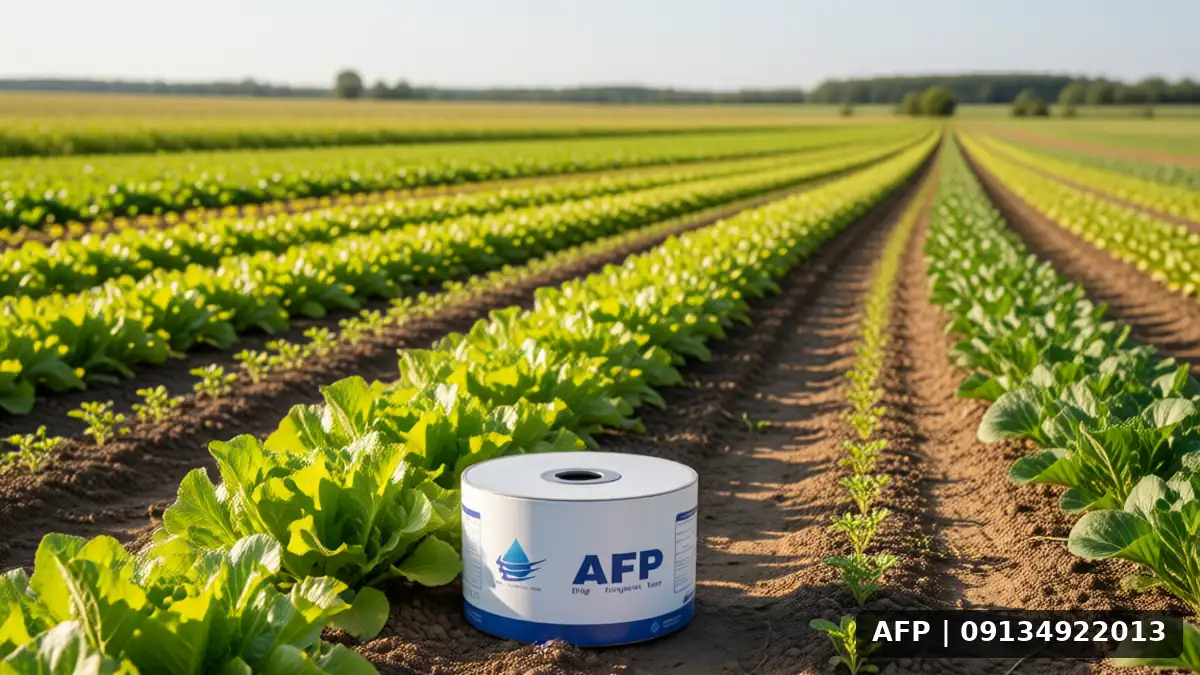
Carrot is one of the most important root vegetables, and the quality of the final crop is directly influenced by soil moisture conditions. While drip irrigation systems remain the gold standard for many orchards, node irrigation, also known as tape drip, has attracted the interest of modern agriculture enthusiasts in recent years due to energy savings and lower installation costs. However, implementing this method in carrot cultivation, which is a crop sensitive to water stress and possessing a delicate root system, requires attention to very fine technical details. This article aims to examine the main challenges of node irrigation in carrots and provide practical solutions to overcome them.
Why does node irrigation present specific complexities in carrot cultivation?
Carrots are plants whose taproots are deep, seeking nutrients and water at depth. In contrast, node or tape drip irrigation delivers water in narrow, more superficial strips compared to concentrated drips. This fundamental difference creates challenges that, if not managed, will lead to reduced yield and crop quality.
Asymmetric distribution of soil moisture with depth
One of the biggest challenges Alfalfa yield per hectare Similar to carrot moisture challenges, but with a similar mechanism. In a tape drip zone, liquid concentrates on both sides of the tape nodes. If the distance from the tape to the center of the carrot row is not correctly adjusted, the initial carrot roots may remain outside the wetted zone. This causes the plant to grow roots outward beyond the tape in search of water, resulting in forked or cracked roots in the carrots. Carrots with forked roots have little commercial value and are highly price-sensitive. Therefore, precise adjustment of the tape’s distance from the row center is the most critical engineering aspect of this system.
Risk of root cracking and rot
Dual watering can be problematic in two ways: overwatering or underwatering. In a node system, controlling flow rates is more difficult. If water flow is low, the soil around the main roots dries out. Carrots are sensitive to dryness, and moisture stress leads to fine cracks in the carrot skin. These cracks become entry points for fungal and bacterial rots at harvest. Conversely, if water flow is high, soil moisture saturation depletes oxygen accessible to the roots. Carrot roots require immediate oxygen, and its deficiency leads to tissue rot and yield loss. Finding the exact balance requires continuous monitoring of soil moisture at different depths.
Technical analysis of tape drip for root vegetables
The selection of tape type and its nodes for carrots is fundamentally different from other crops. We addressed general challenges in the previous section; now we examine the equipment in more detail. The nodes, or polymer loops that direct water from the main pipe to the sub-lines, play a pivotal role.
Evaluating Node Resistance to Sedimentation and Clogging
Drip tapes typically feature smaller orifices or narrow flow paths. In vegetable crops such as carrots, many farmers use water from wells or qanats, which may contain salts, calcium sediment, iron, or suspended solids. Node clogging is a predictable issue. When nodes become clogged, water flow in one section of the tape stops, and the remaining sections must handle the pressure. This pressure asymmetry creates the same root unevenness mentioned in the previous section. To overcome this challenge, using appropriate filters (such as disc or screen filters) at the start of the main line and performing periodic system flushing are mandatory.
Practical Tips for Installation and Operation
For successful drip irrigation of carrots, adherence to the following points is recommended:
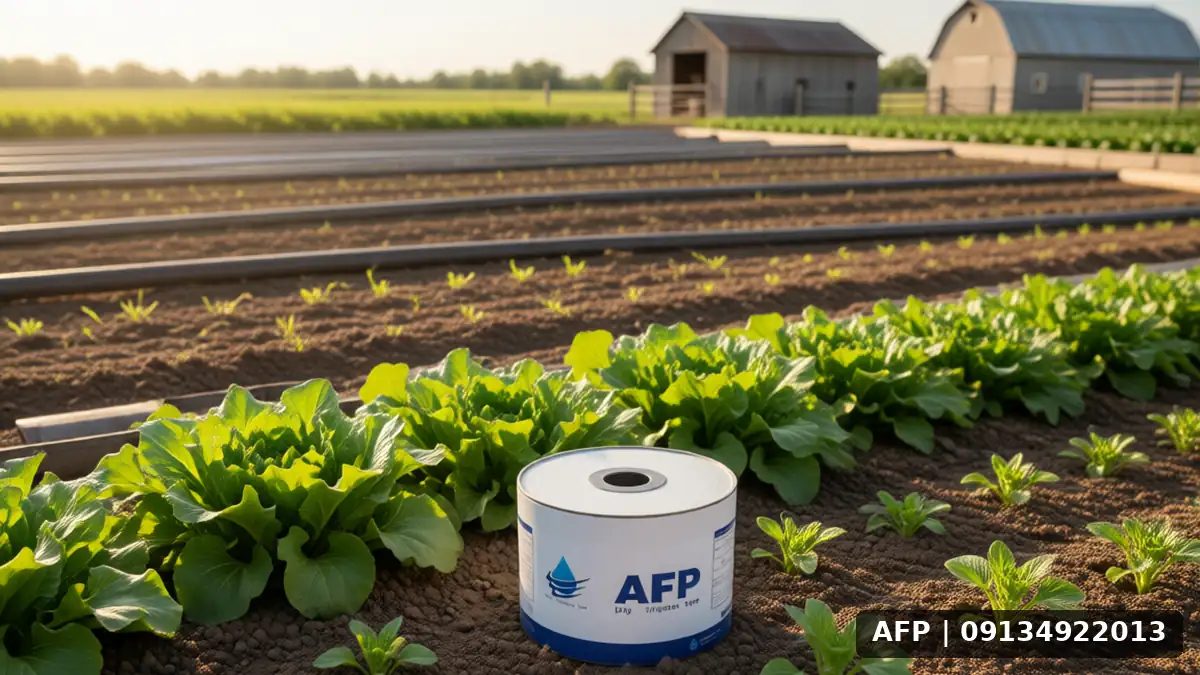
- Tape-to-Row Distance: The drip tape should not be placed directly under the main root. It is better to lay it diagonally or parallel at a distance of 10 to 15 cm from the row center, forcing the roots to move toward the tape to find water and maintain their structure. For further guidance on general principles, you can refer to Drip Tape Usage Training Please refer to the specifications.
- Flow rate: The flow should not be so strong that it causes soil erosion or washes away the delicate carrot roots. A gentle, continuous flow is ideal.
- Soil covering: In the early stages of carrot growth, the soil above the furrow should be kept as open as possible to prevent moisture evaporation. However, in the late stages, appropriate mulching can be used to prevent weed growth, ensuring that weed root tips do not emerge through the furrow.
Moisture and Fertility Management in Lateral Systems
Lateral irrigation directly overlaps with fertility management. In drip systems, fertigation is typically done through the main line. In lateral systems, the lateral length is shorter, and the input pressure to the laterals is critical. If the fertilizer pressure is weak, nutrients precipitate near the laterals. Carrots are sensitive to phosphorus and potassium. Failure to distribute these nutrients to root depth results in the non-absorption of elements like potassium, which directly affects carrot color quality and sweetness. Therefore, the integrity of the mainline and lateral system for fertilization is vital.
Frequently Asked Questions (FAQ)
Is tape irrigation suitable for all carrot varieties?
Yes, but settings must be adjusted according to the sowing method and the final carrot size. Smaller carrots require less distance from the tape.
What is the maintenance cost of a knotted irrigation system?
Maintenance costs are generally lower than for drip irrigation due to fewer moving parts, but it requires close monitoring of knots, which takes more time.
Can saline water be used with tape irrigation for carrots?
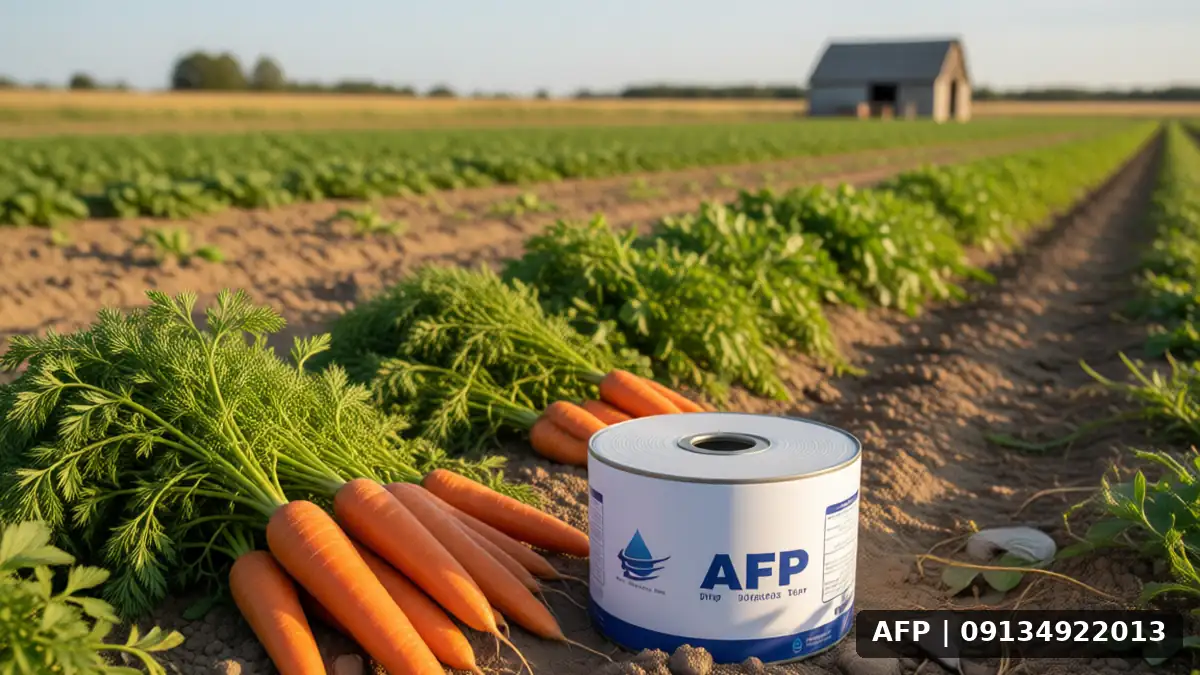
Carrots are sensitive to salinity. If the water EC is high, using tape irrigation may cause salt accumulation at the tape heads and induce plant stress. In such cases, frequent flushing of the tape with fresh water is required.
Conclusion
Emitter-line irrigation in carrot cultivation offers high energy-saving potential, but without technical knowledge, it can compromise produce quality. Success requires a dual focus: mechanical (emitters and lines) and biological (carrot root behavior). Accurate moisture monitoring, proper line-to-row spacing, and a maintenance program to prevent clogging mitigate the main risks of this system. Farmers are advised to run continuous trials on a small scale before wide-scale implementation to understand the specific soil and climate behavior of their farm with this system.
To better understand the relationships between yield, density, and irrigation, reviewing similar data in other vegetables such as the effect of increasing lettuce yield per hectare can reveal similar patterns for moisture management in water-sensitive plants. Additionally, considering environmental variables, such as examining bean performance per hectare in Iraq which has a similar climate, can help predict soil behavior. Finally, attention to technical specifications like the flow rate of a centrifugal pump with a specific diameter can also be useful in designing lateral lines. If you are looking for more details on planting density, the table Watermelon seed rate per hectare It can provide you with a mental framework for spacing sensitive crops.