Rainfed Irrigation with Runoff in Cumin Cultivation: Key Prerequisites
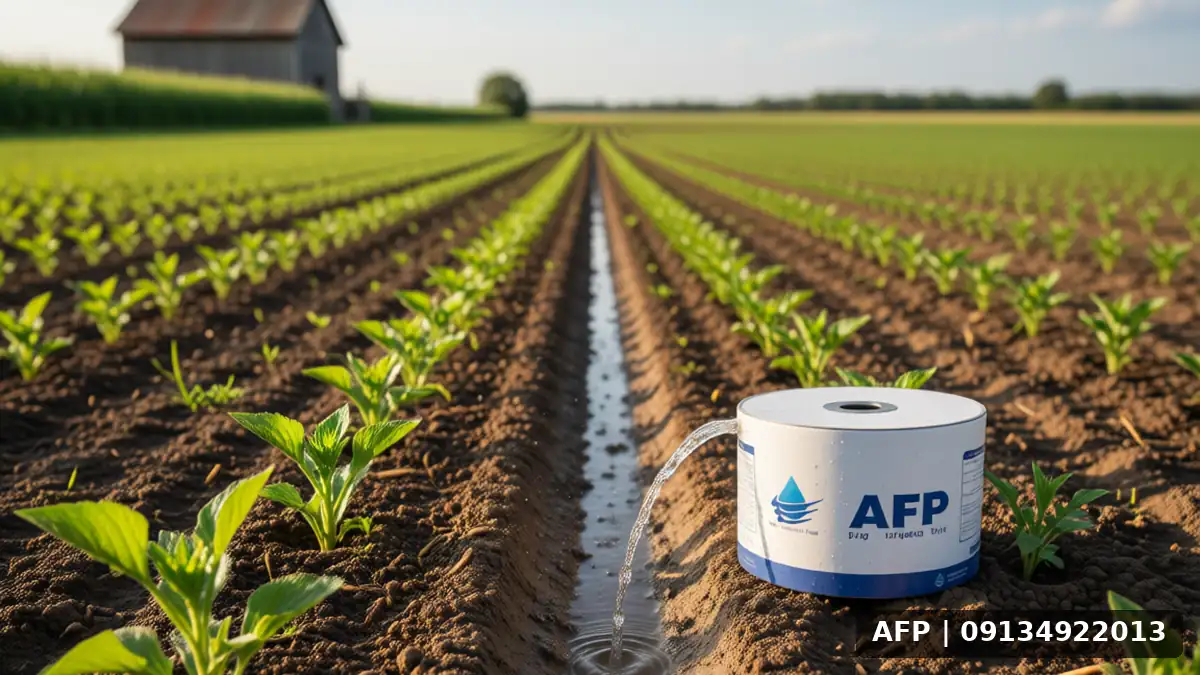
Introduction to Rain-type Irrigation with Water Drift in Dill Cultivation
Due to its short growth cycle and need for uniform moisture, dill cultivation is one of the crops sensitive to water management. While Inline Drip is recognized as the standard method, in certain row configurations or specific soil textures, the rain-type irrigation with water drift can be a more efficient option. Because of its more uniform distribution of moisture at the surface, this method is attractive for plants like dill that have shallow root systems. However, employing this method without meeting strict prerequisites leads to nutrient leaching and reduced efficiency. The following discusses the technical and operational prerequisites for the correct execution of this system. This technique is essentially a combination of drip irrigation and water drift, which maintains moisture uniformity by creating an alternating flow along the line and reduces labor costs for moving lines. Farmers should know that the choice of irrigation method is not limited to the type of crop, but is directly dependent on the farm infrastructure and available water sources.
Soil Science and Agronomy Prerequisites
The most important prerequisite for success in trickle irrigation is a precise understanding of the farm soil type. Trickle flow requires a specific slope gradient for water to move; if the soil slope is too steep, erosion occurs, and if it is too flat, trickle flow is not generated. For coriander cultivation, the longitudinal slope must be between 0.1 and 1 percent. In addition, soil infiltration plays a pivotal role. Soil with very low infiltration causes water accumulation and root asphyxiation in coriander. Therefore, an infiltration test must be conducted in the field before installing the system. If the soil is very fine-textured (clayey), using a drip tape with narrow spacing may be more optimal, as mentioned in the tips prior to purchasing irrigation drip tape. Conversely, for soil with a suitable slope for trickle flow, flow rate calibration must precisely align with infiltration to prevent waterlogging at the tape edges. Additionally, soil pH must be between 5.5 and 7, as coriander is sensitive to alkalinity, and the soil texture must be capable of retaining moisture without becoming waterlogged.
Coriander planting management and appropriate spacing
In the trickle method, water moves from the beginning to the end of the row. Therefore, the planting row spacing and seed density must be such that root coverage is uniform. Coriander is typically planted at high density. Factors affecting Coriander seed rate per hectare and yield increase This includes row spacing. If the row spacing intended for drip tape is selected, it may be excessively wide for a drift irrigation system. In drift systems, a narrower row spacing and higher seed density are generally recommended to ensure complete soil surface coverage. Additionally, the seed quantity per hectare must be adjusted according to planting depth. In drift irrigation, planting depth should not be excessive because water enters the soil from the surface. Deep planting can prevent coriander seeds from accessing sufficient moisture during initial emergence. Managing the spacing between irrigation strips is also critical; excessive spacing causes the central strip to dry out, while spacing that is too narrow places excessive strain on the network. Optimizing these spacings requires precise calculations of the inlet flow rate for each strip.
Infrastructure and equipment prerequisites
One challenge of drift irrigation is the requirement for relatively stable pressure and a higher flow rate compared to drip irrigation. The system must use adjustable nozzles to control flow velocity and ensure the drift speed does not exceed permissible limits. Suitable filters are also essential to prevent clogging of the drift nozzles. In coriander farms that may utilize the simplicity of drip tape systems, transitioning to a drift system requires a redesign of the transmission network. For comparison, many farmers use the Sutera yield guide per hectare and evaluate current efficiency to decide on a method change. In this system, drip strips are typically implemented with suitable emitters or only with guiding furrows. A key point is that the end of the strip (base of the slope) must have proper drainage to remove excess water and prevent interference with subsequent strips. Installing pumps with suitable performance curves that can supply high flow rates at low pressures is another hardware prerequisite.
Practical tips for water and fertilization management
Since water in a wind-driven (impaction) system has dynamic motion (unlike drip systems where it is stationary), the distribution of salts and fertilizers differs. Salts tend to concentrate at the windward end or bottom of the slope. Therefore, for coriander cultivation, which is sensitive to salinity, it is recommended that:
- Use water-soluble fertilizers at lower concentrations to prevent clogging (deposition).
- Apply fertilization at the beginning of the strip (top of the slope) so that the solution moves downhill before reaching plants in the middle of the strip, distributing it across the length of the strip.
- Ensure that coriander and similar plants, yielding to standard production levels (tons per hectare), achieve higher efficiency due to the even distribution of moisture compared to intermittent systems.
Also, irrigation timing is critical. On hot and windy days, evaporation in wind-driven (impaction) rain systems increases. It is best to irrigate during cool and low-wind hours. If possible, the system should be designed with controllable input flow rates so that flow can be increased when evaporation rates rise. Water quality control is also important; surface water used for coriander should be screened for dissolved salts and suspended solids.
Frequently Asked Questions (FAQ)
Is surge irrigation more optimal for dill than drip irrigation?
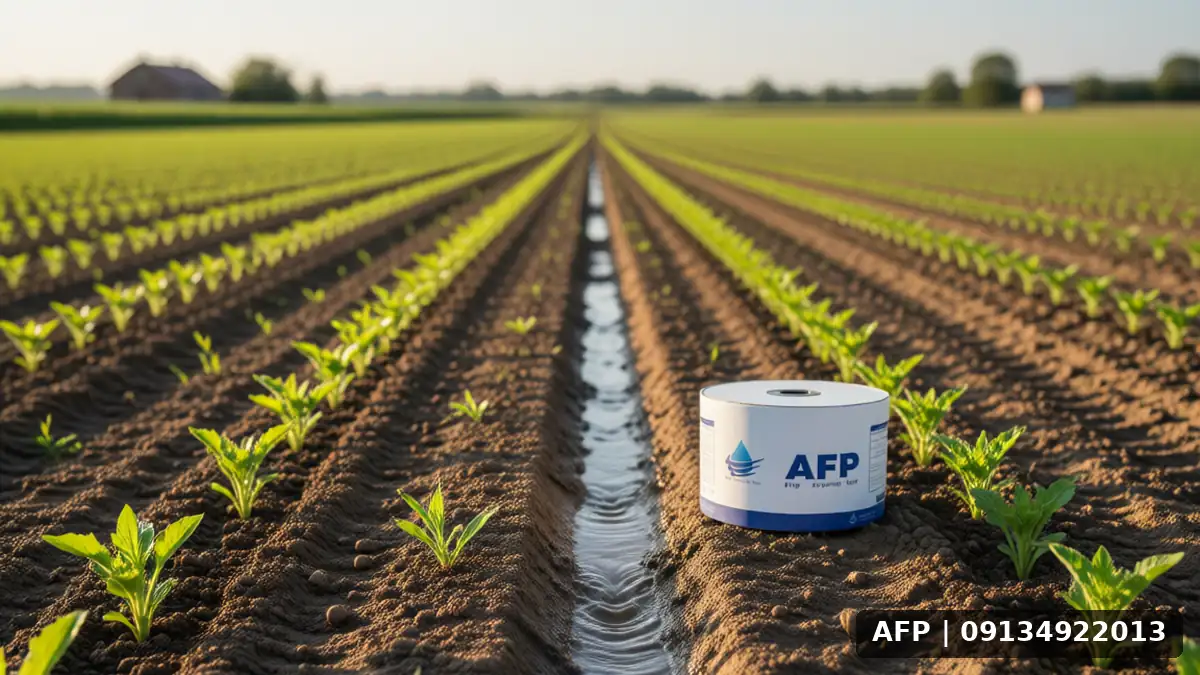
If the land slope is suitable and the soil has medium permeability, yes, because moisture distribution is more uniform. However, if the slope is zero or the soil is very clayey, narrow tape lines with close spacing (as explained in the tape line buying tips section) are a better option.
What pressure is required for the surge system?
Usually, low pressure (below 1 bar) is sufficient, but the input flow rate must be high. Controlling flow rate via inlet nozzles is critical. Fine-tuning these micro-pressures requires the use of precise manometers.
How can we prevent soil erosion in surge lines?
Do not increase the flow rate. The fast-growing dill plant cover prevents erosion, but at the start of planting, control the flow velocity to avoid gully formation. The use of living plant covers can greatly help in this regard.
Summary and Future Solutions
Implementing spray irrigation with drift in coriander cultivation is a specialized solution for farms with suitable slopes. If biological prerequisites (including slope, permeability, and seed density) are observed, this method can lead to more uniform coriander growth and reduced salt stress. Farmers are advised to consult Rye yield per hectare experiences under similar conditions (as a performance indicator in similar soil textures). Comparing costs and final yields between drip lines and drift systems sometimes favors the drift system, especially where coriander product quality in terms of stem size uniformity is the top priority. The final recommendation is to always use precise monitoring of soil moisture throughout the line to ensure the system performs as expected. Recording daily irrigation and plant growth data is a vital step for optimizing future seasons.
Related articles: Cotton seed rate per hectare, Celery drip line: Comprehensive irrigation, spacing, and key points guide, Pumpkin yield per hectare using drip tape