Rainfall-Based Sprinkler Irrigation in Bell Pepper Cultivation: Analysis of Challenges and Innovative Solutions
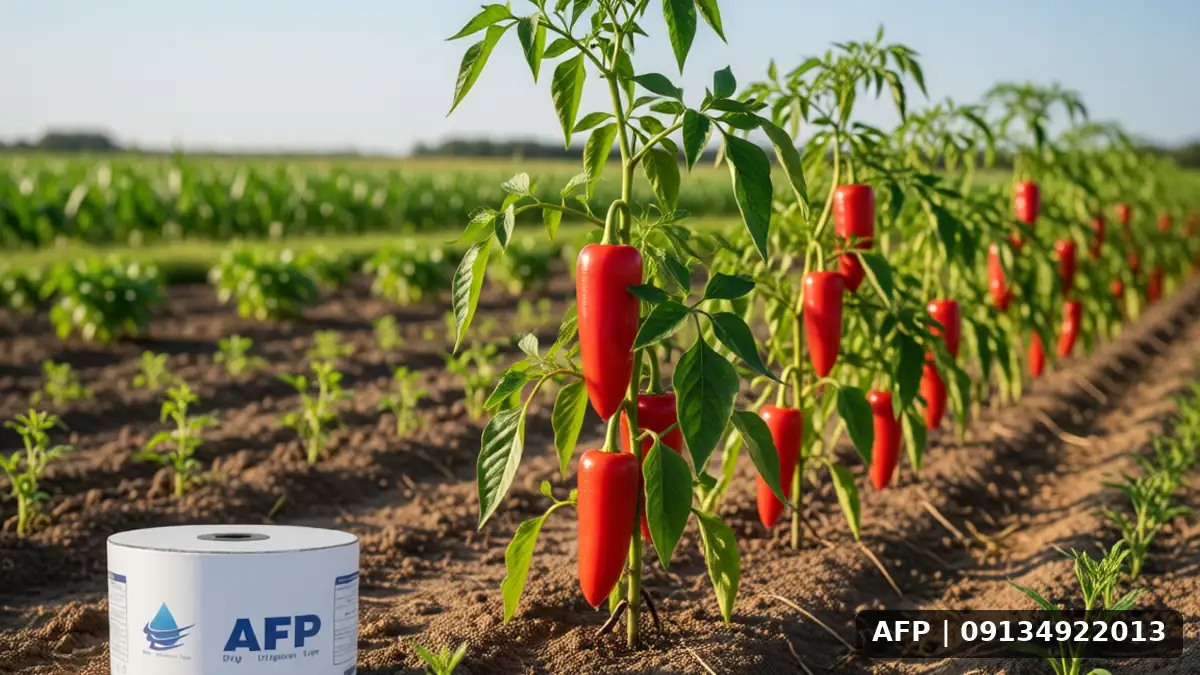
In modern agricultural industry, pepper is considered a key domestic and export commodity due to its high economic value and diverse uses. Selecting an appropriate irrigation method can create significant differences in yield, fruit quality, and operational costs. For the past few decades, rain irrigation has been the preferred option for many pepper growers due to simpler installation and lower initial costs. However, with rising water prices and increased awareness of environmental and technical issues, this method has faced serious challenges. In this article from drip tape, we aim to discuss the drawbacks of this method and alternative solutions in detail.
Why is rain irrigation challenging for pepper?
Rain irrigation refers to a method where water is distributed over the plant and soil through fine droplets or natural rain (in some regions). In pepper, a crop sensitive to continuously wet leaves, this method can cause numerous problems. The main subcategories of these challenges include:
- Increase in fungal diseases: Pepper is inherently susceptible to fungal diseases such as Anthracnose and Grey Mold. When rainwater accumulates on leaves and fruits, it creates a favorable environment for fungal spore growth. Relative humidity above 85% throughout the night increases the disease incidence rate exponentially.
- Soil erosion and surface salinization: Direct impact of water droplets on the soil causes soil crumb collapse and the formation of a compacted surface layer, which reduces root penetration. Additionally, in saline areas, leaching of salts toward the soil surface and their accumulation beneath the irrigation line hinders the proper growth of delicate bell pepper roots.
- Uneven water distribution: Contrary to common belief, rainwater application at various pressures across the field is not completely uniform. Areas located in the wind path or on sloped terrain may experience local dryness or waterlogging, leading to uneven plant growth and reduced fruit quality.
To better understand the position of bell peppers within similar crops, you can refer to the comprehensive drip tape guide for beans, which outlines similar moisture management principles for sensitive plants.
Technical Comparison: Drip and Drip Tape Irrigation vs. Sprinkler Irrigation
Given the aforementioned challenges, the new generation of irrigation systems is based on the Dymaxion concept of drip and drip tape irrigation. Each of these methods has unique advantages and disadvantages that farmers must consider based on their specific field conditions.
Drip Irrigation
Drip irrigation is a system that injects water drop by drop directly into the root zone. This method provides the highest water use efficiency and significantly reduces fungal diseases because the leaves remain dry. However, its challenges include high initial costs and the need for continuous maintenance (flushing).
Spray Tape (Ribbon)
Spray tape is intermediate between drip and sprinkler irrigation. In this system, a plastic tape connected to the main line applies water as very fine, controlled spray directly onto the soil. This method offers more uniform distribution than drip irrigation and reduces fungal risk by not applying water directly to the leaves. Fixed spray tape is an excellent option for fields that require uniform root zone coverage without the high costs of drip irrigation.
A key factor in selecting a system is the farm’s soil type. If you are working with light (sandy) soils, drip-line irrigation may lead to wind erosion, whereas drip irrigation is better suited for these conditions. However, in medium soils, drip-line irrigation provides a good balance. For more information on the impact of soil type on irrigation systems, see the Sami K. Jirder Charit L-Ray useful reference.
Practical tips for farmers transitioning from sprinkler irrigation to modern methods
If you are still using sprinkler irrigation and plan to move toward drip or drip-line methods, keep the following practical tips in mind:
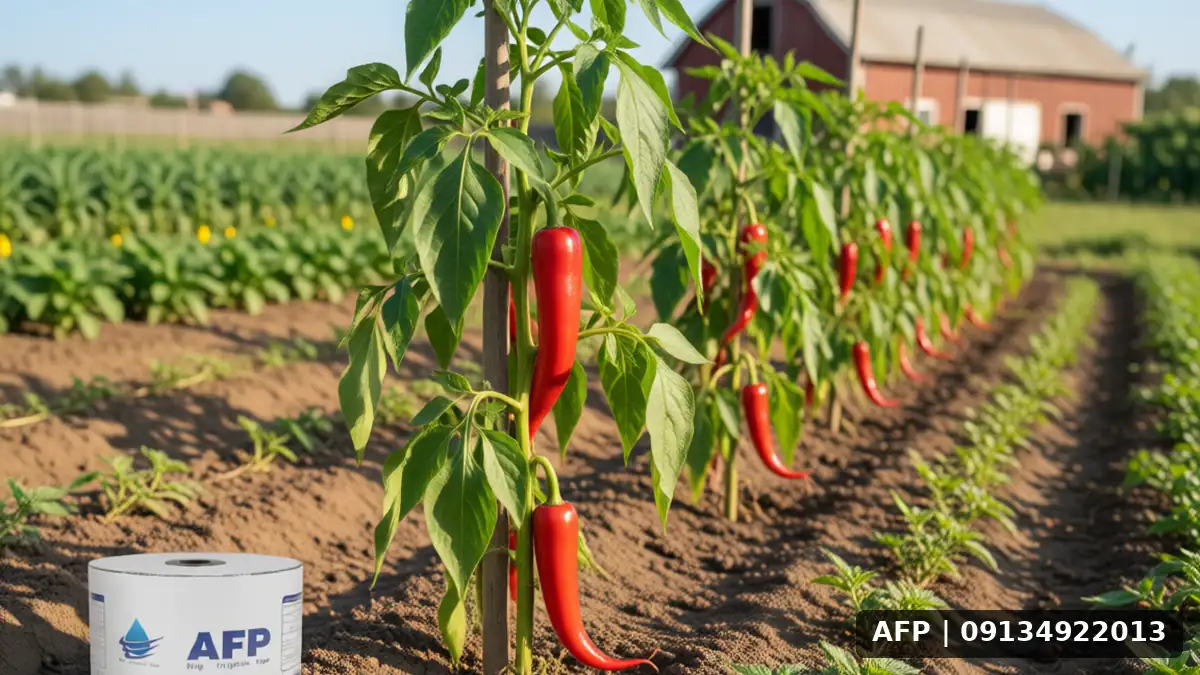
- Soil and slope assessment: Before purchasing a system, accurately measure the ground slope and soil type. Steep slopes increase pressure fluctuations in drip systems, and tape systems may require specific settings in such cases.
- Installing appropriate filters and pumps: Both drip and tape systems are highly sensitive to sediment and suspended particles. Using disc or sand filters and a pump that provides a constant and appropriate pressure ensures the system’s lifespan.
- Fertilization management: In rain irrigation, fertilization usually occurs simultaneously with rainfall, resulting in low efficiency. In drip and tape systems, precise fertilization (fertigation) is possible, which reduces fertilizer consumption by up to 30% and increases absorption.
- Optimizing planting density: Pepper planting density can affect irrigation system performance. Very high densities require higher irrigation rates. If you plan to change the density, pay attention to technical details Melon yield per hectare and the factors affecting them from an irrigation perspective, as common principles of root-zone moisture management can be applied to these crops.
Also, careful selection of the tape drip type based on plastic lifespan and emitter spacing is important. Smaller spacings result in more uniform application and better root-zone coverage but slightly increase initial costs.
Frequently Asked Questions (FAQ) about pepper irrigation
Is sprinkler irrigation better in cold and humid conditions?
Contrary to common belief, no. In cold and humid conditions, the risk of fungal diseases caused by sprinklers is at its highest. In such conditions, using systems that only wet the soil (drip or tape drip) is the best option to reduce leaf relative humidity.
What is the suitable water pressure for tape drip in peppers?
Usually, a pressure of 1 to 2 bar (15 to 30 PSI) is ideal for the proper operation of drip tape for pepper. Higher pressure can cause water splashing and increased soil erosion, while low pressure leads to insufficient irrigation and dryness at the end of the line.
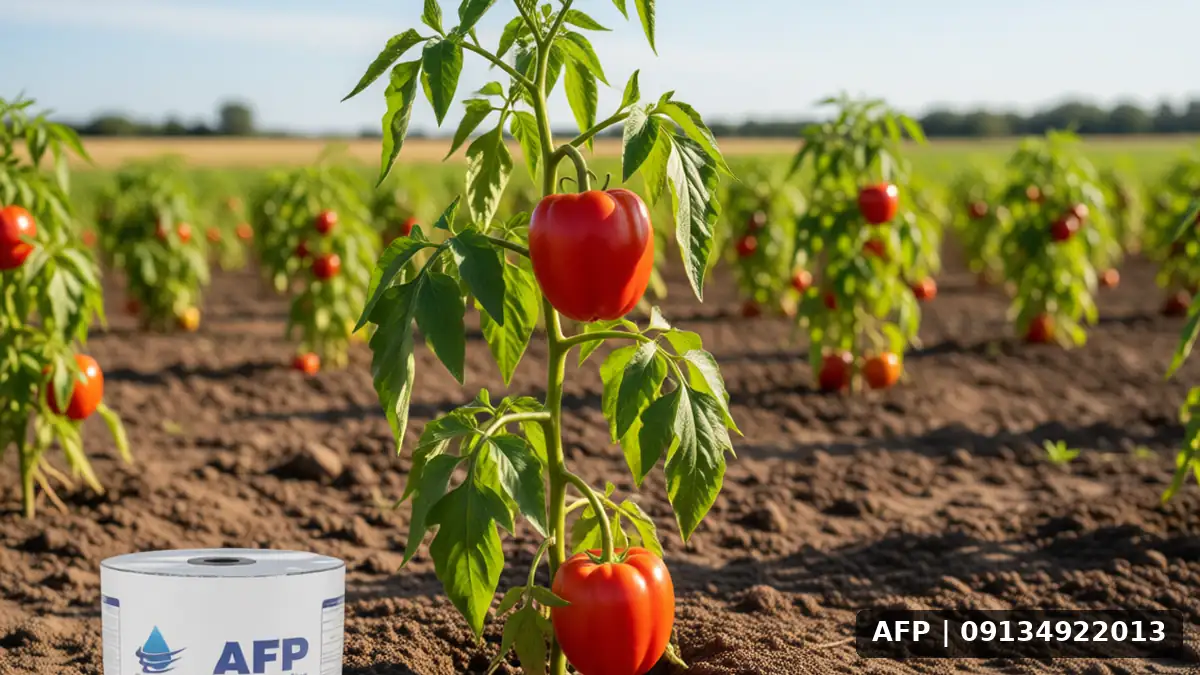
Can a drip system be used for double-row pepper?
Yes, but the spacing between two drip lines or drip tapes must be adjusted based on precise planting density measurements to prevent over- or under-irrigation between the two rows. Proper line spacing management is key to achieving the best efficiency, similar to the principles outlined for fixed drip tape that emphasize layout precision.
Conclusion
Sprinkler irrigation with runoff has become a challenging method for pepper cultivation due to the favorable conditions it creates for fungal diseases and soil erosion. The transition to drip or drip tape irrigation, although it increases initial costs, results in greater long-term profitability for the farmer by reducing water waste, lowering pesticide consumption, and increasing the uniformity of plant growth. The choice between drip and drip tape depends on factors such as soil type, land slope, and budget, but both methods represent a positive step toward sustainable and more precise agriculture compared to sprinklers.
Related articles: Drip Tape for Beans: A Comprehensive Guide to Drip Irrigation, Yield of D8AFD8B1 melon cultivar per hectare