Runoff Irrigation in Calaminta Cultivation: Prerequisites and Technical Principles
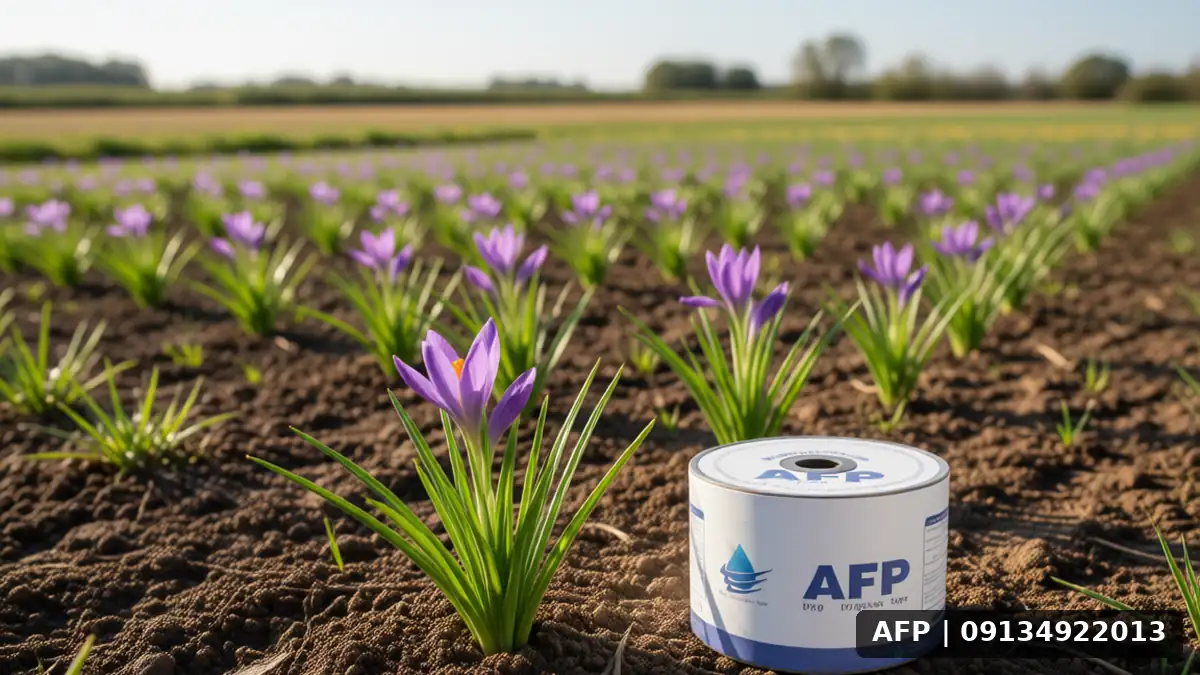
Introduction to Drip Irrigation in Saffron Cultivation
Saffron cultivation, known as “Red Gold”, is a crop highly sensitive to irrigation conditions. While traditional furrow irrigation is gradually being phased out of modern production due to high labor requirements, excessive water consumption, and uneven moisture distribution, many farmers still fail to benefit from the advantages of pressurized irrigation systems like drip lines, often due to a lack of understanding of the technical prerequisites. In arid climates, the main challenge is the dual management of maintaining uniform moisture for healthy rhizome growth while preventing excessive irrigation that causes rot. This guide examines the key prerequisites for successfully implementing pressurized irrigation systems as an alternative or complement to furrow methods, since experience shows that achieving uniform irrigation in saffron is difficult without combining it with drip lines. Understanding the technical characteristics of the equipment is key to successful reduction in water losses and improvement in caryopsis quality.
Technical Prerequisites for Land and Seedbed Preparation
Before any installation or adjustment of the irrigation system, precise preparation of the seedbed for saffron cultivation is of critical importance. Although in furrow irrigation, the horizontal slope of the land plays a decisive role in water movement, in drip line systems, surface uniformity and weed-free conditions are the main prerequisites for proper function. Any irregularity on the ground surface can cause water accumulation in low spots and extreme dryness in high spots.
1. Determining Appropriate Row Spacing and Planting Density
The row spacing for saffron cultivation is typically set between 30 and 50 centimeters. This spacing must align precisely with the diameter of the drip tape, the pipe diameter, and the discharge capacity to ensure water reaches the root zone directly rather than draining between the rows. In high-density plantings, using drip tapes with regular and consistent emitters, instead of irregular spray applications, significantly helps preserve soil structure, reduce direct evaporation, and minimize weed growth. Understanding spacing principles in other crops with similar water requirements and layouts, such as forage corn, can provide a clear model for calculating irrigation density for rhizomatous plants like saffron. Study Drip tape spacing for corn and notes on forage cropping This is useful for better understanding space management in multiple cropping systems.
Selecting suitable equipment appropriate for climatic conditions
Pressurized irrigation technologies must be carefully selected to match the network pressure, ambient temperature, and regional rainfall. One of the most common technical errors is selecting a drip tape with an inappropriate diameter, which leads to dripping, rapid failure, or waterlogging.
- Working pressure and cost breakdown: Saffron irrigation systems typically operate at a pressure between 1 and 3 bar. If you are using a combination of pressurized and drip tape methods, a detailed assessment of operational costs is essential. In this regard, knowing the cost of drip tape per hectare and how it compares with the budgeting of fixed systems helps the farmer choose an economic and optimized model.
- Material and durability of the tubing: Using compacted plastic (PC) or UV-resistant materials significantly extends the system’s service life. Drip tubing is exposed to solar radiation and contact with farming tools; therefore, special attention must be paid to extending the lifespan of the drip tubing and maintaining it properly after each cropping cycle to ensure performance across multiple seasons and years.
Water resource management, network hydraulics, and technical layout
Traditional flood irrigation with limited surplus resources has low efficiency and often leads to resource waste. In contrast, smart or semi-smart drip irrigation systems enable precise water dosing and moisture control. For crops like saffron, which are highly sensitive to waterlogging and excessive moisture, the hydraulic technical layout plays a vital role.
- Network division (zoning): Divide the field into small blocks so that only sections requiring irrigation can be pressurized. This reduces operational pressure and optimizes pump consumption.
- Calculating flow rate and infiltration depth: The output flow rate of the drip tubing must be adjusted to maintain soil moisture at the root depth (20 to 30 centimeters), ensuring that no standing water on the surface develops that could cause corm rot.
- Hydraulics and pressure loss: Checking pressure loss along the line, especially in large segments, is critical. If the line length is long, stronger suction pumps or thicker lines must be used. For accurate calculation of water requirements and network scaling, using the yield of forage (fodder crop) per hectare as a comparative reference for similar vegetative and grain plants can be helpful.
Practical guide for installation and maintenance in fields
Drip line installation requires precision and adherence to specific principles to prevent mechanical damage and unauthorized leaks. This section addresses the operational points that must be considered before activating the system.
Pre-installation notes: The field surface must be completely free of gravel and grass roots. Additionally, the distance of the line from the ground surface should not exceed 5 centimeters to prevent line breakage during plowing. Awareness of Key points before installing drip lines in the field minimizes common errors in the execution process. Also, selecting the appropriate location for tanks and pumps must be based on the field gradient and easy access to the system.
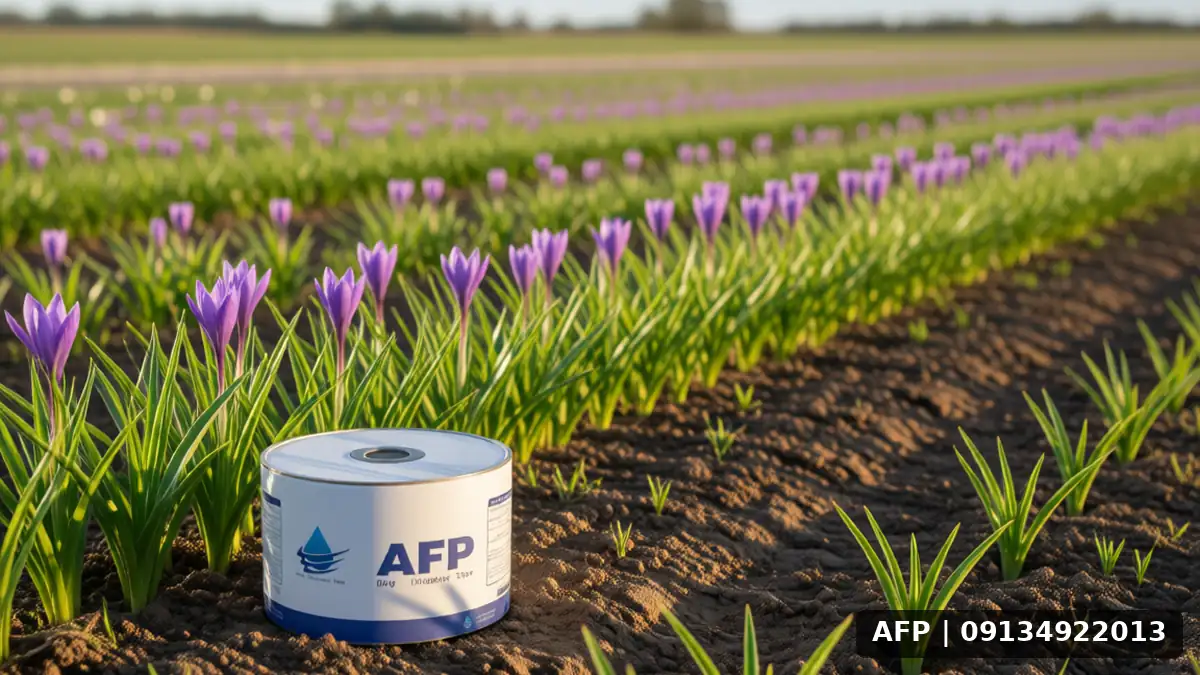
Frequently Asked Questions (FAQ)
Can drip lines be used alongside rill irrigation?
Yes, in many saffron farms, drip lines are used as a supplementary or alternative system for the tail ends of field plots, which typically remain dry under conventional rill irrigation. This combined method maximizes irrigation uniformity and resolves the main limitation of rill irrigation.
What is the best time to plant saffron using a pressurized irrigation system?
Usually, autumn is the season for planting and finalizing the irrigation network preparation. It is essential to review the technical checklists before taking any action. Reading guidance articles such as Fenugreek seeds per hectare can provide insight into planting density and available space for irrigation systems in similar vegetative crops.
What is the impact of precision irrigation on rhizome quality?
Uniform and controlled irrigation promotes better rhizome division and increases plant stand density in the following season. Severe moisture fluctuations, common in furrow irrigation, lead to the production of small, irregularly shaped, and low-quality rhizomes, which reduces final crop yield.
Summary and final recommendations
Transitioning from furrow irrigation to modern systems such as drip tape is not merely an equipment change, but a fundamental shift in the farmer’s approach to water and soil management. The key prerequisites for success are: proper and leveled land preparation, selecting the appropriate material and diameter of tape suitable for the network pressure, and intelligent segmentation (zoning) of the network. For those seeking to increase efficiency in cultivating seedlings or medicinal and grain crops, understanding hydraulic principles and optimizing pipe spacing is key to success. Combining technical knowledge with local climate experience will ensure high performance and system longevity. Studying supplementary resources such as Factors increasing Taro yield per hectare can be a good guide for understanding the relationship between water management and final crop yield.
Related articles: Technical specifications of the drip line and the lentil seed rate per hectare to compare different planting densities.