Irrigating Fruit Orchards in Wheat Systems: A Comparative and Practical Guide
Introduction to Smart Water Management in Different Crops
One of the main challenges for farmers in arid regions is selecting the appropriate irrigation system. Many farmers believe that a single irrigation system, such as drip tape irrigation, can be applied to all crops. However, the reality is that orchards and wheat crops represent two completely different worlds in terms of root depth, water consumption, and sensitivity to drought stress. In this section of Orchard and Wheat Irrigation Comparison, we map out a roadmap to understand these differences so you can make the best decision based on your farm’s conditions.
Key Differences in Root Structure and Water Requirements
Orchards: Deep Rooting and Stress Sensitivity
Fruit trees such as apples, tomatoes (in orchards), or citrus have deep root systems. Throughout the growth cycle, especially during fruiting periods, these plants require consistent and uniform moisture across various soil layers. Drip irrigation, typically with lower pressure and precise distribution at the root zone, is an ideal option. Severe fluctuations in moisture can lead to fruit cracking or root rot. Therefore, micro-irrigation management in orchards requires high precision and should not be based solely on a fixed schedule.
Wheat: Surface Rooting and Uniform Coverage
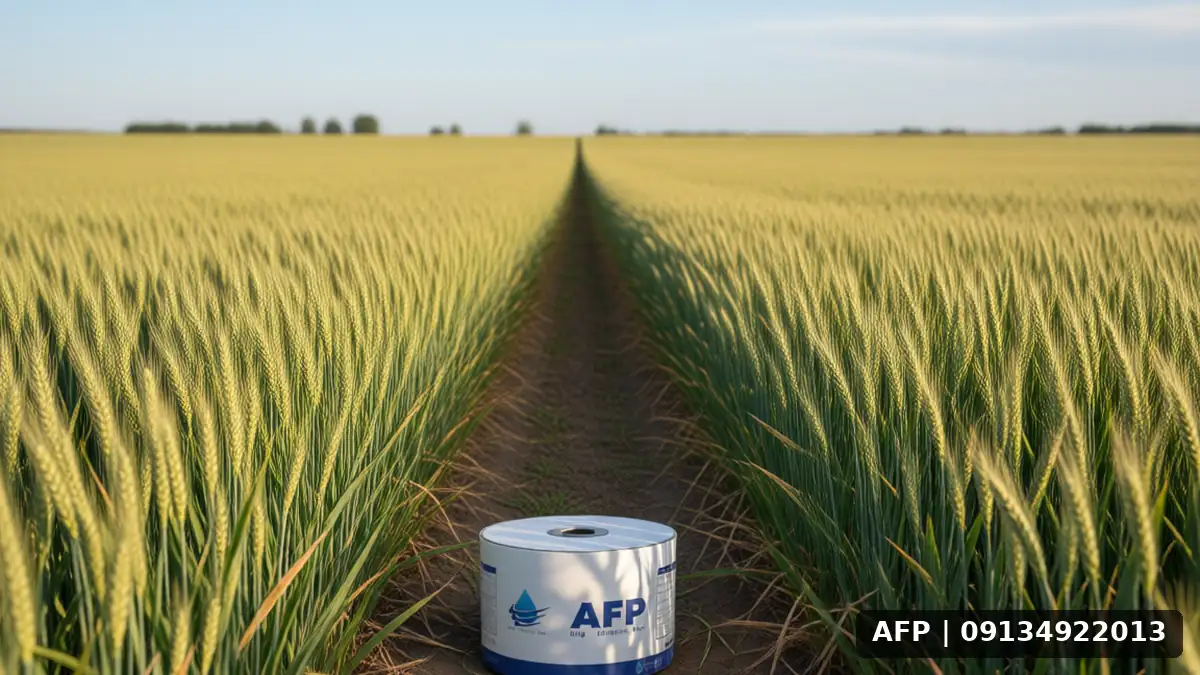
In contrast, wheat is a cereal crop with a fibrous and relatively shallow root system. This crop requires uniform soil moisture near the surface for vegetative growth and grain filling to prevent competition among plants. In this context, Drip irrigation for greenhouses (which uses similar technology applicable in open fields as well) or strip irrigation can be effective, but with dimensions and settings completely different from orchards. Wheat is sensitive to water distribution across the surface, not concentration at specific points like tree root zones.
Comparison of strip irrigation technology in both applications
Strip irrigation is a method where narrow bands of water are applied sequentially at specific intervals on the soil surface. Compared to conventional surface irrigation, this method reduces water consumption and infiltrates moisture into the soil in vertical strips. However, the main difference lies in system design for orchards versus wheat.
- Strip spacing: In orchards, the spacing of strips must align with tree planting density to ensure moisture reaches all deep root zones. In wheat, the strip spacing must allow moisture to distribute uniformly among plants rather than concentrating in specific areas.
- Specific generations: For wheat, what is the cost of drip tape per hectare? It examines factors such as field length, soil type, and pump pressure that must be calculated before purchase. In orchards, costs depend more on the number of trees and piping complexity.
- Infiltration depth: Wheat has a shallower infiltration depth (approximately 30 to 50 cm) compared to fruit trees (up to 1.5 m or more). Therefore, wheat drip lines must have high infiltration rates to ensure faster completion of irrigation and reduce surface moisture variability.
Practical points for proper implementation of irrigation systems
For fruit orchards
- Soil moisture monitoring: Always use digital moisture sensors at various depths. A simple surface moisture sensor is insufficient. Aim for minimal fluctuation in soil moisture within the Root Zone.
- Laser Grading (Land Levelling): Prior to installing drip or micro-irrigation, the orchard land must be graded to ensure uniform water pressure along the slope. Inconsistencies in grading can cause water to pool in some areas and leave others dry.
- Regular Tilling: Due to the sensitivity of deep roots, tilling should be done cautiously to avoid damaging deep lines. In the drip system, the irrigation furrows can also serve as working lines for small equipment.
For Wheat Fields
- Irrigation Scheduling: Wheat exhibits high sensitivity during the flowering and grain-filling stages. Irrigations should be short and frequent to prevent surface moisture from drying out and to prevent dry roots from withering. Thin strips with high frequency are recommended during this season.
- Weed Management: Irrigation lines can serve as a guide for applying pre-emergent or post-emergent herbicides. Ensure that drip line paths are aligned with wheat planting rows.
- Pump pressure control: For wheat, pressure must not be high enough to cause salting or erosion of narrow strips. Medium pressure with an appropriate flow rate usually provides the best balance.
Many farmers look only at the initial equipment cost when selecting an irrigation system. However, hidden costs such as energy consumption for pumping, clogged pipe maintenance, and crop yield reduction due to water stress are often overlooked. In orchards, a low-quality system can cause mold and quality loss, a cost far exceeding the irrigation system itself. In wheat, uneven irrigation directly affects grain weight and the number of healthy plants. For a better understanding of planting amounts and density related to the irrigation system, study topics such as Alfalfa yield per hectare can provide a proper understanding of density and water requirements, although wheat differs from alfalfa, the principles of density measurement are shared.
Frequently Asked Questions (FAQ)
Can a drip tape system be used for both orchards and wheat?
Only if the system is modular and adjustable. If you are using fixed plastic tapes, it is better to have separate systems. In orchards, tapes must be fixed and accurately placed at the tree planting locations, but in wheat, tapes must align with planting rows, which changes annually (if replanted).
Which system is better for wheat: drip or drip tape?
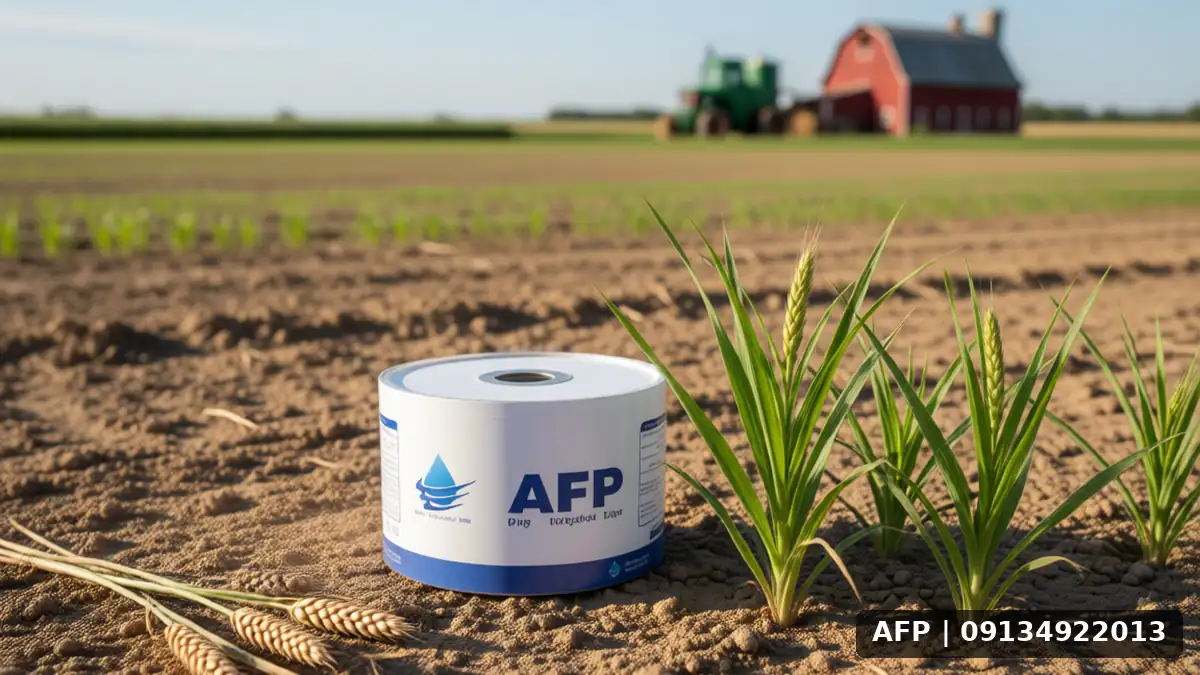
In areas with heavy clay soils, drip tape is generally cheaper and easier to maintain because drip emitters clog faster in these soils. However, in sandy soils with high infiltration, drip emitters perform better due to more precise control over infiltration depth.
How can I optimize water usage for wheat?
Use appropriate cover crops. Read more Guide for green manure cultivation per hectare or other cover crops can be algorithmic. Cover crops reduce soil moisture evaporation and manage irrigation needs throughout the long-term wheat cycle.
Conclusion
A comparison of orchard and wheat irrigation indicates that there is no single approach. Orchards require precision in the depth and uniformity of moisture delivery to deep roots, while wheat requires uniform surface moisture distribution and quick operation of irrigation lines. The choice between tape or drip systems should be based on your soil type, budget, and labor availability. Always conduct soil analysis and precise flow rate calculations before implementation. Understanding the root differences between these two crops is the key to successful water resource management. By following the practical points mentioned above, you can monitor your crop performance while optimizing water consumption.
Related articles: Soybean seed rate per hectar + influencing factors