Drip Irrigation in Melon Cultivation: Benefits, Practical Tips, and Impact on Productivity
Introduction to the importance of drip irrigation in cantaloupe cultivation
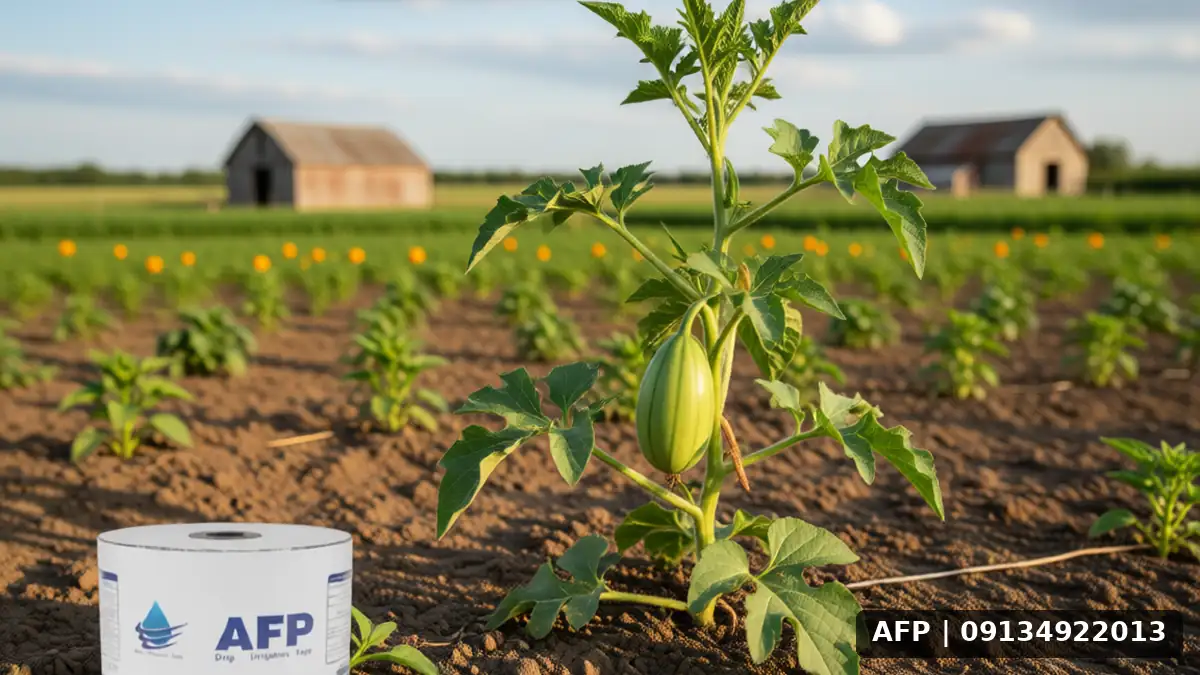
Cantaloupe is a heat-loving crop sensitive to root stress that requires precise moisture management to achieve optimal quality and size. In recent years, professional farmers have increasingly adopted modern irrigation systems, particularly drip irrigation . This method plays a pivotal role in increasing final crop yield by creating a stable root zone environment and reducing evaporation. This article will examine the key advantages, practical execution tips, and answers to frequently asked questions regarding this topic.
Key benefits of using drip tape in cantaloupe farms
Significant water conservation
One of the most prominent benefits of drip irrigation is a 30 to 50 percent reduction in water consumption compared to flood irrigation methods. Drip tapes release water directly into the cantaloupe root zone. This minimizes water loss due to runoff or surface evaporation. To better understand the technical differences, you can refer to the article “Characteristics of Drip Tape” which provides a precise technical description of this system.
Improved nutrient uptake efficiency
Because drip water infiltrates the soil at low flow rates and at regular intervals, water-soluble nutrients are distributed uniformly around the roots. This uniform distribution prevents fine roots (root hairs) in the wetter zone from experiencing root starvation and allows them to grow more rapidly. This characteristic reduces the loss of chemical fertilizers or the leaching of nutrients into deeper soil layers between the time fertilizers are applied and the time they reach the plant.
Improved root aeration and reduction of fungal diseases
Drip irrigation keeps only the root zone moist, leaving the rest of the soil in a relatively dry state. This condition improves air aeration in the root system and prevents the creation of moist and saturated conditions that serve as a suitable environment for the growth of soil-borne fungi and root rot diseases (such as Fusarium). Cantaloupe is sensitive to root diseases, and moisture control with this system increases plant resistance to environmental stress.
Technical and structural review of the drip system in cantaloupe farms
Selection of the appropriate drip tape type
For cantaloupe cultivation, which is usually done on mounds (hills) or in beds, selecting the type of drip tape is critical. Bordered drip tapes are generally recommended for this crop because they maintain an appropriate distance as root depth increases over time. To familiarize yourself with the standards and advantages of this installation type, you can review Advantages of bordered drip tape irrigationcompare the difference with subsurface drip irrigation. The appropriate flow rate for each dripper on melon can vary from 1.7 to 2.5 liters per hour, depending on climatic conditions and soil type.
Impact on fruit growth and final quality
The use of drip irrigation systems protects plants from root temperature stress during sensitive growth stages, particularly after flowering and the onset of fruit filling. Root temperature stress is a major factor in the cracking and reduced flesh thickening of melon. With uniform irrigation, fluctuating root stresses are reduced, and the fruit develops symmetrically from start to finish. To compare with other crops, you can Factors influencing the increase of seedless watermelon yield per hectare also study, as there are similar principles in the management of drip lines for cucurbit crops.
Practical implementation and planting points with drip irrigation system
- Bed preparation: Before planting melon, precise leveling of the beds is essential to ensure that pressure in the drip lines is distributed evenly. Any asymmetrical slope will cause water to drain towards the lower end of the bed and result in water deficiency at the highest points.
- Correct drip tape installation: After planting the seedling or seed, the drip tape must be placed immediately 10 to 15 centimeters from the main root. Using a main line and laterals of appropriate diameter (usually 12 or 16 millimeters) and adhering to the maximum line length prevents pressure drop.
- Irrigation timing: Irrigation should be short and frequent. For example, every day or every two days for 15 to 30 minutes. Monitoring soil moisture with simple tools or digital sensors is recommended to prevent root saturation.
- Soil compaction management: Drip tape prevents root rot, but if the soil surface is compacted from above, lateral roots are inhibited. Although natural drainage from the drip system helps relieve compaction after each irrigation, using seeder and drill for compaction reduction is recommended.
To select a drip tape with suitable thickness that can withstand pressure to the end of the line, it is essential to be familiar with the variety of these products. You can find a list of drip tape types in the section types of drip tape irrigation tubes to review.
Frequently Asked Questions (FAQ) about melon drip irrigation
Is using a drip system for melons expensive?
Although the initial cost of purchasing and installing drip tape may be higher than that of a flood irrigation system, the significant reduction in water consumption, decreased labor costs for weeding (due to soil coverage by the tape and prevention of weed growth between hills), and increased fruit yield lead to a very rapid return on investment in the early years. This investment has high economic viability overall.
What soil moisture level is suitable for melon roots?
Melons require soil moisture at 60 to 75 percent of soil water holding capacity. A drip irrigation system allows you to control this range precisely. During the late fruit-set period, reducing moisture to 50 to 60 percent can help improve fruit flavor and color.
Is drip tape compatible with all types of fertilizer?
Yes, a drip irrigation system enables fertigation (liquid fertilizer injection). It is worth noting that to prevent salt deposition and chemical accumulation around emitters, drip tape with appropriate spacing (e.g., every 25 or 30 centimeters) should be used to avoid the concentration of solutions in one spot. Proper spacing of mainlines and laterals is also recommended.
Summary and Conclusions
Related Articles: Characteristics and Features of Drip Tape