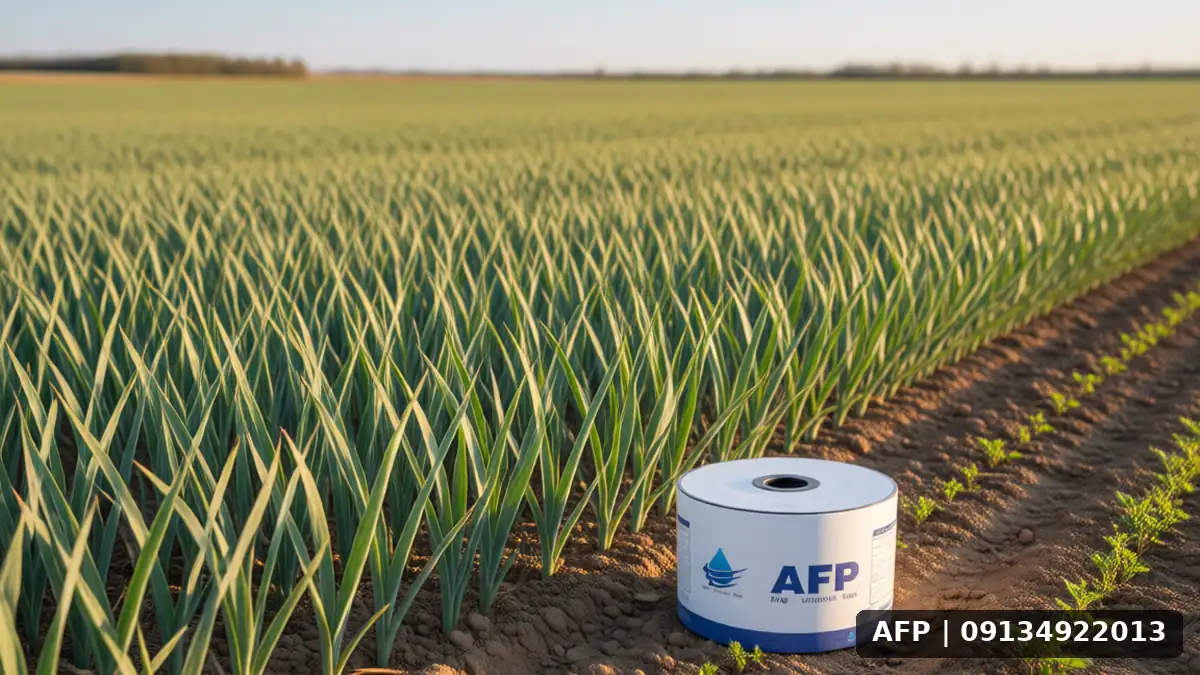
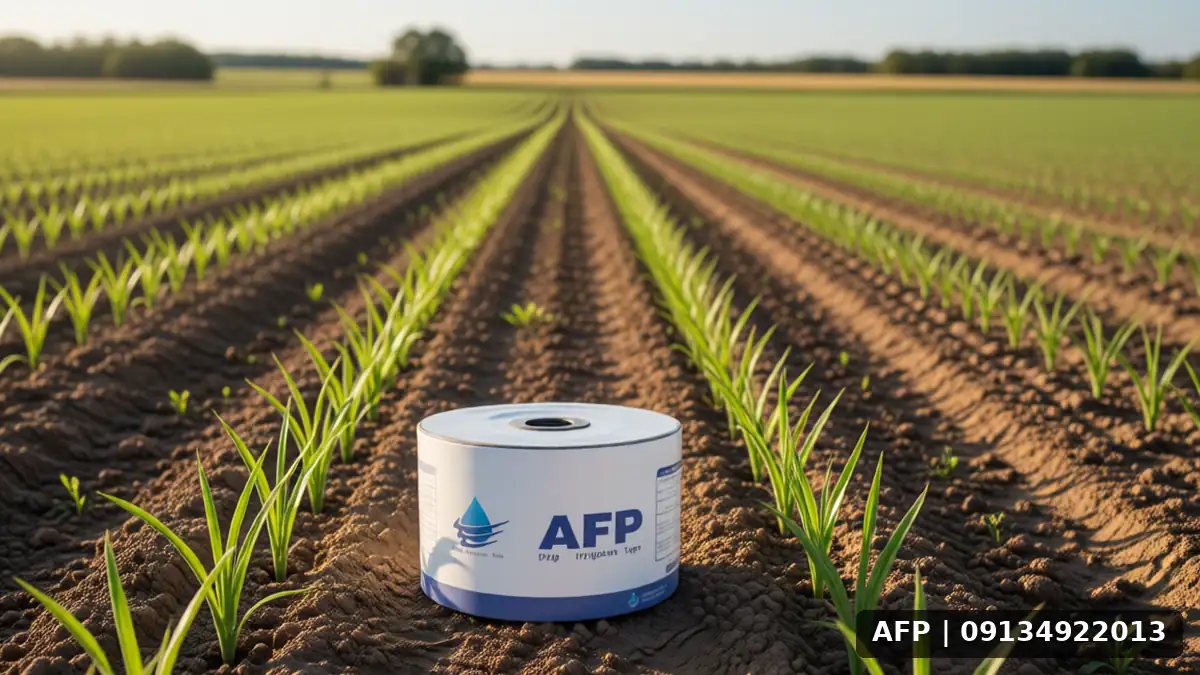
Introduction to Moisture Irrigation in Garlic Cultivation
Garlic is a key horticultural and field crop with high sensitivity to soil moisture. Proper moisture management directly affects not only bulb development but also the reduction of fungal diseases such as botrytis and storage rot. Traditional flood irrigation often leads to moisture heterogeneity, where parts of the bed become saturated while others remain dry. This unevenness causes non-uniform garlic growth and results in a loss of first-grade quality at harvest.
Moisture irrigation, particularly using a drip line, is a modern and precise solution that enables moisture management at the root zone. By applying low pressure and distributing water point-by-point, we can maintain optimal moisture in the root area and prevent over-wetting of stems and leaves, which promotes disease spread. The following section examines the components of this system and its application in garlic farms in detail.
Technical Principles of Moisture Irrigation and Drip Lines
A drip line is a system in which emitters are laid out as straight lines on the ground to distribute moisture uniformly along the rows. For garlic cultivation, the spacing of these lines is critically important. Typically, the distance between lines is set equal to the width of the prepared garlic row to ensure that all roots have equal access to water.
Why Are Drip Lines Ideal for Garlic?
Maintaining soil surface dryness: For garlic, maintaining dryness of the soil surface around the plants is critical. Drip lines allow water to seep precisely at root depth, keeping the surface relatively dry.
Reducing evaporation: Due to point distribution, the water-air contact surface is smaller, resulting in up to 30% water savings in semi-arid regions.
Preventing leaf wetness-related issues: Spraying water onto garlic leaves in the evening or during humid nights creates a suitable bed for Botrytis fungi. Drip lines reduce this risk to nearly zero.
For proper design of this system, understanding stability of drip lines in agricultural crops It is essential. Uniformity here refers to the system’s ability to maintain the same discharge rate throughout the strip and prevent pipe clogging.
Irrigation scheduling and rates based on garlic growth stages
Garlic requires varying amounts of water at each growth stage. Ignoring these needs leads to small cloves or cracking. The table below provides a complete guide to rates and scheduling:
Sub-Irrigation for Garlic Cultivation – Overview
Growth stage
Moisture noise
Irrigation recommendation
Germination (Day 1-15)
High
Light and frequent irrigation to stimulate root development.
Vegetative growth (Days 15–60)
Very High
Maximum irrigation dose; uniform moisture required.
Husk maturation (Days 60–90)
Medium
Gradually reduce dose; stop irrigation 2 weeks before harvest.
Ripe and dry
Zero
No irrigation should be performed until the garlic is well cured and dry.
The key point here is that during the ripe stage, if the garlic remains in moist conditions, it will quickly spoil after harvest. Therefore, precise irrigation shutdown at the right time is the most important part Moisture irrigation in garlic cultivation . To view similar examples in other commodities, you can refer to the ‘Tape type: Comprehensive guide to drip irrigation’ which explains similar principles on commodities sensitive to fungal diseases.
Practical tips for installation and maintenance of tape type systems in garlic farms
Although tape type installation may seem simple, proper execution requires adherence to engineering principles. In this section, we review a checklist of the most important practical points.
1. Selecting appropriate pipe wall thickness
Thin-walled pipes below 2/16 inch are barely usable at pressures above 3 bar and have low mechanical resistance. For garlic crops, which are usually grown on gentle slopes, 1/4 inch pipes with equal internal diameter are recommended to prevent flow rate variations.
2. Precision filtration
Garlic is sensitive to drain sediments and suspended particles. Using two-stage filtration (cloth + disc or turbine) is mandatory. Clogging of emitters creates moisture unevenness, which is the main weakness of conventional methods.
3. Operational pressure
Sub-Irrigation for Garlic Cultivation – Practical application
The system’s inlet pressure must be between 1.5 and 2 bar. Pressures above 2 bar cause water to spill around the roots, leading to non-commercial growth of chaff. Setting pressure-reducing valves at the beginning of each row ensures uniform output from all emitters.
To review further technical details, it is recommended to read the article on drip line installation techniques, which explains the step-by-step process of installing pipes, connections, and pressure adjustments in both visual and text formats.
Economic benefits and resource efficiency
The initial installation cost of drip tape may appear higher than plastic hose at first glance, but annual lifecycle analysis indicates that the return on investment is achieved within the first two years. This return is derived from three primary sources:
Reduced water consumption: Due to reduced evaporation and runoff, water expenses are saved by up to 30 to 40 percent.
Increased revenue through higher yields: Uniform moisture levels result in a higher percentage of the crop grading as premium quality. Comparisons with yields of similar commodities demonstrate that precise moisture management directly leads to increased revenue, as illustrated in ‘Soybean Yield per Hectare: A Comprehensive Guide to Yield Enhancement,’ where irrigation management can be the critical differentiator between profitability and loss.
Reduced labor consumption: Irrigation via automated systems does not require the continuous presence of workforce on the farm.
Frequently Asked Questions (FAQ)
Does drip tape differ between dehydrated garlic and standard garlic?
There is a minor difference. Dehydrated garlic generally has narrower root spacing. Therefore, it is recommended to choose a drip emitter with closer spacing (e.g., 10 to 15 centimeters) to ensure complete root coverage in dense rows. However, the general principle remains the same: moisture uniformity.
How long does drip tape last?
With proper maintenance, annual flushing, and weed control, high-quality tubes can last 5 to 7 years. After that, replacement is usually recommended to reduce the risk of breakage and leaks.
Sub-Irrigation for Garlic Cultivation – Technical detailsDoes drip tape irrigation cause weed growth?
If the distance between the drip line and the crop is too wide, yes. However, if the line is placed directly under the crop rows and straw mulch is used for stabilization, moisture delivery to weeds is reduced. Weed control through precise management of moisture and light becomes gradually effective.
Conclusion and Final Recommendations
Completing Garlic Cultivation with Moisture Irrigation in Garlic Cultivation and drip irrigation is not just a technical change; it is a philosophical shift in farm management. You move from a reactive state (irrigating when the plant wilts) to a predictive state (precise moisture management based on the plant’s physiological needs). This shift guarantees product quality in export markets that strictly enforce uniformity and hygiene standards.
For other moisture-sensitive commodities, such as alfalfa, similar principles apply regarding root establishment control and rot prevention, which you can study in the section on alfalfa seed rate per hectar and influencing factors. Finally, it is emphasized that there is no single model for all farms. Before implementing the system, always consult with a local specialist to ensure settings are optimized based on your soil type, land slope, and climatic conditions. Farm success is the result of combining knowledge, patience, and precise resource management.