Soil Moisture Irrigation in Rye Cultivation: Key Points and Expert Solutions
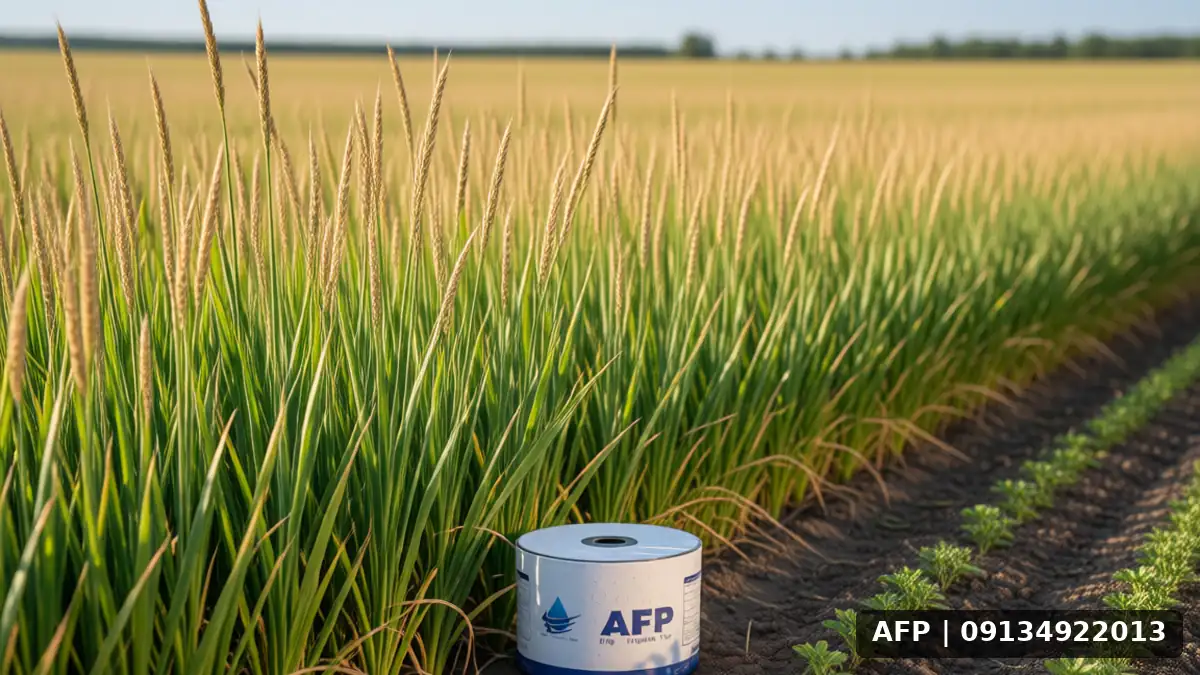
Introduction to the Importance of Moisture Management in Rye Cultivation
Rye is a significant cereal crop during the cold season with high yield potential, but successful production is highly dependent on the proper management of water resources. Moisture Irrigation of Rye This refers to maintaining optimal soil moisture levels in the root zone without causing waterlogging. As rye is an autumn/winter crop, it may not require supplemental irrigation in some regions due to sufficient rainfall. However, in arid or semi-arid regions, precise moisture management is essential to prevent drought stress and increase grain yield.
The use of modern technologies, such as adjusting the number of seeds per hectare, can help farmers achieve maximum efficiency per unit area with optimal water consumption. This approach not only prevents water waste but also mitigates soil salinity and the spread of fungal diseases caused by excess moisture.
Rye Root Characteristics and Their Impact on Irrigation Patterns
Rooting Depth and Moisture Sensitivity
The root system of rye is generally deeper than that of some other cereals, such as wheat. Roots can penetrate depths of 80 to 100 centimeters. Consequently, if irrigation is performed only on the surface, a significant portion of the roots will lack sufficient moisture. Smart moisture irrigation requires considering this depth. The use of drip lines that Light-emitting diode (LED) type in a welded cone with plastic can help improve the distribution of pressure and water flow in deep zones. Although this technology is more commonly used in orchards, its principles are applicable to flow management in precision irrigation networks.
Sensitivity timing
Rye is sensitive to moisture at three main stages: 1. Fructification (utilization of stored moisture), 2. Anthesis (sensitive period for water stress), and 3. Grain filling. During the fructification stage, water requirements are lower, and spring rainfall moisture can be utilized. However, during the anthesis stage, if rainfall is insufficient, supplemental irrigation is critical. Delayed irrigation at this stage leads to reduced grain weight and flower abortion.
Drip and strip tape irrigation methods for rye
Advantages of drip irrigation in cereal crops
Although drip irrigation is primarily known for orchards, it has effective applications in rainfed-to-irrigated or semi-rainfed cereal crops. This method allows moisture to be delivered directly into the root zone. For rye, it is recommended to use drip lines with adjustable spacing (e.g., 20 to 30 cm) and low output capacities (such as 8 or 16 liters per hour). This ensures uniform moisture distribution along the crop rows.
Application of Strip Irrigation
Strip irrigation refers to the flow of shallow water strips along crop rows. This method is less expensive than drip irrigation and appears more suitable for cereals with narrow row spacing. In strip irrigation of beans, it has been observed that the way water is distributed through the strips affects the growth of vegetative plants. For rye, the depth of the strip must be controlled to prevent ponding and the growth of crops and weeds on the surface. Additionally, the width of the strip must be coordinated with the crop row spacing.
Key Points in Soil Moisture Management
Selecting Soil Moisture Sensors
Continuous monitoring of soil moisture is the key to precise moisture-based irrigation. Using cable or point sensors at various depths (e.g., 20, 40, and 60 centimeters) allows the farmer to initiate irrigation exactly when moisture falls below the available water capacity (AWC) threshold. This prevents the waste of pumping energy when soil moisture levels are high.
Estimating Water Requirements and Irrigation Coefficients
Accurate calculation of the water requirements for rye based on regional climate data is essential. Using local weather station data to calculate reference evapotranspiration (ET0) and the rye crop coefficient at each growth stage provides a scientific basis for irrigation planning. An error in estimating this coefficient can lead to inappropriate irrigation.
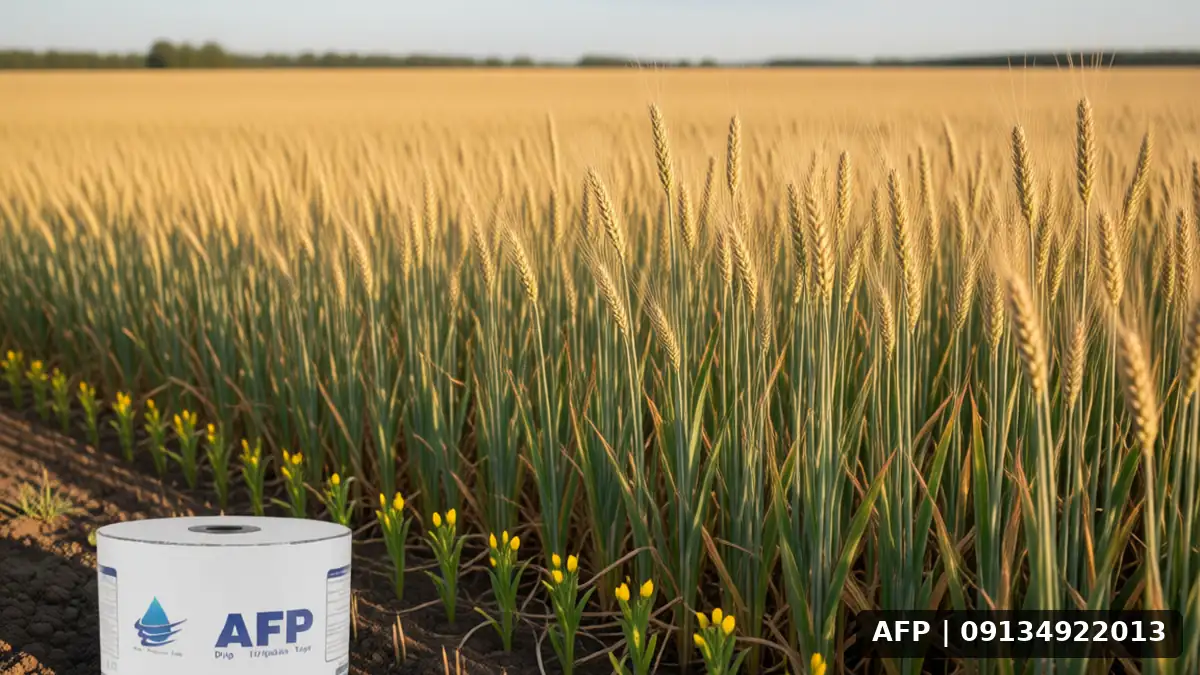
System Calibration and Maintenance
As observed in drip-line irrigation conditions, proper calibration of emitters and tapes is critical. Clogging of emitters due to sedimentation or disc blockages can disrupt uniform water distribution. Seasonal cleaning and the use of appropriate disinfectants are integral parts of system maintenance.
Practical Tips for Field Implementation
- Bed Preparation: Before planting, prepare the soil using plowing and harrowing to ensure uniform root development. Precise land leveling is essential for tape drip irrigation to prevent one-sided water flow.
- Planting: Plant rye at an appropriate depth (2 to 5 cm). The planting depth should not be excessive, as young roots may be prone to rot in cold and wet soil conditions.
- Initial Irrigation (if needed): If autumn rainfall is insufficient, light initial irrigation is recommended to assist with grain filling. Avoid heavy irrigation at this stage.
- Seasonal monitoring: From December to February, monitor soil moisture. During cold seasons, evaporation is low and water requirements are reduced. Irrigation is often applied to relieve drought stress in mid-spring (March).
- Supplemental irrigation: During the flowering stage, if rainfall is insufficient, activate supplemental irrigation using a drip or subsurface system. Keep irrigation depth limited.
- Drainage of excess water: After irrigation, allow excess moisture to drain naturally. Accumulation of standing water on the surface increases the risk of fungal diseases and flower abortion.
Frequently Asked Questions (FAQ)
Is drip irrigation suitable for dryland rye cultivation?
Yes, but only if rye is grown as semi-dryland. If the goal is full dryland cultivation, irrigation systems should not be installed. For semi-dryland rye, drip irrigation is an excellent option for managing drought risk.
What is the appropriate spacing for drippers in rye rows?
Given that rye row spacing is usually 15 to 20 cm, using drippers spaced 15 to 20 cm apart on a main line placed between the rows can create uniform coverage. It is better to use pipes with appropriate diameters to minimize pressure drop.
How does irrigation affect soil salinity?
Low-volume moisture irrigation, if not accompanied by periodic flushing, can lead to salt accumulation at the soil surface. Therefore, planning leaching at the end of the irrigation season is essential to prevent salinization. This matter is similar Wall-mounted geyser Lantai Urbury Qaqi This must be considered in system design, including land slope and drainage.
Summary and Future Outlook
Moisture irrigation management in rye cultivation requires a combination of soil science, meteorology, and irrigation engineering. Utilizing modern technologies such as remote sensing systems and automatic controls can maximize water efficiency. Farming in arid and semi-arid regions will have an uncertain future without optimizing water consumption. By correctly implementing drip and strip-line irrigation principles, we not only preserve the environment but also achieve more economical and sustainable production. It is recommended that farmers consult with local specialized irrigation advisors to select appropriate equipment and customize it based on local conditions.
Related topics: Potato D8AFD8B1 tons per hectare, Spring Barley Yield per Hectare: Practical and Innovative Solutions