Node Irrigation in Cotton Crop: A Comprehensive Guide
Introduction: The Transformation of Water Management in Cotton Farming
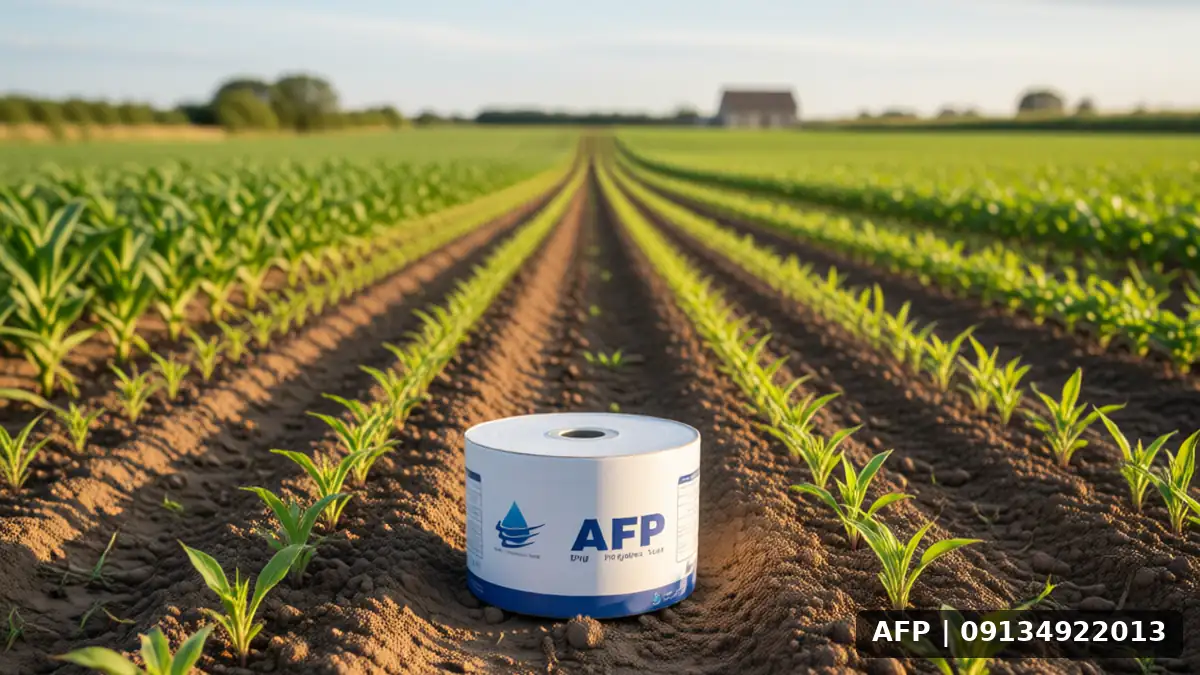
Cotton is one of the most valuable and sensitive industrial crops, where water requirements during the growth period are a determining factor in the final quality and quantity of the harvest. Traditional irrigation methods, such as flood irrigation, cause significant water wastage and lead to excessive root growth in deep soil layers, which is neither economically nor technically efficient. In contrast, Nodal irrigation which is also referred to as point irrigation in technical literature, is an advanced method where water is delivered as discrete drops or fine controlled sprays directly to the active root zone of the plant. This method provides maximum water use efficiency by creating an appropriate moisture node around the roots. In this comprehensive article, focusing on cotton cultivation, we examine the technical principles, calculations, and practical execution points of nodal irrigation to enable farmers to implement this system in their farms with complete technical knowledge.
It should be noted that selecting an appropriate irrigation system depends not only on the type of dripper but also on an understanding of soil behavior, local climatic conditions, and the precise assessment of cotton plant requirements. Sub-surface irrigation of plants in some deeper sections may complement the nodal method, but the main focus of this approach is optimal surface distribution.
Technical Principles of Nodal Irrigation in Cotton Farms
The basis of point irrigation is creating a limited and variable moisture zone around the plant root. In linear drip line systems, one of the most common types of this method, emitters are installed on a thin plastic line placed under the soil surface (5 to 10 cm deep) along the crop row. This arrangement causes water to infiltrate only a narrow band around the roots, forcing other parts of the root system to grow deeper and laterally to access water. For cotton, which has a strong root system, this characteristic makes the plant more resistant to mild water stress and allows it to use its energy for crop (boll) production rather than just stem growth.
Emitter Layout and Spacing
Determining the distance between emitters is a critical parameter. In cotton cultivation, considering the row spacing (usually 75 to 100 cm) and plant-to-plant distance, the drip line can be installed as a single line down the center of the row or as a double-sided setup (two parallel lines). Emitter spacing is usually between 10 and 20 cm. Higher density (shorter spacing) is recommended for sandy soils with high permeability to prevent sudden deep water infiltration, while in clayey soils, slightly larger spacing can lead to the leaching of nutrients toward the roots.
The selection of emitter discharge rate must also be appropriate for the daily water requirements of cotton. In autumn, water demand is lower, but during the peak growth period (summer), water application should be increased. Emitters with stable discharge and clogging resistance guarantee distribution accuracy.
Impact on Root Ecosystem and Reduction in Water Consumption
One of the main reasons for the sustainability of the cotton economy is the 30 to 50 percent reduction in water consumption compared to flood irrigation. In node irrigation, direct evaporation from the soil surface is minimized because only a narrow strip remains wet. Furthermore, reduced over-wetting of the soil decreases root diseases, which are often fostered by high humidity. This specific characteristic improves the need for preventive spraying in cotton fields. To better understand how to manage water resources in different crops, review related articles such as obyorii juyaki can provide a good comparative perspective on the differences between traditional and modern methods.
Practical Guide: Calculations and Planning
Successful implementation of node irrigation requires precise calculations. The first step is determining the gross water requirement. This requirement is calculated based on climatic data, soil type, and the plant growth stage (from germination to boll maturity). After determining the total water required, this amount must be divided based on the soil water holding capacity and irrigation frequency.
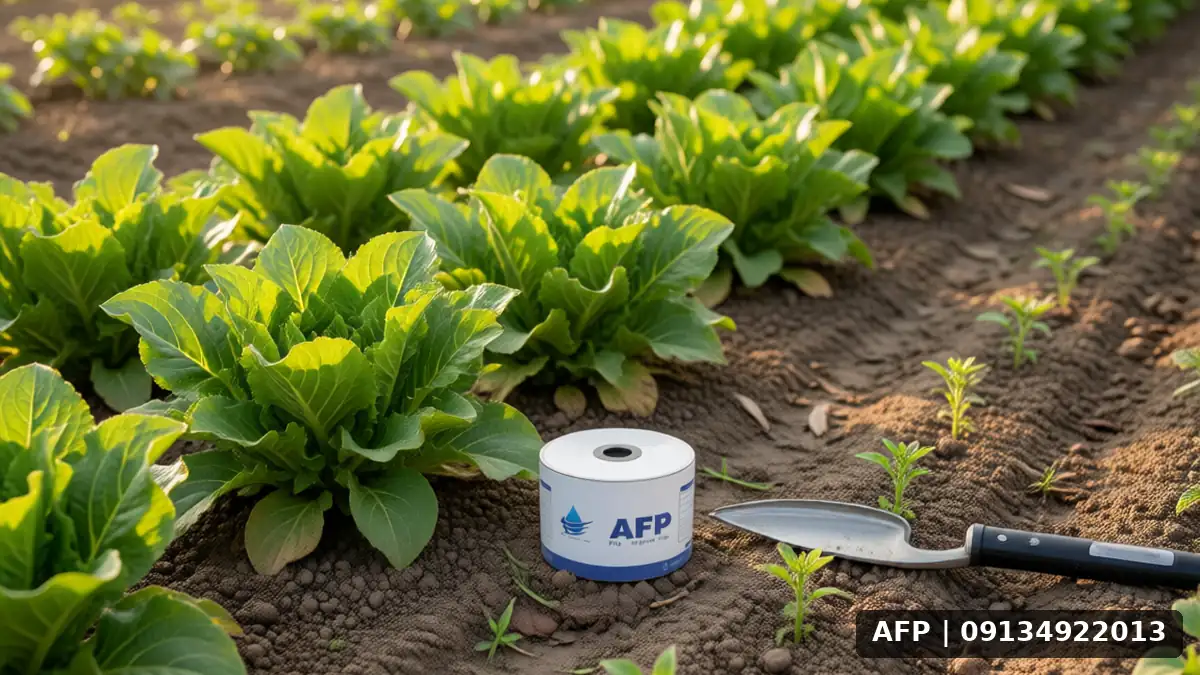
- Soil Analysis: Analyze the soil profile to identify layers with varying permeability. If the soil is clayey, the drip emitter flow rate should be low and irrigation intervals should be more frequent.
- System Planning: Calculate the working pressure for high-pressure and low-pressure lines. In cotton farms, submerged pumps in canals or wells are typically used; these must be capable of generating sufficient pressure to overcome filter losses and maintain pressure at the drip emitters.
- Installing filtration: Always use two-stage filtration (coarse and fine) or advanced disk/filter media systems. Clogging of drip emitters is a major issue for any drip irrigation system and causes uneven cotton growth in the field.
- Laying the network: Schedule line installation at an appropriate time (before or immediately after planting). For cotton, the drip line must be placed precisely at a depth of 7 to 10 cm below the soil surface to align with the main root zone.
To better understand the relationship between water management and other crops, and how to optimize resources, you can review the article on green bean yield per hectare and influencing factors, which highlights the critical role of precise water and nutrient management in vegetable crop productivity.
Key and common points in correct implementation
- System harmonization: In long lines, pressure should be adjusted so that the first and last emitters deliver similar flow rates. This is achieved by calculating pressure loss and selecting the appropriate pipe diameter (typically 16 mm or 19 mm pipes for laterals).
- Weed control: The tip line system helps reduce weed growth by limiting soil surface wetting between rows. However, during early cotton planting when canopy cover is insufficient, do not flush weeds using irrigation wastewater, as this can leach nutrients from the root zone downwards.
- Residual test: After each irrigation, check the depth of infiltration using a simple spade. For cotton, the ideal infiltration depth should be 30 to 40 cm. If infiltration is insufficient, increase the flow rate; if it is excessive, shorten the irrigation interval.
- Fertigation: One of the major advantages of drip irrigation is the ability to supply nutrients through the irrigation system. For cotton, applying nitrogen-based fertilizers during the vegetative growth stage and potassium during boll formation can be done with high precision and minimal waste. To determine specific fertilizer amounts, consult the guide on millet seed quantity per hectare guide which can be helpful regarding fertilization principles and nutrient distribution, although this material focuses on cereal crops.
Frequently Asked Questions (FAQ)
Is node irrigation suitable for all cotton-growing climates?
No, this system offers the highest economic and environmental efficiency in water-scarce, arid regions (such as southern and eastern Iran). In areas with high rainfall and heavy soils, the initial investment cost may delay the return on investment, but it is still recommended for integrated management.
What is the optimal installation depth for a drip tape line for cotton?
The standard depth is 7 to 10 centimeters below the soil surface. This depth aligns with the primary root layer of cotton, which performs 80 percent of water and nutrient absorption. In clay soils, a slightly greater depth (12 centimeters) may be optimal to prevent clogging of the line with fine particles.
Do we need a thermostat or electrical timer?
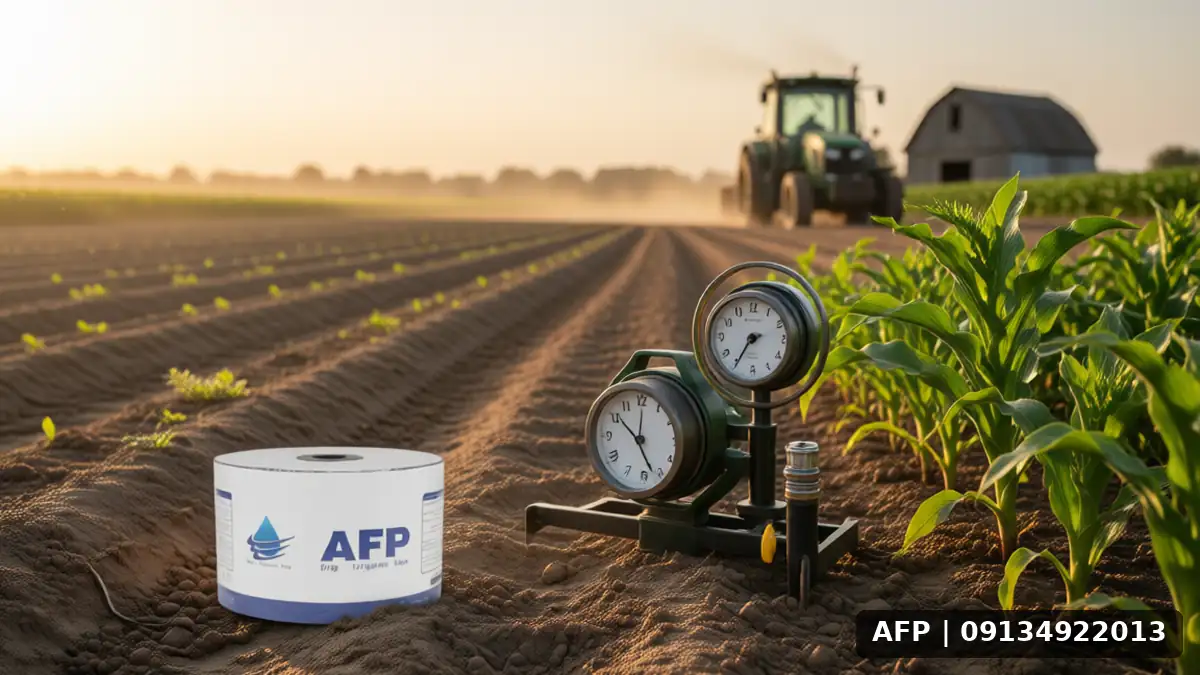
For farms larger than 5 hectares, using a timer and thermostat to automatically control scheduling and system pressure is essential. These devices prevent sudden pressure spikes that can rupture the drip tape and ensure irrigation accuracy. For smaller farms, the system can be managed using manual valves and precise pressure adjustment.
Finally, to familiarize yourself with planting densities and crop layouts that directly influence the design of manifold irrigation lines, you can review the tikmi nuki dimi dar yak hektar guide, which illustrates a similar pattern of high-density layouts.
Conclusion and Final Recommendations
Transitioning cotton farms from conventional methods to manifold irrigation is a strategic step toward agricultural sustainability and water resource conservation. Although initial challenges exist, such as the need for technical expertise, investment in filtration systems, and precise pressure regulation, the long-term benefits include increased crop yields, reduced labor costs for irrigation, and extended operational life of the land’s potential. Farmers are advised to select a small section of the farm prior to full installation and determine optimal settings for the entire field by monitoring cotton performance in that area. Manifold irrigation is not just a technical method but a philosophy of resource management that, through consistency and precise execution, delivers the best results for growing high-quality cotton.