Drip Irrigation in Corn Crops: Key Considerations and Practical Guide
Introduction: Why is drip irrigation essential for corn?
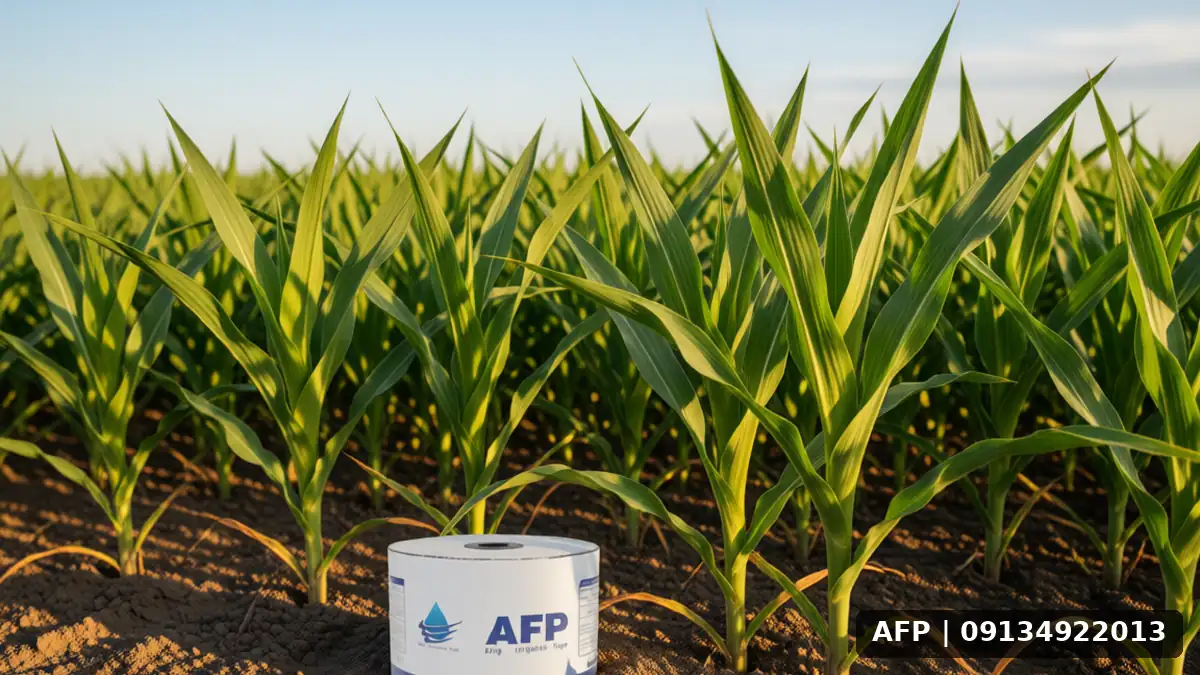
Corn is one of the most sensitive crops to water stress during various growth stages, particularly during grain formation and root development. Drip irrigation, by delivering water and nutrients precisely to the root zone, not only reduces evaporation losses and deep percolation but also enables optimal soil moisture management for the farmer. In modern corn cultivation, the use of drip irrigation combined with strip perforation (Banding) systems has become a critical criterion for increasing efficiency in water-scarce regions.
This method ensures uniform moisture distribution by precisely dividing water flow through drip lines and prevents root starvation in the spaces between rows. Below, we discuss the technical details and key operational points.
Key points in designing a corn drip irrigation system
Selection of appropriate drip emitters and emitter spacing
One of the most important factors in success Drip Irrigation of Cornselecting emitters with appropriate flow rates is recommended. For corn, emitters with a flow rate of 1.6 or 2.17 liters per hour, spaced at 30 to 40 cm intervals, are generally advised. This spacing ensures that the wetted zone of the soil is fully covered within the main root area. If the emitter spacing is too wide, sufficient moisture may not reach the soil between emitters, causing water stress in dry spots.
Pipe Burial Depth and Soil Type
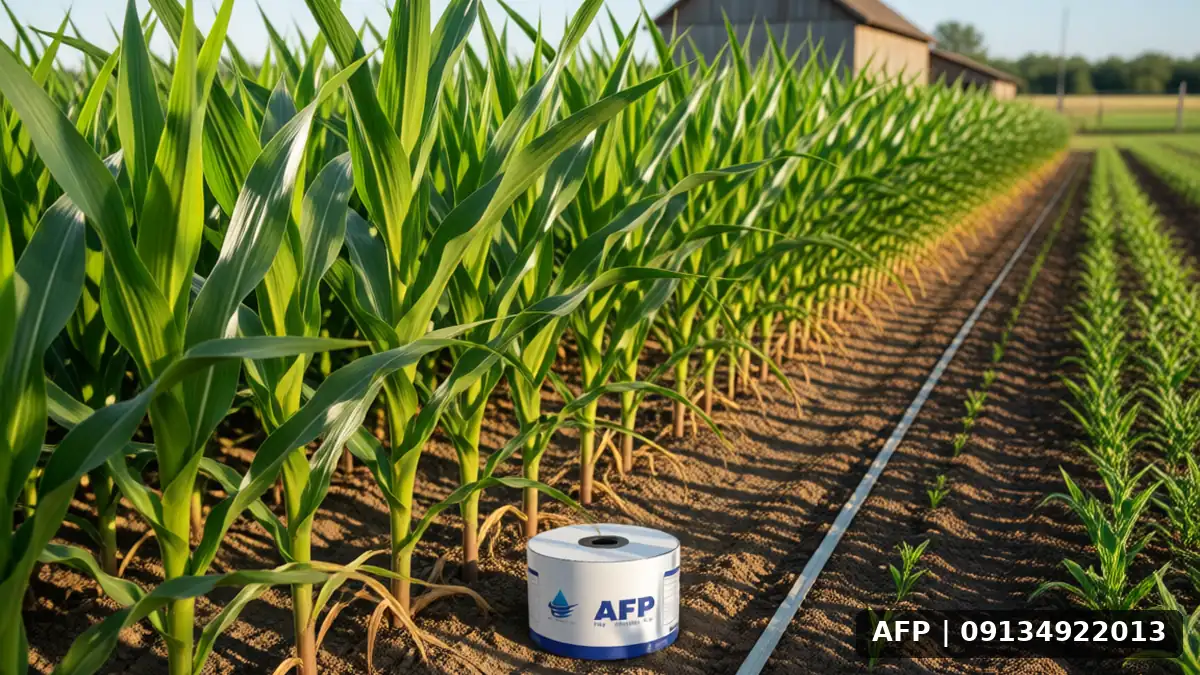
Corn is typically planted in tilled fields. Drip lines can be either surface-laid or buried. In clay soils, burying the line 10 to 15 cm below the surface prevents direct evaporation and physical damage to the pipe. However, in sandy soils with high permeability, surface or semi-buried systems are preferred to control water infiltration speed. Additionally, water quality is critical for drip systems; sedimentation and emitter clogging can eliminate irrigation uniformity. Pre-filtration of water using screen or disc filters is essential.
Combining Drip Irrigation and Band Fertilization & Strip Irrigation)
Band fertilization is a complementary technique where nutrients (specifically silk or nitrogen fertilizers) are applied as bands at a defined soil depth, precisely beneath the drip line path. This method ensures plant nutrients are delivered in solution form directly to the roots. For corn, nutrient bands should be placed 5 to 10 cm from the side of the drip line and at a depth of 10 to 15 cm.
- Advantage of band fertilization: Reduce fertilizer loss and improve plant nitrogen uptake.
- pH Management: This technique helps maintain stable soil pH in the root zone, which is critical for corn’s uptake of micronutrients.
- Synchronization with Irrigation: The timing of Fertigation applications must align exactly with irrigation schedules to prevent nutrient loss before reaching the roots.
If you want to learn more about optimizing nutrition in other intercropping systems, you can review the standard for soil phosphates and boron , as the balance of these elements with water is highly important in drip systems.
Practical tips for seasonal corn irrigation management
Irrigation planning based on growth stages
Corn water requirements vary by growth stage. A practical operational plan should include three main phases:
- Preparation phase: Before planting, conduct a deep irrigation for seedbed preparation. After planting, light and intermittent irrigation (3 to 4 times) is essential for seed germination. During this stage, system pressure should be kept low to prevent seed displacement.
- Vegetative growth and grain filling phase: This is the most critical period. Irrigation rates should peak to prevent yield loss. Using soil moisture sensors can help ensure irrigation is applied exactly when soil moisture drops below the threshold.
- Post-milk phase: Gradually reduce water volume to prepare plants for harvest and prevent stalk breakage.
Common troubleshooting in corn drip irrigation systems
One of the common challenges in corn drip irrigationis pipe clogging due to calcium carbonate deposits or algae. To prevent this, reverse flush the system every two weeks and use an appropriate dose of chlorine in the main lines. Additionally, observing dry areas in the field may indicate a leak in pipe connections or a hole in the drip tape, which should be inspected immediately.
To better understand how planting density affects water requirements and seed usage, comparing seed quantities per hectare for different planting configurations provides good insight into the correlation between density and irrigation efficiency.
Impact of drip irrigation on corn yield and grain quality
Experimental data shows that uniform drip irrigation can increase corn yield by 15 to 20 percent compared to surface irrigation. The main reason is that uniform moisture ensures all plants in the field, even in the middle of the furrow, receive adequate water and nutrients. This uniformity results in uniform grain production and a higher hundred-grain weight (HGW).
In addition to corn, this technology is also effective for many root and leaf crops. If you are interested in increasing the yield of other crops such as lettuce or parsley, we recommend lettuce yield per hectare to study to gain a more comprehensive understanding of irrigation management in vegetable crops.
Frequently Asked Questions (FAQ)
Is the drip system suitable for grain corn (Non-silage)?
Yes, it is very suitable. In grain corn, moisture control during grain formation is critical. The drip system allows for precise soil moisture adjustment to prevent grain cracking.
What is the initial cost of a drip system for corn?
Cost varies depending on field size and drip type, but return on investment is typically seen within two to three growing seasons due to increased yield and savings in water and fertilizer use.
How can I prevent drip emitter clogging?
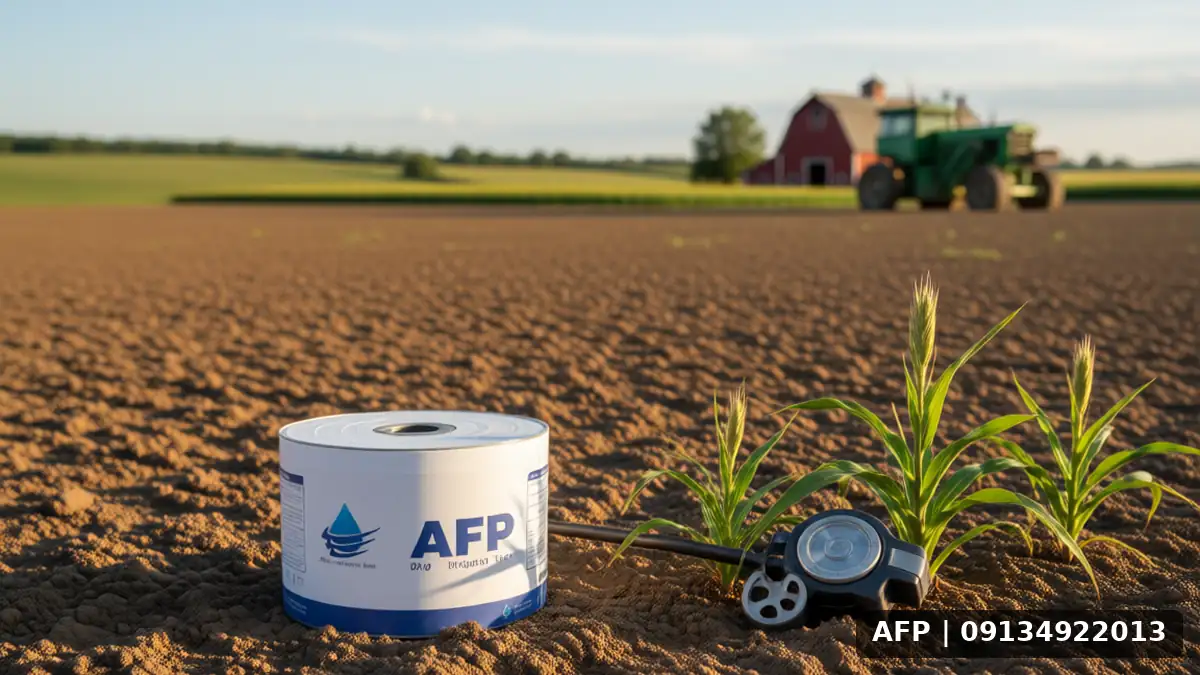
Using appropriate filtration, regular system flushing, and correct chlorine dosing are key to prevention. Also, avoid introducing insoluble chemicals into systems that lack flush capabilities.
Can a drip system be used for foliar fertilizer spraying?
No, drip systems are designed for root zone nutrient delivery. Separate spray equipment must be used for foliar fertilization.
Conclusion: Steps toward intelligent irrigation
Implementation Drip irrigation of corn It is a dynamic process requiring continuous monitoring of system pressure, water quality, and soil conditions. The intelligent combination of this system with strip techniques not only conserves water and fertilizer resources but also maximizes the crop’s production potential. Farmers who follow these principles will have a better position in the long term in terms of both economics and resource sustainability. For further reading on optimizing yields in other grain crops such as mung bean, we recommend reviewing the article on mung bean seed rate per hectare.
Related articles: parsley yield per hectare increase methods, Tonnes of D8AFD8B1 lentils per hectare